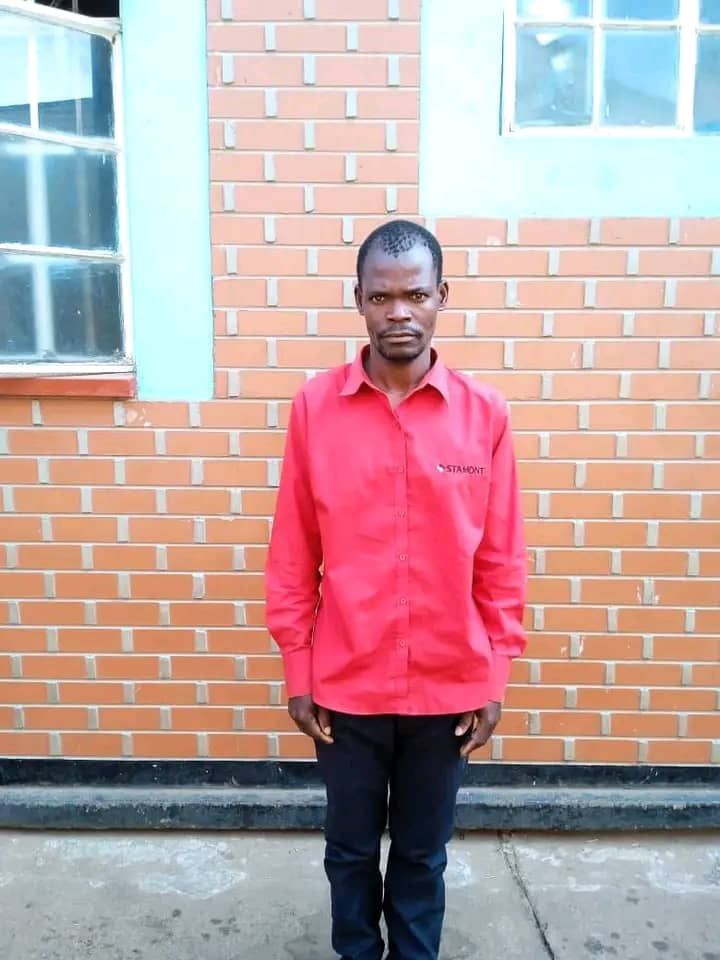
The Lilongwe Police are holding a 34-year-old man, Gift Kachama, in custody for allegedly stealing K12 million in cash belonging to his boss at Area 9 on June 18, 2025.
According to Khumbo Sanyiwa, Deputy Public Relations Officer at Lilongwe Police Station, the suspect was assigned to wash a car when he discovered the money and stole it.
Kachama
After stealing the cash, Kachama reportedly went to church, where he was arrested by police after his boss reported the matter.
Initially, he denied taking the money, claiming it was his cousin who was responsible.
However, he later confessed to the crime and led police to a maize garden where he had hidden some of the cash.
Police recovered K2.5 million from the maize garden, hidden in a plastic bag.
Investigations are ongoing to establish more information on the missing cash and to recover the rest of the stolen money.
Kachama is expected to appear in court soon to face charges of theft.
The suspect, who hails from Mambozi Village, Traditional Authority Chitukula in Lilongwe District, is currently in police custody.
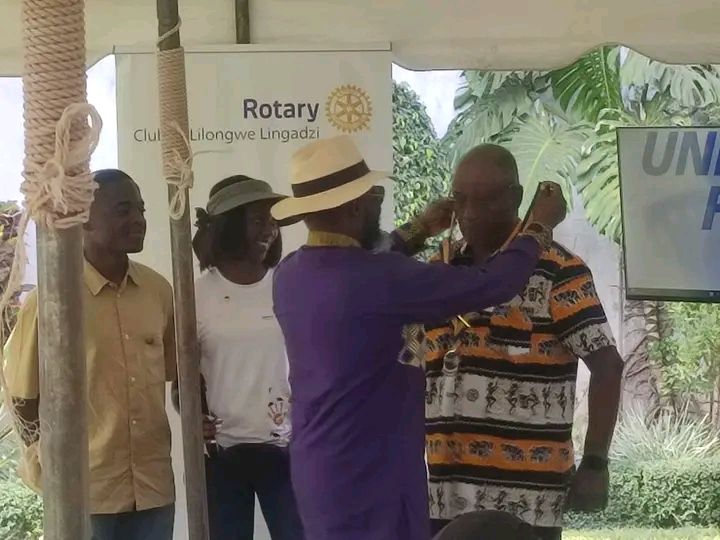
L/The Lingadzi Rotary Club has inducted Frank Chinkhandwe as its new president, replacing Limbani Kakhome.
During his acceptance speech at Serendipity Gardens in Lilongwe, Chinkhandwe emphasized his commitment to serving the community with dedication.
Chinkhandwe highlighted the significance of Rotary International’s theme, “Unite for Good,” saying it resonates deeply with him. “There is, indeed, something magical about the way ordinary people come together through Rotary to achieve extraordinary impact,” he noted.
The club’s initiatives have included supporting young learners with school books, providing clean water, and empowering communities with sustainable livelihoods.
Under Chinkhandwe’s leadership, the club will prioritize impactful service projects, focusing on the community’s needs in:
Chinkhandwe pledged to challenge the club to do more, serve more, give more, and be more, especially for those who need Rotary’s support the most.
His vision aligns with the club’s mission to make a positive difference in the community.
Limbani Kakhome, Chinkhandwe’s predecessor, had a strong track record of community service during his tenure.
Notably, the club, under his leadership, was part of a successful tree-planting initiative, aiming to plant 100,000 trees in schools and communities.
This project demonstrates the club’s commitment to environmental conservation and community development.
With Chinkhandwe at the helm, the Lingadzi Rotary Club is poised to continue its tradition of service, fellowship, and community development, inspiring positive change in Malawi.
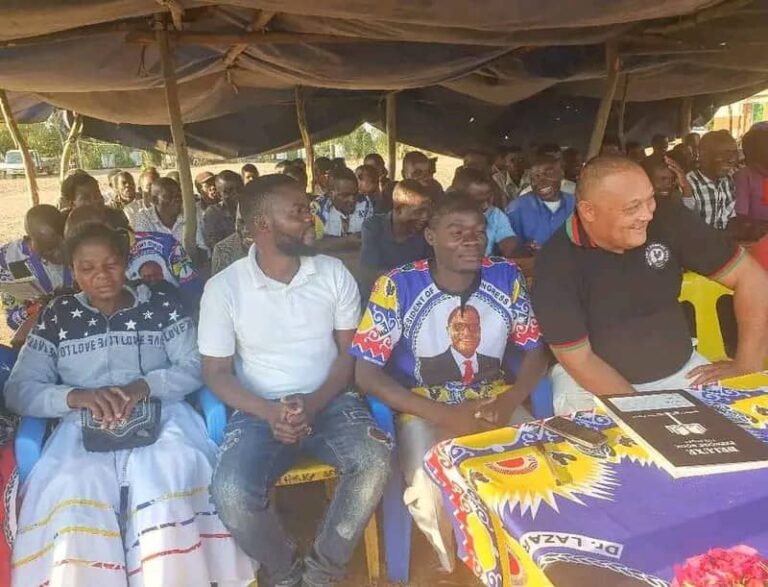
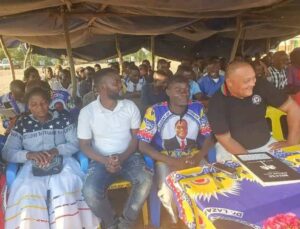
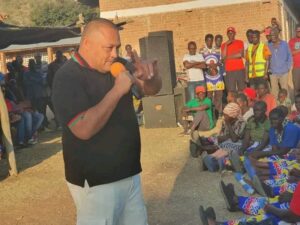
Senior officials from the Malawi Congress Party (MCP) on Sunday, June 29, 2025, held a political rally at Lihaka in Phalombe District, drawing attention from local leaders and community members.
During the rally, Group Village Headman Chiwalo made an impassioned appeal to the party’s leadership to prioritize the rehabilitation of the Migowi–Nambazo road, which he said is negatively affecting development in the area.
He emphasized that the poor state of the road has become a major setback to socioeconomic growth in the region, making it difficult for people to access essential services and carry out business activities.
The event was graced by several high-ranking MCP officials, including National Executive Committee member Babu Khamisa and Phalombe District Chairperson Justin Namadwala, among other party leaders.
The presence of these officials reflected the MCP’s continued engagement with rural communities as it listens to the developmental concerns of local citizens.
According to Group Village Headman Chiwalo, the Migowi–Nambazo road is a crucial route for the people of Phalombe, as it connects them to Lake Chilwa and several rural health centers such as Nambazo, Nambera, and Mtemanyama.
He stressed that due to the road’s dilapidated condition, access to these facilities has become increasingly difficult, especially for patients, traders, and farmers.
The road is also essential for economic activities in the area, particularly for transporting goods and accessing markets, but its current state has created logistical challenges for the communities.
As Malawi prepares for future political campaigns and elections, local leaders like Chiwalo are urging the ruling party to back its promises with tangible infrastructure development.
The appeal from Phalombe serves as a reminder of the urgent need to invest in rural road networks that are fundamental to improving the livelihoods of citizens and driving regional development.
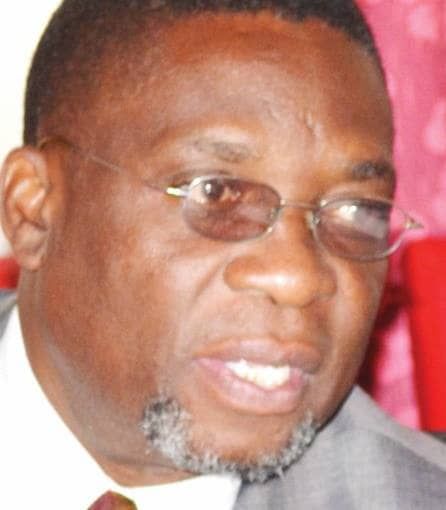
Veteran politician Kamlepo Kalua has claimed that Malawi’s misfortunes as a nation began as far back as 1964, when its citizens allegedly chose the wrong leadership at the dawn of independence.
According to Kalua, the people of Malawi side-stepped the genuine freedom fighters such as Orton Chirwa, William Kanyama Chiume, Manowa Chirwa, and others, and instead entrusted power to someone he calls an “imposter.”
He believes that this fateful decision marked the beginning of a national curse that continues to haunt Malawi to this day.
Kamlepo
Kalua further stated that during the push for multiparty democracy in the early 1990s, it was not Bakili Muluzi who carried the torch of democratic struggle, but rather the likes of himself, Chakufwa Chihana, and the Jiya family who were in exile.
He argued that Malawi made yet another mistake by choosing Bakili Muluzi, whom he described dismissively as “a man just walking down the street,” to lead the country’s democratic transition.
Turning to the 2020 political change, Kalua said it was not President Lazarus Chakwera who fought for the transformation Malawians witnessed.
He named Bantu Saunders Jumah, Dr. Haswel Bandawe, and Moses Kunkuyu as the real catalysts for the 2020 shift, accusing Chakwera and Vice President Saulos Chilima of conveniently forgetting these individuals after securing power.
Kalua criticized the current leadership for offering only a token ministerial role to Timothy Mtambo while disregarding the broader network of contributors to democratic change.
He asserted that the country’s failure to recognize and reward its true heroes is a fundamental reason Malawi continues to stagnate and remain underdeveloped.
Kalua posed a rhetorical question: where are these people now—Frank Jiya, himself, Timothy Mtambo, Bantu Saunders Jumah?
He pointed out that those who contributed nothing to the country’s liberation now enjoy luxurious lives, traveling in first-class flights and living lavishly abroad in countries like Nigeria and Spain.
Meanwhile, he lamented, the true heroes are either forgotten or left to suffer in silence.
Kalua praised Namibia for establishing a special fund to support its veterans, ensuring that those who fought for freedom live dignified lives.
He noted that Namibia even honors those who died under unclear or politically motivated circumstances.
In contrast, he accused Malawi of rewarding only the relatives, girlfriends, and spouses of those in power—people who know nothing about the hard-fought struggle for freedom.
He highlighted the bitter irony that those who shed blood and sweat for Malawi’s freedom are sidelined while others feast on the benefits.
Kalua passionately invoked the names of fallen nationalists whose spirits, he said, are restless—questioning whether they died in vain.
He cited martyrs such as Yatuta Chisiza, Atati Mpakati, Masauko Chipembere, Orton Chirwa, Manowa Chirwa, Dunduzu Chisiza, Dick Matenje, Charles Matinga, Aaron Gadama, Twaibu Sangala, and David Chiwanga.
He added that many of their remains still lie unaccounted for in rivers and dams across the country.
Kalua warned that Malawi will never know peace as long as it continues to ignore and dishonor its true patriots.
He attributed the recurring challenges in national leadership—including what he termed “State-House-paralysis”—to the spiritual consequences of failing to reconcile with the past.
He claimed that those who enter the State House start off with great strength but are quickly overwhelmed by a mysterious “mallytis of governance.”
Kalua concluded with a fervent prayer that in a future election, Malawians will finally awaken to elect a leader who will honor the fallen heroes, heal national wounds, and lead the country toward true prosperity.
He believes that only through such a reckoning can Malawi break free from the curse that has held it back for decades.
The inaugural Central Region Hockey League (CRHL) Fast5 Tournament has come to a thrilling conclusion, with Night Eagles and Capital Brave Ladies emerging as the champions in the men’s and ladies’ categories, respectively.
The tournament, held at Tiger Sports in Lilongwe, saw seven teams battling it out in a showcase of skill, speed, and sportsmanship.
In the men’s category, Night Eagles dominated the competition, accumulating 11 points to finish two points clear of runners-up City Wolves.
The team’s success was built on the outstanding performances of Temwa Chirwa, who was named player of the tournament, and Kenneth Mkese, who excelled as the best goalkeeper.
City Wolves’ Robert Skeva, meanwhile, proved his scoring prowess, topping the charts as the tournament’s top scorer.
The ladies’ category saw Capital Brave Ladies secure the top spot with six points, three points ahead of second-placed Bunda Sticks Ladies.
Despite not winning the title, Bunda Sticks Ladies had a trio of players recognized for their outstanding performances.
Evalista Chaima was the top scorer, Memory Kandengere shone as the best goalkeeper, and Grace Kachingwe was named player of the tournament.
Hockey Association of Malawi (HAM) president Wanthaza Mughogho praised the tournament’s organization and thanked Milanzi Interiors, the title sponsors, for their support.
“The tournament has provided a valuable platform for our young athletes to showcase their talents, and we look forward to continuing this partnership in the future,” Mughogho said.
Milanzi Interiors chief executive officer Samantha Milanzi emphasized her company’s commitment to supporting youth sports.
“We believe that investing in sports is crucial for the development of young people, and we’re proud to be part of this initiative,” Milanzi said.
The CRHL Fast5 Tournament marked a significant milestone in Malawian hockey, highlighting the country’s growing talent and passion for the sport.
With the support of Milanzi Interiors, the tournament is expected to continue providing opportunities for young athletes to develop their skills and pursue their dreams.
The success of the tournament has sparked excitement among hockey fans, who are eagerly anticipating the next edition.
As the sport continues to grow in Malawi, the CRHL Fast5 Tournament is set to become a highlight of the hockey calendar.