Wednesday, December 17, 2025
No menu items!
spot_img
Home Blog Page 384

Call for independent candidacy: Chiefs in Kasiya urge Judith Zaina Nkhwangwi to contest as MP

0


By Burnett Munthali

Supporters of the Malawi Congress Party (MCP) in the Mude area of Kasiya, Lilongwe District, have been urged by some traditional leaders to ask Judith Zaina Nkhwangwi to contest as an independent candidate for the constituency’s parliamentary seat.

This appeal comes amid growing concerns and uncertainty surrounding the results of the MCP’s primary elections held on April 19, whose official outcomes have not yet been announced.

Rumors circulating among residents in the jurisdiction of Senior Chief Khongoni suggest that Mphatso Boti emerged victorious in the primaries.

However, some community members feel the process was flawed, with complaints and suspicions being voiced in local discussions.

According to Ronald Daimoni, a community leader from Kabudula-Demera Zone, it was wise to heed the chiefs’ call and inform Ms. Nkhwangwi of the desire from grassroots communities for her to stand as an independent candidate.

Judith Zaina Nkhwangwi


He emphasized that this reflects the genuine will of the people in the area, who feel their voice is being stifled by party influences.

Daimoni issued a stern warning to some party officials whom he accused of intentionally interfering in the primary election process because they have their preferred candidate.

He argued that such interference violates the democratic rights of ordinary villagers who deserve to freely choose their representative.

He went on to claim that it is evident the primary election process on April 19 was mishandled, hence the delay in publicly announcing the results, unlike in other constituencies where results were declared swiftly and transparently.

He expressed concern over the inconsistency between the records kept in the official Constituency Book and those held by the electoral administrators of the primaries.

Daimoni said this discrepancy has raised serious doubts about the credibility of the entire process and has fueled the frustration now felt by community members.

He added that the failure to address these concerns openly has only deepened suspicion and made the demand for a more transparent alternative stronger.

It is in this context that traditional authorities have now stepped in, advising constituents to rally behind Ms. Nkhwangwi as an independent candidate to ensure their voices are not silenced.

Observers say this move could signal growing discontent with internal party procedures and a push for greater accountability within political parties.

As the MCP continues to delay the release of the primary results for Kasiya, the groundswell of support for Ms. Nkhwangwi may evolve into a full-blown political shift in the constituency.

The coming weeks are likely to be tense, as party leaders, aspiring candidates, and voters navigate the fallout of what many see as a compromised selection process.

For now, residents in Kasiya await clarity — but their message is clear: they want a leader who represents their true will, even if it means stepping outside party lines.
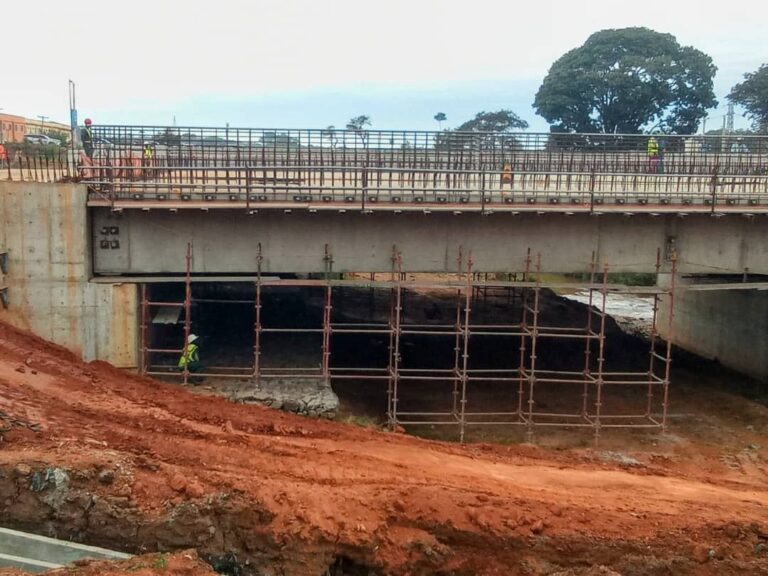
Delayed progress, mounting costs: Lilongwe Bridge reconstruction highlights infrastructure challenges in Malawi

0

By Burnett Munthali

The Lilongwe Bridge, once a key lifeline in Malawi’s capital city, has undergone a major transformation after the old structure was demolished several years ago.

Following its demolition, a new bridge was commissioned to replace the aging infrastructure, with hopes of easing traffic congestion and improving connectivity within Lilongwe and beyond.

This bridge plays a critical role in the daily lives of citizens and the economy at large, as it connects vital roads and commercial areas, serving as a gateway between major residential, business, and government zones.

For thousands of commuters, traders, and transport operators, the bridge is not merely a convenience but a necessity, as it facilitates the flow of goods, services, and people in and out of the city.


Recognizing its importance, the government awarded the reconstruction contract to a Chinese road construction company, with the project initially scheduled for a relatively short timeline.

However, what was supposed to be a major achievement in Malawi’s infrastructure development has turned into a long, drawn-out saga that has stretched from 2020 and is now projected to complete only by 2025.

It is now taking the Chinese road construction company almost five full years to upgrade the road and complete the bridge, sparking concern from citizens and civil society groups alike.

The delays have become increasingly difficult to justify, especially given the strategic significance of the bridge in ensuring urban mobility, trade efficiency, and economic stability in the capital.

One of the most alarming consequences of this prolonged construction timeline is the financial impact it has had on the country, particularly amid ongoing economic challenges.

Since the project began, the Malawian kwacha has undergone severe devaluation, losing value against major foreign currencies, which directly affects the cost of imported materials and equipment used in the project.

This currency instability has led to ballooning project costs, with contractors reportedly needing more funds to procure supplies, hire skilled labor, and meet operational expenses.

The rising cost of goods and services in the country has also affected the local economy, straining the government’s budget and putting pressure on public spending.

In the face of inflation and increased public debt, many citizens question whether the resources allocated to the project are being used efficiently and transparently.

Small businesses near the bridge site that once thrived on daily traffic have reported massive losses, as reduced accessibility has kept customers away for years.

Public transport operators are also incurring increased fuel and maintenance costs, as alternative routes are often longer, poorly maintained, or heavily congested.

Citizens who walk or cycle through the area express frustration over unsafe temporary paths and dust pollution, while emergency services have struggled with delayed response times due to the disruption.

The social cost of the delay is also significant, as communities that once felt connected now feel isolated and neglected, with little communication or updates from authorities on the status of the project.

Infrastructure experts argue that such projects should be completed in realistic but efficient timelines, especially when they involve crucial public infrastructure in a growing urban center like Lilongwe.

The slow pace of progress has prompted calls for greater accountability from both the Malawian government and the Chinese contractors involved in the project.

Critics argue that five years is an unreasonably long time for a bridge of this size, and that without proper oversight, more projects could fall into similar cycles of delay and overspending.

While the government has cited logistical, technical, and global economic factors as contributing to the delays, the public remains unconvinced, demanding transparency and results.

With the 2025 completion deadline looming, the hope is that the bridge will finally deliver on its promise of improved connectivity and economic vibrancy in the capital city.

Yet the Lilongwe Bridge saga also serves as a broader cautionary tale — a reminder that infrastructure is not just about concrete and steel, but about people’s livelihoods, economic confidence, and national development.

As the project enters its final phase, citizens remain watchful, hoping for completion, accountability, and lessons learned to avoid future infrastructure delays in Malawi.

Airtel Africa partners with Spacex to revolutionize internet connectivity in Malawi and beyond

0

By Jones Gadama

In a significant development aimed at bridging the digital divide in Africa, Airtel Africa has announced a groundbreaking partnership with SpaceX to bring Starlink’s high-speed internet services to its customers across the continent, including Malawi.

This collaboration marks a major milestone in expanding digital access, particularly in underserved and hard-to-reach regions.

According to Airtel Africa Managing Director and Chief Executive Officer, Sunil Taldar, the partnership will ensure that customers have reliable and affordable voice and data connectivity, even in the most remote areas.

“Next-generation satellite connectivity will ensure that every individual, business, and community has reliable and affordable connectivity even in the most remote parts of Africa,” Taldar said.

Sunil Taldar


The partnership leverages Starlink’s low Earth orbit (LEO) satellite technology, which can bypass the need for expensive ground-based infrastructure, making it possible to deliver reliable, high-speed internet to even the most remote corners of Africa.

With Starlink’s constellation of over 6,750 LEO satellites, Airtel Africa aims to extend its reach beyond the limits of traditional cell towers and fiber networks.

SpaceX has already acquired the necessary licenses to operate in 9 of the 14 countries where Airtel Africa has a presence.

These countries include Malawi, Nigeria, Kenya, Zambia, Rwanda, Niger, Madagascar, the Democratic Republic of Congo, and Chad. The companies are working on securing licenses for the remaining five countries.

This partnership is expected to have a transformative impact on Malawi and the broader African continent.

By providing high-speed internet access to remote schools, health centers, and businesses, the collaboration will help bridge the digital divide and promote digital inclusion.

Airtel Africa will also explore using Starlink for cellular backhaul to extend rural coverage, enabling mobile network coverage in areas where laying cables or building infrastructure is cost-prohibitive.

The partnership offers benefits for both companies. Airtel Africa will enhance its next-generation satellite connectivity offerings, while SpaceX will leverage Airtel’s ground network infrastructure and capabilities in Africa.

This collaboration will enable SpaceX to expand its reach and subscriber base, while Airtel Africa will gain a significant edge in expanding rural coverage and improving overall network quality.

“Starlink welcomes the opportunity to join forces with important industry leaders to ensure as many people as possible can benefit from Starlink’s presence,” said Chad Gibbs, Vice President of Starlink Business Operations at SpaceX.

He added,”The team at Airtel has played a pivotal role in Africa’s telecom story, so working with them to complement our direct offering across Africa makes great sense for our business”.

As Africa continues to navigate the complexities of digital development, partnerships like this one between Airtel Africa and SpaceX will play a crucial role in shaping the continent’s digital future.

With approximately 600 million people in Africa lacking internet access, this collaboration has the potential to make a significant impact on the lives of millions of people.

Sycamore consult limited advises authorities to strengthen collaboration and communication

0

By Jones Gadama

Sycamore Consult Limited has emphasized the importance of strengthening collaboration and improving communication in organizations to achieve success.

According to Audrey Mwala, Managing Director of Sycamore Consult Limited, a strong, aligned, and motivated team is key to achieving organizational goals.

Mwala made these remarks during a retreat with directors, managers, engineers, and project officers.

Audrey Mwala


The retreat aimed to address gaps in internal communication, collaboration, and trust that can hinder organizational performance.

Mwala stressed that these gaps are serious challenges that need to be addressed to ensure the success of institutions.

The training was designed to equip participants with the skills and knowledge needed to improve performance, enhance communication, work relationships, and problem-solving skills. Participants described the training as beneficial, highlighting its potential to positively impact their work.

Mwala emphasized that effective communication and collaboration are essential for achieving organizational objectives.

She noted that when teams are aligned and motivated, they are better equipped to tackle challenges and achieve their goals.

The retreat provided a platform for participants to engage in discussions and share experiences on how to improve communication and collaboration in their organizations.

By addressing these critical issues, institutions can create a more productive and efficient work environment.

Sycamore Consult Limited is committed to supporting organizations in developing the skills and knowledge needed to succeed.

By providing training and advisory services, the company helps institutions build strong, aligned, and motivated teams that can drive success.

The importance of effective communication and collaboration cannot be overstated.

In today’s fast-paced and competitive business environment, organizations need to be agile and responsive to changing circumstances.

By strengthening collaboration and communication, institutions can better navigate challenges and achieve their objectives.

As organizations continue to face complex challenges, the need for effective communication and collaboration will only continue to grow.

Sycamore Consult Limited’s advisory services provide a valuable resource for institutions looking to build stronger, more productive teams.

The retreat was a significant step towards equipping participants with the skills and knowledge needed to drive success in their organizations.

By addressing gaps in internal communication, collaboration, and trust, institutions can create a more productive and efficient work environment that supports the achievement of their goals.

Malawi to lift ban on Tanzanian commodities following diplomatic talks

0

By Burnett Munthali

In a significant move for trade relations between Malawi and Tanzania, the Malawian government has announced that it will lift its ban on Tanzanian commodities following fruitful discussions between officials from both countries.

The resolution came after a meeting held on Friday, where officials from Malawi and Tanzania agreed on a path forward for facilitating trade between the two nations.

A joint communiqué released after the meeting confirmed that both governments had come to a consensus, with Malawi pledging to issue an administrative instrument to relevant authorities. This will allow for the importation and exportation of goods between the two countries starting from the date of the communiqué.

Nancy Tembo


Malawi had previously imposed a ban on imports of Tanzanian commodities such as maize flour, rice, ginger, bananas, and maize, as part of an effort to promote local production.

In retaliation, Tanzania had imposed its own ban on agricultural imports from Malawi, a move intended to safeguard the country’s business interests, according to Tanzania’s Minister of Agriculture, Hussein Bashe.

However, Tanzania recently lifted its ban and indicated a willingness to engage with Malawi on resolving the issues that had led to the trade restrictions.

The communiqué also noted that the two governments had agreed to complete all necessary legal framework requirements to simplify trade between their nations, ensuring that the trade process will be as efficient as possible moving forward.

Additionally, both countries agreed to develop common standard operating procedures for sanitary and phytosanitary standards. These will be in line with regional and international guidelines, ensuring that trade between the two countries is safe and meets international standards.

Both delegations expressed their mutual respect for the excellent bilateral ties between the two nations and emphasized the need to strengthen and deepen cooperation for the benefit of their people.

The statement highlighted that both governments are committed to adhering to regional and international frameworks in the conduct of bilateral cooperation, particularly in the area of trade.

The discussions also underscored the shared commitment to deepen trade relations, foster economic cooperation, and resolve any existing trade issues that could hinder progress.

The Malawi delegation was led by Minister of Foreign Affairs, Nancy Tembo, while Tanzania’s delegation was led by Ambassador Mahmoud Thapit Kombo, the Minister of Foreign Affairs and East African Cooperation.

The lifting of the ban marks a positive step in restoring and advancing trade ties between the two East African countries. It is hoped that this new phase of cooperation will not only improve bilateral relations but also benefit the economies of both nations, especially in the agricultural sector.

Both countries have expressed a shared commitment to making trade more efficient and mutually beneficial, and it remains to be seen how these agreements will be implemented in the coming months.

For Malawi, this resolution offers an opportunity to reintegrate Tanzanian commodities into its market, which could help stabilize prices and improve the availability of certain goods that are in demand. For Tanzania, lifting the ban provides access to Malawi’s agricultural products, benefiting its business community and creating a balanced trade dynamic.

The discussions and agreements reached by both governments reflect the broader trend of increased regional cooperation and a focus on resolving trade disputes through diplomatic channels. As these talks progress, it is expected that both nations will continue to prioritize open dialogue, with the goal of fostering deeper economic ties in the future.