Thursday, January 1, 2026
No menu items!
spot_img
Home Blog Page 445

Namadingo shows a heart of compassion: Visits Mangochi to repair ambulances

0

By Burnett Munthali

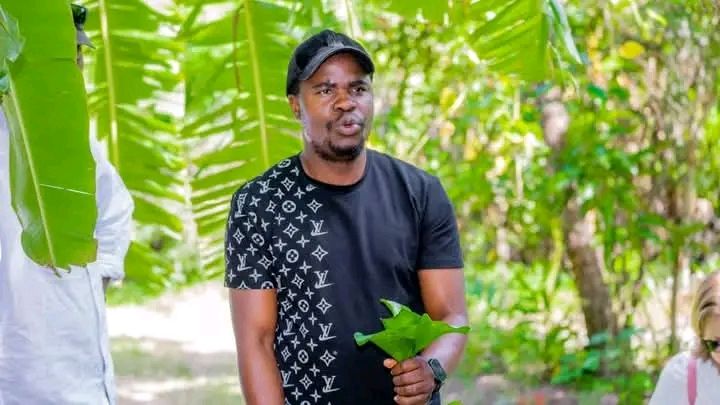
One of Malawi’s most celebrated musicians, Patience Namadingo, visited the District Commissioner’s office in Mangochi.

His visit aimed to hold discussions with senior health officials in the district regarding his plan to help repair broken-down ambulances.

Namadingo has shown a genuine desire to offer assistance in areas that directly affect human lives, particularly in the health sector.

This initiative comes at a time when many hospitals across the country are struggling with a lack of resources, and the availability of ambulances has become a major challenge.

Namadingo wants to use his talent and influence to support people who are in desperate need of emergency medical services.

Yesterday, however, Namadingo was unable to hold the intended discussions with health authorities as planned.

This was due to the absence of some key officials who were not available at the time he arrived.

It was revealed that their absence was due to various reasons that were not clearly stated.

Despite this setback, Namadingo has not given up, and he is expected to return to the office to have detailed discussions on how he can assist in resolving the ambulance issue.

Mangochi District Hospital owns several vehicles that serve different purposes, including patient transportation.

Some of these vehicles have broken down and have not been repaired for a long time.

The broken-down ambulances are currently being stored within the hospital’s perimeter fence, where they continue to deteriorate.

This situation has worsened the challenges in transporting patients, especially during emergencies.

Namadingo’s plan to repair the ambulances appears to be a timely solution to this pressing problem.

It is expected that authorities in Mangochi will seize this opportunity and collaborate with Namadingo to bring development to their district.

Often, public figures choose to remain silent on issues affecting communities, but Namadingo is showing a very different approach.

He is demonstrating that fame should not only be about music or entertainment, but it can also be used to transform lives.

If this initiative is successfully implemented, the people of Mangochi will be in a much better position to receive emergency medical care.

Furthermore, this act could serve as an example for other leaders and celebrities to step in and help where it is needed most.

Namadingo continues to express his love for the nation in various ways, bringing hope to countless people.

Police officers, relatives of patients, and many citizens across the country are eager to see how this initiative progresses.

Namadingo’s work underscores the powerful message that “Our capabilities can open opportunities for others.”

And if the country had more people with Namadingo’s mindset, Malawi could undergo significant and positive transformation.


UGI supports MCCCI Business Leadership conference and Zingwangwa United

0

By Shaffie A Mtambo

United General Insurance (UGI) Company Limited has demonstrated its commitment to supporting local businesses and sports by making significant donations to two important initiatives.

The company has donated K3 million to the Malawi Confederation of Chambers of Commerce and Industry’s (MCCCI) Business Leadership conference, which will take place in Mangochi next week.

According to Golden Jamu, Sales and Marketing Manager at UGI, the sponsorship is aimed at fostering collaboration between business players.


“We decided to sponsor the event as it is crucial in fostering collaboration between business players,” Jamu said.

Wezzie Mungoni, Director of Membership Development at MCCCI, expressed gratitude for the timely donation, saying it will help them meet other costs associated with the conference.

“The donation is timely as it will help us meet other costs,” Mungoni said.

In a separate gesture, UGI has also donated K3 million to Zingwangwa United, a Southern Region Football Association Premier Division side.

The donation is intended to help the team with operational costs.

Davie Khonje, one of Zingwangwa United’s directors, thanked UGI for responding to their financial appeal.

“We are grateful to UGI for responding to our financial appeal,” Khonje said.

These donations demonstrate UGI’s commitment to supporting local businesses and sports initiatives.

NICE urges youths to be agents of peace ahead of elections

0


By Jones Gadama

The National Initiative for Civic Education (NICE) in Chiradzulu District is urging youths to play a crucial role in maintaining peace ahead of the general elections scheduled for September 16, 2025.

According to Chimwemwe Saiti, District Programmes Officer for NICE, youths are often manipulated by politicians to perpetrate violence during elections.

To address this issue, NICE has been conducting training sessions for youths and volunteers since February on the importance of maintaining peace during elections.

Chimwemwe Saiti


The training aims to empower youths with the knowledge and skills necessary to promote peaceful elections and prevent violence.

Saiti emphasized that the training is crucial in ensuring that youths understand the significance of peaceful elections and their role in promoting peace. “We want to ensure that youths are agents of peace and not perpetrators of violence,” Saiti said , adding that,”By working together, we can promote a peaceful and credible electoral process.”

NICE’s efforts to promote peace and stability during elections are part of its broader mandate to provide civic and voter education to Malawians.

The organization’s work in promoting peace and stability is crucial in ensuring that elections are conducted in a free, fair, and transparent manner.

By empowering youths with the knowledge and skills necessary to promote peace, NICE is contributing to the development of a more informed and engaged citizenry.

Peaceful elections are essential for maintaining stability and promoting democracy in Malawi.

When elections are peaceful, citizens can exercise their right to vote without fear of intimidation or violence. This, in turn, helps to build trust in the electoral process and promotes confidence in the government.

NICE’s efforts to promote peace and stability during elections are critical in ensuring that Malawi’s democracy continues to grow and develop.

By working together with other stakeholders, NICE can help to create an environment that is conducive to peaceful elections and promotes the well-being of all citizens.

NICE plays a vital role in promoting civic education and voter awareness in Malawi.Through its training sessions and outreach programs, the organization provides citizens with the knowledge and skills necessary to participate in the electoral process. By empowering citizens with information, NICE helps to promote a more informed and engaged citizenry.

In addition to promoting peace and stability during elections, NICE also provides education on the importance of participating in the electoral process.

The organization encourages citizens to exercise their right to vote and to participate in other aspects of the democratic process.

As the country prepares for the September 16 elections, NICE’s work will be critical in promoting a peaceful and credible electoral process.

The organization’s commitment to providing civic and voter education to Malawians is evident in its tireless efforts to promote peace and stability during elections.

By working together with other stakeholders, NICE can help to create an environment that is conducive to peaceful elections and promotes the well-being of all citizens.

NICE’s efforts to promote peace and stability during elections are crucial in ensuring that Malawi’s democracy continues to grow and develop.

By empowering youths with the knowledge and skills necessary to promote peace, NICE is contributing to the development of a more informed and engaged citizenry.

Youths demand manifestos that champion empowerment

0

By Jones Gadama

As the country gears up for the 2025 General Elections, the Mzimba District Youth Officer, Yamikani Nyalugwe, is urging aspirants to develop youth-centric manifestos that align with the Malawi 2063 agenda on youth empowerment. Nyalugwe emphasized the importance of harnessing the youthful population to propel an inclusively wealthy and self-reliant Malawi by 2063.

Speaking during a Manifesto Debate organized by the Women’s Legal Resource Centre (WORLEC) and Oxfam, Nyalugwe stressed that candidates should prioritize youth empowerment initiatives in their manifestos. “We need to have candidates who will champion empowerment initiatives of the youths. This is why I urge all candidates to develop manifestos that look into youths’ empowerment,” he said.


The debate aimed to drum up support for women, youths, and people with disabilities, with funding from the European Union.

One of the candidates, Maureen Moyo, an independent contestant for the Mzimba Boma Ward in Perejeki Constituency, highlighted her plans to focus on promoting people with disabilities.

Moyo’s commitment to inclusivity is a step in the right direction, considering the importance of representation and empowerment for all citizens.

The Malawi 2063 agenda envisions transforming Malawi into an inclusive, wealthy, and self-reliant industrialized upper-middle-income country.

To achieve this vision, the government has emphasized the need for a youth-centric approach, recognizing the crucial role young people play in shaping the country’s future.

A similar approach was seen in Malaysia, where the Undi18 movement successfully advocated for lowering the voting age from 21 to 18. This move not only increased youth participation in the electoral process but also led to more youth-centric manifestos and policies.

According to Tharma Pillai, co-founder and Advocacy Director of Undi18, “Malaysian politics are dominated by old people… Now, for the first time, young voters could be Malaysia’s kingmakers.”

To develop effective youth-centric manifestos, candidates should consider key areas such as education and skills development, economic empowerment, health and well-being, participation and representation, and protection and safety.

By prioritizing these areas, candidates can develop manifestos that truly address the needs and aspirations of young people in Malawi.

As Nyalugwe emphasized, “Being a largely youthful nation, there is a need for political candidates to come up with manifestos that will ensure the harnessing of the youth population to propel an inclusively wealthy and self-reliant Malawi by 2063.”

The upcoming elections present an opportunity for Malawians to choose leaders who will prioritize youth empowerment and development.

By demanding youth-centric manifestos, young people can play a crucial role in shaping the country’s future and ensuring that their needs and aspirations are addressed.

The call for youth-centric manifestos is a timely reminder of the importance of prioritizing youth empowerment and development in Malawi.

By working together, we can create a brighter future for all Malawians and ensure that the country achieves its vision of becoming an inclusive, wealthy, and self-reliant industrialized upper-middle-income country by 2063.

Malawi’s agricultural future hinges on intensive farming and diversification

0

By Jones Gadama

Malawi’s agricultural sector is at a crossroads, with experts calling for a shift towards intensive farming practices to boost productivity and food security.

According to Horace Phiri, an agricultural expert, pursuing intensive farming, especially for maize, can help free up land for farmers to diversify into high-value crops.

Phiri’s sentiments come as the National Economic Empowerment Fund is disbursing loans of over K20 billion to 30,000 farmers in 2025 alone, with the aim of promoting agriculture development.

The expert identified crops like soyabeans, groundnuts, and horticulture as high-value crops that can significantly contribute to the country’s agricultural economy.

Intensive farming involves using advanced technology and practices to increase crop yields on smaller plots of land. This approach can help Malawian farmers produce more maize on smaller areas, freeing up land for other profitable crops.

According to Phiri, “If farmers can produce more on smaller plots, they can use the remaining land for other profitable crops. This shift is vital for boosting incomes and strengthening food security.”

Maize is a staple crop in Malawi, and its production plays a critical role in the country’s food security. With the right techniques and management practices, maize yields can be significantly improved.

For instance, using raised bed planting technology can save up to 20-30% of irrigation water while increasing productivity.

Phiri’s call for diversification into high-value crops is echoed by Luwayo Biswick, a permaculture farmer from Mchinji District. Biswick believes that Malawi’s unique agricultural land presents numerous opportunities for farmers to grow a variety of crops.

However, he emphasizes the need for value addition and export promotion to tap into global markets.

“Malawi is rich in agriculture, but we must popularize our products globally,” Biswick said, adding,  “Graduates from institutions like LUANAR should take farming seriously as a business to drive the sector forward.” This sentiment highlights the importance of agricultural education and training in equipping farmers with the necessary skills to succeed in the industry.

To achieve agricultural development and food security, several key areas need to be addressed. Maintaining soil health through proper management practices is crucial for sustainable agriculture.

Efficient irrigation systems and practices can help conserve water while ensuring optimal crop growth. Adding value to agricultural products can increase their market value and create new opportunities for farmers.

Promoting Malawian agricultural products globally can help farmers tap into new markets and increase their incomes.

The government’s initiative to disburse loans to farmers is a step in the right direction. However, more needs to be done to support agricultural development.

This includes providing subsidies to smallholder farmers, investing in irrigation infrastructure, and promoting agricultural research and development.

Malawi’s agricultural future hinges on the adoption of intensive farming practices and diversification into high-value crops.

With the right policies and support, farmers can increase their productivity, improve food security, and contribute to the country’s economic growth.

As Phiri noted, “This shift is vital for boosting incomes and strengthening food security.” By working together, Malawian farmers can unlock their potential and drive the agricultural sector forward.

To achieve agricultural development and food security, it is essential to increase investment in agricultural research and development, provide training and education, promote value addition and export promotion, and improve irrigation infrastructure.

By implementing these strategies, Malawi can unlock its agricultural potential and achieve food security and economic growth.