
Tuesday, December 16, 2025
No menu items!
spot_img
Home Blog Page 462

Parliament passes bill to introduce house detention

0


By Jones Gadama

In a significant development, the Malawi Parliament has passed Bill No. 9 of 2025: Penal Code (Amendment), which introduces house detention as a form of punishment.

This amendment aims to address the challenges faced by prisoners with special needs, particularly when continued incarceration poses a threat to their health or life.

The Bill, which was passed after a recommendation by the Special Law Commission on the Review of the Prisons Act, provides for house detention as an alternative punishment method for certain offenders.

This move is expected to reduce the burden on the country’s correctional facilities, while also providing a more humane and effective way of rehabilitating offenders.
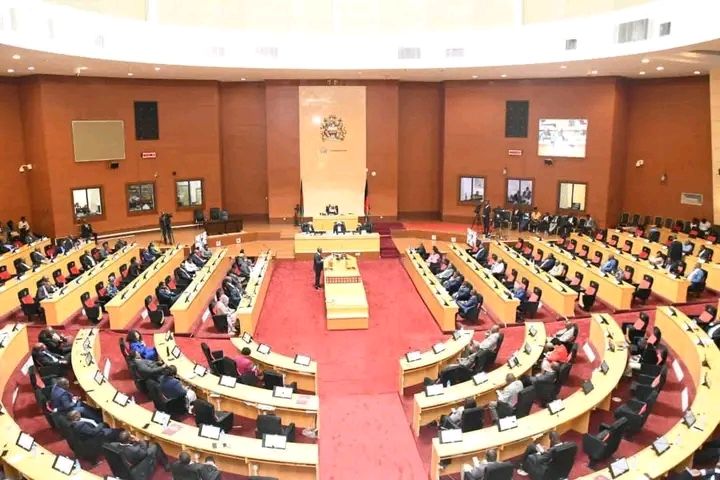
According to the amendment, house detention will be considered as a punishment method for prisoners who require special care, including those with disabilities, the elderly, and those with chronic illnesses.

This move is expected to promote the rights of prisoners and provide a more dignified and humane approach to punishment.

The introduction of house detention as a punishment method is a significant step forward in Malawi’s efforts to reform its penal system.

The country has been working to address the challenges faced by its correctional facilities, including overcrowding and inadequate resources.

The Special Law Commission on the Review of the Prisons Act had emphasized the need for alternative punishment methods, citing the importance of rehabilitation and reintegration of offenders into society.

The commission’s recommendations were aimed at promoting a more humane and effective approach to punishment, rather than simply focusing on retribution.

The passing of the Bill is a testament to the government’s commitment to reforming the penal system and promoting the rights of prisoners.

The introduction of house detention as a punishment method is expected to have a positive impact on the lives of prisoners with special needs, providing them with a safer and more supportive environment.

As Malawi continues to work towards reforming its penal system, the introduction of house detention as a punishment method is a significant step forward.

The government’s commitment to promoting the rights of prisoners and providing alternative punishment methods is expected to have a positive impact on the lives of offenders and their families.

The passing of the Penal Code (Amendment) Bill is a significant milestone in Malawi’s efforts to reform its penal system.

The introduction of house detention as a punishment method is expected to provide a more humane and effective way of rehabilitating offenders, particularly those with special needs.

As the country continues to work towards promoting the rights of prisoners, this amendment is a significant step forward.

Scorchers gear up for friendly matches against Banyana Banyana

0

By Jones Gadama

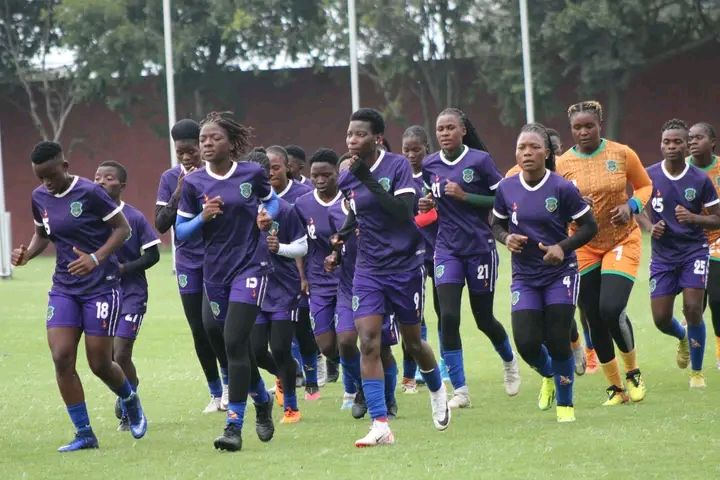
The Malawi national women’s football team, the Scorchers, kicked off their preparations for the upcoming friendly matches against Banyana Banyana with a training session at UJ Auckland Park on Thursday morning.

The team, under the guidance of head coach, McNelbert Kazuwa, went through their paces, working on their tactics and strategies ahead of the two matches scheduled for Saturday and Tuesday.

The Scorchers will have another training session at the same venue in the afternoon, as they intensify their preparations for the friendly matches.

Meanwhile, the team has been boosted by the arrival of DRC-based defender, Chimwemwe Madise, who joined the squad on Wednesday evening.

Madise’s experience and skills will be a valuable addition to the team, as they face off against the South African national team.

Two more players, Bernadettar Mkandawire and Vanessa Chikupila, are expected to join the team today, further bolstering the Scorchers’ squad.

The friendly matches against Banyana Banyana are an important part of the Scorchers’ preparations for the upcoming Africa Women’s Cup of Nations qualifiers.

The team will be looking to use these matches to fine-tune their tactics and strategies, as well as to gain valuable experience playing against a top-ranked team like South Africa.

The Scorchers have been working hard to improve their game, and the friendly matches against Banyana Banyana will provide a stern test of their abilities.

With the addition of experienced players like Madise, Mkandawire, and Chikupila, the team will be looking to give a good account of themselves against their South African opponents.

In a statement, head coach Kazuwa expressed his satisfaction with the team’s preparations so far, saying, “We have been working hard to prepare for these friendly matches, and I am pleased with the progress we have made.

The addition of experienced players like Madise, Mkandawire, and Chikupila will be a big boost to the team, and we are looking forward to the challenge of playing against Banyana Banyana.”

The friendly matches against Banyana Banyana are scheduled to take place on Saturday and Tuesday, with the Scorchers looking to use these matches to prepare for the upcoming Africa Women’s Cup of Nations qualifiers.

As the team continues to prepare for the friendly matches, fans will be eagerly awaiting the opportunity to see the Scorchers in action.

With their preparations well underway, the team will be looking to give a good account of themselves against their South African opponents.

The Scorchers’ preparations for the friendly matches against Banyana Banyana are well underway, with the team having their first training session on Thursday morning.

With the addition of experienced players like Madise, Mkandawire, and Chikupila, the team will be looking to give a good account of themselves against their South African opponents.

Comsip cooperative group members in Kasungu district expect bumper harvest

0

By Jones Gadama

In a major boost to agricultural productivity, Comsip cooperative group members in Kasungu district are anticipating high yields this farming year, thanks to the 2025 Livelihoods and Economic Strengthening Programme (LESP). This initiative promotes sustainable farming practices, including yellow maize cultivation, permaculture, and the use of Mbeya fertilizer.

According to Christina Josiah, Comsip district coordinator, approximately 82 groups have benefited from the programme, accessing essential farming support, including training and resources.

Josiah emphasized that the groups were encouraged to adopt an eco-friendly approach, which has significantly enhanced their productivity and harvests.

Annie Dongolosi, Livelihoods Support Project overseer, noted that Comsip members have developed innovative solutions to tackle agricultural challenges, such as dry spells and fall armyworm infestations.


This resilience and adaptability are testaments to the programme’s success in empowering farmers to overcome obstacles and achieve food security.

The 2025 LESP is a comprehensive initiative designed to improve the livelihoods of smallholder farmers in Kasungu district.

By promoting sustainable agricultural practices, the programme aims to increase crop yields, enhance food security, and boost the local economy.

One of the key components of the programme is the promotion of yellow maize cultivation. Yellow maize is a high-yielding, disease-resistant crop that is well-suited to the local climate.

By providing training and support to farmers, the programme has enabled them to adopt this crop and improve their productivity.

Permaculture is another critical aspect of the programme. This approach to agriculture emphasizes the importance of working with nature to create sustainable and regenerative farming systems.

By adopting permaculture principles, farmers can reduce their reliance on chemical fertilizers and pesticides, improve soil health, and increase biodiversity.

The use of Mbeya fertilizer is also a key component of the programme. This locally produced fertilizer is made from natural ingredients and is designed to promote soil health and fertility.

By using Mbeya fertilizer, farmers can reduce their reliance on chemical fertilizers and improve the overall sustainability of their farming systems.

The success of the 2025 LESP is a testament to the power of community-led development initiatives.

By working together and supporting one another, Comsip cooperative group members have been able to achieve remarkable results and improve their livelihoods.

As the farming season progresses, Comsip cooperative group members are eagerly anticipating the harvest.

With the support of the 2025 LESP, they are confident that they will achieve high yields and improve their food security.

The 2025 Livelihoods and Economic Strengthening Programme is a groundbreaking initiative that is transforming the lives of smallholder farmers in Kasungu district.

By promoting sustainable agricultural practices, providing training and support, and empowering farmers to adopt innovative solutions, the programme is helping to achieve food security, improve livelihoods, and boost the local economy.

Finance Minister Chithyola calls for progressive performance among SOEs

0

By Dean Chisambo

The Minister of Finance and Economic Planning has called for increased progress, hard work, and improved performance among State-Owned Enterprises (SOEs) to generate revenue and pay dividends and remittances to the government.

Chithyola made these remarks during the 2025/26 signing ceremony of the Shareholders’ Letters of Expectations in Lilongwe.

He noted that since the initiative began last year, some SOEs have made significant progress, with some even able to pay dividends and remittances to the government.

However, he acknowledged that others are still struggling due to various challenges.

Chithyola emphasized that the event should serve as a wake-up call for SOEs to continue working diligently.

He also urged better-performing SOEs to share their strategies with others that are struggling, highlighting the importance of learning from one another’s successes.

He disclosed that his ministry will soon begin assessments through a monitoring framework aimed at evaluating the challenges and environment of some SOEs.

“There have been several functional reviews which have introduced numerous turnaround strategies to ensure that these SOEs are working in accordance with their plans,” Chithyola said.

He also pointed out that one of the challenges observed is that some SOEs are too ambitious and operate outside their approved budgets.

He stressed that compliance with the approved budget and the Key Performance Indicators (KPIs) developed for assessment will be crucial in evaluating their performance.

Chithyola added that some SOEs have developed a tendency to over-rely on government subventions, which has led to a situation where these organizations become burdensome to the implementation of the national budget.

In his remarks, the Controller of Statutory Corporations, Peter Simbani, stated that the signing of the Letters of Expectations would outline what the government expects from each state corporation, particularly in terms of revenue targets, expenditures, and dividends to be paid to the government.

Simbani revealed that his office will monitor the implementation of the KPIs that will be developed.

On his part, the Chief Executive Officer of the National Economic Empowerment Fund (NEEF), Humphrey Mdyetseni, emphasized that the KPIs are intended to measure the deliverables expected from state-owned enterprises.

These deliverables aim to improve service delivery and have a positive impact on the lives of Malawians.

Mdyetseni highlighted that the resources received from the government are meant to be spent with the goal of transforming the lives of Malawians.

He added that the significance of the event is to remind SOEs of their duty and obligation to use state resources efficiently and effectively for the betterment of the country, especially for the majority of poor Malawians.

The event brought together several high-ranking officials from various state-owned enterprises, all of whom are monitored by the Ministry of Finance and Economic Affairs for their work, actions, and performance.

The case against extraditing Shepherd Bushiri: Lessons from Timothy Omotoso’s acquittal

By Jones Gadama

The recent acquittal of Nigerian televangelist Timothy Omotoso, who endured eight years of incarceration in South Africa on what many consider to be baseless rape charges, casts a long shadow over the integrity of the South African judicial system.

This case raises critical questions about the treatment of foreign nationals, particularly religious leaders, within South Africa’s legal framework.

As Malawi contemplates the extradition of Shepherd Bushiri, another prominent pastor facing charges in South Africa, the implications of Omotoso’s experience should serve as a cautionary tale.

Bushiri

First and foremost, the prolonged detention of Omotoso without a conviction highlights systemic flaws in the South African judicial process.

Eight years is an unconscionable length of time for an individual to be held without a verdict, suggesting a troubling disregard for due process and the presumption of innocence.

This raises alarms about the potential for similar injustices to befall Bushiri, who has already expressed concerns about the fairness of the legal proceedings he would face in South Africa.

The risk of being subjected to a biased judicial environment, where foreign nationals may not receive equitable treatment, is a significant factor that Malawi must consider.

Moreover, the political climate surrounding high-profile cases involving foreign pastors in South Africa cannot be ignored.

The sensationalism often associated with such cases can lead to a public outcry that pressures the judicial system to act in ways that may not align with justice.

Bushiri’s case has already attracted considerable media attention, and the potential for a prejudiced trial looms large.

The acquittal of Omotoso serves as a warning that the judicial system can be swayed by public opinion rather than grounded in factual evidence and legal principles.

Additionally, the implications of extraditing Bushiri extend beyond the individual. It raises broader questions about the treatment of religious leaders and the potential for persecution based on their beliefs and practices.

The acquittal of Omotoso underscores the vulnerability of foreign pastors in South Africa, where they may be viewed with suspicion or hostility.

Extraditing Bushiri could set a dangerous precedent, signaling to other religious leaders that they are at risk of being targeted by a system that may not afford them the protections they deserve.

In light of these considerations, Malawi should exercise caution in its decision regarding Bushiri’s extradition. The lessons learned from Timothy Omotoso’s case reveal a judicial system fraught with challenges, particularly for foreign nationals.

Upholding the principles of justice and fairness should take precedence over political pressures or public sentiment.

By choosing not to extradite Bushiri, Malawi would not only protect one of its own citizens but also send a message about the importance of safeguarding the rights of individuals, regardless of their nationality or profession.

The integrity of the judicial process must be paramount, and the potential for injustice in South Africa is a compelling reason to reconsider the extradition request.