
Tuesday, April 7, 2026
No menu items!
spot_img
Home Blog Page 52

Malawi’s youth urged to rise against corruption through digital activism

0


By Burnett Munthali

A bold and striking poster circulating across social media platforms is calling on Malawi’s youth and citizens to rise up against corruption and reclaim their power through digital activism.

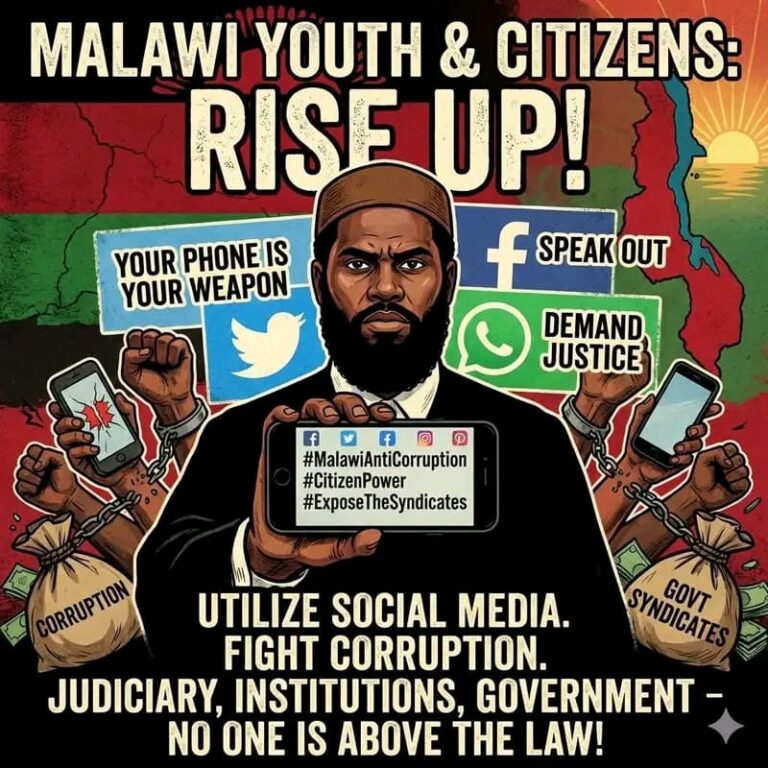
The poster, emblazoned with the words “Malawi Youth & Citizens: Rise Up!”, presents a powerful visual message that positions the mobile phone as a modern instrument of accountability and civic resistance.

At the centre of the artwork stands a resolute figure holding a smartphone displaying hashtags such as #MalawiAntiCorruption, #CitizenPower and #ExposeTheSyndicates, symbolising the growing role of online platforms in shaping public discourse.


The imagery further depicts broken chains and raised fists, conveying a sense of liberation and collective defiance against entrenched systems of corruption.

Accompanying slogans such as “Your Phone Is Your Weapon”, “Speak Out” and “Demand Justice” reinforce the message that ordinary citizens possess tools capable of challenging powerful interests.

The poster explicitly urges Malawians to utilise social media to fight corruption within the judiciary, public institutions and government structures, while asserting that no one is above the law.
Renowned Malawian writer and commentator Onjezani Kenani has expressed support for the idea behind the poster, lending intellectual and moral weight to the campaign’s underlying message.

Kenani’s endorsement signals a broader recognition among thought leaders that digital platforms have become crucial arenas for civic engagement and democratic accountability.

In recent years, social media has emerged as a powerful space in Malawi where citizens debate governance issues, expose alleged wrongdoing and mobilise public opinion.

The poster taps into this evolving reality by encouraging young people, who constitute the majority of the population, to transform their online presence into an organised force for transparency.

Its bold design, incorporating national colours and imagery associated with corruption and state power, underscores the urgency of confronting systemic malpractice.

By linking citizen action directly to institutions such as the judiciary and government, the message suggests that accountability must extend across all arms of the state.

The call for vigilance and exposure of syndicates reflects growing public frustration over high-profile corruption cases that have dominated national conversation.

Supporters of the initiative argue that digital activism offers a relatively accessible and immediate means of participation for young Malawians who may otherwise feel excluded from formal political processes.

Critics, however, may caution that online engagement must be complemented by responsible conduct, factual accuracy and adherence to the rule of law to avoid misinformation or undue harm.

Nevertheless, the central theme of the poster resonates strongly with the democratic principle that sovereignty ultimately rests with the people.

By encouraging citizens to speak out and demand justice, the campaign seeks to cultivate a culture of accountability grounded in collective responsibility.

The involvement and support of respected public intellectuals such as Kenani may further amplify the message and stimulate informed national dialogue.

As Malawi continues to grapple with governance challenges, initiatives that empower citizens to scrutinise authority are likely to remain at the forefront of public debate.

Whether this poster evolves into a broader movement or remains a symbolic statement, it has undeniably ignited conversation about the power of youth, technology and civic courage in the fight against corruption.
Communicators urged to share Gospel with clarity

0


By Burnett Munthali

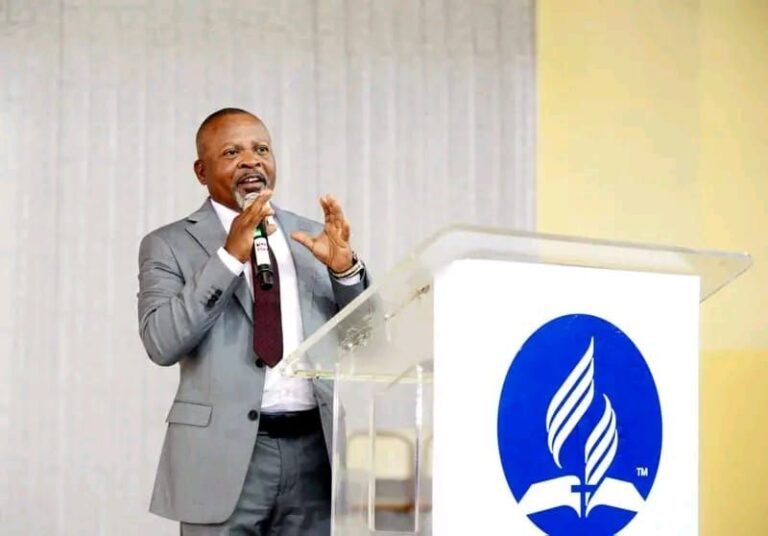
Former Vice-President Dr. Michael Usi has emphasized the importance of effective communication in evangelism at the Eighth Central Malawi Conference Communicators Conference today at Malawi Assemblies of God University in Lilongwe.

The conference, themed “Communicating Christ with clarity,” aimed to strengthen media evangelism and equip communicators with skills to share the gospel effectively.

Usi


Linda Kasambala, Malawi Union Conference Communications director, opened the gathering, urging delegates to approach communication as a duty and ministry.

Dr. Usi, the guest of honour, stressed that communicators must take their role seriously, handling their words with wisdom, responsibility, and integrity.

The three-day workshop features sessions on news writing, graphic design, and social media management, with outstanding communicators set to be recognised for their contributions.

Building resilience in Thyolo Thava: A call for support

0

By Burnett Munthali

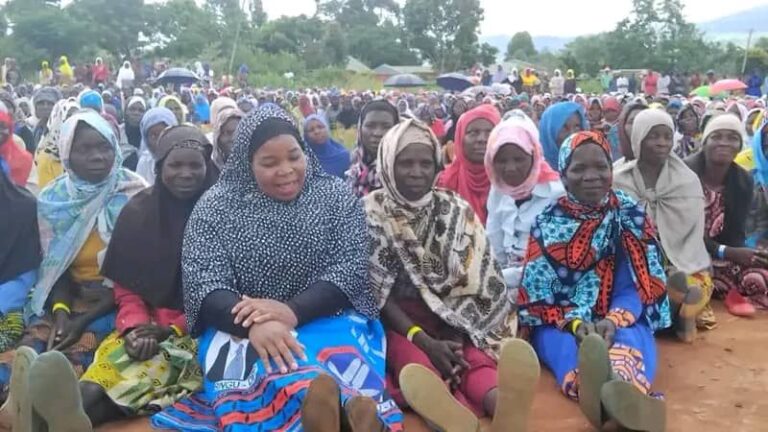
Member of Parliament for Thyolo Thava, Mary Navicha, has appealed to organisations to support people in her area in their winter cropping efforts, in a bid to build resilience among the communities.

Navicha made this appeal on the sidelines of food relief items distribution to 4000 families from Faizan Global Relief Foundation (FGRF) at Mtambanyama ground in Thyolo.

Navicha in Thyolo Thava


Navicha, who is also the Minister of Gender, Children, Disability and Social Welfare, explained that her area was hit hard by a dry spell, which made people food insecure.

The parliamentarian then hailed FGRF for timely assistance, acknowledging the organisation’s efforts in supporting the community.

FGRF Communications Director, Ibrahim Omar Mataya, said the organisation has lined up several initiatives to build resilient communities affected by the effects of climate change.

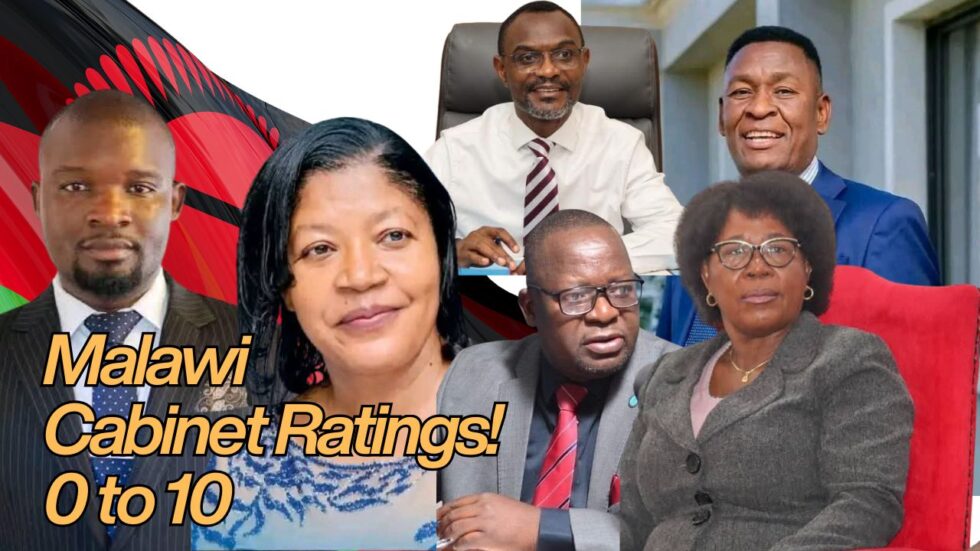
Malawi Cabinet Ratings: Who’s Failing and Who’s Flying?

0

By Durell Namasani

LILONGWE — Five months after President Peter Mutharika was sworn in for his second stint in office following his victory in the September 16, 2025, elections, the initial political honeymoon is well and truly over . In what was described as a “war-time cabinet” needed to rescue a struggling economy, expectations were sky-high . Now, as the government settles, a clear picture of who is delivering and who is struggling has emerged.

In an exclusive assessment, we evaluate the performance of the cabinet ministers rating them from 0 (lowest) to 10 (highest) based on visibility, policy impact, and delivery on their portfolio mandates.

The Top Brass: A Struggle for Relevance

At the apex of government, the performance of the two Vice Presidents tells a tale of contrasting challenges.

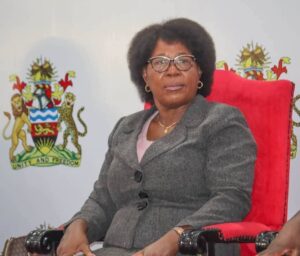
Right Honourable Dr. Jane Ansah, SC, JA (Vice President) is rated 4/10.

While highly qualified on paper, Dr. Ansah has struggled to carve out a political identity. Her tenure was immediately rocked by a public outcry over an expensive trip to the UK, which sources say was linked to her husband’s birthday. Sources within Capital Hill indicate she has since been stripped of many key duties. “It is difficult to rate her when her office is largely directed by the State President,” one political analyst noted. It is becoming clear that the former jurist is yet to master the inner politics of the DPP.

Honourable Enoch Kamzingeni Chihana (Second Vice President) is rated 5/10.

Chihana’s position remains a political anomaly. Appointed as a thank you to the Alliance for Democracy (AFORD) for joining the Blue Alliance with the DPP, his role appears ill-defined . “Nobody knows what he is doing,” remarked a political commentator. While he attempts to stay relevant, his public addresses have been criticized for divisive rhetoric. In a struggling economy, many now view the office of a Second Vice President as an unnecessary drain on public resources, a sentiment echoed by analysts who previously questioned the need for the role .


The High Flyers (7/10 – 8/10)

While many are struggling, a handful of ministers have stood out for their competence and steady hands.

Leading the pack is;

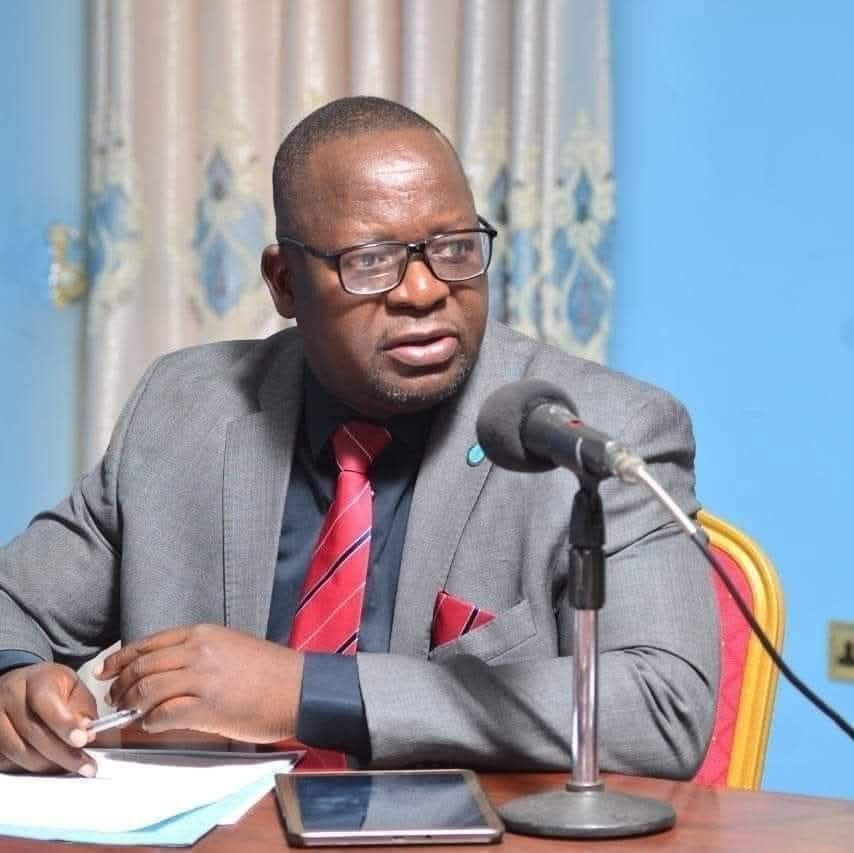
Honourable Dr. Ben Malunga Phiri (Local Government and Rural Development) with a rating of 8/10.

Described as “always available and ready to work,” he appears to have a clear vision for decentralisation and grassroots development. This is despite past controversy surrounding his appointment, given his previous arrest on corruption charges in 2021 .

Honourable Dr. Jean Mathanga (Natural Resources, Energy and Mining) also scores an impressive 8/10.

She has been highly active since assuming the role. The government credits her with easing fuel problems, and she has been at the forefront of sorting out Malawi’s mining issues. However, the persistent electricity problems remain a major challenge that needs urgent work.

Honourable Joseph Mwanamvekha (Finance) and Honourable Roza Mbilizi Fachi (Agriculture) both secure a solid 7/10.

Tasked with the rescue of the Malawi economy, Mwanamvekha’s strategy looks promising so far, even if his focus on taxation is unpopular with the populace. He is experienced and has a vast network, though his reappointment raised eyebrows among donors due to past abuse of office charges . Meanwhile, Fachi has settled into the Agriculture ministry extremely well. She “knows what she is doing” and is widely regarded as one of the best-performing ministers in a critical sector.

Honourable Bright Msaka (Education) and Honourable George Chaponda (Foreign Affairs) also rate 7/10.

Msaka is doing well, bringing his vast experience in running government to the education sector. Chaponda, a “seasoned diplomat,” knows the ins and outs of international cooperation. However, his return to the cabinet continues to stoke fears among international partners regarding impunity, following his dismissal during the “maizegate” scandal .

The Mediocre Majority (4/10 – 6/10)

The bulk of the cabinet falls into this category, showing glimpses of competence but hampered by controversies, lack of visibility, or political overreach.

Honourable Peter Mukhito (Homeland Security) gets a 5/10.

Expectations were high given his background as former Inspector General of Police. While he has sorted out the chaotic passport issues, high-profile cases—such as the killing of a medical doctor in Blantyre and the abduction of a businessperson—remain unresolved. Furthermore, political arrests of opposition figures have raised questions of political persecution, a charge also levelled against his deputy.

Honourable Norman Chisale (Deputy Minister, Homeland Security) also scores 5/10.

The President’s former bodyguard is accused of trying to juggle too many roles. While he has assisted in the passport crisis, his military background has not yet translated into visible security improvements. Critics accuse him of focusing on targeting opposition leaders rather than genuine criminals.

Honourable Shadrick Namalomba (Information) is rated 5/10.

Once a firebrand in opposition, he has lost some of his spark now that he is in government. While he is available to the media and responds to events on time, the promised reforms at the Malawi Broadcasting Corporation (MBC) are yet to materialize .

Honourable Madalitso Baloyi (Health) gets a 6/10.

A rare technocratic appointment, she has done well so far . However, she faces enormous headwinds, including a critical shortage of drugs in hospitals and the thorny issue of doctors who own private hospitals while working in public service.

Honourable Joel Chigona (Labour) gets a 6/10.

A known grafter, he is described as a man of action who talks less. However, he has been too quiet, failing to highlight his work in a ministry that carries heavy expectations. He is inevitably compared to his predecessors such as, Vitumbiko Mumba, who set a high bar for visibility and delivery in the Labour portfolio.

Honourable Alfred Ruwan Gangata (Sports) is rated 3/10.

A victim of constant reshuffling, he has moved from Minister of State, to Natural Resources, and now to Sports within five months. While vital for DPP dominance in the Central Region, he is a political novice who has a lot to learn before he self-destructs .

Honourable Feston Kaupa (Transport) and Honourable Chimwemwe Chipungu (Lands) languish at the bottom with 4/10 and 3/10 respectively.

Kaupa is virtually unknown to the public, and crucial decisions on the state of Malawi’s roads are pending. Chipungu, moved from Defence, has not been heard of in terms of land reforms.

Outlook

President Mutharika had previously warned his team that there is “no time to feast,” declaring war on lazy and corrupt ministers . With this mixed report card, it remains to be seen if the underperformers will be given time to improve or if the axe will fall in the next reshuffle. For now, Malawians are watching, and the verdict is clear: loyalty alone will not fix the economy.

Namalomba
Jean Mathanga
Jane Ansah
Norman Chisale
Alfred Gangata
Dr Ben Phiri

The Fall of a Firebrand: Is Kalindo Losing His Bite?

By Durell Namasani


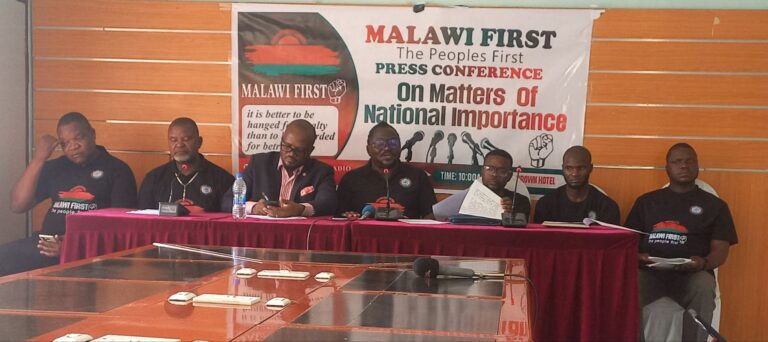
There was a time when Bon Kalindo’s voice was the thunder that preceded the rain of change. When he spoke, the corridors of power trembled, and the common man listened, believing that here, at last, was a leader who understood their pain. But if this week’s press conference in Lilongwe was any indication, that thunder has faded to a whimper, and the firebrand has been reduced to a damp squib.

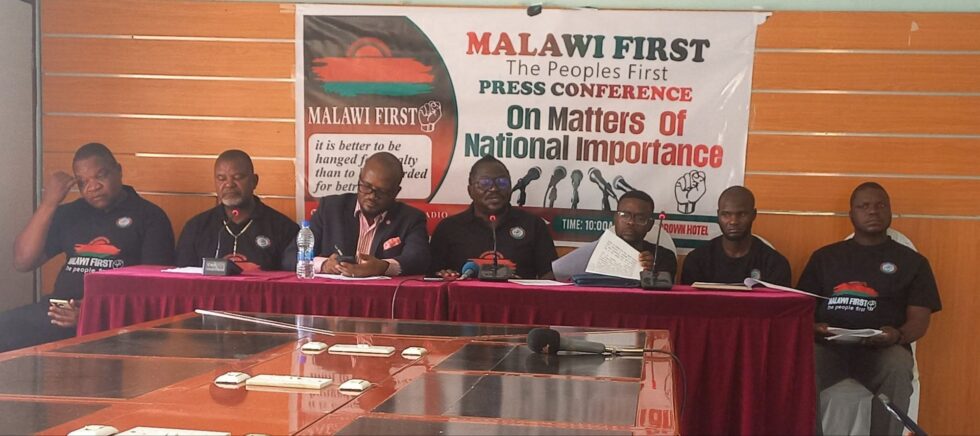
The recent show of solidarity with government lawyer Frank Mbeta—dismissing corruption allegations against him as “unfounded”—was less a defense of justice and more a theatrical display of desperation. It laid bare a truth that many have long suspected: Kalindo and his Malawi First movement are no longer driven by values, but by the winds of political convenience. They swerve like chaff in the wind, directionless and easily scattered.

Let us be clear. The fight against corruption is sacred. It requires due process, and as the movement stated, evidence should indeed go to the Anti-Corruption Bureau (ACB). However, context is everything. For years, Kalindo built his brand on the premise of being the thorn in the side of the establishment. He was the voice for the voiceless, the defender of the oppressed against the powerful. To see him now deploying his platform to shield a government official—amidst a sea of public anger—smells less of principle and more of patronage.

Kalindo and Malawi First


It raises an uncomfortable question: Who are the real masters now?

The answer, it seems to many observers, is no longer the poor Malawians who once packed the streets. The optics suggest that Kalindo has traded the megaphone of the people for the whisper of the powerful elite. He appears to be operating as a mouthpiece for certain political interests, rushing to the defense of connected individuals while the everyday citizen continues to suffer under the weight of the very corruption he claims to fight.

This disconnect was not lost on the public. While the press conference was ongoing, social media—the very space Kambanje criticized—erupted with the fury of a betrayed populace. The comments were not just critical; they were eulogies for a movement that many believe is dead.

Brove Mkandawile captured the sentiment of disillusionment perfectly, writing: “Musogoleri omenyera ufulu, ufulu wake uti wadziko kapena wachipani. Kalindo ndiwachipani osati kuti azinamizira kuti ndimenyera ma ufulu wa anthu mu dziko muno.” (Translation: “A leader fighting for freedom, which freedom is it? National or party freedom? Kalindo is a party agent, not someone pretending to fight for people’s rights in this country.”)

This is the crux of the fall. When a leader is perceived as partisan, their moral authority evaporates. Kalindo is no longer seen as a unifier against a common enemy (corruption), but as a factional player protecting his own.

Then there was the biting commentary from Eduardo Manda, who dismissed Kalindo’s relevance entirely while warning of the dangers of being out of touch. Manda wrote: “Uyu siwomenyeratu ufulu koma ndiwomenyera mwayi wa dpp palibepo chanzeru chomwe angauze dziko anthu akuphedwa iyeyo a kukamba zake mwina akazagwirapo mubare wake ndipamene azaziwe kuti kunjadi kuno kuli palanaweeee ya tchakinori.” (Translation: “This one is not fighting for freedom, but for the interests of the DPP. He has nothing sensible to tell the nation. People are being killed, and he is busy talking his nonsense. Maybe when they touch his relative, that’s when he will know that this place is tough… ya tchakinori.”)


This is the tragedy of the firebrand who loses his bite. He becomes just another politician. The values of integrity, accountability, and justice that he once championed are now just slogans to be deployed when convenient and discarded when they conflict with the interests of his “masters.”

Kalindo called on the ACB to prove its credibility. Perhaps he should look inward. The public is demanding that he prove his. If he continues to swerve with the political wind, he will find that the people he left behind will eventually stop calling his name. And when that happens, the “firebrand” will simply be a man holding a microphone in an empty room, wondering where the crowd went.