Wednesday, December 24, 2025
No menu items!
spot_img
Home Blog Page 527

Former DPP Secretary General Grezelda Jeffrey eyes Nkhotakota-Chia constituency seat on MCP ticket

0


By Twink Jones Gadama

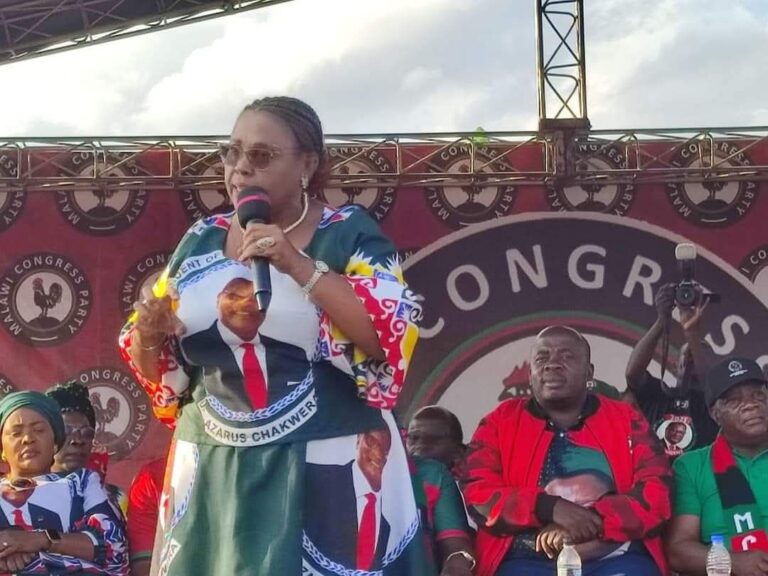
Former Democratic Progressive Party (DPP) Secretary General Grezelda Jeffrey has expressed interest in contesting the Malawi Congress Party (MCP) primaries as a Member of Parliament (MP) for the Nkhotakota-Chia constituency.

Jeffrey, who recently defected to the MCP, made her intentions official by availing herself at the party’s headquarters on Monday.

She will face competition from other aspirants, including Olivia Mchanju Liwewe, a former Malawi Electoral Commission (MEC) commissioner, Ausmane Chunga, and Brainax Kaise, the current MP for the area.

Gaziel Chimzere, the current councillor for the area, has also joined the race and will compete in the party’s primaries.

Some of the contestants have pledged to concede defeat and support the winner if the elections are conducted in a free and fair manner.
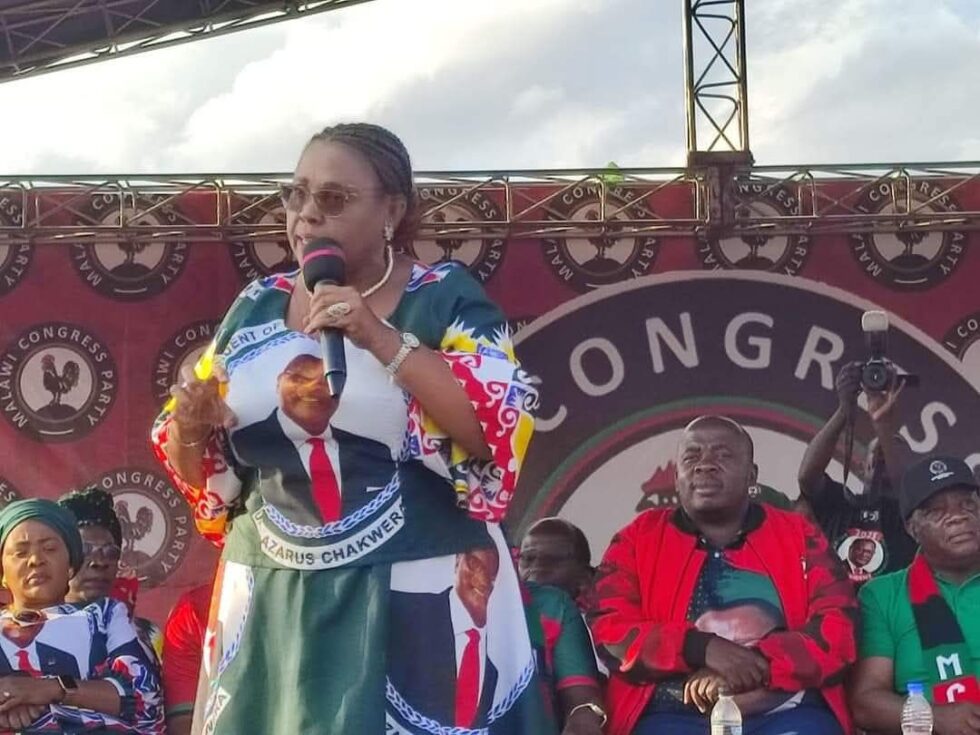
Jeffrey

In a related development, Peter Mazizi, the MP for Nkhotakota Central, also appeared before the party’s headquarters and is expected to compete with Susan Namangale Kakota.

The MCP’s primaries are expected to be highly contested, with several aspirants vying for the party’s ticket.

The outcome of the primaries will determine who will represent the party in the upcoming general elections.

Meanwhile, Zeliya Chakale, the former DPP vice president for the central region, and Calista Chapola, the former first lady to the late Bingu wa Mutharika, both of whom defected to the MCP, had expressed interest in contesting the party’s primaries but were ultimately defeated.

This development highlights the competitive nature of the MCP’s primaries, where several candidates are vying for a limited number of seats.

The country is preparing for the 2025 general elections, which are expected to be highly competitive.

Several parties and independent candidates are vying for seats in the National Assembly.

The MCP, which has been in power since 2020, is expected to face stiff competition from opposition parties.

The party’s ability to retain its seats will depend on several factors, including the popularity of its candidates and the party’s performance in government.

As the country gears up for the elections, the MCP’s primaries are expected to be closely watched.

The outcome of the primaries will have significant implications for the party’s chances in the general elections.
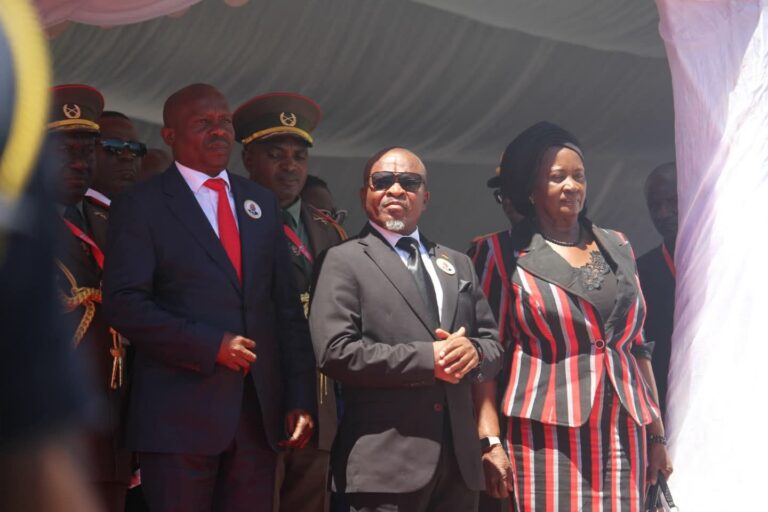
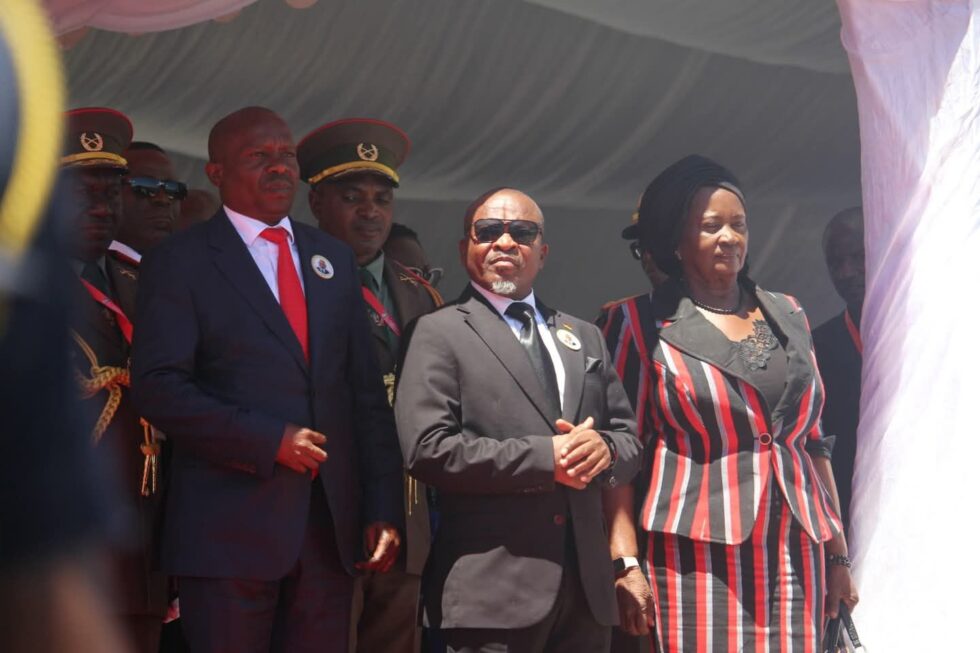
Vice President Dr. Michael Usi returns from Namibia after attending Dr. Sam Nujoma’s Funeral

0

By Burnett Munthali

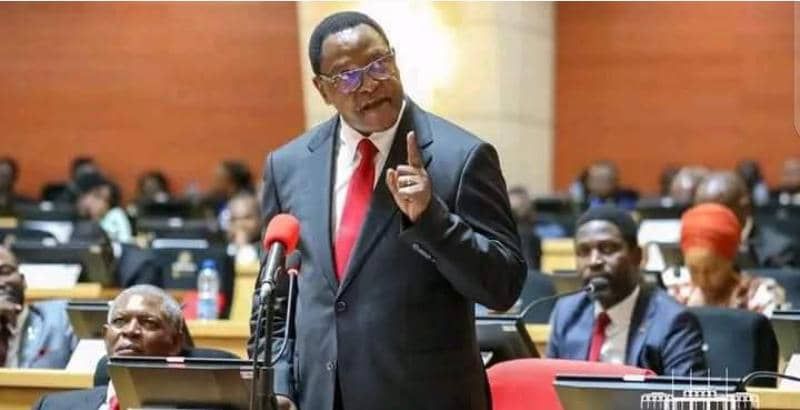
Vice President Dr. Michael Usi has returned to Malawi after representing President Dr. Lazarus Chakwera at the funeral of Dr. Sam Nujoma, the founding father and first President of Namibia.

His arrival at Kamuzu International Airport (KIA) in Lilongwe marked the conclusion of his official mission to Namibia, where he joined other African leaders in paying their final respects to the revered statesman.

The plane carrying Dr. Usi touched down at Kamuzu International Airport at exactly 3:53 pm.

As the aircraft taxied to a stop, government and party officials gathered on the tarmac in anticipation of his arrival.

Usi

A formal welcoming ceremony awaited him, with key dignitaries from various government departments and political circles present to receive him.

Dr. Usi, upon stepping out of the plane, acknowledged the warm reception with a solemn expression, reflecting the significance of the occasion he had just attended.

His visit to Namibia was not only a diplomatic engagement but also a tribute to a man whose contributions to Africa’s liberation struggle continue to inspire many.

Dr. Sam Nujoma, who led Namibia to independence in 1990, remains a towering figure in African history for his relentless fight against colonial rule and his role in shaping the country’s destiny.

In his brief remarks at the airport, Dr. Usi reaffirmed Malawi’s deep appreciation for Dr. Nujoma’s legacy.

He emphasized that Dr. Nujoma’s contributions to the liberation struggle and African unity will forever be remembered.

His words carried a message of solidarity, recognizing that the late Namibian leader’s vision extended beyond his country and resonated with the entire African continent.

Dr. Usi highlighted the historical ties between Malawi and Namibia, noting that Malawi stood with Namibia in its quest for independence, and the two nations continue to share strong diplomatic and economic relations.

The Vice President also acknowledged the presence of other African leaders at the funeral, which underscored the collective respect and admiration that Dr. Nujoma commanded across the continent.

He noted that Dr. Nujoma’s unwavering commitment to justice and self-determination remains a guiding principle for many African nations still navigating the challenges of governance and development.

Dr. Usi’s trip to Namibia demonstrated Malawi’s commitment to maintaining its close ties with regional allies and honoring those who played a pivotal role in shaping Africa’s history.

His presence at the funeral was a testament to Malawi’s recognition of the sacrifices made by liberation heroes who fought against colonial oppression.

As he concluded his remarks, Dr. Usi urged Malawians to draw inspiration from leaders like Dr. Nujoma, who dedicated their lives to the advancement of their people.

He stated that unity, resilience, and visionary leadership are key ingredients in building a prosperous nation, just as they were during Africa’s struggle for independence.

The Vice President then proceeded to his official vehicle, accompanied by senior government officials who had come to receive him.

His return from Namibia marked the end of a significant international engagement, reinforcing Malawi’s role in regional diplomacy and historical remembrance.

As he departed from Kamuzu International Airport, the message of Dr. Sam Nujoma’s enduring legacy lingered—a reminder of the struggles that shaped modern Africa and the responsibility of current leaders to uphold those ideals.

Casket carrying Nujoma remains

Shortage of learning materials disrupts education in Lutchenza, Chiradzulu

0

By Burnett Munthali

The shortage of learning materials among students in Lutchenza, Chiradzulu, has significantly disrupted education in the area.

According to Roland Pakula, the education officer for the region, the lack of essential learning materials has forced many students, especially those from poor families, to struggle in class due to inadequate resources.

Pakula revealed to Zodiak Online that the situation has led to an increase in absenteeism, as students without the necessary learning materials often skip lessons.


He further explained that some students have completely dropped out of school because they lack the basic items required for their studies.

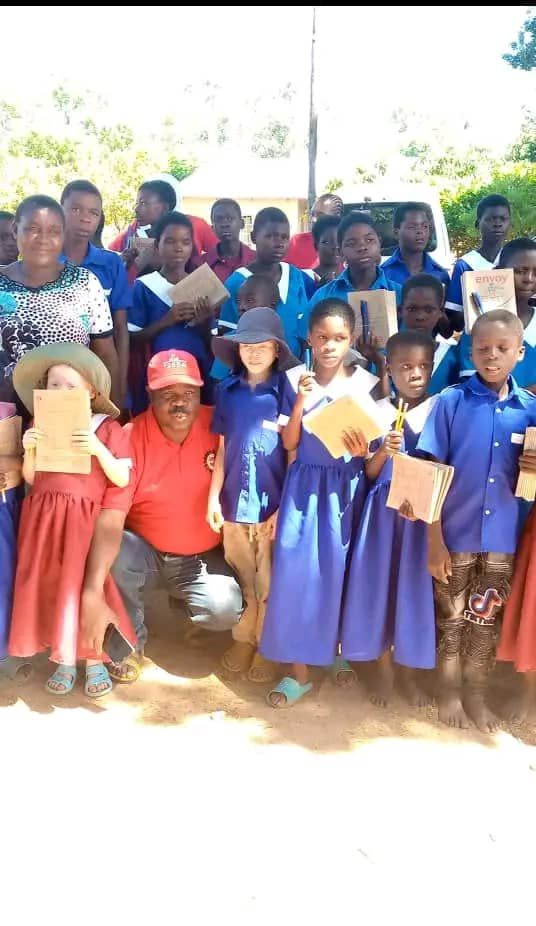
This issue came to light today when a concerned community group called Friends of Nkalo donated various school supplies to assist struggling learners in the region.

The donation, worth K1.5 million, included exercise books, writing materials, school uniforms, and other essential items.

A total of 120 students benefited from this initiative, bringing hope to many families facing economic hardships.

Speaking to reporters, the chairperson of Friends of Nkalo, Mofati Banda, explained that the group decided to provide the support after noticing a decline in the number of students passing their Standard 8 final exams.

Banda emphasized that many students had been failing to perform well due to the lack of proper learning materials, which affected their ability to concentrate and complete assignments.

The Litchenza education zone consists of 12 schools, with a student population exceeding 14,000.

The ongoing shortage of resources in these schools remains a major challenge, posing a threat to the academic progress of learners in the area.

Education stakeholders have since called for more interventions to ensure that all students have access to the necessary materials to support their education.

Parents and teachers in the region have also expressed concern over the situation, urging the government and other well-wishers to step in and address the crisis.

Despite the challenges, the donation from Friends of Nkalo has provided temporary relief, offering students a chance to continue their education with improved support.

However, long-term solutions are needed to ensure that every student in the Litchenza education zone has the tools required for effective learning.

Chakwera’s intervention sends parallel market rates tumbling

0

By Burnett Munthali

A major shift has taken place in Malawi’s foreign exchange (forex) market following government interventions led by President Lazarus Chakwera.

The interventions have significantly impacted the black market trade, which had seen the parallel market exchange rate soaring to unprecedented levels.

At its peak, the black market rate reached an all-time high of K5,000 per US dollar, causing widespread concern among businesses and consumers.


However, within a short period, the rate has dropped drastically to around K3,000 per US dollar.

This sudden decline signals a shift in market dynamics, largely influenced by the government’s efforts to stabilize the forex supply and curb illegal trading.

Authorities have been implementing measures aimed at increasing foreign currency inflows while cracking down on illegal forex dealings.

One of the key strategies has been stricter enforcement against unlicensed forex traders who had been manipulating exchange rates to maximize profits.

The Reserve Bank of Malawi (RBM) has also played a critical role by introducing policies to strengthen the official market and discourage reliance on the black market.

Increased forex availability through formal channels has reduced dependence on the parallel market, forcing illegal traders to lower their rates.

Businesses that were struggling due to high forex costs have welcomed the decline, as it eases import expenses and stabilizes prices of essential goods.

Consumers, too, are expected to benefit from the reduced exchange rate, as it helps curb inflationary pressures caused by a weak kwacha.

Economic experts believe that the sustained implementation of these measures could further stabilize the currency and restore confidence in the formal forex market.

While the drop in parallel market rates is a positive sign, challenges remain in ensuring long-term forex stability and adequate dollar supply.

Government officials have urged the public and businesses to transact through official banking channels to avoid fueling illegal forex activities.

The Malawian economy has been grappling with forex shortages, prompting concerns about external trade imbalances and reduced investor confidence.

President Chakwera’s administration has reaffirmed its commitment to addressing these issues through structural economic reforms and improved foreign investment strategies.

As the country continues to navigate forex challenges, the recent developments in the exchange rate reflect a step towards restoring economic stability.

Financial analysts will be closely monitoring the situation to assess whether the current trend is sustainable or if further interventions are required.

For now, the significant drop in the parallel market exchange rate offers a glimmer of hope for businesses, consumers, and policymakers alike.

Strategies for ensuring foreign exchange availability: The challenge for Malawi

By Burnett Munthali

Foreign exchange (forex) availability is critical for a country’s economic stability, facilitating international trade, investment, and debt repayment.

Many nations struggle with forex shortages, which can lead to inflation, currency depreciation, and difficulties in importing essential goods.

Malawi, like many developing countries, faces significant challenges in maintaining sufficient forex reserves due to structural economic weaknesses.


One of the most effective ways to increase forex availability is by boosting exports, as a strong export sector generates foreign currency inflows.

Malawi relies heavily on agricultural exports such as tobacco, tea, and sugar, but these commodities are vulnerable to price fluctuations in global markets.

To reduce dependency on a few commodities, Malawi must diversify its export base by investing in manufacturing, mining, and value-added industries.

Another strategy to ensure forex availability is attracting foreign direct investment (FDI), which brings in foreign currency and promotes economic growth.

Governments can encourage FDI by creating a stable macroeconomic environment, strengthening property rights, and simplifying business regulations.

Remittances from Malawians working abroad also serve as an important source of forex, and policies should be implemented to encourage formal remittance channels.

To reduce forex outflows, countries must limit excessive imports and promote local production of essential goods.

Developing strong domestic industries can reduce dependency on imported goods and preserve forex reserves.

Tourism is another major forex earner for many countries, and Malawi can capitalize on this by improving infrastructure and marketing its unique attractions.

A well-regulated financial system is crucial in ensuring forex stability by preventing illegal forex trading and speculation that weakens the local currency.

Governments should strengthen central bank policies to manage forex reserves efficiently and prevent artificial shortages in the market.

Engaging in bilateral and multilateral trade agreements can also help stabilize forex reserves by opening up new markets and securing trade deals.

International financial institutions such as the International Monetary Fund (IMF) and World Bank can provide forex support programs to struggling economies.

Despite these potential solutions, Malawi faces unique challenges, including high debt levels, corruption, and weak economic diversification.

To overcome these obstacles, strong governance, transparency, and effective economic policies must be implemented.

A long-term forex strategy that prioritizes export growth, investment promotion, and financial prudence can help Malawi achieve forex stability.

By adopting sustainable forex policies, Malawi can strengthen its economy, enhance global trade participation, and secure a more stable financial future.