Tuesday, April 7, 2026
No menu items!
spot_img
Home Blog Page 54

NBM plc gives 1,000 bags of maize relief in Zomba

0

By Linda Kwanjana

National Bank of Malawi (NBM) plc has handed over 1,000 bags of maize to the Department of Disaster Management Affairs (DoDMA) in support of the National Food Relief Initiative for people affected by hunger in Zomba.

The handover ceremony took place at St. Anthony in Traditional Authority Mlumbe as part of NBM plc’s K300 million commitment made in January in response to President Peter Mutharika’s declaration of the State of Disaster caused by prolonged dry spell in 11 districts.

Speaking after the donation on Thursday, NBM plc’s Chief Operations Officer, Masauko Katsala, said the institution felt duty-bound to respond to the national appeal as a responsible corporate citizen.
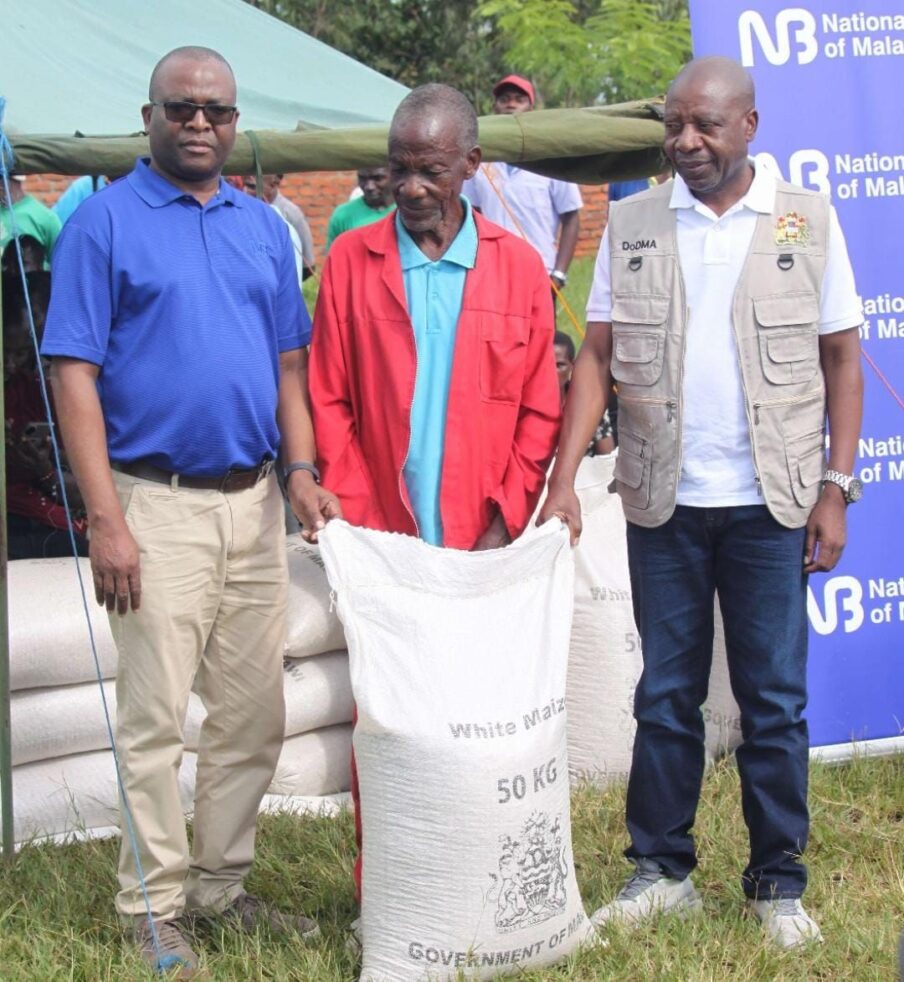
Masauko Katsala handing over the donations


“As the ‘Bank of the Nation’, we felt compelled to respond when the appeal was made. Our customers are Malawians, and we operate within Malawi. Supporting this initiative is part of our commitment to giving back to the communities we serve and contributing to national development,” said Katsala.

He added that the K300 million contribution forms part of the Bank’s broader culture of corporate responsibility.

“We have pledged a donation of K300 million, which has been incorporated into the budget presented today. At NBM plc, responding to such appeals is not a one-off activity; it is part of our culture and long-standing commitment to supporting the communities where we operate. Giving back is embedded in who we are as a Bank,” said Katsala.

Principal Secretary for Administration in the Office of the President and Cabinet (OPC), Rashid Ntelera, commended the NBM plc for the timely intervention, noting that the donation will significantly support affected households.

“So far, the progress has been very good. We requested a full support package amounting to K7.1 billion. What we have received so far, including the assistance delivered today and the support we received earlier in Blantyre in February, brings us close to that figure, and it may even end up being less than initially projected. This means that the response has exceeded what we originally asked for,” said Ntelera.

Zomba District Commissioner Musandide Misinjo said the prolonged dry spells have affected the farmers who are now seeking help to re-establish themselves.

“Due to these conditions, many farmers have uprooted their failed crops and are now replanting drought-resilient varieties. Government, together with its partners, has intervened by distributing sweet potato vines and cassava cuttings to help households cope and rebuild food security,” said Misinjo.

He revealed that about 8,145 families across the district have been affected by hunger, including approximately 3,000 from the area of Senior Chief Mlumbe alone.

One of the beneficiaries, Joyce Mwanza, expressed gratitude for the support, saying the maize will bring immediate relief to struggling households.

“The maize we have received will help us feed our children and bring relief to our households. We are truly grateful for the support National Bank has given us today,” said Mwanza.
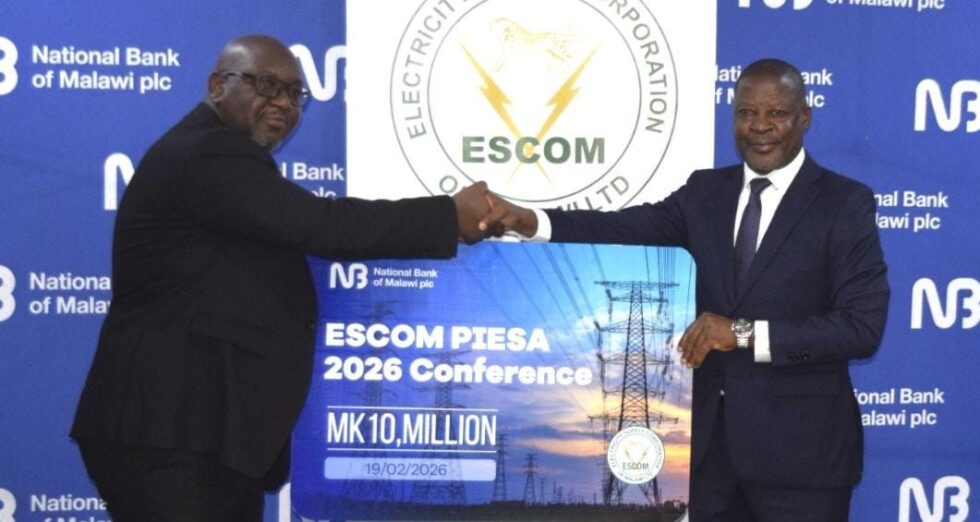
NBM plc supports ESCOM PIESA conference with K10 million

0

By Linda Kwanjana

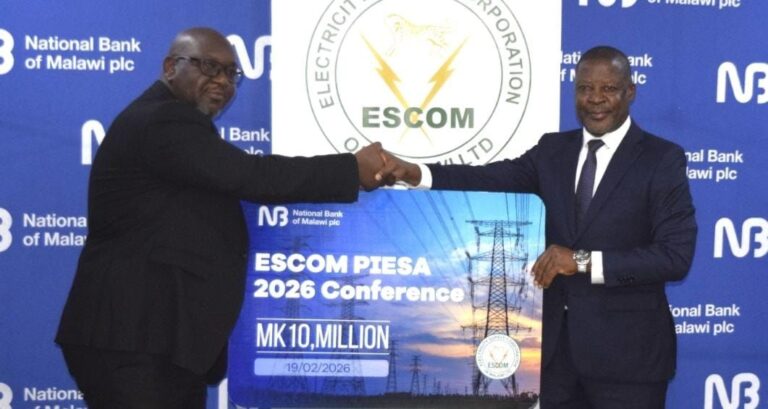
National Bank of Malawi (NBM) plc has donated K10 million to the Electricity Supply Corporation of Malawi (ESCOM) in support of their upcoming Power Institute for East and Southern Africa (PIESA) Conference in Lilongwe.

The conference is scheduled to take place at Bingu International Conference Centre (BICC) in Lilongwe from February 22 to 24, bringing together power utilities, energy leaders, and experts from Eastern and Southern Africa.


Speaking during the cheque presentation event on Tuesday, NBM plc Head of Corporate Banking, William Chatsala, described the sponsorship as strategic, emphasising the critical role electricity plays in national development.

“Power or energy is an enabler. For this country to develop, we need the electricity ecosystem to function effectively. As NBM plc, we felt it was necessary to support the conference because of its strategic nature,” said Chatsala.

He added that the Bank expects the conference to create a platform where Malawian engineers, policymakers, and other stakeholders will engage with regional counterparts to discuss innovative solutions aimed at driving economic growth.

Chatsala further stressed the importance of access to capital within the energy sector, describing it as capital-intensive.

“The energy sector requires significant investment in equipment procurement and continuous upgrades. Banks like NBM plc play a role in ensuring capital is made available so that the country can grow and strengthen its energy ecosystem,” he said.

ESCOM Director of Finance, Brian Ndisale, welcomed the donation by NBM plc, saying it has come at a crucial time when the power utility is facing financial challenges.

“Among the key issues to be discussed during the conference are vandalism affecting energy infrastructure in Malawi and neighbouring countries, as well as emerging technologies within the power sector,” he said.

He added that the conference is expected to strengthen regional cooperation and generate practical solutions to improve energy sustainability and reliability in Malawi and beyond.

“When we collaborate, we get to understand what is happening in Eastern Africa and in the Southern Africa Power Pool, and we can come up with solutions that will assist all of us,” he said.

ESCOM says it expects about 90 delegates from 25 countries to attend the conference.

Unlocking Malawi’s potential: RBM urges banks to fuel economic growth

0


By Burnett Munthali

Reserve Bank of Malawi (RBM) Governor George Partridge has called on commercial banks to step up their role in stimulating economic growth by channeling financing into productive sectors.

Speaking during his inaugural engagement with chief executives under the Bankers Association of Malawi (BAM), Partridge reaffirmed RBM’s commitment to safeguarding financial stability while promoting a market-led economy.

The RBM Chief further urged banks to move beyond reliance on government securities and instead design products tailored to private sector needs, a shift that could unlock new opportunities for businesses and individuals alike.

Partridge


BAM President, Philip Madinga, welcomed the call, assuring RBM of the association’s support in advancing recovery and growth, and highlighting opportunities for banks to finance infrastructure projects.

Madinga underscored the importance of clear communication on policy reforms to avoid market uncertainty, a crucial step in building trust and confidence in the financial sector.

RBM and BAM pledged to deepen collaboration, with both institutions committing to sustained dialogue aimed at strengthening the financial sector and driving broader economic progress.

Doctors Challenge Mutharika’s Ban on Private Practice Ownership

0


By Rahim Abdul

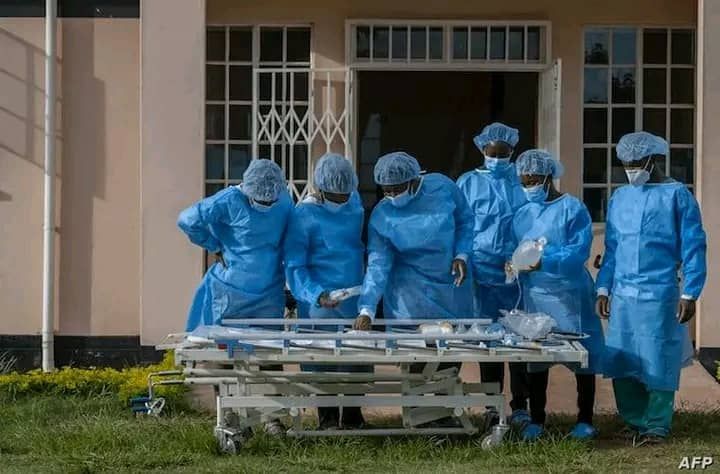
The Society of Medical Doctors in Malawi (SMDM) has strongly opposed a directive issued by President Peter Mutharika banning public health workers from owning private clinics or pharmacies, describing the move as a violation of their constitutional right to engage in legitimate business.

The directive, announced on February 16, 2026, is part of government efforts to combat corruption and drug shortages in public hospitals. However, doctors argue that the decision could create more problems than it solves.

Speaking on behalf of the association, Dr. Steve Mlangiza warned that the restriction risks discouraging highly skilled professionals from continuing to serve in public hospitals.

He said many government health facilities are already grappling with severe staff shortages, with doctors working long hours under intense pressure to meet overwhelming patient demand.


According to Mlangiza, preventing doctors from supplementing their income through private ventures may push some to resign from public service altogether in search of better financial stability.

He cautioned that such an exodus would disproportionately affect vulnerable citizens who depend on free or subsidized medical care in government hospitals.

The doctors’ body further argued that tackling theft of medicines and corruption requires a deeper examination of systemic weaknesses rather than focusing solely on health workers.

Mlangiza emphasized that corruption in hospitals cannot be addressed through blanket bans alone but through stronger accountability systems and improved oversight mechanisms.

Despite their objections, the association acknowledged the government’s commitment to fighting corruption in the health sector.

They commended authorities for recognizing the urgency of addressing drug shortages and mismanagement in public facilities.

However, the group urged the government to ensure that anti corruption measures are fair, balanced and applied consistently across all sectors of public service.

They also called for dialogue between policymakers and medical professionals to find sustainable solutions that protect both public resources and workers’ rights.

The directive has since sparked widespread debate within the health community, with many observers questioning whether the policy will strengthen or further strain Malawi’s fragile healthcare system.

Analysis of Mutharika’s Vision: Industrializing Malawi for a Brighter Future


By Burnett Munthali

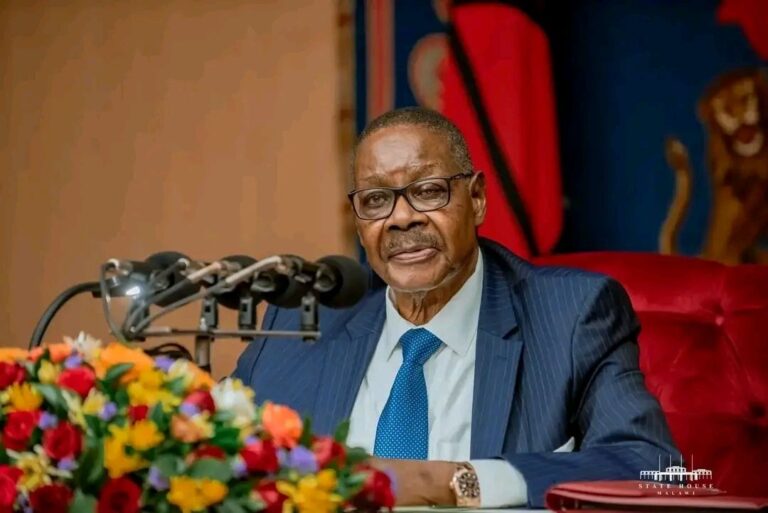
President Mutharika’s State of the Nation Address (SONA) outlines a bold plan to transform Malawi’s economy from an importing to a producing and exporting one.

The strategy centers around Special Economic Zones (SEZs) in Magwero, Chigumula, Matindi, and Dunduzu, aiming to attract investment, create jobs, and stimulate growth in manufacturing, agro-processing, and logistics.

The SEZs will offer a conducive business environment, leveraging Malawi’s strategic location, natural resources, and competitive labor costs.

Mutharika


To support this, the government will expand support for Small and Medium Enterprises (SMEs) and cooperatives, providing access to finance, business development services, and market linkages.

Energy generation is critical, with a target of 1,000 megawatts by 2030.

Recent additions in solar and biomass energy mark progress, and the government is exploring other renewable sources.

The doubling of fuel storage capacity will strengthen supply stability, reducing transportation costs and making Malawian products more competitive.

Nationwide road rehabilitation has resumed, with toll revenues ring-fenced for maintenance, improving the country’s road network.

Malawi Airlines will expand its fleet from three to ten aircraft, widening international connectivity and trade access.

The government’s focus on industrialization and infrastructure development is expected to drive growth, create jobs, and reduce poverty.

Addressing infrastructure gaps and promoting value-added production can move Malawi up the value chain.

The African Development Bank (AfDB) estimates Malawi’s infrastructure deficit at 10% of GDP, highlighting the need for investment.

The government’s focus on infrastructure is a welcome move, expected to positively impact economic growth.

With a clear vision and commitment to reform, Malawi can achieve its economic aspirations and improve citizens’ lives.

Mutharika’s strategy has the potential to transform Malawi’s economy, making it more competitive, diversified, and resilient.