Tuesday, December 23, 2025
No menu items!
spot_img
Home Blog Page 543

Kaunjika traders face uncertainty as government revokes licenses

0


By Twink Jones Gadama

The Ministry of Trade and Industry has announced the immediate revocation of all business licenses for kaunjika wholesalers and retailers.

The decision, which was made public through a press release, has sent shockwaves through the business community, leaving many traders wondering about their future.

According to the press release, the government has revoked the licenses due to unspecified reasons, and all kaunjika traders are required to reapply for new licenses.



The Ministry has warned that anyone found operating without a valid license will be prosecuted according to the law.

The decision has raised concerns among traders, who are worried about the impact on their livelihoods.

Many kaunjika traders rely on their businesses to support their families, and the sudden revocation of their licenses has left them facing uncertainty.

“This is a big blow to us,” said one trader, who wished to remain anonymous. “We were not given any notice or explanation for the revocation of our licenses. We are worried about how we will survive.”

The Ministry of Trade and Industry has emphasized that the decision to revoke the licenses was made to ensure compliance with the law and to protect the interests of consumers.

However, traders are skeptical about the government’s motives.

“We have been operating our businesses for years without any issues,” said another trader. “We pay our taxes and follow all the regulations. Why has the government suddenly decided to revoke our licenses?”

The government’s decision has also raised questions about the impact on the economy.

Kaunjika traders play a significant role in the informal sector, providing employment and income opportunities for many people.

“The revocation of licenses will not only affect the traders but also the people who depend on them for employment and income,” said Aoja Mutepati an economist. “The government needs to consider the broader implications of its decision and find ways to support the affected traders.”

In the meantime, kaunjika traders are advised to comply with the government’s directive and reapply for new licenses.

The Ministry of Trade and Industry has promised to provide guidance and support to traders during the reapplication process.

As the situation unfolds, one thing is clear: the government’s decision to revoke the licenses of kaunjika traders has sent shockwaves through the business community, and it remains to be seen how the situation will be resolved.

The Ministry of Trade and Industry’s vision is to make Malawi a globally competitive export-oriented economy, generating higher and sustainable livelihoods through trade.

However, the decision to revoke the licenses of kaunjika traders has raised questions about the government’s commitment to supporting small-scale traders and the informal sector.

Only time will tell if the government’s decision will achieve its intended goals or if it will have unintended consequences for the economy and the people of Malawi.
Lifa Saidi unveils new nasheed

0

By Shaffie A Mtambo

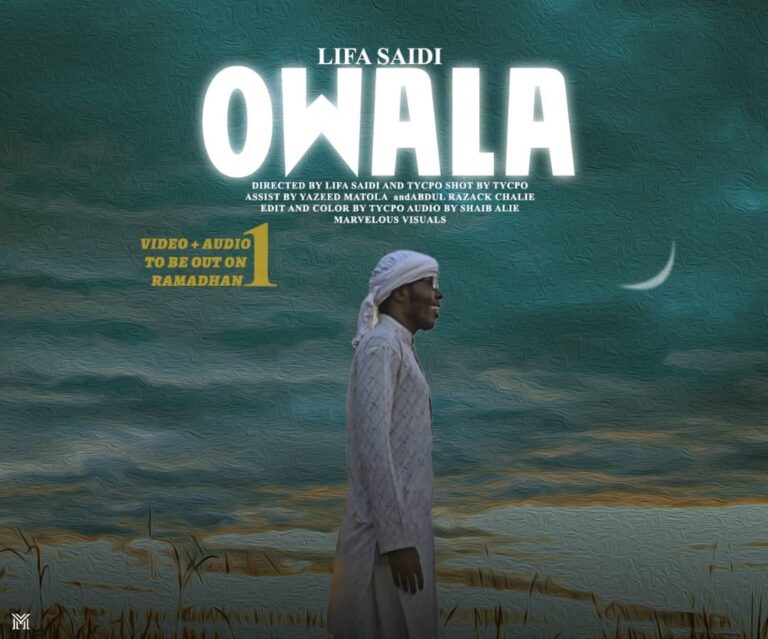
Malawian nasheed artist Lifa Saidi is set to release his first nasheed(song) of the year 2025.

The highly-anticipated nasheed, titled Owala, is scheduled to drop on the first day of Ramadan.


In an exclusive interview with 247 Malawi News says he  revealed that Owala song will be a dual-release, featuring both an audio and video component.

“The nasheed is designed to convey a powerful message that resonates with listeners of all ages and uplift both young and old”said Saidi.

Lifa Saidi has built a reputation as a talented nasheed artist, with a portfolio that boasts hits like “Daily”, “Kumachabe”, and “Liopserenji”, among others.


The holy month of Ramadan is a time for spiritual reflection, renewal, and devotion, making it the perfect backdrop for a nasheed that aims to inspire and uplift.

UK Malawi Diaspora donates to local school

By Shaffie A Mtambo

A group of Malawian well-wishers based in the United Kingdom,have come together to support Mary-View School for the Deaf in Chiradzulu, Malawi.

The school, which has been facing significant challenges, received a generous donation of essential items, including food and non-food supplies.

The donation, coordinated by social media influencer Connex Banda, included exercise books, mathematical sets, ballpoint pens, cooking oil, salt, and pigeon peas.


These items will go a long way in alleviating the challenges faced by the school, which has been struggling to meet its obligations.

The school’s headteacher, Tadeyo Kazembe, expressed his gratitude for the donation, stating that it would have a significant impact on the school’s operations.


However, he also appealed to other well-wishers to continue supporting the school, which serves a marginalized community of deaf and blind students.

Kazembe emphasized the need for a bursary program to support underprivileged students who are at risk of dropping out due to financial constraints.

NEEF’s Fertilizer loan program hits a snag

0

By Shaffie A Mtambo

The National Economic Empowerment Fund (NEEF) has been working tirelessly to empower Malawian farmers through its Farm Input Loan program.

However, the organization has expressed concern over some beneficiaries who are misusing the funds.

Therefore instead of using the fertilizer for food production, some individuals are selling it for personal gain.


NEEF’s Chief Executive Officer, Humphrey Mdyetseni, emphasized that the program’s primary goal is to achieve food security and contribute to the country’s economic revival.

“The fertilizer loan is meant to support farmers in producing food, not to generate personal income”Mdyetseni explained.

The program has had a positive impact on many lives. Davie Nkhoma, Chairperson for the Youth Forum in Dowa district, praised the loans for transforming the lives of people in the district.

However, he also urged beneficiaries to use the fertilizer loan for its intended purpose not selling.

NEEF plans to monitor the use of the fertilizer and ensure that it is being utilized for food production.


The organization is committed to making a positive impact on the lives of Malawian farmers and the country’s economy as a whole.

CCAP Livingstonia Synod pushes for caregiver honorarium increase

0

By Chisomo Phiri

The Livingstonia Synod of the Church of Central Africa Presbyterian (CCAP ) has called on the government to increase the monthly honorarium for caregivers from K20,000 to K100,000.

The call to action was made by Executive Director for Early Childhood Development(ECD),Nase Chunga,during the graduation ceremony of 166 caregivers who completed a six-month training program via tablets on Monday.

Chunga


Chunga emphasized that the current honorarium is insufficient, making it challenging for caregivers to afford basic necessities.

He also highlighted that only 2,000 out of 36,000 caregivers in the country receive the honorarium, while the rest provide their services voluntarily.

In response, ECD Quality Control Officer at the Ministry of Social Welfare,Chikondi Chiumbuzo Mponda
,stated that her ministry has engaged parliament and is discussing with the Ministry of Finance to improve the payroll for more caregivers.


The training program was part of the ECD interventions financed by the Roger Federer Foundation.

The CCAP Synod of Livingstonia’s Early Childhood Department has been working to provide quality ECD services and ensure sustainable ECD centers across the synod.