
Monday, December 22, 2025
No menu items!
spot_img
Home Blog Page 557

UTM dismisses reports of headquarters repossession and SKC foundation funding controversy

0

By Twink Jones Gadama

The United Transformation Movement (UTM) has come out strongly to refute reports that the Chilima family has repossessed the party’s headquarters building in Lilongwe.

The building, which was donated to the party by the late Vice President Saulos Klaus Chilima, has been at the center of controversy following reports that the Chilima family had taken back possession of the property.

However, according to the UTM publicity secretary,Felix Njawala, these reports are “totally false and misleading.” Njawala emphasized that the party is still in possession of the building and that there has been no communication from the Chilima family regarding the repossession of the property.

Njawala


The UTM has also denied reports that the Chilima family refused to receive K10 million kwacha from the party towards the launch of the SKC Foundation.

The foundation, which was established in honor of the late Vice President Chilima, aims to promote his legacy and continue his work in empowering Malawians.

The controversy surrounding the UTM headquarters and the SKC Foundation funding has raised questions about the relationship between the party and the Chilima family.

The late Vice President Chilima was a key figure in the UTM, and his family has continued to play an important role in the party’s affairs.

However, the UTM has assured its members and supporters that it remains committed to its core values and principles.

The party has also emphasized its gratitude to the Chilima family for their continued support and generosity.

As the controversy continues to unfold, the UTM has called on its members and supporters to remain calm and to ignore the “false and misleading” reports that are being circulated.

The party has assured its members that it will continue to work tirelessly to promote its values and principles, and to provide leadership that is accountable and transparent.

In related news, the UTM has announced plans to hold a press conference to address the controversy surrounding its headquarters and the SKC Foundation funding.

The press conference, which is expected to take place later this week, will provide an opportunity for the party to clarify its position and to provide updates on its plans and activities.

As the UTM continues to navigate the challenges and controversies that have arisen in recent weeks, the party remains committed to its core values and principles.

The UTM’s leadership has assured its members and supporters that it will continue to work tirelessly to promote its values and principles, and to provide leadership that is accountable and transparent.

The UTM has refuted reports that the Chilima family has repossessed its headquarters building in Lilongwe.

The party has also denied reports that the Chilima family refused to receive K10 million kwacha from the party towards the launch of the SKC Foundation.

As the controversy continues to unfold, the UTM has called on its members and supporters to remain calm and to ignore the “false and misleading” reports that are being circulated.
Independent candidate James Zuze pledges to uplift lives in Michiru Chirimba constituency

0

By Shaffie A Mtambo

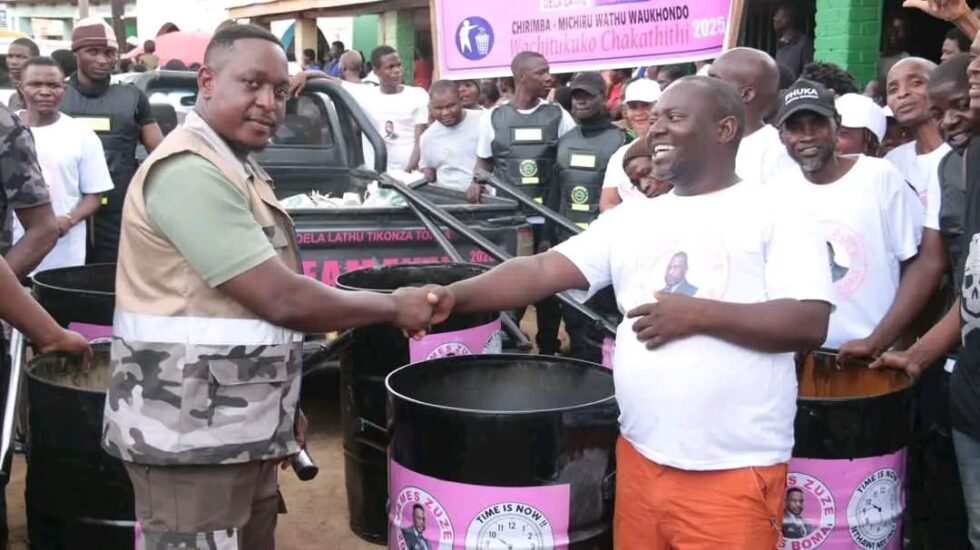
An aspiring independent member of parliament for Michiru Chrimba constituency, James Zuze, has made a pledge to uplift the lives of people in his area if he wins the elections in September.

Speaking with 247 Malawi News, Zuze outlined his plans to introduce a new secondary school and technical college in the area.


“Chirimba is one of the areas that has had no secondary school for the past 70 years, and not even a technical college.

Therefore students have to walk long distances to access education, which is unacceptable,” Zuze said.

Zuze In Michiru Chirimba

Zuze added that his manifesto will be introduced during the campaign period.

His pledge to improve education infrastructure in the area is a key part of his campaign, and he hopes to make a positive impact on the lives of his constituents.

The people of Michiru Chirimba constituency will have the opportunity to vote for Zuze and other candidates in the September elections.

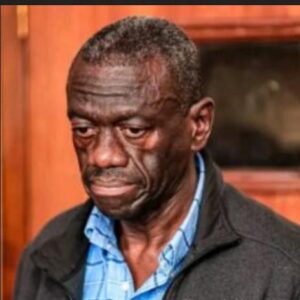
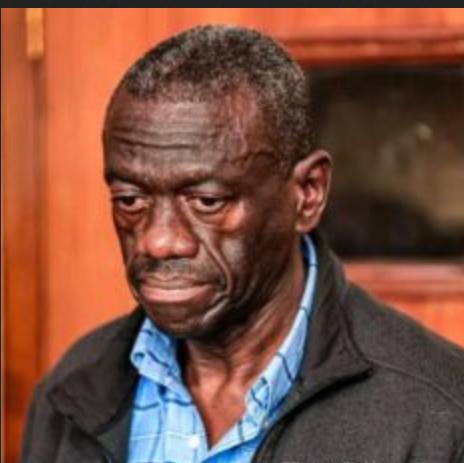
Calls for Kizza Besigye’s release: An analysis of military stubbornness and political calculus in Uganda

By Twink Jones Gadama

The ongoing calls for the release of Kizza Besigye, a prominent opposition leader in Uganda, have reverberated across the nation and beyond, yet the military’s steadfastness in maintaining his detention raises critical questions about the dynamics of power, governance, and human rights in the country.

Despite the deteriorating health of Besigye, the military and the government, led by President Yoweri Museveni, appear unmoved by the mounting pressure from civil society, international organizations, and the general populace.

This situation invites a deeper examination of the underlying factors that contribute to the military’s unwavering stance and Museveni’s reluctance to intervene.

To begin with, it is essential to understand the historical context of Uganda’s political landscape.

Since coming to power in 1986, Museveni has cultivated a political environment characterized by a strong military presence and a systematic suppression of dissent.

The military has been a crucial pillar of Museveni’s regime, providing not only security but also a means of enforcing political control.

This militarization of politics has created a culture where the military’s interests often supersede those of civil society, leading to a reluctance to respond to public outcry, especially when it involves a figure like Besigye, who has been a thorn in the side of the regime for decades.

Moreover, the military’s response to calls for Besigye’s release can be viewed through the lens of power dynamics within the ruling establishment.

The military’s leadership is acutely aware that releasing Besigye could be perceived as a sign of weakness, potentially emboldening other opposition figures and movements.

In a political environment where dissent is met with repression, the military’s refusal to release Besigye serves as a message to both the opposition and the general populace: any challenge to the status quo will be met with resolute resistance.

This strategy of deterrence is not only aimed at Besigye but also at discouraging others from rising against the regime.

Furthermore, Museveni’s position as the commander-in-chief of the armed forces complicates the situation.

While one might expect him to exert his authority to secure Besigye’s release, doing so could undermine the military’s loyalty and cohesion.

The military’s leadership is likely to view any concession as a potential threat to their own power and influence.

In this context, Museveni’s reluctance to intervene can be interpreted as a calculated decision to maintain the delicate balance of power within the military and the ruling party.

By not acting, he reinforces the military’s role as a key player in the political arena, ensuring that they remain aligned with his interests.

Additionally, the international dimension of this issue cannot be overlooked.

Uganda’s strategic importance in the East African region, coupled with its historical ties to Western nations, has often resulted in a complex relationship between the Ugandan government and foreign powers.

While there have been calls from international organizations for Besigye’s release, the Ugandan government has frequently dismissed these appeals as foreign interference in domestic affairs.

This narrative allows Museveni to rally nationalist sentiments and portray himself as a defender of Uganda’s sovereignty, further entrenching his position.

The military, therefore, may perceive the international calls for Besigye’s release as an opportunity to reinforce their own legitimacy by standing firm against perceived external pressures.

Moreover, the regime’s control over information and the media plays a significant role in shaping public perception and discourse surrounding Besigye’s detention.

The Ugandan government has a history of manipulating narratives to suit its agenda, often portraying opposition figures as threats to national security.

By framing Besigye’s continued detention as a necessary measure for maintaining stability, the military and the government can justify their actions to both domestic and international audiences.

This control over the narrative allows them to deflect criticism and maintain a semblance of legitimacy, even in the face of widespread calls for justice.

In addition to these factors, the psychological aspect of power cannot be underestimated.

The military’s leadership, having been entrenched in a system that rewards loyalty and suppresses dissent, may genuinely believe that their actions are in the best interest of the nation.

This mindset can lead to a disconnect between the ruling elite and the general populace, where the military perceives itself as the guardian of stability, even as it disregards the fundamental rights of individuals like Besigye.

This psychological barrier further complicates the possibility of a change in course, as the military’s leadership may be unwilling to acknowledge the legitimacy of the opposition’s demands.

In conclusion, the refusal of the Ugandan military to heed calls for Kizza Besigye’s release is a multifaceted issue rooted in historical, political, and psychological dynamics.

The interplay of power within the military, Museveni’s strategic calculations, the influence of international relations, and the regime’s control over narratives all contribute to the current stalemate.

As Besigye’s health continues to deteriorate, the implications of this situation extend beyond the individual, raising critical questions about the state of democracy, human rights, and governance in Uganda.

The international community and civil society must continue to advocate for justice and accountability, but the entrenched nature of the military’s power suggests that meaningful change will require a concerted effort to address the underlying structures that perpetuate this cycle of repression.

FAM and MASSA unite to revive schools football in Malawi

0

By Shaffie A Mtambo

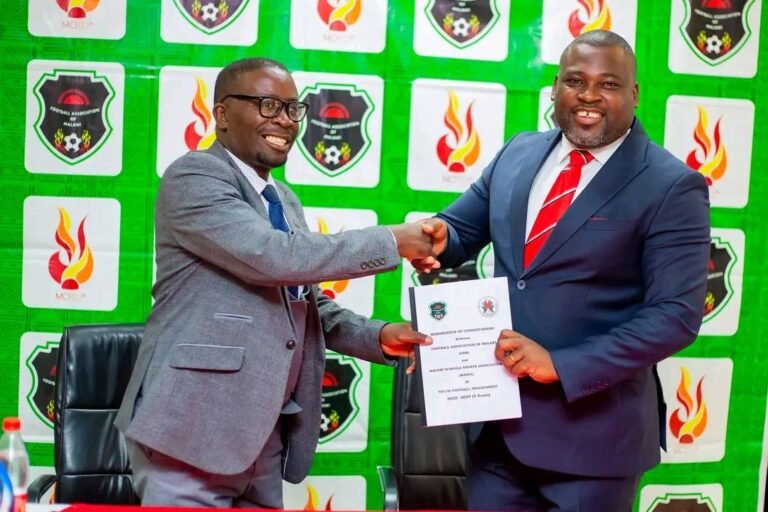
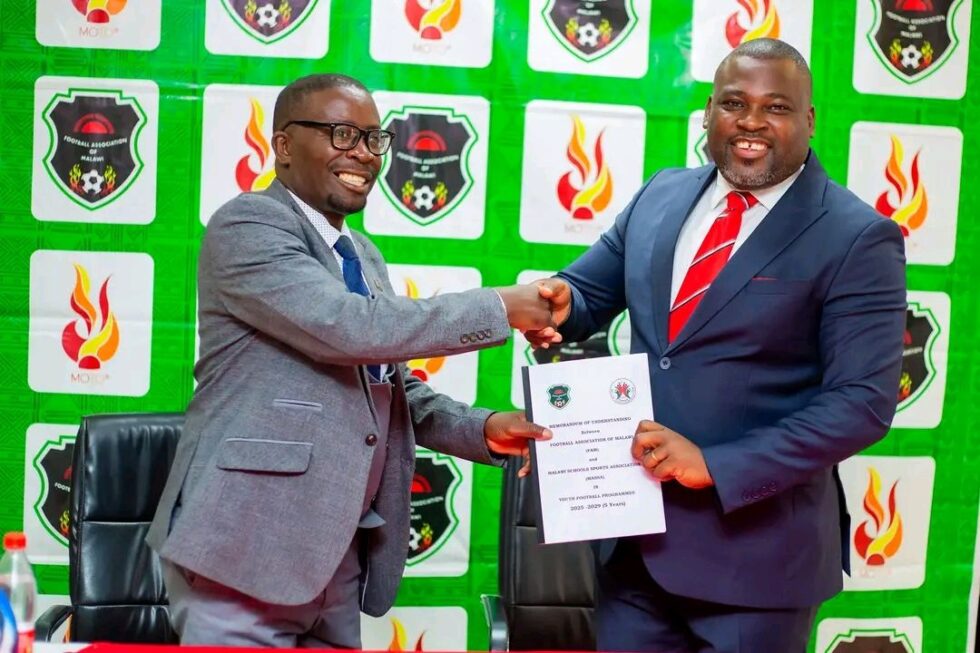
The Football Association of Malawi (FAM) has partnered with the Malawi Schools Sports Association (MASSA) to revive schools football in the country.

The partnership it’s for five years with aims to bring back structured youth football development programs in schools.

FAM President Fleetwood Haiya emphasized the significance of this partnership, stating that it will enhance platforms at the grassroots level, which is essential for developing quality players.

He also acknowledged that the lack of collaboration between FAM and schools in the past has contributed to the decline of Malawi’s football standards.

The partnership has several key objectives, including eliminating age cheating in football, improving coordination and knowledge sharing, preventing school dropouts, and protecting young players from abuse.


FAM and MASSA will work together to ensure that players’ ages are accurately verified, enhance the implementation of football development programs, use football as a tool to encourage students to remain in school.

To achieve these objectives, FAM and MASSA have committed to undertaking specific roles. FAM will provide technical support, equipment, and funding for schools football programs.

While MASSA will identify players for U15 and U17 teams in partnership with other stakeholders, monitor players during the school calendar season, and screen the ages of players in partnership with FAM and other organizations.


This partnership marks a significant step forward for Malawi’s football development, and its success will depend on the effective collaboration between FAM, MASSA, and other stakeholders.

FAM President Fleetwood Haiya praised MASSA President Blackson Malamula for his role in making the partnership a reality.

Malamula also expressed his excitement about the partnership, stating that it has the potential to bear significant results if well executed.

The partnership is part of FAM’s overall strategy to transform Malawi’s football and contribute to the country’s development goals.

TNM Plc honors top performing employees with prestigious awards

0

By Chisomo Phiri

One of the country’s leading telecommunications companies, Telecom Networks Malawi (TNM) Plc on Monday evening recognized its top-performing employees for 2024 with a prestigious awards ceremony held at Sunbird Mount Soche Hotel in Blantyre.

During the awards ceremony,three company’s exceptional employees were rewarded with an all-expenses-paid trip to Cape Town, South Africa, while several others received monetary awards of up to K1.5 million for their outstanding performance in their respective divisions.

In an interview with journalists ,one of the awardees, Linda Moyo, expressed her gratitude, stating that the recognition serves as a motivation to continue delivering exceptional results.

On her part, TNM Plc Acting Chief Human Resource Manager, Chisomo Governor emphasized that the awards are a testament to the company’s appreciation for its employees’ unwavering commitment to driving success.

“We value our employees’ contributions and are committed to recognizing and rewarding their excellence,” said Governor.