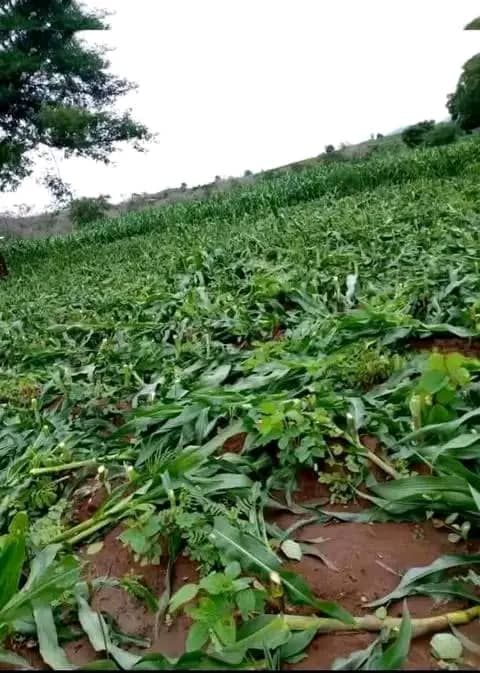
A woman in Dedza has slashed her entire maize field after catching her husband cheating on her with another woman.
According to eyewitnesses, the woman had gone to her maize field to fetch some vegetables when she stumbled upon her husband and the other woman in a compromising position.
The husband and the other woman reportedly fled the scene, leaving the wife in a state of shock and anger.
In a fit of rage, the wife allegedly grabbed a slasher and began to cut down the entire maize crop, leaving nothing but a trail of destruction in her wake.
The maize field, which was reportedly one of the best in the area, is now completely ruined.
“It was like she was possessed,” said one eyewitness, who wished to remain anonymous. “She was slashing at the maize like it was her enemy. We tried to stop her, but she wouldn’t listen.”
The incident has sent shockwaves through the community, with many residents expressing sympathy for the wife.
“It’s understandable that she was angry,” said one resident. “But destroying her own maize field? That’s just crazy.”
The husband, who has not been named, is reportedly on the run, and it is not clear whether he will face any charges.
The wife, who has also not been named, is said to be receiving counseling and support from her family and community.
The incident has raised questions about the prevalence of infidelity in the community and the need for couples to seek counseling and support.
“This incident is a wake-up call for all of us,” said a local leader. “We need to work together to build stronger, healthier relationships and to support those who are struggling.”
Martyrs’ Day is observed every year on the 3rd of March in Malawi, honoring those who gave their lives during the country’s struggle for independence.
This day holds profound significance, as it acknowledges the sacrifices of brave individuals who fought against colonial rule.
It serves as a reminder of the immense courage these martyrs displayed, risking everything for the freedom of future generations.
Martyrs’ Day is not simply about remembering the past, but about reflecting on the deep emotional toll of those who laid down their lives for the nation’s freedom.
It offers a moment for the people of Malawi to pause and remember the steadfastness of the freedom fighters who were unwavering in their dedication to a better, free nation.
The day is also a call to the nation that the struggle for freedom is not complete. It reminds us that the fight for justice, equality, and human rights is ongoing.
As Malawians reflect on the lives lost in the fight for independence, Martyrs’ Day offers a chance to appreciate the resilience and sacrifice that shaped the nation’s history.
This day transcends political, social, and regional divisions, bringing the entire nation together in unity and respect for those who gave their lives for the country’s liberation.
Martyrs’ Day urges the current and future generations to protect and cherish the freedoms they now have, acknowledging that these liberties came at a heavy cost.
The observance invites people to revisit the core values of unity, peace, and justice—principles fought for by their ancestors, who believed in the strength of a united Malawi.
It also serves as an opportunity to assess the nation’s progress since achieving independence, looking at the strides made politically, socially, and economically.
While Martyrs’ Day is primarily a time of reflection, it also plays an important educational role. Schools and communities take part in activities that teach the younger generation about the nation’s history and foster pride in their heritage.
Beyond remembrance, this day inspires Malawians to continue working toward a more just and inclusive society, ensuring that the sacrifices made by the martyrs are not forgotten.
Ultimately, Martyrs’ Day is about more than simply reflecting on the past. It celebrates the enduring spirit of resistance, resilience, and hope that continues to shape Malawi’s future and guide its journey towards unity and progress.
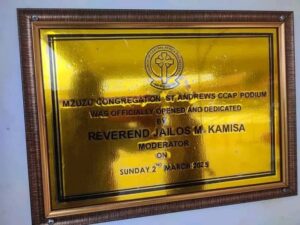
Speaker of Parliament Catherine Gotani Hara has urged Christians at St Andrews CCAP Church of Livingstonia Synod in Mzuzu to refrain from spreading negativity about others.
She made the remarks during the official opening of a newly built structure at the church.
Hara emphasized that the love Jesus teaches is rooted in focusing on the positives in others rather than spending time dwelling on their shortcomings.
She stated that speaking positively about others is the foundation of success.
“As church members, let us be positive with others and continue to spearhead the love that Jesus advances,” she said.
She further noted that constantly highlighting others’ flaws drains energy and is counterproductive.
The church moderator, Reverend Jailos Kamisa, acknowledged the country’s current economic struggles.
He stated that while Malawi is facing tough economic challenges, the church remains committed to praying for the nation’s economic recovery and peace.
According to the church’s session clerk, the newly constructed structure cost K16 million.
Apart from being a place of worship, the building will also serve as an income-generating facility by hosting various events.
The event highlighted the church’s dedication to spiritual growth and community development.
With the ongoing economic difficulties, religious leaders continue to emphasize faith, unity, and positivity as guiding principles for Malawians.
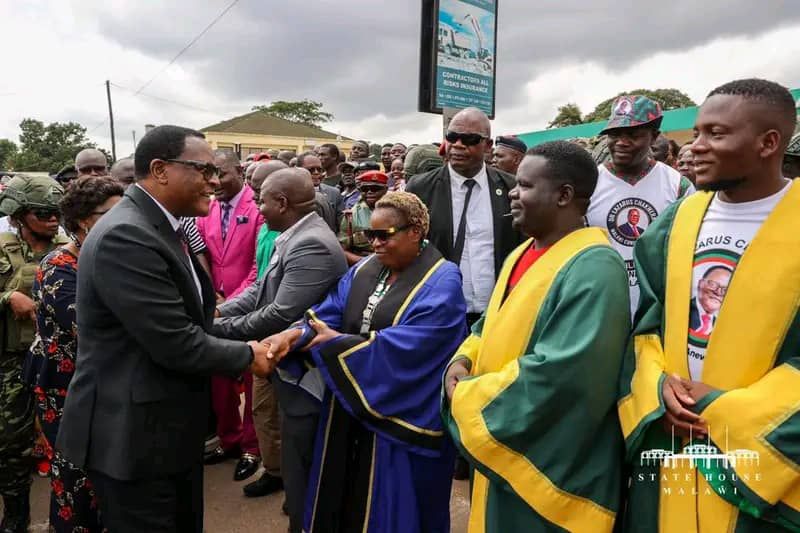
The ruling Malawi Congress Party (MCP) has reiterated its dominance and strong grassroots structures, as evidenced by the overwhelming reception President Lazarus Chakwera received upon his arrival in Mzuzu City.
MCP Secretary General Richard Chimwendo Banda said the turnout was a testament to the party’s deep-rooted presence and unwavering support across the Northern Region.
Speaking during the President’s visit, Chimwendo Banda took the opportunity to criticize opposition parties, arguing that their lack of solid ground structures forces them to rely on market days to attract crowds for their rallies.
He dismissed their public gatherings as opportunistic rather than a demonstration of genuine political strength.
“The warm welcome that the President received here in Mzuzu is proof that MCP is well-organized and deeply embedded in the communities.
Other parties struggle because they lack proper structures, which is why they time their rallies during market days, hoping to attract people who are simply there for their daily business,” said Chimwendo Banda.
His sentiments were echoed by Speaker of Parliament Catherine Gotani Hara, who is also MCP’s First Vice President.
She emphasized that the party remains vibrant and is actively preparing for the upcoming elections.
According to her, MCP is already in the process of selecting its candidates, with aspiring Members of Parliament gearing up for primary elections ahead of the September polls.
“The level of activity within MCP is remarkable.
We have aspiring MPs already mobilizing in their constituencies, preparing for the primaries.
This shows that our party is not only alive but also ready to retain and even expand its influence in the forthcoming elections,” said Gotani Hara.
The strong presence of MCP in Mzuzu and other parts of Malawi is likely to play a crucial role as the country inches closer to the next general elections.
With internal structures seemingly intact and candidates actively engaging their constituencies, MCP appears confident in maintaining its hold on power.
Meanwhile, opposition parties face the challenge of proving their own organizational strength and mobilizing genuine grassroots support beyond the convenience of market-day rallies.
As the political landscape continues to heat up, the reception President Chakwera received in Mzuzu is likely to serve as a morale booster for MCP while intensifying the competition for support in the months leading up to the elections.
The concept of a single global currency has been a topic of discussion among economists and financial experts for decades.
The Bible, too, has prophesied that during the end times, the world will have one currency in use.
While the timing of this event is unknown, the European Union has already taken a significant step towards a single currency with the introduction of the Euro.
In this analysis, we will explore the viability of a single global currency and its potential benefits for Malawi, which has been grappling with the issues of kwacha devaluation.
The use of a single currency, such as the Euro, has several advantages.
One of the most significant benefits is the elimination of exchange rate fluctuations, which can have a devastating impact on a country’s economy.
When a country’s currency devalues, the prices of imported goods increase, leading to higher inflation and reduced purchasing power for citizens.
In Malawi, the kwacha has been experiencing frequent devaluations, which have had a negative impact on the economy and the lives of citizens.
A single global currency would eliminate the need for exchange rates, thereby reducing the risk of currency devaluation.
This would provide a stable economic environment, which would be conducive to investment, trade, and economic growth.
With a single currency, businesses would no longer have to worry about exchange rate fluctuations, which would make it easier for them to operate and invest in different countries.
Another advantage of a single global currency is that it would reduce transaction costs.
When businesses and individuals engage in international trade, they have to convert their currency into the currency of the country they are trading with.
This process involves transaction costs, such as commission fees and exchange rate margins, which can be significant.
With a single currency, these transaction costs would be eliminated, making international trade cheaper and more efficient.
A single global currency would also promote economic integration and cooperation among countries.
When countries use different currencies, it can create barriers to trade and investment.
A single currency would eliminate these barriers, making it easier for countries to trade and invest with each other.
This would promote economic integration and cooperation, which would be beneficial for all countries involved.
In addition to these advantages, a single global currency would also promote transparency and accountability in financial transactions.
With a single currency, it would be easier to track financial transactions and prevent money laundering and other financial crimes.
This would promote transparency and accountability in financial transactions, which would be beneficial for businesses and individuals.
Despite these advantages, there are also some challenges and concerns associated with the use of a single global currency.
One of the main concerns is the loss of national sovereignty and control over monetary policy.
When a country uses its own currency, it has control over its monetary policy and can adjust interest rates and money supply to suit its economic needs.
With a single global currency, countries would have to surrender some of this control to a global authority, which could limit their ability to respond to economic shocks and challenges.
Another concern is the potential for a single global currency to exacerbate economic inequalities between countries.
When countries use different currencies, they can adjust their exchange rates to make their exports more competitive.
With a single currency, countries would no longer have this flexibility, which could make it more difficult for them to compete in the global market.
Despite these concerns, the benefits of a single global currency far outweigh the costs.
A single currency would promote economic stability, reduce transaction costs, and promote economic integration and cooperation among countries.
While there are some challenges and concerns associated with the use of a single global currency, these can be addressed through careful planning and implementation.
In conclusion, the use of a single global currency is a viable solution to the problems of currency devaluation and economic instability.
While there are some challenges and concerns associated with the use of a single global currency, the benefits far outweigh the costs.
A single currency would promote economic stability, reduce transaction costs, and promote economic integration and cooperation among countries.
As Malawi continues to grapple with the issues of kwacha devaluation, the adoption of a single global currency could be a game-changer for the country’s economy.
The adoption of a single global currency would require careful planning and implementation.
It would involve the creation of a global monetary authority, which would be responsible for managing the global currency and setting monetary policy.
It would also involve the establishment of a global financial framework, which would provide a set of rules and regulations for the use of the global currency.
The benefits of a single global currency for Malawi would be significant.
It would eliminate the risk of kwacha devaluation, which would provide a stable economic environment for businesses and individuals.
It would also reduce transaction costs, which would make it cheaper and easier for businesses to engage in international trade.
Furthermore, it would promote economic integration and cooperation among countries, which would be beneficial for Malawi’s economy.
In addition to these benefits, the adoption of a single global currency would also promote transparency and accountability in financial transactions, which would help to prevent money laundering and other financial crimes.
This would be beneficial for Malawi’s economy, as it would help to promote a stable and secure financial environment.
Furthermore, the adoption of a single global currency would also help to promote economic growth and development in Malawi, as it would provide access to a larger market and more investment opportunities.
Overall, the adoption of a single global currency would be a positive step for Malawi’s economy, and would help to promote economic stability, growth, and development.