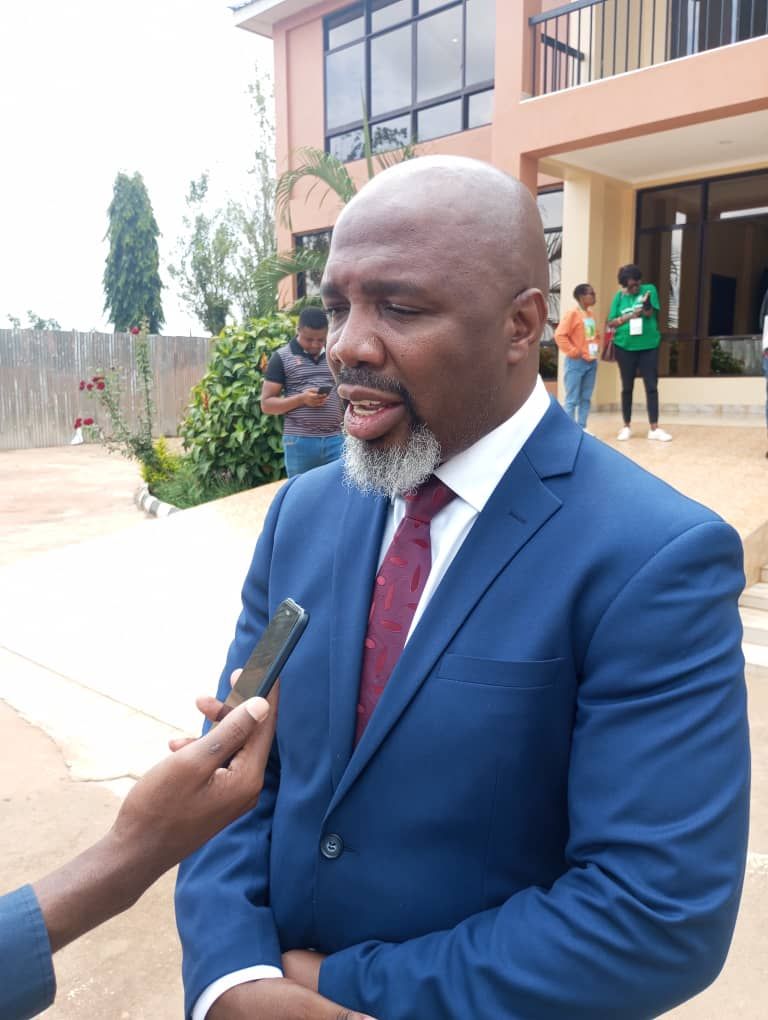
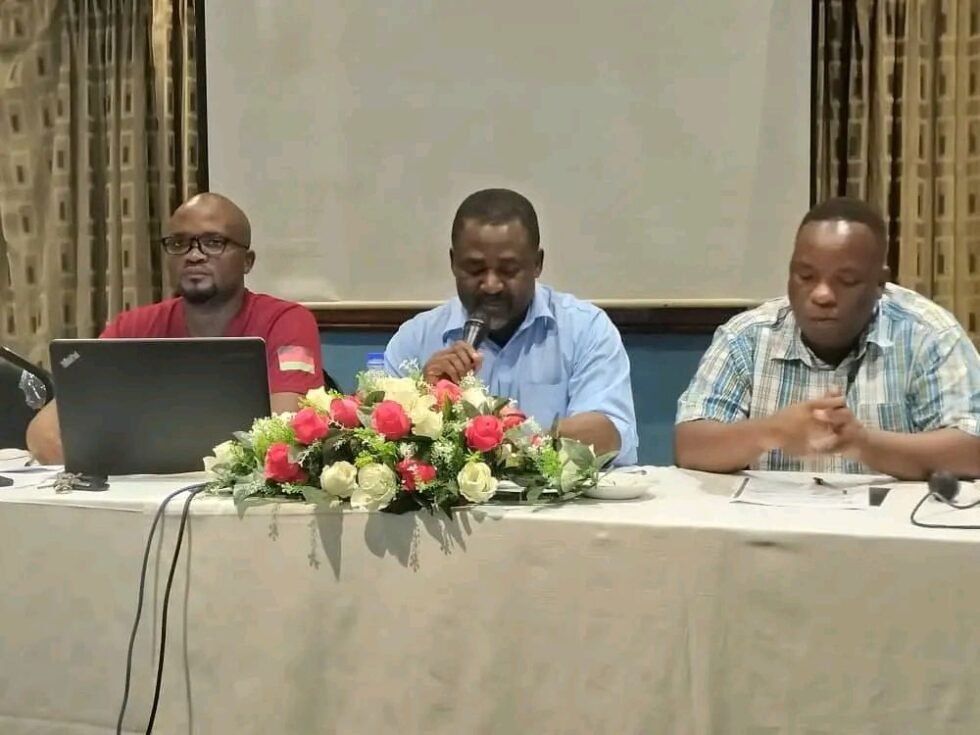
The National Youth Football Association(NYFA) has re-elected Tiyenkhu Chavura as its chairperson after going unopposed to steer the association for the next 4 years.
During the association’s elective general assembly held at Mponela in Dowa on Saturday. The association also elected Mwawi Mwanza as the vice Chairperson while Rabson Woodwell emerged the General Secretary with Gomezgan Mkandawire as his vice.
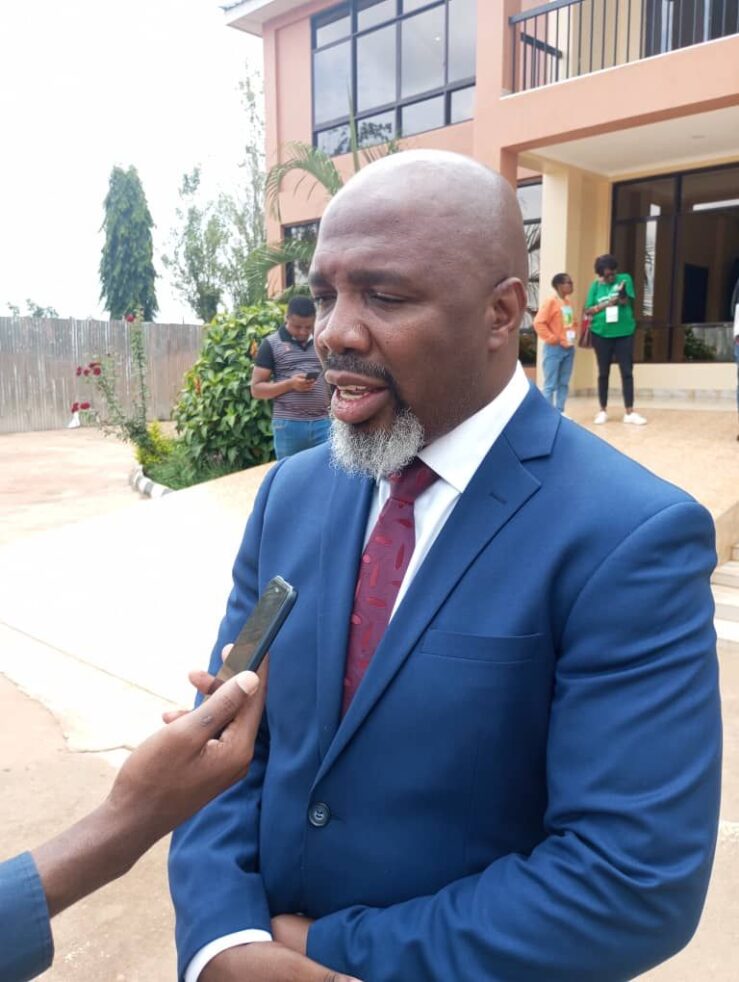
Pic: Chavura- re-elected NYFA chairperson
Duncan Jumbe has been entrusted with keeping the association’s purse. Speaking after being re-elected, Chavura said they will continue pursuing the Football Association of Malawi (FAM)’s agenda of transforming the game.
“We will make sure we put up initiatives to promote and accelerate young players’ growth and also ensure that we nurture youth talent. We would like to see our Under 17 team qualify for World Cup in Quatar in 2027,” he said.
Chavura added: “The centre for transforming the game is youth football. It is now our responsibility to uplift the standards by doing the right things.”
FAM’s Competitions Chairperson, who was the returning officer at the elective meeting Felistus Dossi expressed optimism about the continued good working relationship with the association.
“This committee is very critical in ensuring that we push the transformative agenda especially at grassroots. We hope we will work together so that we realize the transformative agenda and all the strategies for FAM which is more on promoting grassroots football,” she said.
During the elections, all seats went unopposed except the post of General Secretary where Rabson Woodwell beat Thokozani Chimbali 13-5 votes.
The association’s elected executive committee members are Muhammad Ajusa and Linda Kasenda.
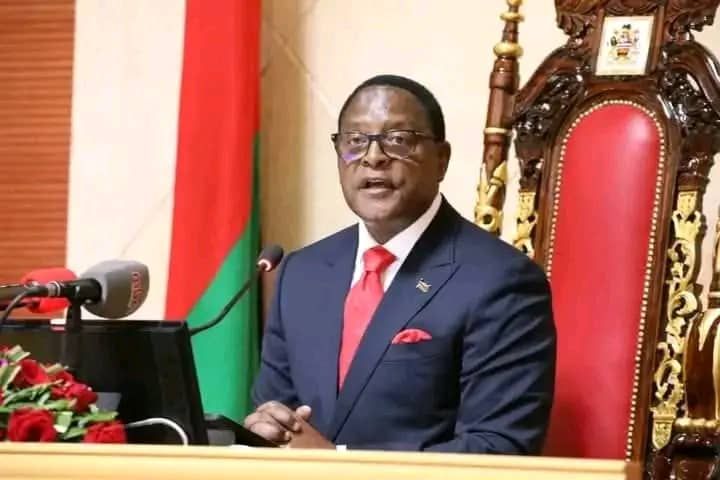
The controversy surrounding President Lazarus Chakwera’s recent State of the Nation Address (SONA) has deepened, as a Member of Parliament from the area in question has come forward to clarify the president’s statements. The dispute arose when the Community Forum Organisation (COFO), a local group in Chikwawa, accused Chakwera of misleading the public by taking credit for the construction of a clinic that his administration did not build. However, MP Susan Dossi has stepped in to defend the president, arguing that his remarks were misinterpreted.
According to Dossi, the president was not referring to the clinic built by COFO when he claimed that a health post had already been constructed in the area. Instead, she insists that Chakwera was speaking about government plans to construct two separate health posts in Finiyasi and Liston. “The President said we have constructed. To me, maybe he meant we are done with the processes to construct the two health posts,” she explained.
Chakwera
Dossi’s defense, however, raises further questions about the accuracy of the president’s statement. In his SONA, Chakwera categorically stated that the government had already built a health post in Finiyasi and Liston. Yet, according to the MP herself, no such construction has taken place. Instead, she admits that the government plans to build these health posts in the coming months, estimating that they could be completed within six months.
This contradiction has only fueled further skepticism and frustration among Malawians, particularly those in Chikwawa, who feel that the president misled the nation about the actual status of healthcare development in their region. If the government has not yet constructed these health posts, why did the president say otherwise? And if he meant that the government had completed the processes necessary for construction to begin, why did he not state that clearly?
The clarification from Dossi, rather than resolving the matter, has instead confirmed what critics of the president have been arguing—that Chakwera’s SONA contained misleading information. It is one thing for a government to outline its future development plans, but it is entirely different to claim that a project has been completed when, in reality, it has not even begun.
COFO, which built the Chapananga clinic with funding from World Connect, remains firm in its stance that the president should not claim credit for projects he did not implement. Their frustration is shared by many civil society groups and opposition figures, who argue that Chakwera’s government has developed a habit of exaggerating its achievements while failing to address pressing economic and governance issues.
For many Malawians, this incident is not just about a health post in Chikwawa—it is about trust in the government. If the president can make inaccurate claims about a single development project, what does that say about other claims he made in his SONA? How many other projects that he listed as achievements have actually been completed? These are the critical questions that citizens are now asking.
Ultimately, Dossi’s attempt to defend Chakwera has inadvertently confirmed the very thing his critics were accusing him of: the president made a misleading statement. Whether this was a deliberate attempt to embellish his administration’s track record or simply a careless mistake, the damage has been done. Malawians are growing increasingly impatient with what they see as a government that talks more than it delivers, and incidents like these only deepen the public’s frustration.
If the government wants to restore credibility, it must be more transparent in its communication and ensure that statements made at the highest level of leadership reflect reality, not just political rhetoric. Until then, skepticism about the president’s words will only continue to grow.
Producers of the Apongozi TV Series, HD Plus Creations have honoured the legendary Zodiak Broadcasting Station (ZBS) broadcaster and actress late Maria Chidzanja-Nkhoma for her incredible contributions towards the production of the movie.
Chidzanja-Nkhoma who was featured on Apongozi TV Series before her death on January 9,2021, acts the role of Apongozi in the movie series.
Speaking on the sidelines of the official release of the all the 10-series of the Apongozi TV Series for online streaming on Friday, one of the directors of the movie Gift ‘Sukez; Sukali described Chidzanja-Nkhoma as one of the undisputable gifted actresses who added a yummy spice to Apongozi Series.
“Apongozi TV series is a drama-filled movie whose quality, suspense and twists can never be appreciated without mentioning Maria.
“She was a gen who added a luscious part to the movie. We will forever miss her incredible talent at HD Plus Creations,” said Sukez.
According to Sukez, Chidzanja-Nkhoma was in the special category on older talented actors who were rare to find in the country.
“Most movie productions which feature older cast fail to deliver because it’s not easy to find energetic and talented older cast.Chidzanja-Nkhoma was one of its kind and irreplaceable,” said Sukez.
The first series of Apongozi were premiered on Zodiak Television in December 2022 and then airing on Zodiak’s Facebook page and HD Plus Creations’ YouTube channel.
HD Plus Creation has released all the 10 series of the action-packed drama that revolve around a matrilineal (chikamwini) family which lives with its five daughters and their sons-in-law.
The action of the drama rises when one of the sons in-law (Edwin Chombo) sends offensive pictures and videos of himself to his mother in-law (Apongozi) erroneously.
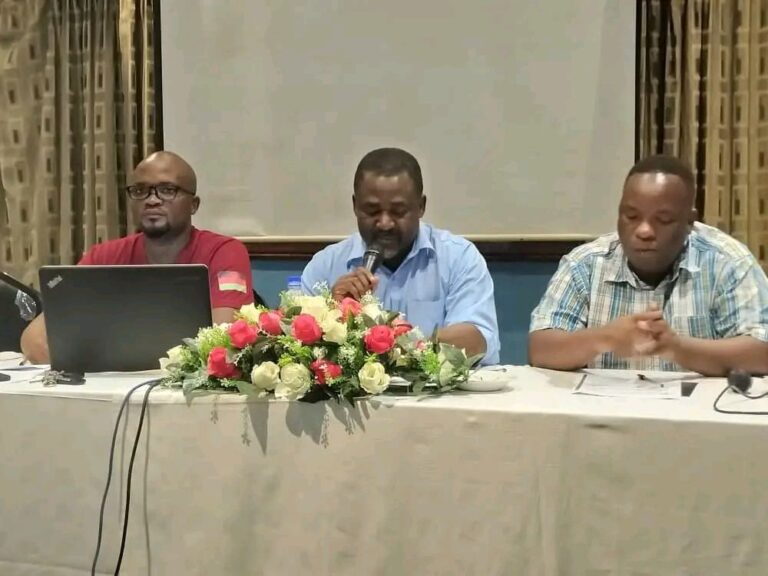
The Concerned Citizens of Malawi-People Power Movement (CCM-PPM) has expressed deep concern over the failed development projects and allegations of corruption within the government, as highlighted in the recent President Lazarus Chakwera’s State of the Nation Address (SONA).
In a statement seen by this publication,the group is calling for immediate action and accountability from top officials, including Governor of the Reserve Bank of Malawi (RBM )Dr. Mafuta Mwale,
Reads part of the statement:”Dr. Mwale, who previously served as Secretary to the Treasury is linked to the approval of fraudulent projects, raising concerns about his ability to manage public funds.
“His tenure at the Treasury was also marred by the fertilizer procurement scandals, resulting in the loss of billions of kwacha.”
The CCM-PPM has further demanded that Parliament summons Dr. Mwale to answer for his role in the failed projects.
The group has also called for the Secretary to the Treasury to issue a public statement explaining the payments made for these projects, and for the Ministers of Health and Transport to be dismissed for their role in mismanaging the projects.
Furthermore, the group is seeking transparency regarding the contractors involved in the projects, including a full list of contractors, a public explanation of the selection process, and an investigation into whether procurement laws were followed.
The CCM-PPM has however,announced plans to conduct a nationwide inspection of the listed projects to verify their existence and gather evidence of any mismanagement.
“We are warning of nationwide protests and vigils if our demands are ignored because Malawians deserve transparency, accountability, and responsible leadership,” adds the group’s statement.
Haiti, a country long grappling with poverty, political instability, and natural disasters, finds itself in the throes of its worst crisis in decades. The island nation has been heavily dependent on foreign aid to maintain its fragile social and economic fabric. Among its key international partners, the United States has been the largest donor, providing crucial humanitarian assistance to Haiti, especially in the realms of healthcare, infrastructure, and disaster recovery. However, recent decisions by the Trump administration to freeze foreign aid and slash funding for agencies like the U.S. Agency for International Development (USAID) have left Haiti’s already fragile systems on the brink of collapse.
Haiti’s reliance on U.S. aid cannot be overstated. According to the United Nations, the United States provided nearly 60 percent of all humanitarian assistance to Haiti in the past year, which highlights the critical role that American support plays in the daily survival of millions of Haitians. In particular, the U.S. has been a vital partner in supporting Haiti’s healthcare system, where it has funded 40 percent of primary-care services and operated 170 healthcare clinics across the nation. These clinics, often the only source of medical care for many Haitians, offer essential services such as vaccinations, maternal care, and treatment for infectious diseases.
In addition to healthcare, U.S. aid has been instrumental in rebuilding Haiti’s infrastructure and supporting various development initiatives aimed at alleviating the country’s widespread poverty. From food assistance to education, the U.S. has long been a cornerstone of Haiti’s international support network.
The Trump administration’s decision to freeze foreign aid and significantly reduce USAID funding is deeply concerning for Haiti, particularly at a time when the country is facing an unprecedented wave of violence and instability. Gangs have taken control of vast areas of the country, creating a dangerous environment for both civilians and aid workers. This crisis has made it increasingly difficult for Haitians to access basic services, and the suspension of U.S. support threatens to leave millions without the help they desperately need.
The healthcare sector, already stretched thin, stands to suffer the most from these aid cuts. USAID plays a crucial role in maintaining the operation of clinics and providing medical supplies to Haiti. The loss of this support would further hinder the country’s ability to provide even the most basic healthcare services, which could lead to a public health catastrophe. Infectious diseases like cholera, which have plagued Haiti in the past, could once again spread rapidly due to the lack of proper medical care and preventative measures.
Beyond healthcare, the reduction in U.S. aid has broader implications for Haiti’s social and economic stability. Humanitarian assistance has helped sustain various sectors of the economy and provided much-needed resources for development projects. Without this funding, key programs aimed at rebuilding schools, improving infrastructure, and supporting local businesses will likely be delayed or halted altogether.
Furthermore, the freeze on foreign aid threatens to exacerbate the humanitarian crisis in the country. With a large portion of the Haitian population already living in extreme poverty, the loss of external assistance will make it even more difficult for families to meet basic needs like food, clean water, and shelter. This could lead to an increase in migration as Haitians seek safety and survival in other countries, potentially placing additional strain on neighboring nations and international relief efforts.
The decision to cut aid to Haiti also has geopolitical implications. The United States has long been an important player in the Caribbean and Latin America, and its aid to Haiti has been a significant part of its diplomatic relationship with the region. By reducing support for Haiti, the U.S. risks losing influence in one of its closest neighbors, potentially leaving a power vacuum that could be filled by other international actors, including China and Russia.
This shift in foreign policy could also undermine U.S. efforts to promote stability and democracy in the Western Hemisphere. The current crisis in Haiti highlights the delicate balance between aid and political stability, and the consequences of withdrawing support could be far-reaching, not just for Haiti, but for the broader region.
As Haiti teeters on the edge of a full-blown humanitarian disaster, the loss of U.S. aid presents a grave challenge for the nation. While the Trump administration’s decision to freeze foreign aid may be driven by concerns over fraud and inefficiency, the consequences for Haiti are dire. With gang violence escalating and poverty levels at an all-time high, the people of Haiti need international support now more than ever. The U.S. has historically been a vital partner in helping Haiti rebuild and recover from its many challenges. The withdrawal of this support could push the country further into crisis, leaving millions of Haitians to suffer without the assistance they so desperately need.
For Haiti, the path forward is uncertain, and the stakes are high. The nation’s future depends on the ability of its leaders, alongside international partners, to find solutions to the violence, poverty, and instability that have plagued the country for so long. But without the crucial support that the U.S. provides, Haiti’s prospects for recovery remain bleak.