President Dr.Lazarus Chakwera has today reshuffled his cabinet and appointed Vitumbiko Mumba as the new Minister of Trade and Industry.
Mumba previously served as the Minister of Labour.
Chakwera has not provided any information regarding Sosten Gwengwe, who formerly held the Minister of Trade and Industry position
Mumba
Meanwhile, Gwengwe has thanked Chakwera for giving him an opportunity to serve in his cabinet for the past four years.
Writing on his Facebook page a short while ago, Gwengwe, who is also a Member of Parliament (MP ) for Lilongwe Nsozi north,says he served to the best of his capability.
“I would like to thank the state president, His Excellency, the state president of the Republic of Malawi, Dr. Lazarus Chakwera for the opportunity he offered me to serve my country as Minister of trade”, says Gwengwe.
He adds:”I did so to the best of my capability and due diligence. This far, I wish my brother, Hon. Vitumbiko Mumba all the best as he takes up the Ministry of Trade.”
Gwengwe also served as minister of Finance before appointed minister of Trade and Industry in the Chakwera’s administration.
Lilongwe, February 26, Mana: President Dr. Lazarus Chakwera has expressed disappointment over accusations that he was dishonest during the State of the Nation Address (SONA) on February 14, 2025.
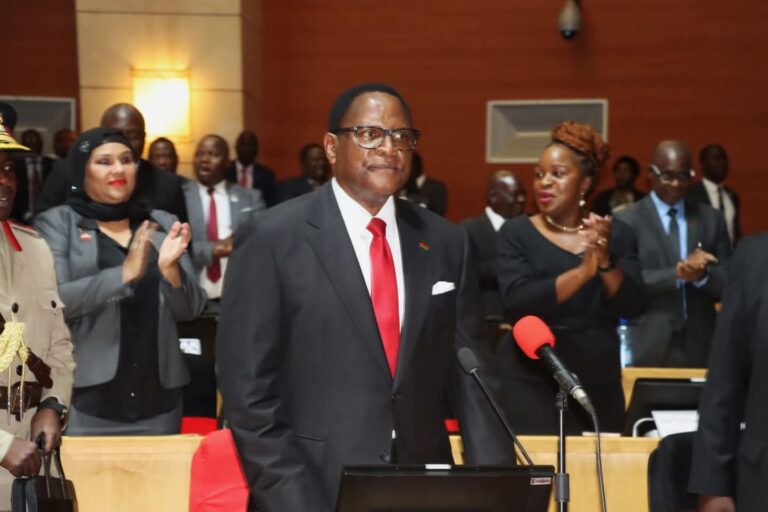
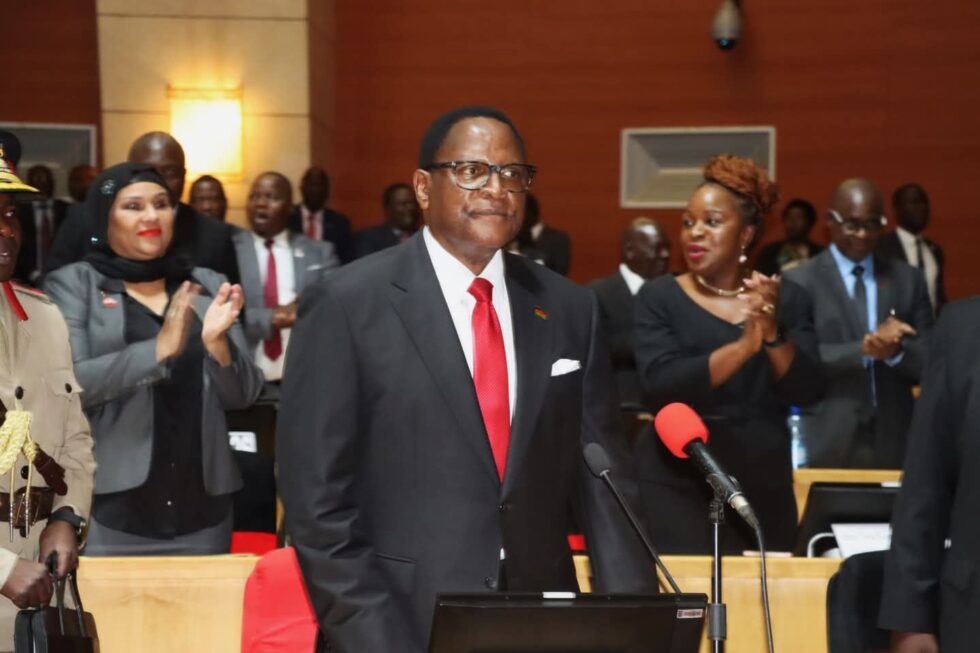
He was speaking in Parliament on Wednesday when he appeared before the House to respond to questions from Members of Parliament (MPs) regarding the State of the Nation Address (SONA).
Chakwera said those accusing him of dishonesty are doing so to gain some political mileage. He has however said that he is not immune to mistakes just like everyone else.
Chakwera in Parliament
“All Data that I presented concerning developments which are taking place in the country are true though some errors were made by the team responsible for these issues,” said Chakwera.
He further said the statement which was made by the Leader of the Opposition must be withdrawn as part of his speech, he accused him of lying to Malawians.
“I am committed to serving Malawians and have no time for lies. As a country, we need to come together to address the challenges Malawians are facing, such as hunger and the rising cost of commodities,” he said.
He stated that he is aware of some individuals who are deliberately sabotaging the country’s economy for political gain and to create the impression that his government has failed.
The president highlighted, that he has taken strong measures to address those who are intentionally harming the economy for personal gains.
Ngũgĩ wa Thiong’o has long been a literary force in African literature, using his works to challenge societal norms, corruption, and oppressive political structures.
I Will Marry When I Want, co-written with Ngugi wa Mirii, stands as one of his most controversial and politically charged works.
First performed in 1977 in Kenya, the play was developed in collaboration with Kikuyu actors at the Kamiriithu Cultural Centre in Limuru.
Its raw and unfiltered critique of post-colonial Kenya’s political, religious, and economic systems led to its banning and likely contributed to Ngũgĩ wa Thiong’o’s detention without trial.
At its core, the play tells the story of Kiguunda, a poor farmer who owns a small piece of land.
His simple life is disrupted when he is deceived into taking a loan, using his land as collateral.
The pressures of religion, capitalism, and societal expectations force him into a situation where he stands to lose everything.
Through this narrative, the play boldly exposes the hypocrisy of religious institutions, which claim to advocate for morality while being complicit in economic exploitation.
It also critiques the capitalist elite, who manipulate the working class for their gain, perpetuating cycles of poverty and disenfranchisement.
One of the most striking aspects of I Will Marry When I Want is its innovative use of performance.
The play incorporates song and dance, enhancing its emotional and cultural resonance.
This blend of storytelling with traditional oral performance made it especially powerful when staged, drawing audiences from all walks of life.
It was not merely a play; it was a movement—one that deeply unsettled the ruling class, leading to its swift ban by the Kenyan government.
Beyond its political message, the title itself—I Will Marry When I Want—holds significant personal and social weight.
It represents a defiance against imposed societal norms, particularly those related to marriage, wealth, and personal agency.
The phrase can be interpreted as a declaration of independence, a refusal to be controlled by cultural and religious expectations that dictate when and how one should make life choices.
While the play is set in Kenya, its themes remain universally relevant across Africa and beyond.
The exploitation of the poor by the wealthy, the entanglement of religion in politics, and the struggle for economic justice are issues that continue to affect many societies.
The play serves as both a historical document of post-colonial Kenya and a timeless call to resist oppression in all its forms.
In conclusion, I Will Marry When I Want is a masterpiece of resistance literature. Its bold critique of societal injustices, combined with its compelling storytelling and cultural authenticity, make it an essential read for anyone interested in African literature, political theatre, or the power of art as a tool for change.
It is a testament to the enduring strength of voices that refuse to be silenced, and its impact remains just as powerful today as it was at the time of its first performance.
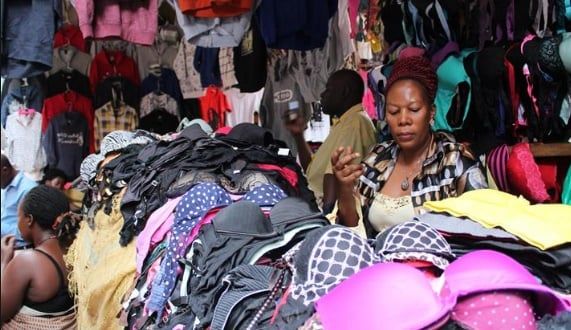
In a dramatic turn of events, prices of Kaunjika, the popular second-hand clothing market in Malawi, have significantly decreased following the government’s directive to traders.
This development comes after vendors in Lilongwe staged protests yesterday, demanding action against the rising prices of goods.
A snap survey conducted by this publication in Lilongwe today revealed that prices of second-hand clothes have dropped substantially.
For instance, a Bale No1, which was previously priced at K1.1 million, is now selling for K680,000. Similarly, the price of a Medium bale has decreased from K750,000 to K420,000, while a Mix dress has dropped from K690,000 to K450,000. The price of a Polysilk dress has also plummeted from K1,350,000 to K850,000.
Minister of Trade, Hon. Sosten Gwengwe, assured the public that this is just the beginning of the government’s efforts to regulate prices and protect consumers.
“Prices of goods will continue to go down because we have taken a serious stand to ensure that Malawians are no longer exploited by traders who arbitrarily raise prices of basic necessities,” Gwengwe stated.
The government’s swift action has been welcomed by consumers and traders alike.
People at Bwalo la Njovu, a popular market in Lilongwe, applauded the government’s efforts, urging them to continue engaging with traders to address the rising prices of goods.
Kaunjika sellers at Msikawanjala in Dedza district expressed excitement about the price reduction, stating that it was challenging to make a profit with the previous prices.
However, with the new prices, they can now breathe a sigh of relief.
The reduction in prices is expected to have a positive impact on the livelihoods of many Malawians who rely on Kaunjika for their daily needs.
The government’s intervention is also seen as a step towards promoting fair trade practices and protecting consumers’ rights.
As the situation continues to unfold, it remains to be seen how traders will respond to the government’s directives.
However, for now, consumers can rejoice at the prospect of affordable prices for essential goods.
In related news, the used clothing industry is a significant sector in Malawi, with many people relying on it for employment and income generation.
According to a report, the global second-hand clothing market is expected to double to $51 billion in the next five years, exceeding fast fashion within a decade.
As the demand for second-hand clothing continues to grow, it is essential for the government to strike a balance between regulating prices and promoting fair trade practices.
By doing so, they can ensure that the benefits of the used clothing industry are shared equitably among all stakeholders.
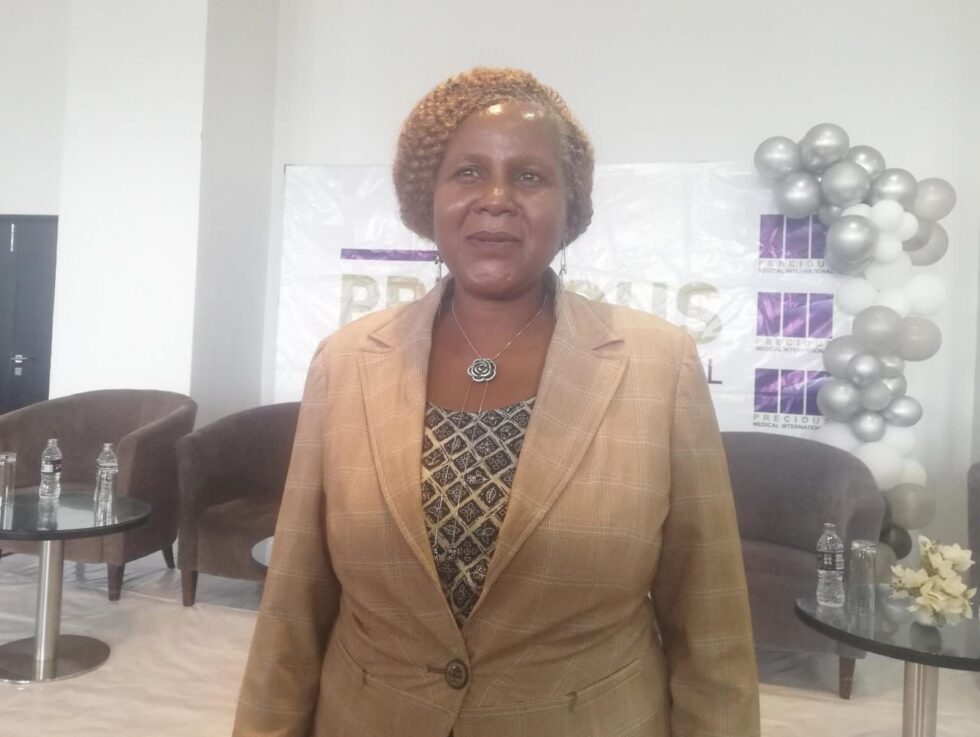
One of the country’s leading medical insurance companies Precious Medical International on Wednesday morning hosted a wellness breakfast meeting for Executives and Chief Executive Officers(CEOs) of various companies, hospitals, and prospective clients at Amaryllis Hotel in Blantyre.
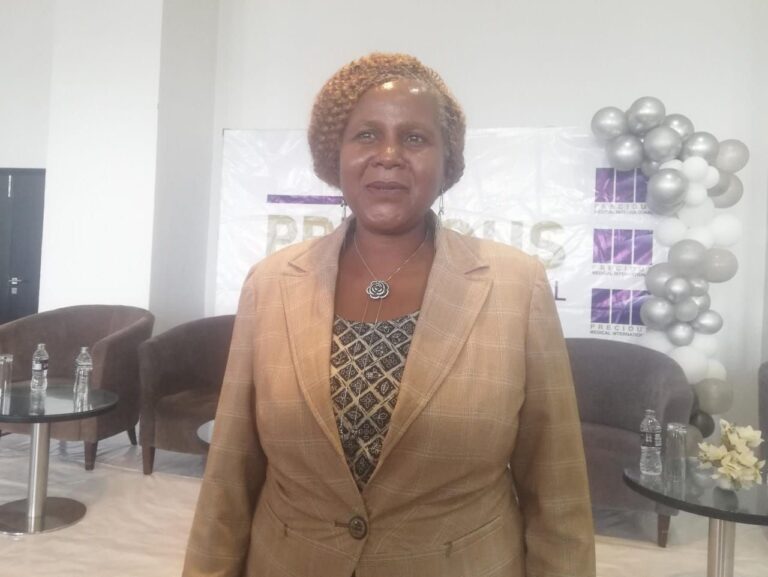
Speaking to journalists, Precious Medical International CEO Dr. Gertrude Mateyo said the event aimed to promote networking and share the importance of wellness among busy executives.
Dr. Gertrude Mateyo
“We wanted to bring executives and CEOs out of their offices and provide a relaxed atmosphere where they could learn about wellness and network with peers.
“The meeting featured experienced speakers, including professionals,” said Mateyo.
She expressed her satisfaction with the event’s success saying:”We are happy with the turnout and the positive feedback from our guests.”
Dr.Mateyo emphasized the importance of wellness.
“Wellness is everybody’s business. Everyone wants to be healthy, happy, and have a long life. This event encourages every Malawian to take special care of themselves, focusing on self-care and making conscious choices about their lifestyle,” she said .
On his part,renowned psychologist, Chiwoza Bandawe emphasized the importance of prioritizing mental health, particularly among leaders.
Bandawe highlighted the impact of mental health on productivity and overall well-being.
“Mental health is fundamental because it affects our ability to work and be productive.
“Leaders, in particular, face numerous challenges that can take a toll on their mental health. It is essential for them to maintain resilience and find ways to cope with stress,” he said.
Bandawe noted that while mental health is gaining attention, it still requires more focus and investment.
“Mental health issues need more attention in terms of professionals. We need to train more psychiatrists, clinical psychologists, and counselors,” he said .
The psychologist pointed to the alarming increase in suicide rates as a clear indication of the need for improved mental health services.
“We need to invest more in mental health education and ensure that mental health professionals are available to provide support during crises, such as natural disasters,” he said
Bandawe advocated for a significant increase in the national health budget allocated to mental health, from the current 1% to at least 5%.
“This would enable us to have psychologists in schools, hospitals, and other critical areas,” he said.