One of the fastest-growing betting companies in the country, Supa Pesa Limited on Monday evening launched its Bet Yanga Online Sports Betting.
The launch took place at Protea Ryalls Hotel in Blantyre.
Speaking in an interview with journalists, Supa Pesa Limited Managing Director Harm Fourie explained that the innovative platform enables individuals to place bets using a simple Short Message Service (SMS),catering to customers without smartphones.
Harm Fourie
Fourie added that the inclusion of the SMS betting platform is a deliberate strategy to differentiate Supa Pesa from international competitors and expand its customer base.
“We recognized that many potential customers were being left out due to the lack of smartphones.
“By incorporating SMS betting, we’re making our services more accessible and inclusive,” he said.
Fourie stated that to use the SMS betting feature, customers with basic mobile phones can simply dial *4297# on the Airtel or TNM networks.
“Smartphone users can access the platform through the website www.betyangaonline,” he said.
Mzuzu police have arrested 33-year-old Davie Kumwenda for posing as an ESCOM official. Kumwenda’s ruse was blown when suspicious community members caught him conducting an illegal power connection while dressed in ESCOM regalia.
According to Northern Region Police Public Relations Officer, Maurice Chapola, Kumwenda was arrested on Monday in Luwinga, Mzuzu. Chapola revealed that Kumwenda’s deception was convincing enough to fool some, as he was seen performing duties in ESCOM attire.
However, his luck ran out when community members noticed him connecting ESCOM wires and erecting poles. Their suspicions were aroused, and they promptly alerted an ESCOM security guard, who then notified the authorities.
Kumwenda’s arrest serves as a warning to would-be impersonators and highlights the importance of vigilance in the community. The police and ESCOM have demonstrated their commitment to rooting out fraudulent activities and ensuring the safety and security of the public.
As the investigation unfolds, it remains to be seen how long Kumwenda’s impersonation scheme had been ongoing and how many people may have fallen victim to his deception. One thing is certain, however: justice has been served, and the people of Mzuzu can rest a little easier knowing that impersonators like Kumwenda will be held accountable.
The Ministry of Health in Malawi has swiftly responded to the temporary suspension of support by the U.S. President’s Emergency Plan for HIV/AIDS Relief (Pepfar) by implementing a set of urgent measures aimed at sustaining essential HIV/AIDS services in the country. The suspension of Pepfar funding, which was part of a broader freeze on foreign aid initiated by former U.S. President Donald Trump, has created significant challenges for Malawi’s healthcare system, particularly in the fight against HIV/AIDS.
To mitigate the impact of the funding suspension, the Ministry of Health has outlined several key interventions to ensure the continued provision of life-saving services. Among the measures introduced is the redeployment of ministry staff to fill the gaps left by Pepfar-funded personnel. These staff members will be assigned to critical areas such as HIV testing, the dispensing of antiretroviral therapy (ART), and targeted viral load monitoring to maintain essential healthcare services.
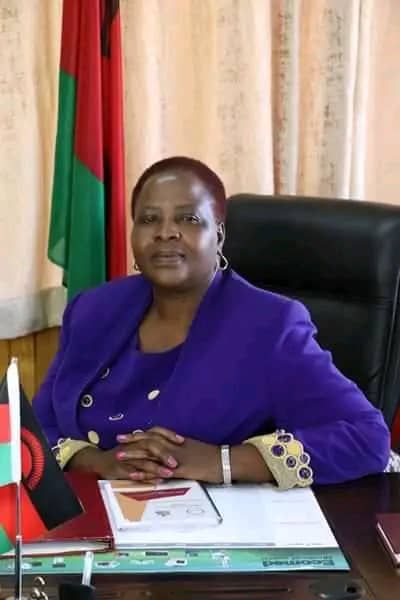
Khumbize
Additionally, the ministry has emphasized the need to optimize the dispensation of ART by extending the supply period to six months for eligible patients. This measure aims to reduce the frequency of clinic visits, thereby easing the burden on health facilities and ensuring that people living with HIV continue to receive uninterrupted treatment. By reducing patient traffic, the ministry hopes to manage existing resources more efficiently while minimizing disruptions caused by Pepfar’s withdrawal.
A circular issued by the Ministry of Health, signed by Linley Chewere, the Director at the Directorate of HIV, STI, and Viral Hepatitis, on February 3, 2025, has instructed health facilities across the country to implement these measures without delay. The directive underscores the urgency of the situation and the need for immediate action to prevent service gaps that could have devastating consequences for those relying on HIV-related healthcare services.
The suspension of Pepfar funding is a significant blow to Malawi, a country that has heavily relied on international assistance to combat HIV/AIDS. Pepfar has played a crucial role in supporting Malawi’s HIV response, funding essential services such as testing, treatment, and prevention programs. The temporary halt in funding threatens to disrupt progress made over the years in reducing HIV-related deaths and infections.
While the government’s contingency plan seeks to address the immediate challenges posed by the funding gap, concerns remain about the long-term sustainability of these measures. The redeployment of ministry staff may strain other critical healthcare services, and the extended ART dispensation approach, while necessary, may not be a permanent solution if funding uncertainties persist.
Health experts and civil society organizations have urged the Malawian government to explore alternative funding sources to prevent further disruptions in HIV/AIDS programs. There are calls for increased domestic investment in healthcare and the strengthening of partnerships with other international donors who may be able to fill the gap left by Pepfar’s suspension.
Meanwhile, the global health community continues to monitor the situation, with hopes that the suspension will be temporary and that Pepfar funding will be restored. The future of U.S. foreign aid policies, especially regarding health initiatives in developing countries, remains uncertain, particularly in light of shifting political priorities in the U.S. government.
For now, Malawi’s Ministry of Health remains focused on ensuring that HIV/AIDS patients do not suffer due to the sudden withdrawal of financial support. The emergency measures in place will be crucial in maintaining continuity of care, but the long-term impact of Pepfar’s suspension is yet to be fully realized.
Zomba City Council (ZCC) Mayor, Christopher Jana, has taken a proactive step in environmental conservation by leading a large-scale tree-planting exercise along the M3 road connecting Zomba and Blantyre. The initiative, which took place this morning, saw the planting of 7,500 trees in an effort to restore the city’s green landscape and combat environmental degradation.
Recognizing the challenges associated with tree survival, Mayor Jana emphasized the importance of collective responsibility in ensuring the success of the initiative. He announced that ZCC has assigned the care of planted trees to various stakeholders, including shop owners, community members, and city officials. This collaborative approach aims to enhance the survival rate of the newly planted trees, ensuring that they grow into a lasting green cover for the city.
Jana reiterated that the Zomba City Council has allocated significant resources towards environmental management, underscoring the council’s commitment to making Zomba a model of sustainable urban development. He called on all stakeholders to take an active role in maintaining the trees, stating that environmental conservation is not just the responsibility of city authorities but of all citizens.
Among the prominent participants in the tree-planting exercise was Sub-Sahara Africa Family Enrichment (SAFE) Executive Director, Benjamin Khoswe, who commended the initiative, emphasizing that Zomba has lost much of its traditional natural beauty. Khoswe noted that rapid urbanization, deforestation, and climate change have significantly altered the city’s landscape, making reforestation efforts more critical than ever. He urged the city’s residents to take pride in the initiative and support the city’s drive towards environmental restoration.
The event saw participation from various organizations, including Changalume Barracks, Castel Malawi, and DAPP Malawi, among others. Their involvement highlighted the importance of multi-sectoral cooperation in addressing environmental challenges. With such partnerships, the Zomba City Council hopes to create a long-term impact by fostering a culture of environmental stewardship among businesses, institutions, and residents.
The tree-planting initiative aligns with Malawi’s broader national reforestation efforts, which seek to combat deforestation, restore biodiversity, and mitigate the effects of climate change. In recent years, Malawi has experienced severe environmental challenges, including erratic weather patterns, soil erosion, and reduced water retention capacity in major rivers and reservoirs. The reforestation of areas like the M3 road corridor is expected to contribute to mitigating these effects while improving air quality and enhancing the aesthetic appeal of the city.
As the trees take root, the real test will be in the commitment of all stakeholders to nurture them to maturity. The Zomba City Council’s strategy of assigning tree-care responsibilities to community members and business owners demonstrates an innovative approach to sustainable urban forestry. If successfully implemented, this model could serve as a blueprint for other cities and districts across Malawi looking to enhance their green spaces.
With the strong leadership of Mayor Christopher Jana and the collaborative efforts of various stakeholders, Zomba’s tree-planting initiative stands as a beacon of hope for environmental restoration. It remains to be seen how well the city will maintain the momentum, but for now, the initiative marks a significant step towards reclaiming Zomba’s lost natural beauty.
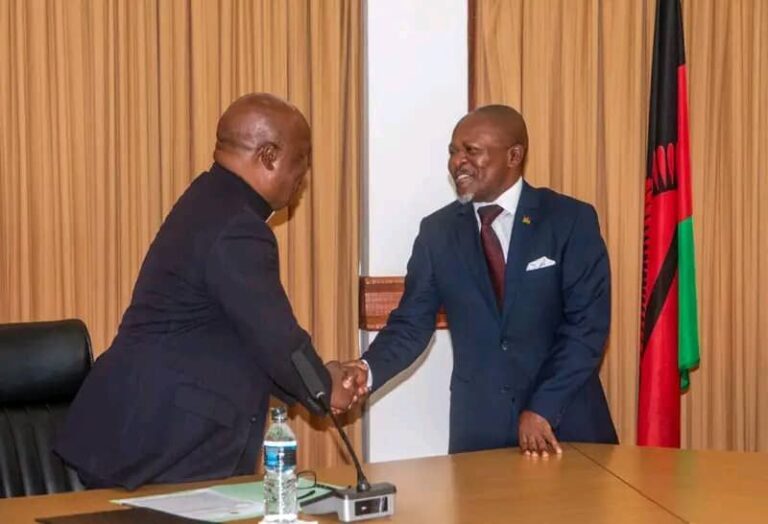
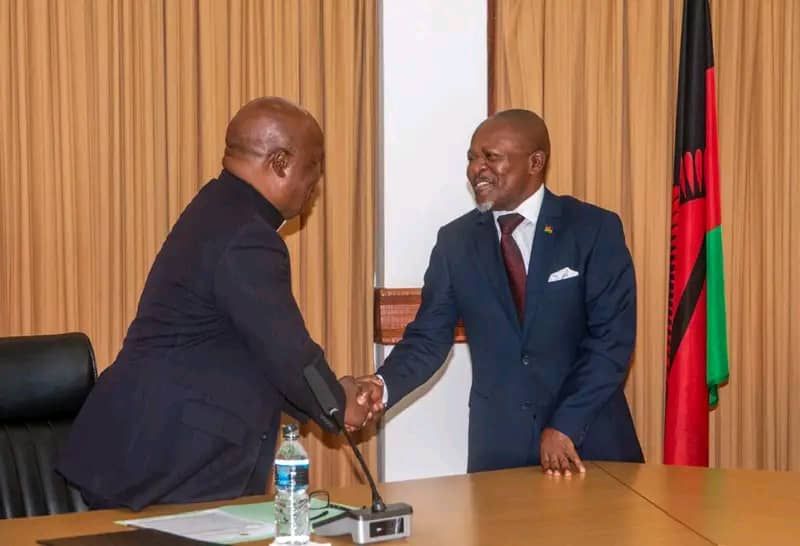
Vice President Dr. Michael Usi is holding a crucial meeting with the quasi-religious body, the Public Affairs Committee (PAC), at Capital Hill in Lilongwe. The high-level discussions, which are taking place behind closed doors, are expected to center on pressing national issues that PAC deems critical to Malawi’s governance, economy, and social welfare.
PAC, led by its chairperson, Monsignor Patrick Thawale, has historically played a significant role in shaping Malawi’s political and socio-economic landscape. The organization is known for advocating good governance, transparency, and accountability, often engaging with government officials to push for policy changes and reforms. While the details of today’s meeting remain confidential, it is widely speculated that topics such as economic instability, governance challenges, and public service delivery are on the agenda.
Vice President Michael Usi
Dr. Usi’s engagement with PAC comes at a time when Malawi is grappling with multiple socio-economic challenges, including high inflation, persistent fuel shortages, and governance concerns. As Vice President, his role in addressing these issues is critical, and PAC’s involvement suggests that civil society and religious leaders are keen on ensuring that government decisions reflect the interests and needs of the people.
Following his meeting with PAC, Dr. Usi is scheduled to meet stakeholders in the fuel sector to discuss the ongoing fuel supply crisis that has affected businesses and daily life across the country. The meeting is expected to bring together key players in the petroleum industry, including representatives from the Malawi Energy Regulatory Authority (MERA), fuel importers, and transporters.
Malawi has faced recurrent fuel shortages in recent months, attributed to foreign exchange constraints, logistical challenges, and supply chain disruptions. The scarcity of fuel has led to long queues at filling stations, increased transportation costs, and disruptions in economic activities. The Vice President’s decision to engage directly with fuel sector stakeholders signals the government’s commitment to finding sustainable solutions to the crisis.
As Malawians await the outcomes of these high-level meetings, expectations are high that Dr. Usi’s discussions with PAC and fuel sector players will yield concrete solutions to the nation’s pressing challenges. His leadership in these engagements could prove crucial in addressing public concerns and restoring confidence in the government’s ability to manage economic and governance issues effectively.
It remains to be seen whether today’s deliberations will lead to immediate policy interventions or long-term strategies to stabilize the country’s socio-economic situation. However, the Vice President’s proactive approach in engaging key stakeholders underscores the administration’s recognition of the urgent need to tackle Malawi’s growing challenges head-on.