Former President and Democratic Progressive Party (DPP) leader, His Excellency Prof. Arthur Peter Mutharika, made a significant stop at Balaka Township on his way to Mangochi South West. This marked a key moment in his ongoing efforts to rally support for his comeback in the upcoming general elections.
Addressing a large crowd that had gathered to welcome him, Mutharika called on the people of Balaka to remain steadfast in their loyalty to the DPP. He urged them to support his bid to reclaim the presidency, promising a return to the party’s development-oriented governance.
Mutharika took the opportunity to remind his supporters of the progress made during his tenure, highlighting the Balaka-Chingeni road project as a prime example of his administration’s commitment to development.
“We had completed compensating landowners along this road, and the project was ready to move forward,” he said. “But for the past four years, the Chakwera administration has done nothing to continue the work we started. This is not just neglect; it is a betrayal of the people’s trust.”
His words resonated with many in the crowd, who expressed frustration over the stalled road rehabilitation, a vital link for economic activities in the region.
Mutharika was accompanied by DPP Vice President for the East, Hon. Bright Msaka, who lauded the people of Balaka for turning out in large numbers to show their unwavering support for their former president.
“We thank you for your loyalty and dedication to our party and to President Mutharika,” Msaka said. “Your presence here today is a testament to the enduring bond between the DPP and the people of Balaka.”
The stop in Balaka is one of many strategic engagements Mutharika has planned as he seeks to solidify his support base ahead of the 2025 elections. His message of development, combined with criticism of the current administration, is central to his campaign narrative.
As the convoy moved on to Mangochi South West, the atmosphere in Balaka was one of renewed hope among DPP supporters who believe that under Mutharika’s leadership, the party can reclaim its position and deliver on its promises of progress and prosperity.
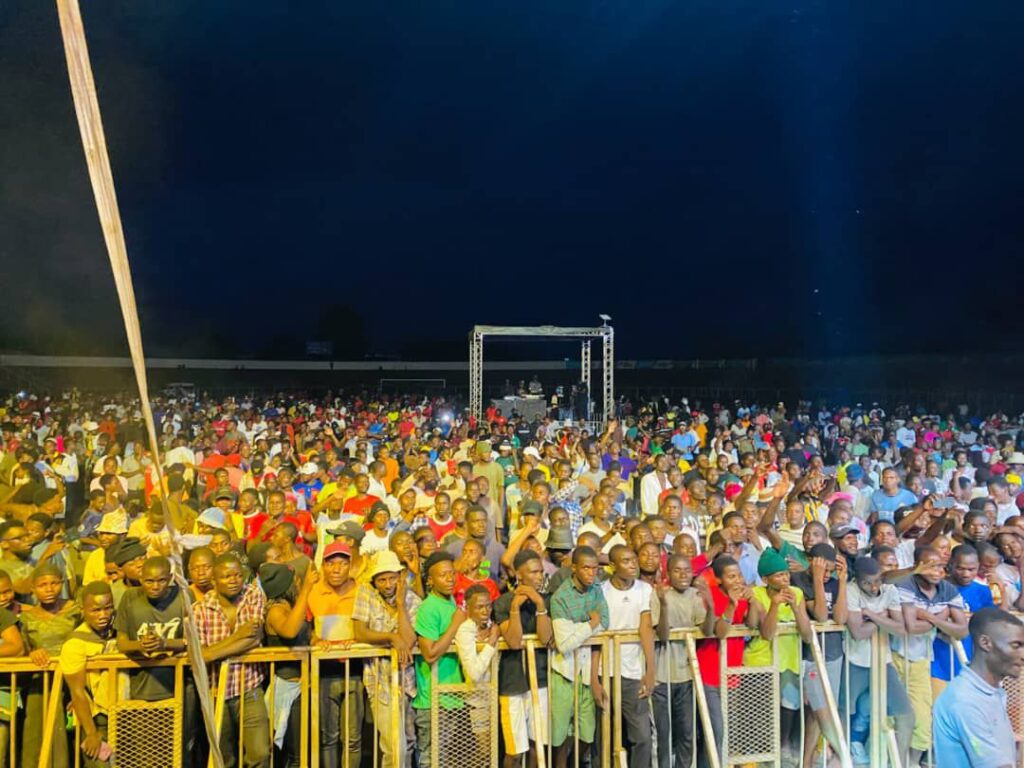
The Youth Concert, a dynamic event designed to encourage young people to register to vote, featured an unforgettable performance by the popular musical duo Nyemba Nyemba Boys, made up of Symon and Kendal. The concert aimed to inspire youth engagement in the upcoming elections and highlighted the importance of voter participation.
Symon and Kendal, known for their infectious rhythms and catchy tunes, brought their signature energy to the stage, captivating the audience throughout their performance. The duo’s songs not only entertained but also carried important messages about civic duty and youth involvement in the electoral process.
In addition to their musical performance, the duo took a moment to acknowledge Lazarus Chakwera, leader of the Malawi Congress Party (MCP). In some of their songs, they praised the leadership of Chakwera, a gesture that sparked conversations among the crowd and added a political dimension to the event. Whether it was a nod to his leadership or a reflection on his role in the current political landscape, the inclusion of such references brought a sense of connection between music and national issues.
The concert’s main focus was to motivate young people to register for the upcoming elections. With voter registration being a key factor in determining the outcome of the elections, the event sought to bridge the gap between entertainment and civic responsibility, ensuring that the message of participation reached the hearts of Malawi’s youth.
The Youth Concert demonstrated how music can be a powerful tool for social and political change. Symon and Kendal’s performance was not only a celebration of music but also a call to action for the youth to be proactive in shaping the future of their country through voting.
The Youth Concert is a resounding success in rallying young people to take part in the democratic process. Symon and Kendal’s contribution highlight the role of music in driving political awareness, while reminding the youth of their responsibility to contribute to the future of Malawi. The event marks an important step in fostering a more engaged and active electorate, setting the stage for a brighter future.
On Saturday, 7th December 2024, Malawi Congress Party (MCP) officials Moses Kunkuyu and Vitumbiko Mumba made a passionate appeal to young people in Malawi, urging those who are eligible to register with the Malawi Electoral Commission (MEC) to ensure they participate in the upcoming 2025 general elections.
The appeal was made during a vibrant Youth Concert dubbed “Kutchaya Kugwetsa,” held in Lilongwe. The event was designed not only as a platform to entertain but also to inspire and motivate young people to engage in the electoral process. The concert brought together several popular musicians who performed for a crowd of enthusiastic youths, with the aim of encouraging those who had already registered to vote, while also urging those who had not yet done so to complete their registration in time for the 2025 elections.
The concert featured performances from well-known artists, including Jetu, Blasto, and Chizmo. Although Dan Lu was scheduled to perform, his set had not yet taken place at the time of the event’s conclusion. The concert created an atmosphere of excitement and youthful energy, which organizers hope will inspire a strong turnout at the polls in the next election.
Speaking to the crowd, Kunkuyu emphasized that the concert was open only to youths who had already registered to vote, and attendees were asked to bring their voter registration documents as a condition of entry. Kunkuyu clarified that the party’s focus was not on the voter registration documents themselves but on ensuring that as many young people as possible are equipped and ready to vote in 2025.
“We want to make sure that the youth are involved in this election. We don’t just want to see documents; we want to ensure that young people actively participate in the process and make their voices heard,” Kunkuyu said.
Mumba echoed these sentiments, stressing the importance of young people using their voting power to shape the future of Malawi. He encouraged all eligible youth to complete their registration and become part of the country’s democratic process.
With young people making up a significant portion of the electorate, MCP’s campaign underscores the critical role that this demographic will play in determining the outcome of the 2025 elections. The party is clearly aiming to galvanize the youth vote, which could be decisive in what is expected to be a highly competitive election season.
The concert, with its blend of entertainment and political messaging, was a strategic move to reach out to young people in a setting where they feel comfortable and engaged, while also reinforcing the importance of voter registration and civic responsibility.
Sparc Systems has been crowned the Best ICT Service Provider of the Year during the prestigious Information and Communication Technology Association of Zambia (ICTAZ) Award Gala held yesterday in Lusaka, Zambia. This recognition underscores the company’s dedication to delivering top-notch IT solutions and services across the region.
Receiving the award, Sparc Systems Managing Director, Wisely Phiri, expressed gratitude and pride in the company’s achievements. He highlighted that the accolade, which was determined by customer votes, reflects the firm’s consistent performance and the trust it has earned from its clientele.
“Being voted by customers in Zambia is a great milestone as it means that the firm is doing great works and that its customers are appreciative,” said Phiri during his acceptance speech.
He reiterated Sparc Systems’ overarching vision, stating, “The vision for Sparc Systems has been to be the best skilled-based IT Service Provider in Africa.”
Founded with a mission to revolutionize IT services, Sparc Systems has grown into a key player in Africa’s ICT landscape, providing cutting-edge solutions in system integration, IT infrastructure, and cybersecurity. Their tailored services have helped businesses in Zambia and beyond thrive in the digital age.
This award adds to the company’s growing list of accolades and cements its reputation as a leader in the ICT sector.
The ICTAZ Award Gala is an annual event that celebrates outstanding achievements in the ICT industry, recognizing individuals and organizations that are driving innovation and excellence in Zambia’s technology ecosystem. This year’s event brought together industry leaders, policymakers, and professionals to honor those who have made significant contributions to the sector.
With this recognition, Sparc Systems is poised to continue its mission of providing innovative and reliable IT services. The company’s commitment to upskilling its workforce and staying ahead in technology trends signals a promising future for the firm and its customers.
As the ICT industry evolves, Sparc Systems remains at the forefront, setting benchmarks for quality and innovation in Africa.
Malawi, a landlocked country in southeastern Africa, is renowned for its agricultural landscape, with maize serving as the cornerstone of its food security and cultural identity. The reliance on rain-fed agriculture, particularly for maize cultivation, poses significant challenges, especially in the face of climate change and erratic weather patterns. As farmers across the nation grapple with the harsh realities of prolonged dry spells, the urgent need for innovative solutions to mitigate the impact of drought on maize production has never been more critical. This article explores various strategies that Malawi can adopt to ensure that the absence of rain does not jeopardize maize crops and, consequently, the food security of its people.
The first step towards enhancing resilience in maize production is the adoption of irrigation systems. Malawi is endowed with numerous water bodies, including lakes and rivers, which can be harnessed for irrigation purposes. By investing in modern irrigation infrastructure, such as drip and sprinkler systems, farmers can ensure a consistent water supply for their crops, regardless of rainfall patterns. The government, in collaboration with non-governmental organizations and international partners, should prioritize the development of irrigation schemes, particularly in regions most vulnerable to drought. Training farmers on efficient water management practices will further enhance the effectiveness of these systems, allowing them to maximize crop yields even in dry conditions.
In addition to irrigation, the promotion of drought-resistant maize varieties is crucial for safeguarding food security. Research institutions and agricultural extension services should work together to develop and disseminate improved maize varieties that can withstand prolonged dry spells. These varieties, often characterized by deeper root systems and enhanced water-use efficiency, can significantly reduce the vulnerability of maize crops to drought. Farmers should be encouraged to adopt these resilient varieties through awareness campaigns and incentives, ensuring that they have access to the seeds and knowledge necessary for successful cultivation.
Furthermore, the implementation of conservation agriculture practices can play a pivotal role in enhancing soil health and moisture retention. Techniques such as minimum tillage, crop rotation, and cover cropping can improve soil structure, increase organic matter, and enhance the soil’s ability to retain moisture. By promoting these practices among farmers, Malawi can create a more sustainable agricultural system that is better equipped to withstand the challenges posed by climate variability. Training programs and workshops should be organized to educate farmers on the benefits of conservation agriculture, providing them with the tools and knowledge needed to adopt these practices effectively.
Another critical aspect of ensuring food security in the face of drought is the establishment of robust early warning systems and climate information services. Farmers need access to timely and accurate weather forecasts to make informed decisions about planting and managing their crops. The government, in collaboration with meteorological agencies, should invest in the development of user-friendly platforms that provide farmers with real-time weather updates and climate forecasts. By equipping farmers with this information, they can better prepare for adverse weather conditions, adjust their planting schedules, and implement appropriate risk management strategies.
In addition to these proactive measures, it is essential to strengthen the social safety nets for vulnerable communities. Droughts can have devastating effects on food security, particularly for smallholder farmers who lack the resources to cope with crop failures. The government should consider implementing food assistance programs, cash transfers, and insurance schemes that provide support to affected households during times of crisis. By creating a safety net, Malawi can help mitigate the impact of drought on food security and ensure that vulnerable populations have access to the resources they need to survive.
Moreover, fostering collaboration between farmers, agricultural researchers, and policymakers is vital for developing effective strategies to combat drought. Establishing platforms for knowledge exchange and dialogue can facilitate the sharing of best practices, innovative solutions, and lessons learned from past experiences. By bringing together stakeholders from various sectors, Malawi can create a more cohesive and coordinated approach to addressing the challenges posed by climate change and ensuring food security.
Investing in education and capacity building for farmers is another essential component of enhancing resilience in maize production. Many smallholder farmers lack access to modern agricultural techniques and technologies that can improve their productivity and resilience to drought. By providing training programs that focus on sustainable farming practices, water management, and crop diversification, Malawi can empower farmers to make informed decisions and adopt practices that enhance their resilience to climate variability. Additionally, promoting access to credit and financial services can enable farmers to invest in necessary inputs, such as irrigation systems and improved seeds, further strengthening their capacity to cope with drought.
The role of technology in enhancing agricultural productivity cannot be overlooked. The integration of digital tools and mobile applications can provide farmers with valuable information on weather patterns, market prices, and best agricultural practices. By leveraging technology, farmers can make data-driven decisions that optimize their production and reduce their vulnerability to climate-related shocks. The government, in partnership with tech companies and agricultural organizations, should work towards expanding access to digital resources and training farmers on how to utilize these tools effectively.
Lastly, addressing the underlying issues of land degradation and deforestation is crucial for ensuring long-term food security in Malawi. Unsustainable land use practices can exacerbate the impacts of drought and reduce the overall productivity of agricultural land. The government should prioritize reforestation initiatives and promote sustainable land management practices that enhance soil health and biodiversity. By restoring degraded lands and protecting natural ecosystems, Malawi can create a more resilient agricultural landscape that is better equipped to withstand the challenges posed by climate change.
In conclusion, the challenges posed by drought and climate variability require a multifaceted approach to ensure food security in Malawi. By investing in irrigation infrastructure, promoting drought-resistant maize varieties, implementing conservation agriculture practices, and strengthening early warning systems, the country can enhance its resilience to climate shocks. Additionally, fostering collaboration among stakeholders, investing in farmer education, leveraging technology, and addressing land degradation are essential components of a comprehensive strategy to combat the impacts of drought on maize production. As Malawi navigates the complexities of climate change, a proactive and coordinated approach will be vital in securing the future of its agricultural sector and ensuring that all Malawians have access to sufficient and nutritious food.