Former President Peter Mutharika, who is also the president of the Democratic Progressive Party (DPP), has pledged to reverse the harmful decisions made by the current administration if the party gets back in power in 2025.
Mutharika made the remarks at the DPP’s southern region fundraising dinner and dance held at the Golden Peacock Hotel in Blantyre on Saturday.
Mutharika
He emphasized that the country has been destroyed by the current government and promised to rebuild it.
Mutharika said his priorities include relocating crucial offices like the Malawi Communications Regulatory Authority(MACRA) and Malawi Housing Cooperation(MHC) back to Blantyre.
He also called on volunteers, including youth, business leaders, women, and men, to join him in uniting and building a brighter future.
Mutharika stressed the importance of genuine support and encouraged supporters to exercise their right to vote in the 2025 General Elections.
Mutharika ruled Malawi from May 2014 to June 2020.
MISA Malawi has expressed sadness over the death of former Malawi Broadcasting Corporation (MBC) newsreader Joshua Kambwiri who died on Saturday morning in Blantyre.
In a statement signed by MISA Malawi Chairperson Golden Matonga, Kambwiri will be remembered for his commitment to media professionalism and broadcasting excellence.
“Our condolences go to the Kambwiri family, colleagues at MBC, Nkhoma Synod Radio, TWR and the entire media fraternity,” reads the statement in part.
The Late Joshua Kambwiri
Kambwiri was one of the popular and articulate English newsreaders at MBC in the 1990s and early 2000s.
Kambwiri also served as a Station Manager for Nkhoma Synod Radio and helped the setting up of the now defunct Galaxy Radio, Dziko FM and volunteered with Transworld (TWR) at some point.
The Malawi Electoral Commission (MEC) has been at the center of controversy in recent times, with many calling for the resignation of its chairperson, Dr. Anabel Mtalimanja.
The opposition and other concerned citizens and stakeholders have been vocal about their demands, citing various reasons for their request.
However, Mtalimanja remains defiant, refusing to step down.
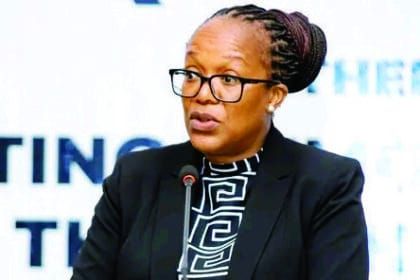
Mtalimanja
The MEC plays a crucial role in ensuring free, fair, and credible elections in Malawi.
As the body responsible for overseeing the electoral process, its independence and impartiality are essential.
However, allegations of violations of electoral laws and irregularities have raised concerns about the commission’s ability to conduct fair elections.
Mtalimanja has been under fire with some accusing her of bias and incompetence.
The Democratic Progressive Party (DPP) and other opposition parties have been particularly vocal in their criticism, calling for electoral justice and fair elections.
Despite the mounting pressure, Mtalimanja has shown no signs of backing down.
In a recent speech, Mtalimanja emphasized the importance of the MEC’s role in ensuring the integrity of the electoral process.
While her commitment to the commission’s mission is commendable, many question whether she is the right person to lead the MEC.
*Calls for Resignation*
The opposition’s demands for Mtalimanja’s resignation are not unfounded.
Allegations of electoral irregularities and bias have marred the commission’s reputation.
Furthermore, concerns about the MEC’s independence and impartiality have been raised, with some accusing Mtalimanja of being too close to the ruling party.
*Support for Mtalimanja*
Despite the criticism, Mtalimanja still enjoys support from some quarters.
Her supporters argue that she is a competent and experienced leader who has dedicated her career to public service.
They also point out that the MEC’s challenges are not solely her responsibility, but rather a result of systemic issues and external pressures.
*Conclusion*
The controversy surrounding Mtalimanja’s refusal to resign as MEC chair raises important questions about the role of the electoral commission in ensuring democratic governance.
While Mtalimanja’s commitment to the commission’s mission is commendable, the allegations of bias and incompetence cannot be ignored.
Ultimately, the decision to resign or remain in office is Mtalimanja’s to make.
However, it is crucial that the MEC prioritizes transparency, accountability, and impartiality to maintain public trust.
As Malawi prepares for the 2025 general elections, the electoral commission’s credibility will be put to the test.
Will Mtalimanja’s defiance be seen as courageous or stubborn?
Only time will tell. One thing is certain, however: the MEC’s integrity and independence are essential to Malawi’s democratic future.
President and Commander in Chief of Muvi wa Chilungamo Revolutionary Party (MRP) Bantu Saunders Jumah, has expressed his gravest concern just like all political parties as well as all Malawians that President Dr. Lazarus Chakwera’s administration has changed Malawi, the country is no longer a democracy and a multiparty nation that Malawians hard fought for it.
Jumah said what happened in Lilongwe on the 13th November, 2024 was one biggest mistake that President Chakwera will live to regret saying MCP is the oldest political party in the country, it was supposed to act and move with time.
He said people thought that after Kamuzu Banda the succeeding leaders will transform the MCP to be democratic since the laws of the country changed from one-party state to multiparty democracy but everyone is shocked to see President Chakwera crushing the very norms and values that he used to get into government in 2020.
Writing in a statement, Jumah has condemned President Chakwera’S administration, his leadership, his party and all those guiding him that he is laying eggs of war, hatching eggs of civil strife claiming that any state President who does what Chakwera is doing, has no place to be a leader in the World.
Jumah said seeing his government deploying heavily armed police into the streets on 13th November, 2024 firing tear gas and observing dozens of his supporters armed to teeth with pangas and other tools clearly tells Chakwera is not a leader to be in this generation of multiparty ideas and culture.
He said Malawians are not surprised the “no vote” that the MCP gave on the 14th June, 1993 rejecting democracy and multipartism warning President Chakwera that if he thinks the powers he has are permanent, he is deceiving himself, these powers are temporary, the powers are always passed on to the next.
The MRP President said President Chakwera’s desperation to remain in power after he has messed up the social economic trajectory of the country will not work by the use of force or terror advising him not to make citizens suffer for his mistakes.
“You had ample time, you had space and an opportunity to govern this country well, but you have squandered the opportunity yourself,” said Jumah.
He has pleaded with President Chakwera to direct Malawi Police Service to arrest all the people who caused chaos in Lilongwe together with their sponsors and financiers, warning him that failure to apprehend the culprits, this will be a call on the Malawi Defense Force (MDF) to come to the rescue of citizens when another democratic protest is called.
Jumah said it is clear that President Chakwer never wanted to be in power for the people and country but for his personal greed saying MPS is not serving the nation and has failed its duty reminding him that if all avenues are exhausted, civilians of Malawi will rise up and defend their hard-won democracy.
He said a President is a figurehead that stands for the law regardless of which political party he belong, saying President Chakwera is on the wrong side of the law, of the Constitution, of the people and of God, he will not rule beyond 2025 through force but only through the people.
In democratic societies, the establishment of a commission of inquiry is often seen as a vital mechanism for addressing issues of public concern, investigating allegations of misconduct, and promoting transparency and accountability.
When a president institutes such a commission, it is typically tasked with examining specific issues, gathering evidence, and making recommendations based on its findings.
However, the effectiveness of a commission of inquiry largely depends on its approach to evidence gathering and the methods it employs to engage with the public and relevant stakeholders.
At the heart of a commission’s mandate is the need to uncover the truth.
This often involves investigating complex issues that may have significant political, social, or economic implications.
The commission must navigate a landscape fraught with potential biases, conflicting interests, and the challenge of ensuring that all voices are heard.
Therefore, the question arises: should a commission actively seek out individuals with evidence to testify, or should it adopt a more passive approach, inviting those with information to come forward voluntarily?
One of the primary responsibilities of a commission of inquiry is to establish a framework for evidence gathering that is both comprehensive and fair.
This involves not only identifying key individuals who may possess relevant information but also creating an environment where witnesses feel safe and encouraged to share their experiences.
A proactive approach, where the commission actively reaches out to potential witnesses, can be beneficial in ensuring that no critical information is overlooked.
This method can help to identify individuals who may not come forward on their own due to fear of reprisal, lack of awareness, or other barriers.
Moreover, a commission that takes the initiative to identify and interview specific individuals can enhance the credibility of its findings.
By demonstrating a commitment to thoroughness and diligence, the commission can build public trust in its process and outcomes.
This is particularly important in cases where the issues at hand are contentious or politically charged.
When the public perceives that a commission is taking its responsibilities seriously and is willing to engage with a wide range of stakeholders, it can foster a sense of legitimacy and authority in the commission’s work.
However, there are also arguments in favor of a more passive approach, where the commission invites individuals to come forward with evidence.
This method can empower witnesses and encourage grassroots participation in the inquiry process.
By allowing individuals to self-identify as having relevant information, the commission may uncover a broader range of perspectives and experiences.
This can be particularly valuable in cases where the issues are deeply rooted in community dynamics or where marginalized voices may otherwise go unheard.
Additionally, a passive approach can help to mitigate concerns about the commission overstepping its bounds or appearing to target specific individuals.
By creating an open invitation for testimony, the commission can position itself as a neutral arbiter, focused on gathering information rather than pursuing a predetermined agenda.
This can be crucial in maintaining public confidence in the commission’s impartiality and integrity.
Nevertheless, the challenge with a purely passive approach lies in the potential for underreporting or incomplete evidence gathering.
Individuals may be hesitant to come forward due to fear of repercussions, lack of trust in the process, or simply a lack of awareness that their testimony is sought.
In such cases, the commission may miss critical information that could inform its findings and recommendations.
To strike a balance between these two approaches, a commission of inquiry could adopt a hybrid model.
This would involve actively identifying key individuals and groups who may have relevant information while also creating an open platform for voluntary testimony.
By combining proactive outreach with an invitation for public participation, the commission can maximize its chances of gathering comprehensive and diverse evidence.
Furthermore, the commission should prioritize creating a safe and supportive environment for witnesses.
This may involve implementing measures to protect the identities of those who come forward, providing legal protections against retaliation, and ensuring that the inquiry process is transparent and accessible.
By fostering a culture of trust and respect, the commission can encourage more individuals to share their experiences and insights.
In conclusion, the establishment of a commission of inquiry is a critical step toward addressing issues of public concern and promoting accountability.
The effectiveness of such a commission hinges on its approach to evidence gathering.
While there are merits to both proactive and passive methods, a hybrid approach that combines elements of both can enhance the commission’s ability to uncover the truth.
By actively seeking out witnesses while also inviting voluntary testimony, the commission can create a comprehensive and inclusive inquiry process.
Ultimately, the goal should be to ensure that all relevant voices are heard, and that the commission’s findings are grounded in a thorough and impartial examination of the evidence.
In doing so, the commission can fulfill its mandate and contribute to the broader goals of justice and transparency in society.