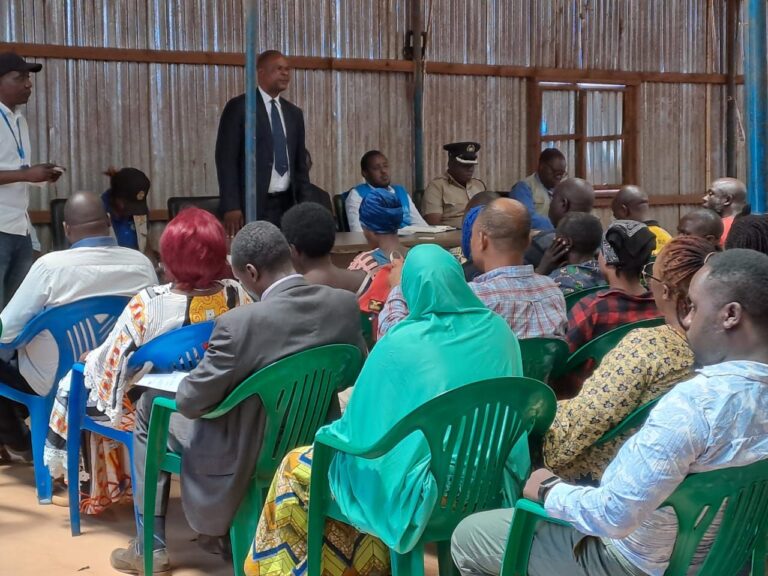
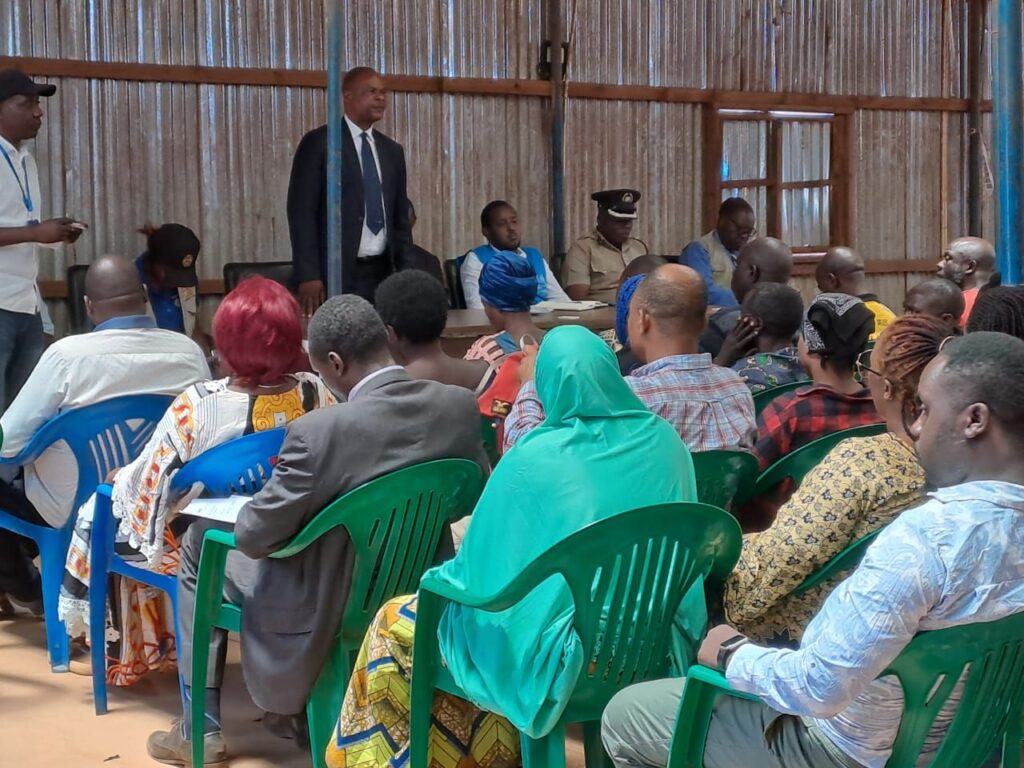
On Tuesday, November 5, 2024, refugees were informed about the process of obtaining convention travel documents to enhance their security and wellbeing.
Hilda Kausiwa from the Department of Refugees outlined the criteria for obtaining these documents, which are available to refugees needing medical treatment abroad, attending legal matters, pursuing education, and other valid reasons.
To apply, refugees must submit a detailed, signed request to the authorities, including an exit letter from the camp manager, proof of refugee status, two passport photos, police clearance, and supporting documents from the UNHCR.
Inspector Prince Matope, Immigration Coordinator for IOL, explained that their role is to verify the applicant’s refugee status in the database. If verified, the process takes up to 10 working days after a payment of K70,000. However, applications can be rejected on security grounds.
Dowa Police Officer In-Charge Mr Almakio Daka Assistant Commissioner of Police emphasized the importance of using the document correctly, warning that misuse would not be tolerated.
He also highlighted the police’s role in ensuring the security of the refugees and the integrity of the travel documents.
Daka said regular checks and monitoring will be conducted to prevent any fraudulent activities.
Currently, 2,000 booklets are available for 55,000 refugees.
Pali chiopsezo choti chiwerengero cha anthu odzavota pa anthu oposera 23,000 m’dera la Nsondole pansi pa mafumu a kulu Kuntumanji ndi Nkagula sadzavota nawo kutsala njala yamnanu m’boma la Zomba.
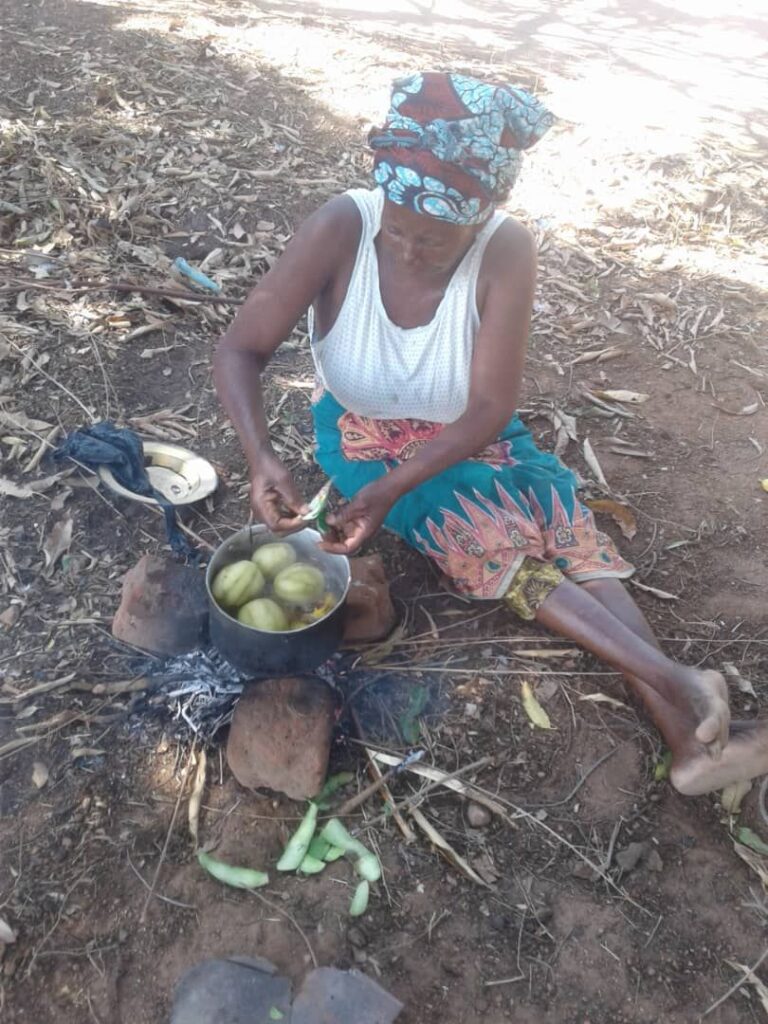
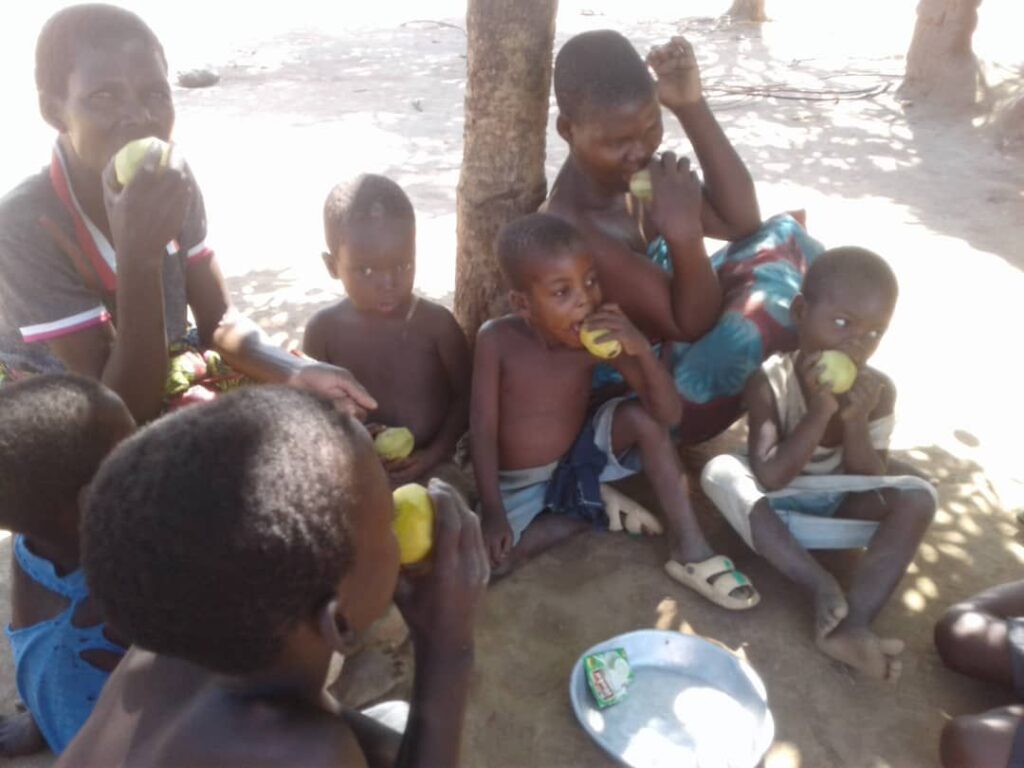
Malingana ndi anthu omwe tacheza nawo m’maderawa ati akungodya mango powaphika ngati ngosapsa penanso kupanga zokumwa powafinya akakhala opsera mumtengo ndipo izi zakhala zikuchitika kwa miyezi yoposera isanu (5).
A Gift Chiuma omwe ndi wokhudzidwa komanso Mfumu Sadi omwe dzina lawo lenileni ndi Louis Zgambo ati izi zili ndi kuthera kwakukulu kotenga miyoyo ya anthu ochuluka pomwe ena akumakomokakomoka kuphatikizapo anthu achikulire ndi ana.
Ndipo m’mawu ake yemwe akufuna kudzaimira uphungu m’derali a Leonard Kafunsila ati afikira kale mtsogoleri wa chipani cha People’s mai Joyce Banda ndipo akudikirira yakho ndipo iwo aperekapo thandizo lochepa la ufa.
“Ine kumbali yanga ndalakhulapo ndi mtsogoleri wa chipani chathu Mai Joice Banda ndipo andilonjeze kuti achitapo kathu”atero akafunsila.
Iwo ati kutalika kwa mtunda wokapeza nthandizo la zipangizo za ulimi zotsika mtengo (AIP) ndi zinanso zomwe zakoledzera vutoli,ponena kuti anthu ena akumayenda mtunda wa makilomita 3 enanso mpaka 10 kuti akapeze zipangizozi,zomwe nzosowekera mphamvu pokudyanso mukwanira.
“Vutoli kumbali ina yakula potengeranso kuti dziko lino linakhudzika ndi namondwe nde anthu ambiri sanadzitolerebe komanso kupeza katundu mu AIP mtunda ukukhala wautali kwa anthuwa madela amenewa, ndipo pakufunika mphamvu zoyendera kukafika ku malowa koma zingatheke ndi chakudya chokha basi” Anaonjezera motero akafunsila.
Tinayesetsanso kuti tiyakhule ndi phungu yemwe akuimira derali a MacNice Abu Naliwa koma foni yawo simapezeka.
Naliwa ndi phungu wa chipani cha Democratic Progressive(DPP) ndipo izi a Kafunsila akufuna kuti adzaimire mpando omwewu pansi pa chipani cha People’s (PP).
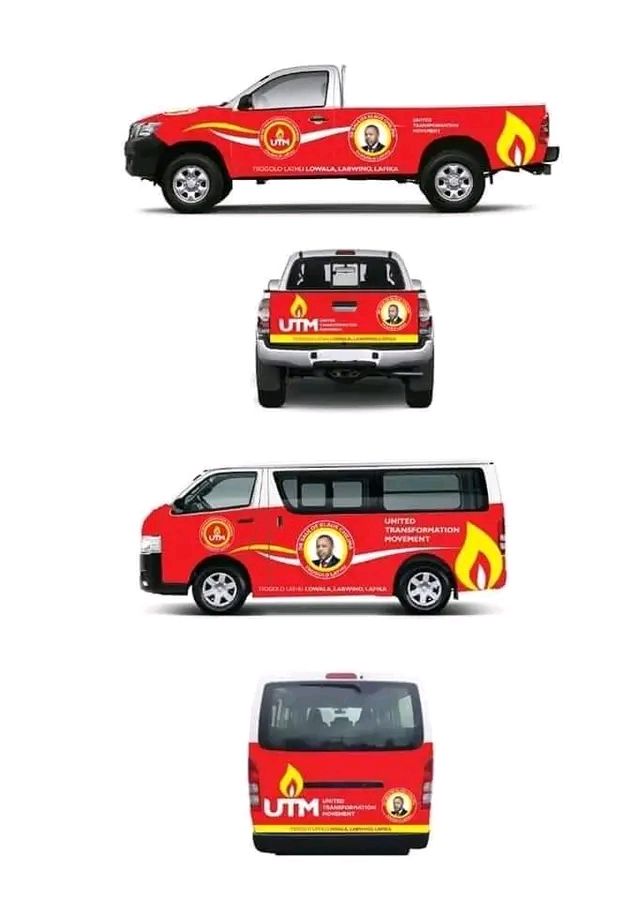
The sudden demise of UTM leader Dr. Saulosi Klaus Chilima in June has sparked a fierce battle for control within the party, with his family and the party engaging in a bitter dispute over the ownership of multiple vehicles.
At the heart of the controversy are 28 vehicles, which Chilima’s family claims as personal property, citing sentimental value.
However, UTM officials counter that the vehicles were purchased using party funds, including loans from banks and individuals, making them party assets. A senior UTM official, who wished to remain anonymous, emphasized that if the family wants to claim ownership, they must also agree to settle the outstanding loans.
The dispute has taken a dramatic turn, with both sides exchanging accusations and threats. In a bold move, Chilima’s family has locked seven vehicles in a safe compound, sparking allegations from UTM members that they are prioritizing personal interests over the party’s well-being.
Some UTM officials believe that if Mary Chilima, the widow of Dr. Chilima, takes over the party leadership, the ownership dispute will be resolved naturally.
However, this proposal has received negative feedback so far.
The battle over vehicle ownership is a microcosm of the larger struggle within UTM.
As the party navigates this critical juncture, resolving the dispute will require a delicate balance of personal, party, and public interests.
Dr. Chilima’s passing created a power vacuum within UTM, with various factions vying for control.
His family, who were instrumental in his rise to leadership, now find themselves at odds with party officials.
The 28 vehicles at the center of the dispute were purchased during Dr. Chilima’s tenure as party leader.
While his family claims they were bought for personal use, UTM officials argue that they were acquired using party funds.
As the dispute continues to simmer, UTM officials are calling for a resolution that prioritizes the party’s interests.
With the party’s future hanging in the balance, finding a solution that balances personal, party, and public interests is crucial.
The outcome of this dispute will have far-reaching implications for UTM’s future.
Will the party emerge stronger and more united, or will the battle for control tear it apart?
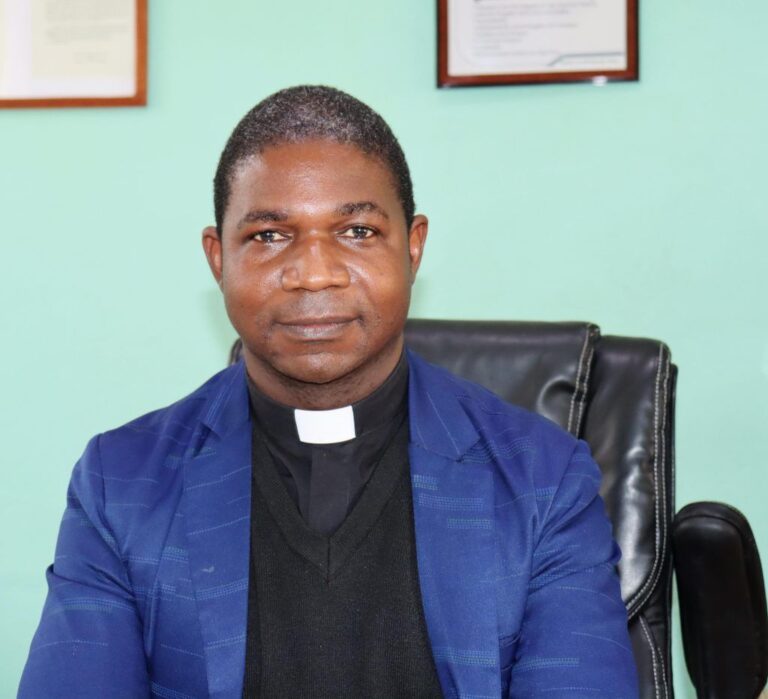
The Episcopal Conference of Malawi (ECM) has appointed Reverend Father Dr. Wilfred Sumani as the acting vice chancellor of the Catholic University of Malawi (CUNIMA).
This comes after the passing of the country’s well-known legal scholar, Associate Professor Ngeyi Ruth Kanyongolo, who was the vice chancellor until her death.
In a letter, ECM Chairperson, Most Reverend George Tambala, states that the decision ensures the university’s continued leadership as the ECM works on permanently filling the position.
Sumani
Previously, Reverend Dr. Wilfred Sumani served as the Director of Academic Affairs at CUNIMA in 2021.
CUNIMA is an accredited institution of higher learning established by ECM on October 16, 2004.
The University started admitting students in 2006 and was officially opened on 28th October, 2006 by the late President Bingu wa Mutharika.
It has seven faculties, namely Commerce, Education, Law, Nursing and Midwifery, Science, Social Sciences and Theology.
Since its establishment,CUNIMA has grown its student body from 129 in 2006 to 4000-plus in 2020.
The university has held nineteen congregations, with over 2000 graduates joining the industry in Malawi and beyond.
CUNIMA has an affiliation agreement with the Inter Congregational Institute (Balaka), St. Anthony Major Seminary, and St Peter’s Major Seminary (Zomba).
The Government of Malawi, through the Ministry of Local Government, Unity, and Culture, has provided clarity on the substantial budget of K2.7 billion allocated for the construction of the Gwanda Chakwamba mausoleum. This announcement comes amid public scrutiny regarding the cost associated with the memorial, emphasizing that the funds encompass a comprehensive package of projects designed to honor the late political icon and freedom fighter.
Lovemore Mazibuko, the Director of Culture in the Ministry, explained that the mausoleum’s budget includes several critical components beyond the mausoleum structure itself. The allocated funds will cover the establishment of a library or information center, the construction of two staff houses, a car park, landscaping, and a tarmacked road connecting to the main road. Additionally, the rehabilitation of the late Chakwamba’s residence is part of this ambitious project.
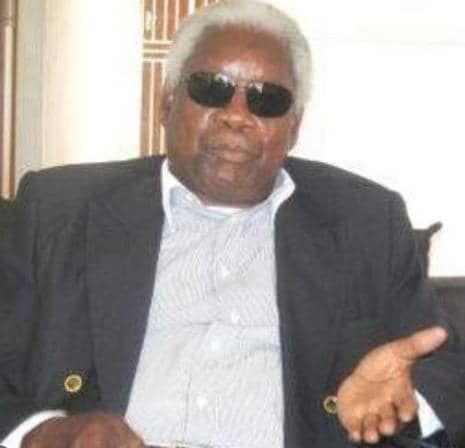
Gwanda Chakuamba
“If you factor all these projects into this ‘mausoleum package,’ the amount of money rises to K2.7 billion, which is reasonable looking at the power of our currency,” Mazibuko stated. He emphasized that the mausoleum is not merely a standalone building but part of a broader initiative aimed at preserving the legacy of Gwanda Chakwamba. Mazibuko drew parallels with the mausoleum of another prominent figure, late Orton Chirwa, highlighting that no mausoleum in the world is built without an accompanying information center to educate visitors about the historical significance of the figure being honored.
Mazibuko further elaborated that the mausoleum for Orton Chirwa is also nearing completion, with expectations of finishing by December this year. He noted that several projects, including the construction of four houses for Chirwa’s relatives, have been underway for two years at the site.
In a show of appreciation, Senior Traditional Authority Chimombo from Nsanje district commended the government for moving forward with the construction of the Gwanda Chakwamba mausoleum as a fitting eternal resting place for the late leader. He remarked on Chakwamba’s significant contributions to the political and socioeconomic development of Malawi, particularly in the districts of Nsanje and Chikwawa.
“Late Chakwamba was a distinguished son of the soil who played a critical role in shaping the political and socioeconomic development of the country. He fought against injustice, inequality, and poverty for his people. He showed us a principled life,” Chimombo stated. He further praised Chakwamba’s humility and dedication to the welfare of others, noting how he helped pay school fees for the underprivileged and orphans, thereby motivating many to pursue education.
The tender for the mausoleum’s construction has been awarded to PMC Construction Limited, which will also oversee the development of a road named in honor of Gwanda Chakwamba, the Chakwamba Highway.
Born on April 4, 1934, Gwanda Chakwamba passed away on October 24, 2016, due to complications related to old age. A key figure during the Malawi Congress Party (MCP) regime under the late Kamuzu Banda, Chakwamba held several high-ranking cabinet positions before retiring from active politics during the first year of late President Bingu wa Mutharika’s administration.
As the mausoleum project progresses, it stands as a testament to the Malawian government’s commitment to preserving the legacies of its national heroes and fostering a deeper understanding of their contributions to the nation’s history.