

Saturday, December 13, 2025
No menu items!
spot_img
Home Blog Page 822

Analysis of Twink Jones Gadama’s Critique on the Modern Church’s Shift Toward Profit


By Burnett Munthali

Twink Jones Gadama’s write-up on the modern church’s shift from a spiritual sanctuary to a profit-driven institution presents a sobering critique of what has become a troubling trend within religious organizations. Gadama argues that, while churches have traditionally been centers for faith, community support, and personal growth, they are increasingly focusing on financial gain, often to the detriment of their members. This analysis examines Gadama’s key points, reflecting on the implications of this shift and the need for a return to authentic spiritual leadership.



In his analysis, Gadama highlights a central paradox: churches are becoming businesses, while the very people who sustain them are burdened financially. One of the most telling examples he provides is the establishment of church-run schools. While these institutions often provide high-quality education, the costs for families are substantial. Tuition, admission fees, and other charges contribute to the church’s growing wealth, creating a reliable revenue stream. The same can be said for church-owned healthcare facilities, which, while providing essential services, also generate significant income for the church. This trend raises questions about whether congregants should still be obligated to give tithes and offerings while the church maintains multiple income streams.

Gadama’s point that “the church has become a business, and we’re the customers” resonates with many who feel that modern churches prioritize profit over people. This sentiment is echoed by Emily, a member who shared her frustration that spiritual support often seems secondary to financial demands. Gadama’s critique extends to the lifestyles of church leaders, who often enjoy luxury homes, expensive cars, and significant financial security while their congregants struggle to meet basic needs. This disparity challenges the church’s moral standing and leaves members questioning the sincerity of a faith that preaches humility but indulges in opulence.

The implications of this wealth-focused approach are profound. First, many church members feel disillusioned and exploited. When they see their leaders living luxuriously while they are urged to make sacrifices for the “greater good,” the sincerity of the church’s mission becomes questionable. This disillusionment has led to a decline in giving, as members become increasingly skeptical of the church’s intentions and reluctant to support an institution that appears to prioritize wealth accumulation over compassion and service.

Gadama makes a compelling case for the need for transparency. He argues that churches should openly disclose their finances, allowing members to see how their contributions are utilized. This approach could foster greater trust and accountability, reassuring congregants that their donations support genuine community initiatives rather than luxury lifestyles. Additionally, Gadama suggests that the church’s leaders must refocus on serving their congregants, putting people’s needs before financial ambitions. Without this fundamental shift, Gadama warns, the church risks losing its moral authority and spiritual relevance.

Finally, Gadama’s appeal for a return to the church’s core values is a timely reminder of its true mission: to offer guidance, compassion, and hope. The message from the Bible—”Where your treasure is, there your heart will be also” (Matthew 6:21)—captures this sentiment perfectly. The true wealth of the church should be found not in its bank accounts but in the spiritual growth and well-being of its members.

Gadama’s analysis underscores a necessary conversation about the role of the modern church in society. Churches must re-evaluate their priorities, striving to be true to their mission as sanctuaries for faith and compassion. By returning to these principles and ensuring that their focus remains on uplifting and supporting their members, churches can once again become beacons of hope and integrity within their communities.
The Church’s Hidden Agenda: Exploiting Faith for Financial Gain

By Twink Jones Gadama

The institution of the church has long been revered as a sanctuary for spiritual growth and community service.

However, a closer examination reveals a startling truth: churches are increasingly venturing into lucrative business ventures, prioritizing profit over people.

This phenomenon has led to a paradoxical situation where church members are burdened with financial obligations, while pastors and church leaders bask in opulence.


One of the most striking examples of the church’s foray into business is the establishment of schools.

From primary to secondary schools and even universities, churches have created an extensive educational network.

While these institutions provide quality education, they also generate substantial revenue for the church.

Tuition fees, admission charges, and other expenses contribute significantly to the church’s coffers.

Similarly, churches have ventured into the healthcare sector, establishing hospitals and medical facilities.

These institutions provide essential services but also reap substantial financial benefits. The question remains: should church members be expected to pay tithes and offerings when the church itself has multiple streams of income?

The answer is unequivocal: no. Church members should not be strained financially, especially when the church has its own income-generating activities (IGAs).

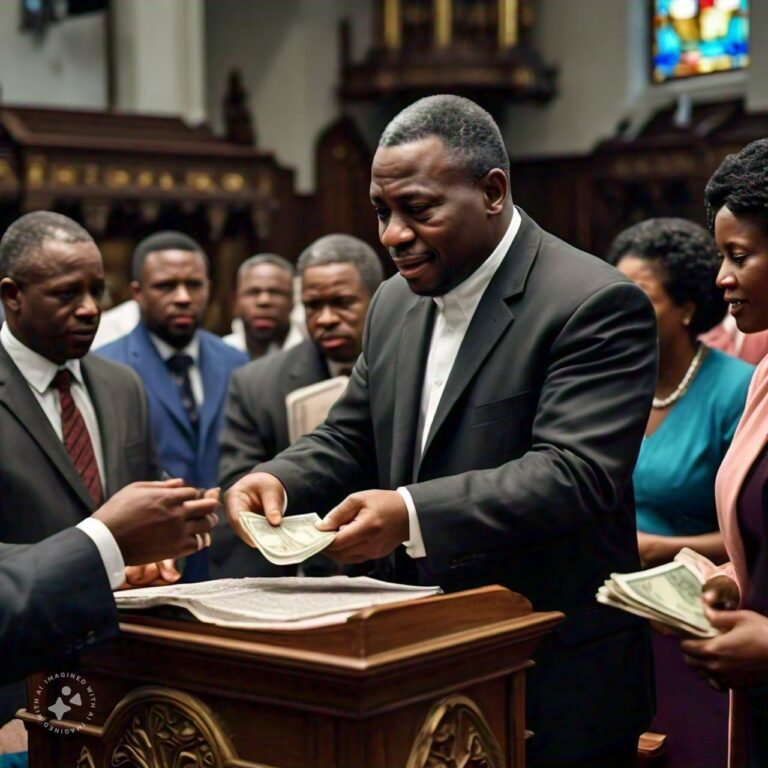
Pastors and church leaders receive monthly salaries, drive luxury cars, and reside in opulent homes, all while encouraging their congregants to give generously, promising them heavenly rewards.

This stark contrast between the church’s wealth and its members’ struggles has sparked widespread criticism.

Many argue that the church’s focus on financial gain has compromised its spiritual mission.

The emphasis on tithing and offerings has become a tool for exploitation, rather than a genuine expression of faith.

“The church has become a business, and we’re the customers,” laments Emily, a frustrated church member. “They’re more concerned with collecting money than helping us spiritually.”

This sentiment is echoed by many who feel that the church’s priorities have shifted from serving the community to serving its own interests.

The implications of this trend are far-reaching. Church members, already struggling financially, are forced to sacrifice even more to support the church’s lavish lifestyle.

This has led to decreased giving, as members become disillusioned with the church’s motives.

Moreover, the church’s focus on financial gain has compromised its moral authority.

How can church leaders preach about humility and selflessness while indulging in luxury themselves?

To restore the church’s integrity and spiritual purpose, a fundamental shift is necessary.

Church leaders must reevaluate their priorities, recognizing that their primary responsibility lies in serving their congregation, not accumulating wealth.

Transparency is essential.
Church finances should be openly disclosed, ensuring accountability and trust.

Members have the right to know how their contributions are being utilized.

Ultimately, the church must rediscover its true mission: spreading love, compassion, and hope.

By doing so, it will reclaim its moral authority and spiritual relevance.

As the Bible teaches, “Where your treasure is, there your heart will be also” (Matthew 6:21).

The church’s treasure should not be measured in dollars and cents but in the hearts of its members.

The church’s hidden agenda of exploiting faith for financial gain must be exposed and addressed.

Church members deserve better. They deserve a church that prioritizes their spiritual growth and well-being over financial profit.

By reclaiming its spiritual purpose and prioritizing its members’ needs, the church can once again become a beacon of hope and light in the community.

TiKuMA Programme Launched to Enhance Educational Outcomes for Children in Malawi

0


By Elywin Chighali Mhango

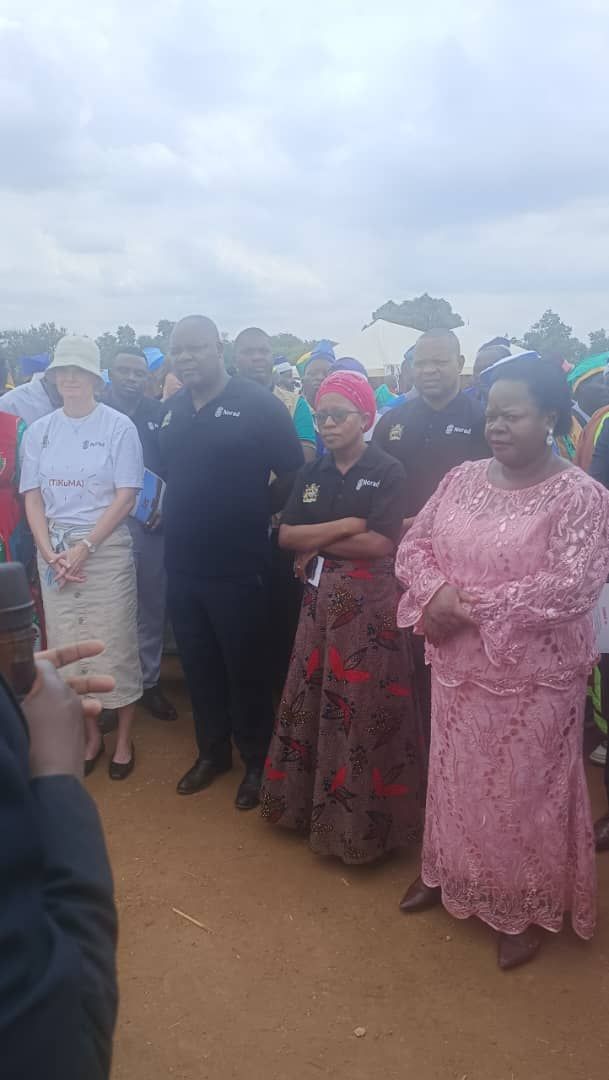
The Principal Secretary for Basic Education in the Ministry of Education, Dr. Rachel Chimbwete Phiri, announced the launch of the TiKuMA Programme, a significant initiative aimed at improving children’s educational rights and outcomes in Malawi. The launch took place on Thursday at Mduwa Primary School in Mchinji District, with the event underscoring the government’s commitment to advancing children’s rights to education.

Funded by the Norwegian government through the Norwegian Agency for Development Cooperation (Norad) with an investment of K18 billion, the TiKuMA Programme will be implemented across three Traditional Authorities (TAs) in Mchinji and six TAs in Balaka. The program aims to ensure that all children can access education and are supported by robust community and government systems by 2028.

Dr. Phiri expressed optimism regarding the programme’s potential, citing past successful collaborations between the Malawian government and Save the Children, which were also aligned with Norwegian funding. She highlighted the achievements of previous initiatives, including the Malawi Inclusive Education Programme, which improved educational access for vulnerable children in various districts.

“Today, I stand here reflecting on the valuable work we’ve achieved together with Save the Children and with the generous support from the Government of Norway and Norad,” Dr. Phiri remarked, emphasizing the positive impact of initiatives like the Securing Child Rights through Education and Protection (SCREP) Programme. She noted significant improvements in educational outcomes, including a rise in reading proficiency among Grade 4 learners and a reduction in the dropout rate among girls due to child marriage.

Dr. Nertha Semphere Mgala, Principal Secretary in the Ministry of Gender, Community Development and Social Welfare, also spoke at the launch, reinforcing the inseparable link between education and protection for all children. “The government will continue to tackle challenges to ensure no child is left behind,” Dr. Mgala stated.

Norwegian Ambassador to Malawi Ingrid Marie Mikelsen reaffirmed her country’s dedication to advancing children’s rights through improved education and child protection systems.

The Ministry of Education will spearhead the TiKuMA Programme, focusing on enhancing the capacity of school leadership, promoting digital technology in teaching literacy and numeracy, and adopting child-centered, participatory teaching practices. This initiative represents a significant step forward in enhancing educational outcomes for children in Malawi, ensuring a brighter future for the nation’s youth.

The Authentic Essence of Exemplary Leadership

By Political Contributor

Dr Lazarus Chakwera, the President of Malawi, stands as a beacon of true leadership, particularly highlighted through his recent judicious appointments related to the investigation of the tragic aircraft crash in Thungwa, located within the Mzimba District.

His carefully considered choices reflect a profound commitment to transparency and accountability, ensuring that the citizens of Malawi remain well-informed about the details and circumstances surrounding this heart-wrenching incident.

President Chakwera


Among his notable appointments, the inclusion of human rights activist Silvester Namiwa stands out as a commendable gesture by the President.

However, the subsequent resignation of Namiwa raises concerns, hinting at deeper issues fueled by tribalism and underlying political motives that have cast a shadow over his integrity and intentions.

It is essential to consider that Namiwa’s historical allegiance to the opposition Democratic Progressive Party (DPP) could be seen as a conflict of interest, ultimately undermining the credibility of his pursuit for truth in the investigation of the plane crash.

In marked contrast, President Chakwera’s inclusive leadership style is characterized by his willingness to engage with individuals holding differing opinions, showcasing his statesmanship and unwavering dedication to fostering unity and understanding among the various tribal factions.

His approach goes beyond mere political rhetoric; it signifies a transformative journey aimed at overcoming historical divisions and building a cohesive national identity.

Under Chakwera’s leadership, Malawi has seen a cultural shift where journalists are encouraged to voice their opinions freely, civil servants feel inspired to perform their duties with dedication, education takes centre stage, and the rights of individuals are safeguarded without discrimination. This environment nurtures a spirit of collaboration and progress that benefits the entire nation.

Despite all these efforts by President Chakwera, the opposition, led by Peter Mutharika and the Democratic Progressive Party (DPP), has resorted to employing divisive tactics, leveraging groups such as Mulhako Wa Alhomwe to undermine Chakwera and the Malawi Congress Party (MCP).

This practice of sowing hatred needs careful examination and proactive scrutiny from the Malawian public, who deserve clear and honest governance.

President Chakwera’s transformative influence on Malawi’s political landscape is undeniable, as he steadfastly adheres to principles of unity, transparency, and tangible progress.

His efforts have set a new standard for governance, inspiring hope and fostering a brighter future for all Malawians.

Stalemate at Kamuzu Stadium as Bullets come from behind to draw 1-1 against Dynamos

0

By McLloyd Kudzingo

TNM Super League Defending champions FCB Nyasa Big Bullets came from behind to draw 1-1 against Premier Bet Dedza Dynamos at Kamuzu Stadium on Thursday afternoon.

Ibrahim Sadik put the visitors in front in the 65th minute but Lameck Gamphani scored the equaliser against his former club after an assist from Crispin Mapemba.

Donnex Mwakasinga receiving the man of the match award


Both sides started the game very well but it was Dedza who got the first clear chance through Marko Chiwaya in the 18th minute but Richard Chimbamba made a brilliant save to deny the visitors an early lead.

Babatunde Adepoju had a chance to put Bullets in front from the penalty spot in the 25th minute following a hand ball incident but his spot-kick was saved by Dynamos’ goalkeeper Donnex Mwakasinga

The second half proved to be very exciting but it was not without any drama as Dynamos player Khumbo Banda was shown a Red Card for foul language in the 83rd minute before an alleged Bullets fan jumped onto the pitch to drop a bottle of urine at the visitors goal.

After the match Dedza Dynamos goalkeeper Donnex Mwakasinga was voted man of the match.

Following the draw, the People’s team remain third on the log table with 41 points after playing 24 games and Dynamos are stuck on position 11 with 30 points.

Elsewhere, Moyale Barracks thumped bottom placed Baka City 4-1 at Mzuzu Stadium to move to position 6 on the log table.

The soldiers scored through Emmanuel Allan, Raphael Phiri, Khumbo Mhone and Jimmy Viyuyi while Tambulani Mwale scored a consolation for the visitors.

In Lilongwe Mafco FC and Bangwe All Stars played out to a goalless draw at Nankhaka Stadium as Bangwe’s Shukuran Goba received a first consecutive man of the match award after receiving another award last weekend.

Mafco are on 10th position with 35 points while Bangwe have dislodged Chitipa United on Position 14 with 21 points from 25 games.