President Dr. Lazarus Chakwera says God sent his son Jesus to build a new Kingdom and a new government of justice and righteousness questioning Malawians whether they have accepted Jesus to be the ruler of their lives.
President Chakwera has advised Malawians to take Christmas to show love, justice and righteousness to those around them and surrender their lives to Jesus by asking him to include them in his Kingdom of life and righteousness.
In his Christmas message to Malawians, President Chakwera said surrendering one’s life to Jesus is the best thing that can happen to them saying he surrendered his life to Jesus as the ruler of his life at Mtendere Secondary School in Dedza district.
Chakwera
“I urge you to ask Jesus to be the ruler of your life,” said President Chakwera.
On Christmas Day, 25th December, 2024 as part of showing love, justice and righteousness to those around him, President Chakwera will visit and cheer patients at the Mangochi District Hospital the very same day former President of the Republic Professor Arthur Peter Mutharika was set to do the same.
Writing in a statement signed by the DPPs National Publicity Secretary Shadric Namalomba, District Commissioner for Mangochi refused to grant permission for Professor Mutharika to visit and cheer patients at the hospital after State House saw the announcement on social media and in a surprising move, they announced that President Chakwera is visiting the hospital on Christmas Day.
And the United Transformation Movement (UTM) President Dr. Dalitso Kabambe will on Christmas Day spread his Christmas cheer in the central region of Malawi through charitable visits to Kabudula Rural Hospital in Lilongwe, Mponela and Kasese Rural Hospitals in Dowa district. In a communication from the UTM National Publicity Secretary Felix Njawala, the UTM is encouraging all of its supporters to join this noble and heartfelt initiative saying it is an opportunity to stand together in the spirit of giving and compassion during this festive season.
“Please note that no party logos are permitted inside hospital wards, but you are welcome to wear red attire, party colors may be displayed outside the wards, in accordance with hospital regulations,” reads the UTM communication in part.
Supapesa Limited, a Malawian-owned company, has awarded two lucky winners with prizes totaling K32 million. The winners were announced at a ceremony held in Blantyre on Tuesday.
Commercial Operations Director Josiah Kachali expressed his company’s commitment to contributing to the economic well-being of the community through sports betting.
“We aim to provide user-friendly platforms for sports betting enthusiasts,” he said.
One of the winners, Pharess Justin, was overjoyed to have won K10 million after betting on Lucky Yanga for the first time.
“I didn’t know what I was doing until I received the call that I was a winner,” she said.
Justin plans to use her prize to boost her business capital, pay her children’s school fees, and build a house.
Justin advised fellow sports betters to bet responsibly to avoid addiction. Supapesa Limited also awarded K22 million to a Mzuzu-based player who won a Bet Yanga online product.
The company, which began operations in Malawi in 2018, continues to promote sports betting in the country.
As the year 2024 comes to a close, United Democratic Front (UDF) leader Atupele Muluzi has taken to social media to reflect on the challenges that Malawi has faced. In a Facebook post, Muluzi wished Malawians a Merry Christmas and a prosperous New Year, while also acknowledging the difficulties that the country has encountered in 2024.
According to Muluzi, 2024 has been a tough year for many Malawians, with the country facing numerous challenges, including a struggling economy, rising prices of goods and services, fuel shortages, and a weakening currency.
Despite these challenges, Muluzi urged Malawians to remain hopeful and resilient, and to continue working together to build a better future for themselves and their families.
Atupele Muluzi
Muluzi’s message was one of encouragement and optimism, as he reminded Malawians that despite the difficulties they have faced, they have the power to shape their own destiny and create positive change in their communities. He also emphasized the importance of unity and cooperation, urging Malawians to put aside their differences and work together to address the challenges facing their country.
As Malawi prepares to enter a new year, Muluzi’s message serves as a timely reminder of the importance of perseverance, resilience, and collective action. Despite the challenges that lie ahead, Malawians can take heart from Muluzi’s words and work together to build a brighter future for themselves and their country.
In related news, Muluzi’s UDF party has been actively engaged in various development initiatives across Malawi, aimed at improving the lives of ordinary citizens. The party has also been vocal on various national issues, including the need for economic reform, improved governance, and enhanced transparency and accountability.
As the 2025 elections approach, Muluzi’s UDF party is expected to play a significant role in shaping Malawi’s political landscape.
With his message of hope and unity, Muluzi has demonstrated his commitment to putting the needs of Malawians first and working towards a brighter future for all.
Atupele Muluzi’s reflective message on the challenges facing Malawi in 2024 serves as a powerful reminder of the importance of resilience, unity, and collective action.
As Malawians look to the future, they can draw inspiration from Muluzi’s words and work together to build a better tomorrow for themselves and their country.
As the chill of December settles in and the world transforms into a winter wonderland, the spirit of Christmas begins to envelop communities across the globe. Streets adorned with twinkling lights, homes filled with the scent of pine and baked goods, and the sound of carols echoing through the air signal the arrival of this cherished holiday. Yet, beneath the surface of the modern celebration lies a rich tapestry of history, tradition, and meaning that has evolved over centuries. To truly appreciate Christmas, one must delve into its genuine origins, explore the contrasts between old and modern celebrations, understand its significance, and reflect on how we can celebrate it meaningfully today.
The genesis of Christmas is a complex narrative woven from various cultural, religious, and historical threads. While many associate the holiday primarily with the birth of Jesus Christ, its roots extend far beyond the Christian tradition. The date of December 25th was chosen by early Christians to coincide with existing pagan festivals that celebrated the winter solstice, such as Saturnalia in ancient Rome and Yule in Northern Europe. These festivals honored the return of longer days and the rebirth of the sun, symbolizing hope and renewal. By aligning Christmas with these celebrations, early Christians sought to facilitate the transition to Christianity for pagan communities, allowing them to retain some of their cherished customs while embracing the new faith.
As Christianity spread, various cultures infused their own traditions into the Christmas celebration. For instance, the Germanic influence introduced the Yule log, while the English brought forth the tradition of Christmas caroling. The figure of Santa Claus, derived from St. Nicholas, a 4th-century bishop known for his generosity, further evolved through the amalgamation of various cultural influences, including Dutch and British folklore. This rich history illustrates that Christmas is not merely a Christian holiday but a global celebration that has absorbed diverse customs and practices over time.
The contrast between old and modern Christmas celebrations is striking. In the past, Christmas was a time for communal gatherings, marked by feasting, storytelling, and the sharing of gifts among family and friends. The focus was on togetherness and the spirit of giving, often without the commercial pressures that characterize contemporary celebrations. Traditional carols were sung, and the Nativity scene was a central symbol, reminding participants of the holiday’s religious significance. The emphasis was on simplicity, gratitude, and the joy of being with loved ones.
In stark contrast, modern Christmas has become a commercial juggernaut, often overshadowing its original meaning. The holiday season is now marked by rampant consumerism, with advertisements urging people to buy the latest gadgets, toys, and luxury items. The pressure to create the “perfect” Christmas experience can lead to stress and anxiety, detracting from the joy and warmth that the season is meant to evoke. While many still cherish the traditions of yesteryear, the modern celebration often prioritizes materialism over meaningful connections, leading to a disconnection from the holiday’s true essence.
Despite the commercialization of Christmas, its significance remains profound. At its core, Christmas is a celebration of love, hope, and goodwill. It serves as a reminder of the importance of compassion and generosity, encouraging individuals to extend kindness to those in need. The holiday also fosters a sense of community, as people come together to celebrate, share meals, and create lasting memories. For many, Christmas is a time for reflection, a moment to pause and appreciate the blessings in their lives, and an opportunity to reconnect with family and friends.
In a world that often feels divided and chaotic, the spirit of Christmas offers a chance for unity and healing. It invites individuals to embrace the values of empathy, forgiveness, and understanding, transcending cultural and religious boundaries. The holiday encourages acts of charity, whether through volunteering at local shelters, donating to food banks, or simply reaching out to those who may be feeling lonely during the season. By embodying the true spirit of Christmas, individuals can contribute to a more compassionate and connected world.
As we navigate the complexities of modern life, it is essential to consider how we can celebrate Christmas in a way that honors its rich history and significance. First and foremost, individuals should strive to prioritize meaningful connections over material possessions. This can be achieved by focusing on experiences rather than gifts—organizing family gatherings, participating in community events, or engaging in acts of service together. By creating shared memories, we can foster a deeper sense of belonging and joy.
Additionally, embracing the traditions of the past can enrich our modern celebrations. Incorporating elements such as caroling, storytelling, and the creation of handmade gifts can infuse the holiday with a sense of authenticity and warmth. These practices not only honor the history of Christmas but also encourage creativity and thoughtfulness in our gift-giving and interactions with others.
Moreover, it is crucial to cultivate an attitude of gratitude during the holiday season. Taking time to reflect on the blessings in our lives, whether big or small, can shift our focus from what we lack to what we have. This practice can be as simple as keeping a gratitude journal or sharing moments of appreciation with loved ones during holiday gatherings. By fostering a mindset of gratitude, we can enhance our overall well-being and deepen our connections with others.
Finally, it is essential to remember that Christmas is not solely about the festivities but also about the values it embodies. Embracing the spirit of giving, compassion, and kindness can transform our celebrations into meaningful acts of love. Whether through volunteering, supporting local businesses, or simply reaching out to someone in need, we can embody the true essence of Christmas and make a positive impact in our communities.
In conclusion, Christmas is a multifaceted celebration with deep historical roots and profound significance. While the modern holiday may often feel overshadowed by commercialism, its essence remains a beacon of hope, love, and togetherness. By understanding its genuine background, appreciating the contrasts between old and modern celebrations, and embracing its core values, we can celebrate Christmas in a way that honors its rich heritage and fosters meaningful connections. As we gather with loved ones this season, let us remember the true spirit of Christmas and strive to create a world filled with compassion, generosity, and joy.
First Lady Madam Monica Chakwera has appealed to the elderly in the country, to consider assisting their grandchildren to grow with good values and culture.
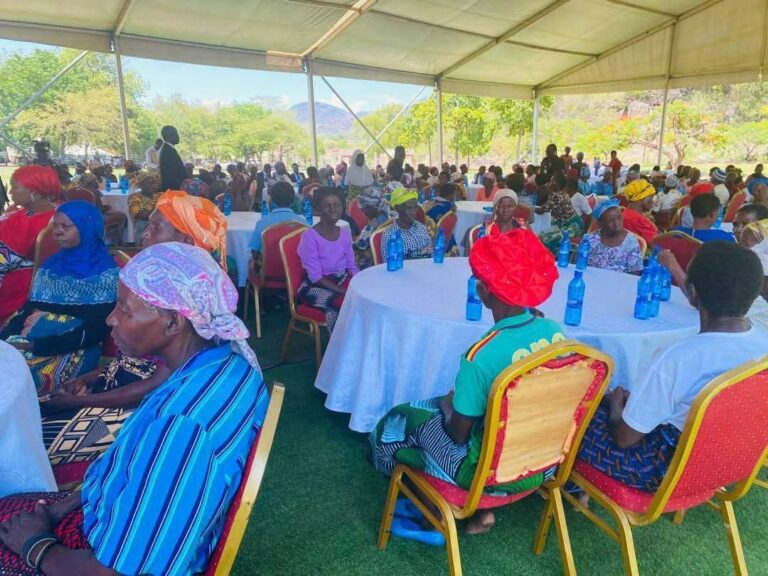
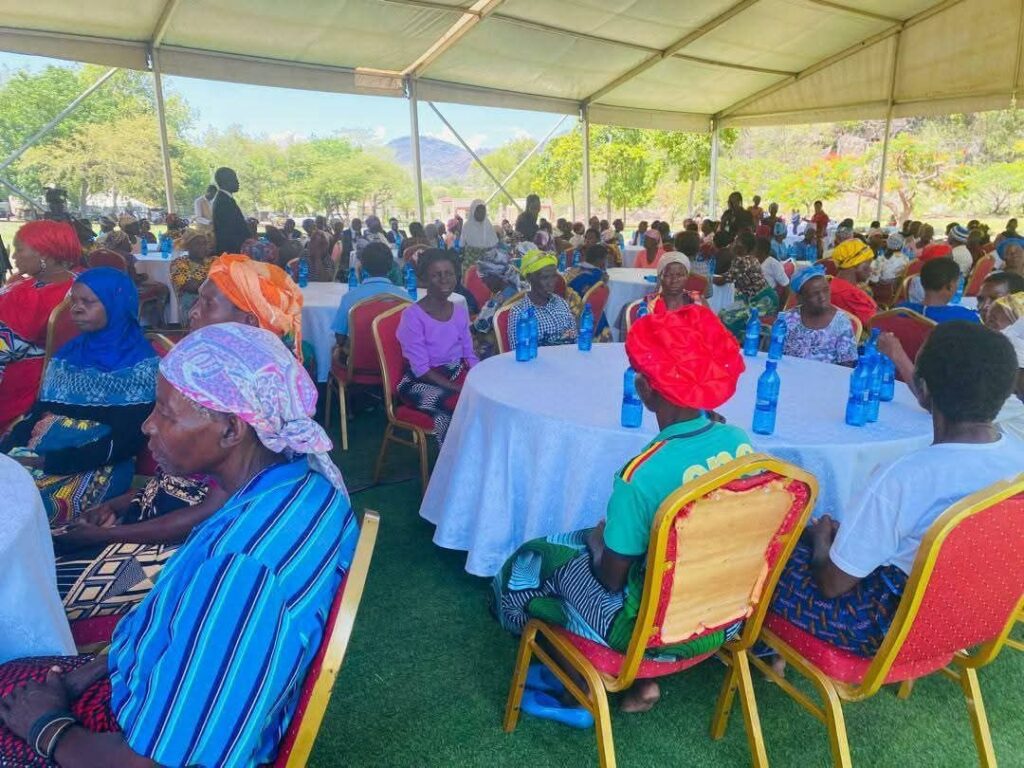
Speaking when she hosted the elderly women within Mangochi Boma on Tuesday, Madam Chakwera said, as people who are custodians of culture, the elderly are crucial for shaping their grandchildren with good morals.
“I decided to invite you here at the State Lodge in this Christmas season, because I consider you as my friends. We are here in order to celebrate together, but most importantly, for us to share stories as we used to be doing in the past.
“I encourage you to reflect on how our grandchildren are living in this modern era, let us continue having ample time with our grandchildren and share them stories that would assist them to grow with good values,” she said.
She urged the senior citizens in the country to encourage their grandchildren to pursue education, in order for them to excel in life.
Through her ‘shaping our future foundation’, the First Lady is assisting vulnerable girls with school amenities.
The First lady also bemoaned the tendency by some community members who associate senior citizens to witches, saying that they are rather a blessing to the society, as God loved them to stay for more years.
Apart from interacting with the elderly, the First Lady also provided them with Christmas gifts.
Minister of Gender, Community Development and Social Welfare Jean Sendeza echoed with the First Lady, by challenging communities to change their negative mindset towards the elderly.
In her remarks, Presidential Advisor on Women and Child Development, Dorothy Chirambo commended the First Lady for being exemplary in promoting the welfare of the elderly in the country.
Over 120 elderly women around Chikoko Bay and other areas in Mangochi attended the gathering.