The High Court sitting in Lilongwe on Friday acquitted 10 police officers and convicted 11 police officers over the death of Buleya Lule who died while in the hands of police officers at Area 3 police station’s cells in Lilongwe.
The conviction of 11 police officers who on 8th January, 2025 will be sentenced to serve prison sentences, has attracted comments from many Malawians that some of the police officers who are aiding panga wielding thugs harassing innocent citizens holding peaceful demonstrations, will one day appear in court to answer their charges
Everlister Chisale….the then Regional police commissioner (C) acquitted
.
Political activist Bon Kalindo said the Malawi laws are in the hands of individuals who are loyalists to the MCP saying these people are untouchables before the law and can do whatever they can even killing their opponents at will.
Kalindo said the Malawi Parliament is the most respected institution saying it is very strange that MCP youth armed with pangas sneaked into Parliament to threaten MPs and shouting on top of their voices disrupting parliamentary deliberations in “This is the government going nowhere “Boma ndilomweli silikuchoka”.
He has advised MCP panga wielding thugs that no one has long life, no one is above the law, disrupting parliamentary deliberations does not mean that they are next to God leading to some of the notable MPs one being Sameer Suleman running away from Parliament.
The activist has questioned Malawians to open their eyes that if well educated people are inviting thugs to Parliament and what about if President Dr. Lazarus Chakwera is given the second mandate to run the country from 2025 to 2030?
He said it is up to Malawians themselves to decide whether to continue being ruled by pangas of the MCP or their vote to remove President Chakwera out of power in 2025 saying Chakwera’s leadership did not come to rule but to terrorize and threatening people to be silent.
Kalindo has reminded Malawians that the late Kamuzu Banda was the most feared man but death escorted him to the grave observing that these thugs are demonstrating their thuggeries in full view of police officers.
“Police officers working with politicians take care, the world will turn against you tomorrow, you cannot always be harassing and threatening people with pangas, one day you will pay for your pangas,” he said.
Kalindo has finally advised MCP panga wielding thugs that instead of terrorizing, harassing and threatening fellow Malawians, they need to go to Lake Malawi to reclaim the land taken by Tanzanian soldiers.
The commission of inquiry instituted by President Dr. Lazarus Chakwera to investigate circumstances that led to the departed Vice President Dr. Saulosi Chilima’s and eight others death, has revealed that there was money disbursed to political parties for unexplained reasons.
About K120 million was disbursed to ten Alliance partners while parties which were not in the Alliance got zero case in point the DPP, Muvi wa Chilungamo Revolutionary Party (MRP) and the others and very surprisingly, UDF was one of the beneficiaries.
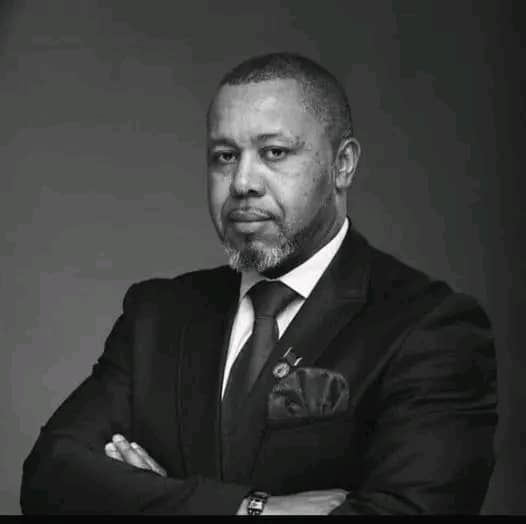
Chilima
Revelations have come out that the Peoples Party of Madam Dr. Joyce Banda received K15.5 million but this has been refuted by the party claiming that it received K15. 9 million a development which has made Malawians to shake their heads in disbelief as if they have horns.
While millions of Malawians are questioning the lack of independence of the commission as a cover up of President Chakwera and his MCP, questions without answers are going to the MCP that who made a decision to release unexplained funds to political parties for Dr. Chilima’s death and why?
President and Commander in Chief of MRP Bantu Saunders Jumah, has noted with a grave concern that the country has 21 registered political parties and if there is the law that during state funerals, funds should be disbursed, all parties could have received the same.
Jumah said if the funds were for logistical purposes, all political parties were there and why others did not receive the same and why special were the parties considered for the allocation with a question, was it to mourn Dr. Chilima or for unity of purpose?
He has demanded audit, clarification and explanation from the MCP government under President Dr. Lazarus Chakwera on what criteria was used to disburse the funds for the matter to rest in peace, otherwise, Malawians will speak on top of their voices.
“Malawi needs political and economic state of emergency to stop some of the nonsense, taking taxpayers money is not or gamble by politicians, this money is for development, transformation and for the lives of citizens<’ he said.
Jumah has again registered his concern over Tanzanians government changing its geographical map cutting Lake Malawi in halves while President Chakwera and his government have said nothing, observing that the country’s leaders are busy gathering fruits when the country is being lost in the hands of enemies.
He said Lake Malawi is fully belonging to the Nyasa people, the whole lake belongs to Malawi advising government to take the matter to the International Court of Justice (ICJ) saying for the sake of the future, Malawians cannot trade their sovereignty with corruption.
Jumah said recently there were reports that German investors would want to buy Likoma and Chizumulu Islands, some areas in Mangochi-Makanjira and Dzobwe are in Mozambique while the border itself is in Mwanza and Jenda in Mzimba suspecting corruption is exchanging hands.
Dr. Michael Usi has boldly declared to UTM party leaders that while they may take control of the party’s name and structure, they cannot take away the people who continue to support him.
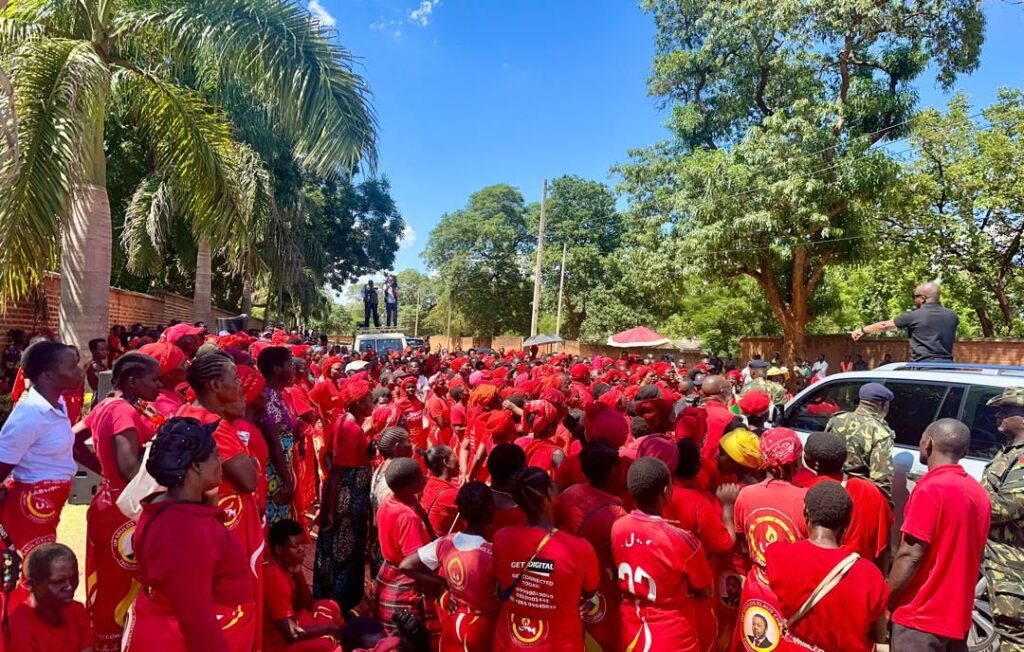
Dr. Usi made the statement to a group of supporters who gathered at his Area 12 residence in Lilongwe during his journey to Blantyre for official government duties.
The crowd, comprised of women, youth, and men dressed in UTM-branded attire, showed unwavering loyalty to Dr. Usi, even after the party leadership reportedly distanced itself from him.
Usi
“You can take the name of the party, but you cannot take the hearts of the people who believe in my vision and leadership,” Usi is reported to have told the enthusiastic crowd.
Despite facing internal challenges within UTM, Dr. Usi remains a popular figure, with many supporters expressing their admiration for his commitment to serving the people. The event underscores the growing division within UTM, as supporters appear to align themselves with individual leaders rather than the party as a whole.
Dr. Usi’s continued public backing raises questions about the future of UTM and the potential political ramifications of his statement.
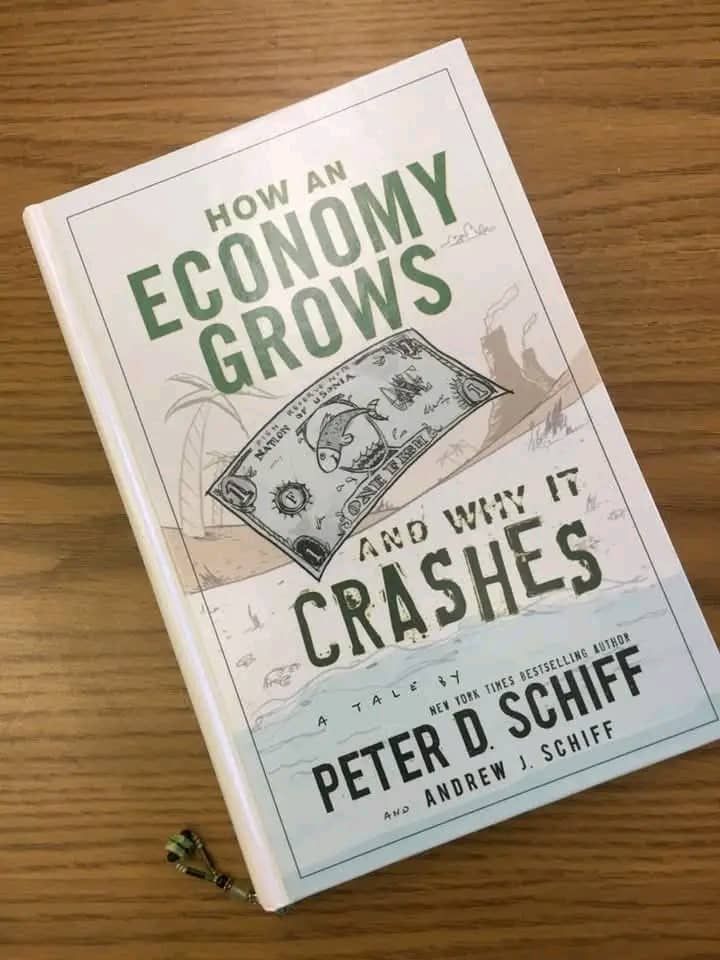
Peter D. Schiff’s How an Economy Grows and Why It Crashes takes a unique approach to explain economic principles through a storytelling format. Using an allegory of islanders, fishing, and trade, Schiff simplifies complex concepts to help readers understand how economies work and the consequences of poor policy decisions. Here are seven critical lessons from the book:
1) The power of specialization and trade
Schiff highlights how specialization and trade drive economic growth. By focusing on tasks where they hold a comparative advantage, individuals and regions can produce more efficiently. This surplus of goods and services, when traded, expands economic prosperity and fosters mutual benefit.
2)The importance of saving and investment
Economic growth is rooted in capital accumulation and investment. Savings fuel the resources needed for investments in new technologies, infrastructure, and businesses, which enhance productivity and increase the economy’s capacity to produce goods and services.
3) Innovation as a catalyst for growth*
Technological advancements and innovation are essential for economic progress. The book emphasizes how new ideas and improved processes boost efficiency, create new products, and open markets, all of which are crucial for sustained growth.
4) Entrepreneurship and risk-taking
Entrepreneurs are the backbone of economic expansion. Their willingness to take risks and bring fresh ideas to market creates jobs, generates wealth, and drives innovation. Without entrepreneurship, economies would stagnate.
5) Investing in human capital
A skilled and educated workforce is crucial for economic success. Schiff underscores the importance of investing in the health, knowledge, and skills of workers to ensure they can adapt to changes, innovate, and contribute to economic productivity.
6) The role of effective government policies
Government policies and institutions play a significant role in shaping economic outcomes. By ensuring a stable economic environment, protecting property rights, promoting competition, and investing in public goods like infrastructure and education, governments can foster growth and development.
7) Understanding economic cycles and crashes
Economic cycles, characterized by growth and decline, are a natural part of economic activity. Schiff delves into the causes of economic crashes, often tied to asset bubbles, excessive debt, and imbalances in supply and demand, emphasizing the importance of maintaining balance to avoid severe downturns.
Schiff’s book simplifies the mechanics of economies, emphasizing productivity, saving, and free-market principles. It offers valuable insights for readers looking to better understand the dynamics of economic growth and the pitfalls of mismanagement.
To get a copy of the book, visit Amazon. You can also sign up for Audible to enjoy the audiobook version for free using the same link. Start your journey to economic literacy today!
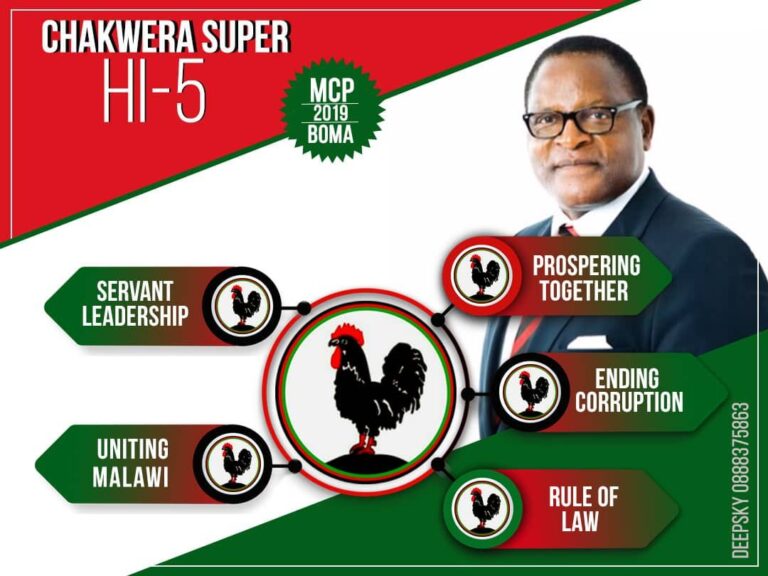
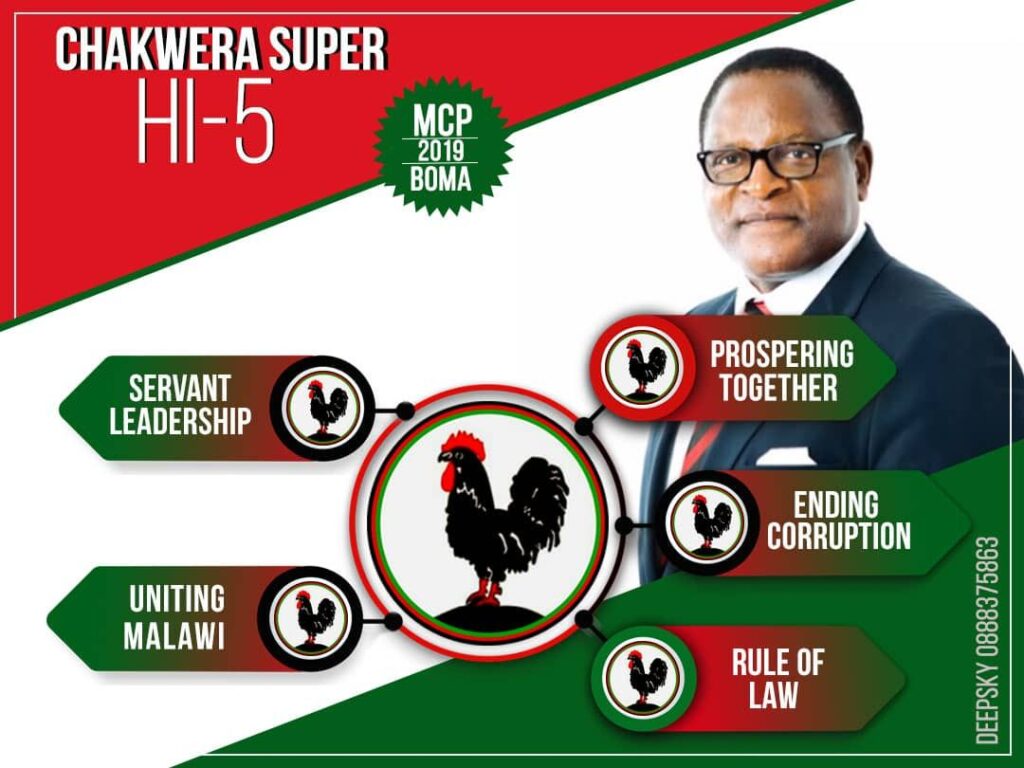
When President Lazarus Chakwera assumed office in 2020, he introduced his “Hi-5” agenda, outlining five pillars meant to guide his administration toward a better Malawi. Four years into his presidency, it’s important to critically assess how the Chakwera administration has fared in achieving the goals of servant leadership, national unity, prosperity, ending corruption, and upholding the rule of law. While there have been some successes, the challenges remain numerous and in some cases, the promises have not materialized as expected.
Servant leadership: A struggle amidst leadership paralysis
One of the core principles Chakwera campaigned on was “servant leadership,” a commitment to put the needs of the people above personal or political interests. However, over the course of his tenure, this ideal has often been overshadowed by indecisiveness, particularly in moments of national crisis. A glaring example of this occurred during the Chikangawa plane crash in 2022, where the President’s delay in taking immediate action and offering clear guidance left the nation frustrated and confused. His failure to make swift decisions during critical moments has diminished public confidence in his leadership.
Furthermore, his administration faced significant challenges during cabinet reshuffles. While reshuffles are commonplace, the delayed and indecisive nature of these changes, especially when crucial leadership roles were left vacant or under the purview of individuals with questionable qualifications, further diluted Chakwera’s image as a decisive leader. The cabinet reshuffle, at a time when effective governance was urgently needed, became a symbol of political maneuvering rather than a response to the country’s needs.
Uniting Malawi: A struggle amidst political division
Chakwera’s call to “unite Malawi” has proven to be a difficult challenge, particularly as political violence has worsened under his administration. The unity he envisioned has been undermined by a steady rise in political thuggery, especially among armed Malawi Congress Party (MCP) supporters. The most notable incidents were the brutal attacks on peaceful protestors and the storming of Parliament by MCP thugs in 2022. While the August House was in session, these violent acts of aggression occurred, all while chanting “boma ndi lomweli” (“the government is one”), a slogan that reflected the party’s increasingly authoritarian and undemocratic posture.
Despite numerous calls for reconciliation and dialogue, Chakwera’s government struggled to contain political violence and address the growing concerns over the use of party-affiliated militias to suppress opposition and dissent. Instead of bringing the nation together, his administration’s tolerance of this violence sent a clear message that political power could be maintained through intimidation, not through the rule of law or dialogue.
Prospering together: A promise unmet amid economic decline
“Prospering Together” was another pillar of Chakwera’s campaign, a promise that his administration would foster economic growth and shared prosperity. Unfortunately, the opposite has occurred. The Malawi kwacha’s devaluation and the skyrocketing cost of living have placed a significant strain on businesses and households alike. Both small and large businesses have struggled to stay afloat as inflation surged, and the promised economic prosperity has remained elusive for most Malawians.
Instead of a thriving economy, Malawi has seen more people fall into poverty, with unemployment continuing to rise. The lack of concrete policies to address inflation, the high cost of living, and the weak performance of essential sectors such as agriculture and manufacturing has exacerbated the situation. While international aid has flowed into the country, it has often failed to reach those in most need due to systemic inefficiencies and poor governance.
Ending corruption: A hollow promise in the face of scandal
One of Chakwera’s most high-profile promises was to combat corruption at all levels of government. Yet, despite the administration’s stated commitment to rooting out graft, corruption continues to thrive within the highest echelons of government. Allegations of corruption at State House, in the police service, the judiciary, and Parliament, paint a damning picture of a government that has struggled to bring the perpetrators of corrupt activities to justice.
Rather than ending corruption, Chakwera’s administration has seen an increase in the very practices he vowed to eliminate. From the misappropriation of public funds to the dubious appointments and the failure to act against those involved in corruption scandals, the lack of accountability has been glaring. In fact, corruption investigations are often delayed, dismissed, or outright ignored, further entrenching the culture of impunity within the government.
Rule of law: A casualty in the face of political violence
The final pillar of Chakwera’s Hi-5 agenda, “Rule of Law,” is perhaps the most critical, yet also the most compromised under his leadership. Political violence has surged under his watch, with incidents of armed MCP supporters openly wielding pangas (machetes) in broad daylight. These acts of intimidation have been funded and perpetrated by the ruling party, creating a climate of fear that undermines the rule of law and the ability of citizens to express dissent freely.
Instead of upholding the rule of law, Chakwera’s government has allowed these violent acts to flourish. The judiciary, which should have acted as a neutral body to ensure justice, has also been undermined by political influence, reducing its independence. The growing fear of political retaliation, combined with the lack of legal recourse for victims of violence, has eroded public trust in the country’s legal and justice systems.
Conclusion: A Hi-5 that has fallen short
After four years in office, Chakwera’s Hi-5 agenda has largely failed to live up to the expectations set during his campaign. His promises of servant leadership, national unity, economic prosperity, corruption eradication, and the rule of law have been marred by indecision, political violence, economic decline, and corruption scandals. The Chakwera administration’s inability to deliver on these core promises has led to widespread disillusionment among the Malawian public.
As Malawi prepares for the 2025 elections, the legacy of the Chakwera Hi-5 will be one of missed opportunities and unfulfilled promises. Whether or not the country can turn the tide depends on the leadership that will take the reins in the future and the ability to address the deep-rooted issues that have hindered Malawi’s development under the current regime. The Chakwera administration’s vision for a united, prosperous, and just Malawi remains largely unfulfilled, and the question remains whether the next leader can truly transform these promises into reality.