Thursday, April 16, 2026
No menu items!
spot_img
Home Blog Page 846

Tanzania’s Territorial Ambitions: A Test of Leadership for Malawi’s Chakwera

By Twink Jones Gadama

In a move that has sent shockwaves through the heart of Malawi, Tanzania has laid claim to a portion of Lake Malawi, a body of water that has long been a source of national pride and identity for Malawians. The Tanzanian government has not only altered its maps to reflect this new claim but has also urged educators to teach students about this revised geography. This brazen act of territorial ambition raises critical questions about the leadership of President Lazarus Chakwera, who has been accused of failing to defend Malawi’s sovereignty in the face of external aggression.

Lake Malawi, known for its stunning beauty and rich biodiversity, is not just a geographical feature; it is a vital resource for the people of Malawi. It provides livelihoods for countless fishermen, serves as a source of fresh water, and is a cornerstone of the nation’s tourism industry. The lake is also steeped in history and cultural significance, making it a symbol of national pride. The fact that Tanzania has now claimed a part of this cherished lake is not merely a diplomatic issue; it is a matter of national identity and integrity.

Tanzania President Samia Suluhu Hassan


Historically, the issue of Lake Malawi has been a contentious one. Former President Hastings Kamuzu Banda famously declared the lake to be “non-negotiable,” a sentiment echoed by his successor, Bingu wa Mutharika, who also took a firm stance against any encroachment on Malawian territory. Both leaders understood the importance of standing firm in the face of external threats, recognizing that the sovereignty of Malawi was paramount. Their resolute positions fostered a sense of unity and national pride among Malawians, who felt secure under their leadership.

In stark contrast, President Chakwera’s response to Tanzania’s claims has been tepid at best. Observers have noted a conspicuous silence from the Chakwera administration, which has left many Malawians feeling abandoned and betrayed. Critics argue that this lack of action is emblematic of a broader pattern of weakness in Chakwera’s leadership. The president, who came to power on a platform of hope and change, now faces accusations of failing to protect the very interests he vowed to uphold. The silence from the presidency is deafening, and it has left many questioning whether Chakwera is equipped to handle the challenges that come with leading a nation.

The implications of this territorial dispute extend beyond mere politics; they touch the very fabric of Malawian society. The sense of betrayal felt by many citizens is palpable. Chakwera’s inaction has led to a growing disillusionment among the populace, who had hoped for a leader who would prioritize their interests and stand firm against external threats. The president’s failure to address the situation has sparked a wave of criticism, with many labeling him as the weakest leader Malawi has ever had. This sentiment is particularly poignant given the historical context of strong leadership that has characterized Malawi’s past.

As the situation unfolds, the question remains: what will it take for Chakwera to take a stand? The president has a unique opportunity to rally the nation around a common cause, to remind Malawians of their shared identity and the importance of standing together in the face of adversity. However, the longer he remains silent, the more he risks alienating his supporters and solidifying his reputation as a leader who is unwilling to fight for his country.

The international community is also watching closely. Malawi’s relationship with Tanzania has historically been complex, marked by both cooperation and tension. The current situation presents an opportunity for diplomatic engagement, but it also poses risks. If Chakwera fails to assert Malawi’s claims, it could embolden Tanzania to pursue further territorial ambitions, setting a dangerous precedent for the region. The stakes are high, and the consequences of inaction could reverberate for years to come.

Moreover, the educational implications of Tanzania’s claims cannot be overlooked. By altering maps and instructing educators to teach a new narrative, Tanzania is attempting to reshape the historical understanding of the region. This move not only undermines Malawi’s territorial claims but also threatens to distort the historical narrative that has been passed down through generations. The potential for a generation of Malawians to grow up with a skewed understanding of their own history is a chilling prospect, one that could have lasting effects on national identity and unity.

In this context, Chakwera’s leadership is being put to the test. The president must navigate a complex landscape of national pride, historical significance, and international diplomacy. He has the opportunity to rise to the occasion, to become a leader who stands firm in the face of adversity and defends the interests of his people. However, this will require courage, decisiveness, and a willingness to engage with the complexities of the situation.

As Malawians watch and wait, the question remains: will Chakwera rise to the occasion, or will he continue to be seen as a leader who has failed to protect the interests of his nation? The future of Lake Malawi, and indeed the future of Malawi itself, hangs in the balance. The time for action is now, and the eyes of a nation are upon him. The legacy of leadership is not merely about the promises made during campaigns; it is about the actions taken when the stakes are highest. For Chakwera, this is a defining moment, one that will shape his presidency and the future of Malawi for years to come.
Supplementary Voter Registration Exercise Set to Commence

0


By Twink Jones Gadama

The Malawi Electoral Commission (MEC) has announced plans to conduct a supplementary voter registration exercise in various councils across the country.

The decision was made following a review of the conduct of the three phases of voter registration for the 2025 General Election.

According to a public statement issued by the MEC, the supplementary registration exercise will target eligible voters who were unable to register during the initial phases due to various reasons. The exercise is expected to commence soon, with specific dates and modalities to be communicated by the Commission.

Mwafulirwa


Under Phase 1, the supplementary registration will be conducted in 12 councils, including Chitipa, Karonga, Mzuzu City, and Nkhotakota. Phase 2 will cover 14 councils, including Nkhata Bay, Rumphi, and Zomba City. Phase 3 will comprise 8 councils, including Lilongwe, Mangochi, and Chikwawa.

The MEC has emphasized that the supplementary registration exercise will only target eligible voters who were unable to register during the initial phases and will not involve fresh civil registration by the National Registration Bureau (NRB) at voter registration centers.

The Commission has also assured that NRB staff will be present to provide identification and verification services for applicants who may have challenges with their proof of national registration.

The supplementary voter registration exercise is expected to provide an opportunity for eligible voters to register and exercise their right to vote in the upcoming 2025 General Election.

Its for Hammers or Lali Lubani boys to sip Castel

0


By Pemphero Mpho Musowa

Mzuzu City Hammers head coach Kondwani Ikwanga says people should not underestimate his boys when they meet Mighty Mukuru Wanderers in the Castel Challenge Cup finals at Bingu National Stadium on Saturday.

Ikwanga speaking ahead of the match said his boys are ready for the big showdown.

’’We know that very few people gave us a chance to reach this far. We are in the final so we deserve respect. Wanderers should not underrate us,’’ Ikwanga said.


Wanderers coach Bob Mpinganjira said despite having a good record against Hammers, he anticipates a tough clash.

’’We are not focusing on past results. This is a different game so we have to exercise caution. We will work hard so that we win it,’’ Mpinganjira said.

Hammers earned a 2-0 victory in the first round at Mzuzu Stadium but Wanderers responded with 8-0 win in the reverse fixture at Kamuzu Stadium.

Hammers go into the match beaming with confidence having knocked out holders Bullets following 4-1 victory on post-match penalties at Kamuzu Stadium on Tuesday.

So far, Hammers are also the only side yet to concede in this year’s competition. Hammers started their journey in the Castel Challenge Cup with a 4-0 victory over Kameme in the round-of-32 before a 1-0 win over Mighty Tigers in the round-of-16.

In the quarterfinals, Hammers defeated Karonga United 3-1 on post-match penalties after goal-less in regulation time before knocking out last year’s winners.

On the other hand, Wanderers are no strangers in domestic cup finals having won several trophies.

However, Wanderers last reached a cup final in 2022 when they won the Airtel Top 8 with a 5-3 victory over FCB Nyasa Big Bullets on post-match penalties.

Both Wanderers and Hammers will make their first ever appearance in the Castel Cup final since its inception last year. But the two sides will meet for the first time at this stage in all competitions.

Police Officer Killed in Land Dispute Intervention

0


By Twink Jones Gadama

A police officer, Benjamin Nyirenda, has been brutally killed by irate villagers in Mangochi while trying to intervene in a conflict situation between villagers and estate owners over land issues.

The incident occurred at Chipunga Estate in Mangochi, where Nyirenda and other officers were called to mediate a disagreement between the parties.

According to National Police Spokesperson Peter Kalaya, the police were alerted by estate owners that some villagers were uprooting trees due to a long-standing land dispute.

However, as the police were discharging their duties, some irate villagers regrouped and hacked Nyirenda several times using a panga knife.

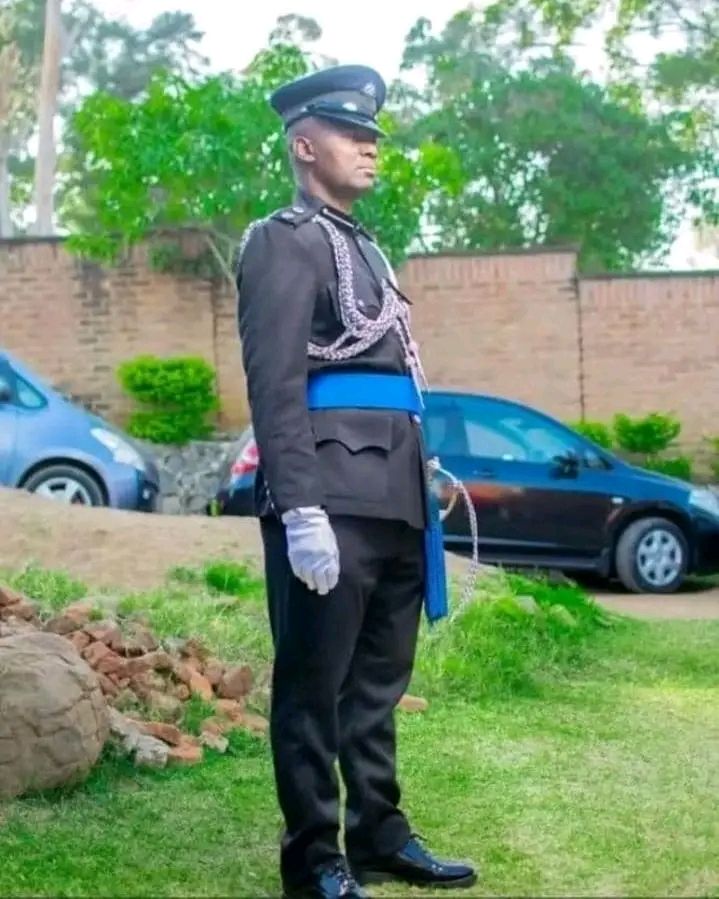
The late Benjamin Nyirenda


Nyirenda was taken to Mulibwanji Hospital, where he was pronounced dead. The police have launched an investigation into the incident to apprehend those responsible for the offense.

This tragic event highlights the dangers faced by law enforcement officers in Malawi and the need for effective measures to address land disputes and promote peaceful resolution.

Judicial Service Commission Bill fails-Chimwendo.

0

By Patience Longwe and Pixson Chipeso


Leader of Parliament, Hon. Richard Chimwendo Banda, has stated that the Judicial Service Commission Bill failed to pass due to insufficient registrars in the house.

Chimwendo said this at pariament in Lilongwe on Thursday.

“In this case at least 128 of the members must be available in the house but today we were about 121 members meaning that over 62 members were absent which is a very pathetic situation, we don’t need to reach that level. We need members of parliament to be available in the house if those members were present in the house it means we would have been able to process this piece of legislation,” he said.

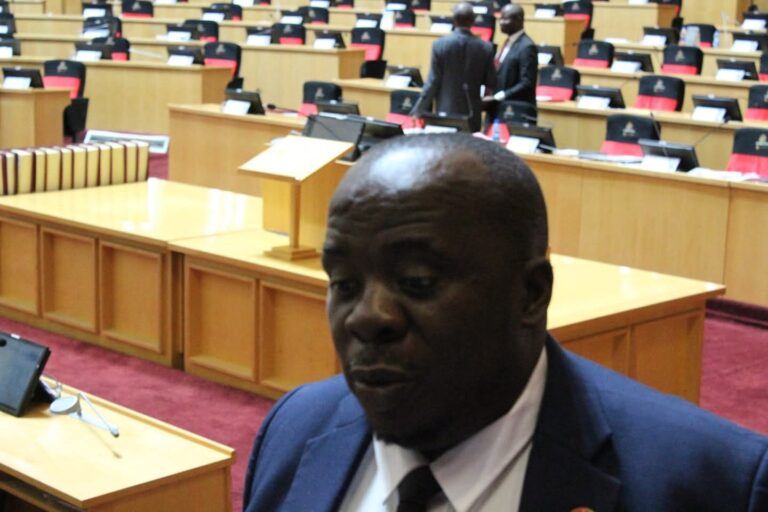
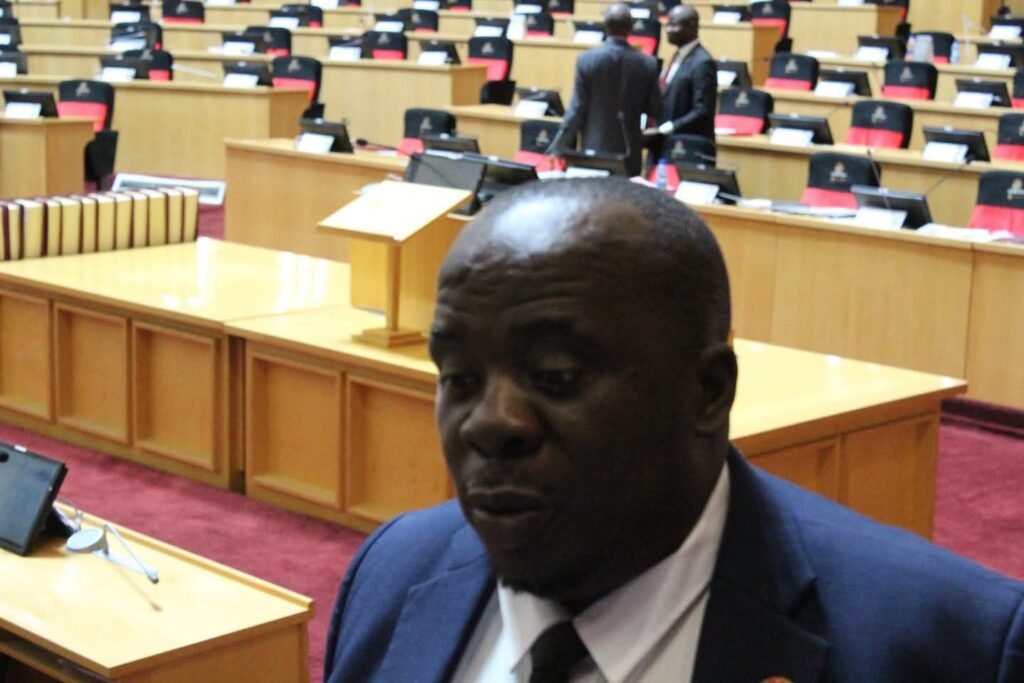
Chimwendo


He added that he has since asked members of parliament to be available for the following parliamentary sitting for them to carry out the judicial service commission legislation.

Chimwendo explained that processing a piece of legislation does not automatically mean the outcome will be a “yes.” He said the purpose is to discuss the matter, gather votes, and understand the sentiments of Malawians, as Members of Parliament represent the people.

Minister of Justice, Titus Mvalo said the bill was very essential and important since it does reform the judiciary.

” As you know, people often raise concerns about the judiciary and various other issues. These Bills are intended to address some of those concerns, which is why we came here to present them,” he said.