
Tuesday, April 7, 2026
No menu items!
spot_img
Home Blog Page 859

Ensuring Food Security in Malawi: Strategies to Combat Drought and Enhance Maize Production

0

By Twink Jones Gadama

Malawi, a landlocked country in southeastern Africa, is renowned for its agricultural landscape, with maize serving as the cornerstone of its food security and cultural identity. The reliance on rain-fed agriculture, particularly for maize cultivation, poses significant challenges, especially in the face of climate change and erratic weather patterns. As farmers across the nation grapple with the harsh realities of prolonged dry spells, the urgent need for innovative solutions to mitigate the impact of drought on maize production has never been more critical. This article explores various strategies that Malawi can adopt to ensure that the absence of rain does not jeopardize maize crops and, consequently, the food security of its people.


The first step towards enhancing resilience in maize production is the adoption of irrigation systems. Malawi is endowed with numerous water bodies, including lakes and rivers, which can be harnessed for irrigation purposes. By investing in modern irrigation infrastructure, such as drip and sprinkler systems, farmers can ensure a consistent water supply for their crops, regardless of rainfall patterns. The government, in collaboration with non-governmental organizations and international partners, should prioritize the development of irrigation schemes, particularly in regions most vulnerable to drought. Training farmers on efficient water management practices will further enhance the effectiveness of these systems, allowing them to maximize crop yields even in dry conditions.
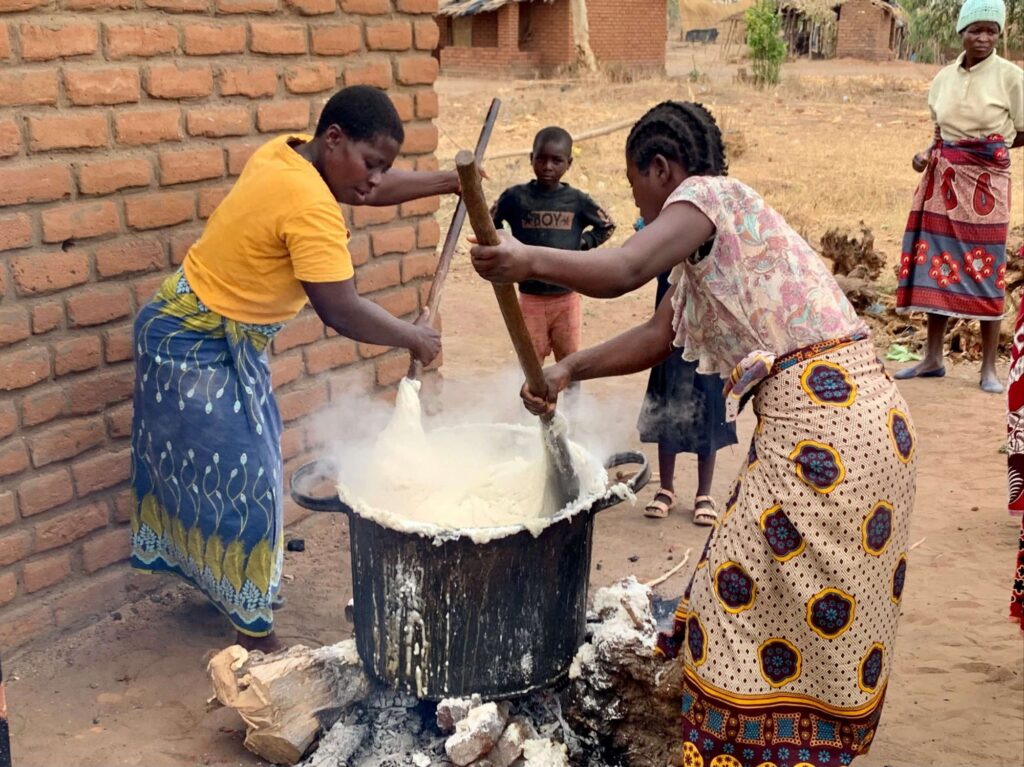


In addition to irrigation, the promotion of drought-resistant maize varieties is crucial for safeguarding food security. Research institutions and agricultural extension services should work together to develop and disseminate improved maize varieties that can withstand prolonged dry spells. These varieties, often characterized by deeper root systems and enhanced water-use efficiency, can significantly reduce the vulnerability of maize crops to drought. Farmers should be encouraged to adopt these resilient varieties through awareness campaigns and incentives, ensuring that they have access to the seeds and knowledge necessary for successful cultivation.

Furthermore, the implementation of conservation agriculture practices can play a pivotal role in enhancing soil health and moisture retention. Techniques such as minimum tillage, crop rotation, and cover cropping can improve soil structure, increase organic matter, and enhance the soil’s ability to retain moisture. By promoting these practices among farmers, Malawi can create a more sustainable agricultural system that is better equipped to withstand the challenges posed by climate variability. Training programs and workshops should be organized to educate farmers on the benefits of conservation agriculture, providing them with the tools and knowledge needed to adopt these practices effectively.

Another critical aspect of ensuring food security in the face of drought is the establishment of robust early warning systems and climate information services. Farmers need access to timely and accurate weather forecasts to make informed decisions about planting and managing their crops. The government, in collaboration with meteorological agencies, should invest in the development of user-friendly platforms that provide farmers with real-time weather updates and climate forecasts. By equipping farmers with this information, they can better prepare for adverse weather conditions, adjust their planting schedules, and implement appropriate risk management strategies.

In addition to these proactive measures, it is essential to strengthen the social safety nets for vulnerable communities. Droughts can have devastating effects on food security, particularly for smallholder farmers who lack the resources to cope with crop failures. The government should consider implementing food assistance programs, cash transfers, and insurance schemes that provide support to affected households during times of crisis. By creating a safety net, Malawi can help mitigate the impact of drought on food security and ensure that vulnerable populations have access to the resources they need to survive.

Moreover, fostering collaboration between farmers, agricultural researchers, and policymakers is vital for developing effective strategies to combat drought. Establishing platforms for knowledge exchange and dialogue can facilitate the sharing of best practices, innovative solutions, and lessons learned from past experiences. By bringing together stakeholders from various sectors, Malawi can create a more cohesive and coordinated approach to addressing the challenges posed by climate change and ensuring food security.

Investing in education and capacity building for farmers is another essential component of enhancing resilience in maize production. Many smallholder farmers lack access to modern agricultural techniques and technologies that can improve their productivity and resilience to drought. By providing training programs that focus on sustainable farming practices, water management, and crop diversification, Malawi can empower farmers to make informed decisions and adopt practices that enhance their resilience to climate variability. Additionally, promoting access to credit and financial services can enable farmers to invest in necessary inputs, such as irrigation systems and improved seeds, further strengthening their capacity to cope with drought.

The role of technology in enhancing agricultural productivity cannot be overlooked. The integration of digital tools and mobile applications can provide farmers with valuable information on weather patterns, market prices, and best agricultural practices. By leveraging technology, farmers can make data-driven decisions that optimize their production and reduce their vulnerability to climate-related shocks. The government, in partnership with tech companies and agricultural organizations, should work towards expanding access to digital resources and training farmers on how to utilize these tools effectively.

Lastly, addressing the underlying issues of land degradation and deforestation is crucial for ensuring long-term food security in Malawi. Unsustainable land use practices can exacerbate the impacts of drought and reduce the overall productivity of agricultural land. The government should prioritize reforestation initiatives and promote sustainable land management practices that enhance soil health and biodiversity. By restoring degraded lands and protecting natural ecosystems, Malawi can create a more resilient agricultural landscape that is better equipped to withstand the challenges posed by climate change.

In conclusion, the challenges posed by drought and climate variability require a multifaceted approach to ensure food security in Malawi. By investing in irrigation infrastructure, promoting drought-resistant maize varieties, implementing conservation agriculture practices, and strengthening early warning systems, the country can enhance its resilience to climate shocks. Additionally, fostering collaboration among stakeholders, investing in farmer education, leveraging technology, and addressing land degradation are essential components of a comprehensive strategy to combat the impacts of drought on maize production. As Malawi navigates the complexities of climate change, a proactive and coordinated approach will be vital in securing the future of its agricultural sector and ensuring that all Malawians have access to sufficient and nutritious food.
Matola optimistic about resumption of uninterrupted fuel supply

0

By Chisomo Phiri

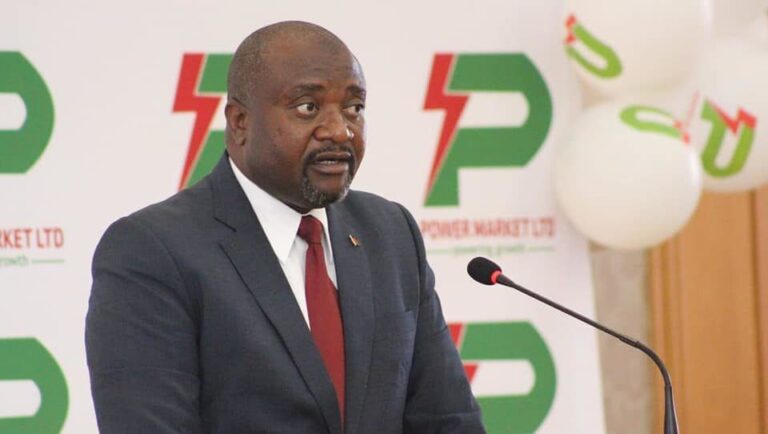
Minister of Energy Ibrahim Matola says he is optimistic that the country will soon resume uninterrupted fuel supply.

This follows President Lazarus Chakwera’s visit to Abu Dhabi, where he met with UAE President Sheikh Mohammed bin Zayed Al Nahyan to discuss bilateral agreements, including the supply of petroleum products.

Matola

In an interview,Matola said the President’s visit will pave the way for a policy shift in fuel procurement.

He said while the open tender procurement system will not be abandoned, the government will adopt Government-to-Government fuel transactions to bypass middlemen and reduce costs.

Matola noted that Malawi’s long supply chain, coupled with its landlocked position, makes it vulnerable to exploitation by middlemen.

The Minister cited the distances from Dar es Salaam to Lilongwe (1,700 km), Beira to Blantyre (900 km), and Nacala to Malawi (700 km) as examples of how the supply chain can be abused.

He emphasized that the new system will lead to a long-term, sustainable fuel supply, as it eliminates the need for agents in the petroleum business.

President Chakwera also invited UAE investors to explore opportunities in Malawi’s agriculture, tourism, and mining sectors.

Southern Region teams Bangwe, FOMO relegated from TNM Super League as Chitipa United survive

0


By McLloyd Kudzingo


The TNM Super has finally come to an end and two teams from the Southern Region namely Bangwe All Stars and FOMO FC have been relegated joining Northern Region outfit Baka City FC.

Before the start of the final matches on Saturday, only Baka had no chance of staying in the top flight having been confirmed relegated  earlier with a number of games to spare.

Three teams namely Chitipa United, Bangwe All Stars and FOMO FC were trying to avoid the remaining two relegation slots.

In the end, Blantyre-based Bangwe All Stars and Mulanje-based FOMO FC were relegated from the Super League having lost 4-1 and drawing 0-0 against Creck Sporting Club and Karonga United respectively.

Chitipa United dramatically survived the chop following their 3-1 win against Baka City at Karonga Stadium.

Francis Nyirenda, Trouble Kajani and Ken Mulenga were on target for Chitipa while Dickson Mwangonde scored Baka’s consolation.

At Balaka Stadium, Bangwe All Stars who needed all the three points for them to survive,gave out a lackluster performance having conceded an early goal in the 2nd minute of the match.

TNM Super League Champions: Silver Strikers


Talandira Chigadula was the scorer of that first goal after receiving an assist from his captain Haji Wali and Gift Kadawati doubled the lead following a cross from Ademola Ajibola in the 37th minute.

The second half saw the two sides making a number of substitutions as Bangwe brought in Kondwani Chilembwe and Patrick Phiri for Clever Chikwata and Beston Jimu.

Creck coach Joseph Kamwendo on the other hand  brought in Jauma Edward, Akuzike Lifa and veteran striker Muhammad Sulumba for  Frank Phiri, Vincent Nyangulu and Harvey Nasiyaya .

Later on Bangwe coach Trevor Kajawa replaced Lyton Chinong’one with James Tambwali.

Substitute Muhammad Sulumba increased the lead for the visitors in the 70th minute with a beautiful header after receiving a cross from George Chaomba.

Sulumba completed his brace 8 minutes later with yet another assist from Chaomba to consolidate the win for the Lilongwe-based side who have just joined the top flight this season.

Substitute Patrick Phiri scored Bangwe’s consolation from a direct free-kick following a foul commited by Akuzike Lifa a few meters from the penalty box.

After the match, Creck Sporting player Hardy Ng’andu was voted man of the match.

The win means that Creck have finished the season on position 6 with 42 points level with 7th placed Karonga United who drew 0-0 against FOMO FC at Mulanje Stadium.

Elsewhere, champions Silver Strikers thumped Premier Bet Dedza Dynamos 5-2 to finish the 2024 TNM Super League in style as they win the league after 11 years.

Gift Chunga scored a brace with other goals coming from Chimwemwe Idana, Duncan Nyoni and Zebron Kalima while Gift Magola scored all the two goals for the visitors.

In Blantyre, third placed FCB Nyasa Big Bullets beat Kamuzu Barracks with an early goal from Stanley Billiati.

Mighty Mukuru Wanderers beat Moyale Barracks 2-1 at Mzuzu Stadium with goals coming from Misheck Botomani and Isaac Kaliati. Emmanuel Allan scored Moyale’s consolation.

Mighty Tigers were 1-nil winners against Civil Service United at Mpira Stadium courtesy of a first half goal from Precious Chipungu

In Lilongwe, Mafco FC were hammered at Nankhaka Stadium by Mzuzu City Hammers with goals from Isaiah Nyirenda, Samuel Ademeyi and Isaac Msiska.

Silver Strikers, Mighty Mukuru Wanderers, FCB Nyasa Big Bullets, Mzuzu City Hammers, Civil Service United, Creck SC, Karonga United and Moyale Barracks are the teams that have finished in the Top 8 this season.

Man of the match Hardy Ng’andu receiving the man of the match award at Balaka Stadium
Action at Balaka Stadium

MEC calls for peaceful electoral participation amid 16 days of activism

0

By Burnett Munthali

The Malawi Electoral Commission (MEC) has reinforced its commitment to promoting peaceful elections, with Richard Mveriwa, MEC’s Communications Officer, emphasizing the importance of violence-free electoral processes. His statement comes on Day 13 of the 16 Days of Activism Against Gender-Based Violence campaign, a global initiative to combat violence and promote safety for all.

“Voting is a fundamental right that should never be overshadowed by violence,” Mveriwa stated. He urged Malawians to unite in ensuring that electoral participation is marked by peace and mutual respect.

Richard Mveriwa


Mveriwa highlighted the critical role of citizens in creating an environment where every voter can cast their ballot without fear or intimidation. He underscored that democracy thrives when voices are heard in a safe and secure environment.

“Together, we can ensure that every voice is heard without fear or intimidation. Let us stand firm for a future where democracy thrives in a safe environment,” Mveriwa said.

The 16 Days of Activism campaign provides an ideal platform to address violence, particularly during politically charged periods such as elections. The initiative advocates for the protection of women and marginalized groups, who are often disproportionately affected by electoral violence and intimidation.

MEC has pledged to collaborate with stakeholders to raise awareness and promote peaceful electoral practices, ensuring that democracy remains inclusive and secure for all participants.

Mveriwa’s statement has resonated with many Malawians, with social media users echoing his sentiments.

One user commented:
“We must remember that peace is not just the absence of violence but the presence of justice and inclusion. Kudos to MEC for this important reminder.”

Others, however, urged the commission to go beyond statements and implement actionable measures to curb violence at polling stations and during campaigns.

As Malawi prepares for the 2025 general elections, MEC’s message serves as a timely reminder of the need for unity, peace, and respect for democratic principles. The commission has called on all citizens, political parties, and stakeholders to play their part in fostering a peaceful and inclusive electoral environment.

The fight against violence—whether gender-based or electoral—is a collective responsibility. As Malawi observes the 16 Days of Activism, Mveriwa’s call to action underscores the importance of standing together to protect the sanctity of the ballot and the safety of every voter.

Dalitso Kabambe’s political prospects doubted

0

By Burnett Munthali

Malawian social commentator Rick Dzida has sparked a spirited debate on the viability of UTM President Dalitso Kabambe’s presidential bid, suggesting that his chances of success without a strong electoral alliance are slim.

Dzida’s analysis, shared in a WhatsApp group discussion on December 7, 2024, draws comparisons between Kabambe’s current position and the late Vice President Saulos Chilima’s third-place finish in the 2019 presidential election.

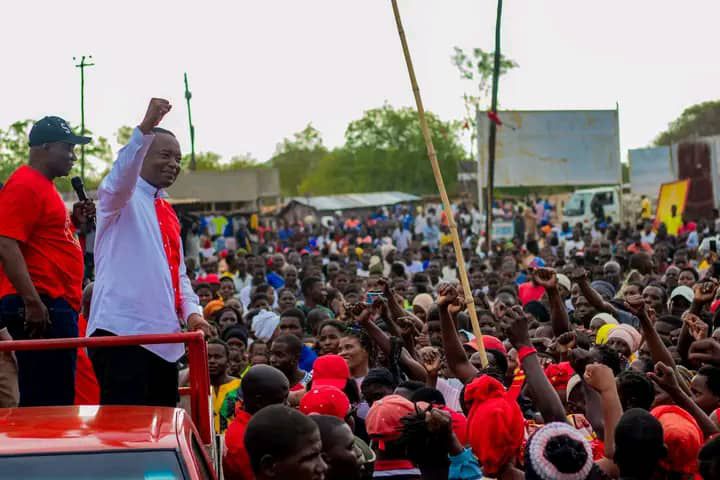
Dalitso Kabambe at a rally


“Kabambe sangamake pa SKC. If SKC came third in the 2019 presidential election, chances of Kabambe’s victory without a formidable electoral alliance are dismal,” Dzida remarked.

In response to Dzida’s statement, another contributor observed the shifting political landscape in Malawi.

“Amalawitu akusontha each and every day chifukwa chazomwe akuziona,” they noted, hinting at growing dissatisfaction among Malawians due to the current administration’s perceived failures.

Dzida acknowledged these changes but stressed that Kabambe’s path to the presidency would require more than just public dissatisfaction. He questioned the likelihood of Kabambe securing enough support in a direct contest against key opponents like President Lazarus Chakwera and former President Arthur Peter Mutharika (APM).

“Zoona akusinthadi. Atati apikisane payekhapayekha pakati pa Chakwera, APM ndi DK, perekani mmene angawinire. 1,2,3!!” Dzida challenged, inviting further discussion on Kabambe’s chances in a hypothetical three-way race.

Another participant defended Kabambe, arguing that he deserves a chance to compete against political heavyweights Chakwera and APM.

“DK timpase mpata kaye apikisane awiriwa; boma likuwaziwa,” they said, suggesting that Kabambe’s potential should be tested in a direct contest with Malawi’s established political leaders.

Kabambe, who recently assumed the presidency of UTM following the death of Saulos Chilima, has called on Malawians to rally behind his leadership. He believes his policies can deliver meaningful economic change, but critics like Dzida argue that his political strategy needs stronger alliances to ensure victory in the 2025 general elections.

As Malawians continue to evaluate potential candidates, discussions like these highlight the challenges and opportunities facing political leaders. Whether Kabambe can defy the odds and emerge as a leading contender will depend on his ability to mobilize support, address public concerns, and possibly build alliances with other parties.