Monday, April 6, 2026
No menu items!
spot_img
Home Blog Page 875

Mibawa TV Presenter George Buliyani pleased with EOY nomination


By Durell Namasani


Mibawa Television popular presenter George Buliyani has expressed excitement with his nomination for this year’s Entertainer Of the Year (EOY) awards which is an annual event organised by state broadcaster Malawi Broadcasting Corporation (MBC).

Buliyani has been nominated in the category of Television Personality of the Year alongside Times Television Presenter Brian Banda and MBC TV 2 presenter Drew Jessie.

Speaking to 247 Malawi, Buliyani said he was very greatful for the nomination and said he appreciates the support he receives especially for his ‘Sapota’ program which is one of the most famous television programs in the country.

Buliyani


“I am very excited for this nomination and I am very thankful to those who took their time to nominate me for this category. I really feel honoured for the nomination and I would like to urge people to vote for me, the fight is not over yet, I need more votes to win this,” said Buliyani.

Buliyani started his television journey in 2015 as a producer at the now defunct Beta Television before  joining Mibawa in 2018.

Since then, he has become the household name with his ‘Sapota’ program which is aired on Mibawa TV on Tuesdays and Fridays.

Apart from being the producer and presenter of Sapota, Buliyani also works as the Head of Mibawa TV Lilongwe Branch.

Entertainers Of the Year award ceremony is expected to take place on December 14 in Lilongwe.

People can vote by dialing *364# and follow the instructions that follows.

Below is the full list for those nominated in different categories

MUSIC CATEGORY

SECULAR ARTIST OF THE YEAR – MALE

1. Fada Moti

2. Eli Njuchi

3. Driemo

SECULAR ARTIST OF THE YEAR – FEMALE

1. Emmie Deebo

2. Jetu

3. Temwa (Temwa Gondwe)

GOSPEL ARTIST OF THE YEAR – MALE

1. Steve Wazisomo Muliya

2. Alex Nkalo

3. Kelvin Sings

GOSPEL ARTIST OF THE YEAR – FEMALE

1. Miracle Chinga

2. Theresa Phondo

3. Peace Phiri

SECULAR SONG OF THE YEAR

1. Controller

2. Tempolale

3. Kutali

GOSPEL SONG OF THE YEAR

1. Udzatsala Wekha

2. Ndimanvetsera Kumwamba

3. Mseri

SECULAR BAND OF THE YEAR

1. Aidfest and Kineo

2. Malimba Band

3. Nep Sounds

GOSPEL GROUP OF THE YEAR

1. Ndirande Anglican Voices

2. Mount Sinai Choir

3. The Trumpeters Anglican Choir

UPCOMING OF THE YEAR

1. Fada Moti

2. Sife Mw

3. Emmie Deebo

MUSIC PRODUCER OF THE YEAR

1. Stich Frey

2. Tricky Beats

3. John Nguluwe

MUSIC VIDEO PRODUCER OF THE YEAR

1. Sean Films

2. Kante

3. Twice P

BEST VIDEO OF THE YEAR

1. Bana Pwanya

2. Chete

3. Distance


DRAMA CATEGORY

BEST RADIO ACTRESS OF THE YEAR

1. Linda Chatha

2. Eleanor Sanga

3. Nanyoni

BEST RADIO ACTOR OF THE YEAR

1. Kelvin Maxwell Ng’oma

2. Walewale

3. Dimingu

RADIO DRAMA PROGRAM OF THE YEAR

1. Fupa Lokakamiza

2. Pamajiga

3. Nzeru N’kupangwa

BEST TV ACTRESS OF THE YEAR

1. Cathereen Kayange

2. Junnie Mulazie

3. Flora Suya

BEST TV ACTOR OF THE YEAR

1. Maxwell Makande

2. Kelvin Maxwell Ng’oma

3. Sauzande Gift Lizakuwe

TV DRAMA OF THE YEAR

1. Mdyangu

2. Tonde Wadula

3. The Club

BEST STAGE ACTOR OF THE YEAR

1. Kelvin Maxwell Ngoma

2. Tammy Mwawa

3. Jack Musumba

BEST STAGE ACTRESS OF THE YEAR

1. Enifa Chiwaya

2. Linda Chatha

BEST STAGE DRAMA OF THE YEAR

1. All That Glitters

2. Half Past 2

3. Nyambose Goes to Town

BEST RADIO DRAMA PRODUCER OF THE YEAR

1. Micheal Nyirenda

2. Carim Mpaweni

3. Yamikani Lanjesi

BEST TV DRAMA PRODUCER OF THE YEAR

1. Moses Kachingwe

2. Flora Suya

3. Harley Sulian

BEST STAND-UP COMEDIAN

1. Mr Jokes

2. Jadidi

3. Ching’aning’ani


MEDIA CATEGORY

RADIO PERSONALITY OF THE YEAR – MALE

1. Kizito Kachapira

2. Joy Nathu

3. Bwande

RADIO PERSONALITY OF THE YEAR – FEMALE

1. Ruth Kulaisi

2. Chikondi Phinda

3. Thokozile Gondwe Zalira

RADIO PROGRAM OF THE YEAR

1. Bwande

2. Made on Monday

3. Zokonda Amayi

TV PERSONALITY OF THE YEAR – MALE

1. George Buliyani

2. Drew Jessie

3. Brian Banda

TV PERSONALITY OF THE YEAR – FEMALE

1. Ruth Kulaisi

2. Alinafe Mlamba

3. Doreen Banda

TV PROGRAM OF THE YEAR

1. It Can Be You

2. Selfie Time

3. Woman Talk

BEST RADIO DJ OF THE YEAR

1. Joy Nathu

2. DJ Love

3. DJ Mbuzi


SPORT CATEGORY

BEST FEMALE FOOTBALLER OF THE YEAR

1. Temwa Chawinga

2. Tabitha Chawinga

3. Leticia Chinyamula

BEST MALE FOOTBALLER OF THE YEAR

1. Chrispine Mapemba

2. Isaac Chair Kaliati

3. Chimwemwe Idana

BEST MALE FOOTBALL TEAM OF THE YEAR

1. FCB Nyasa Big Bullets

2. Silver Strikers

3. Mighty Mukuru Wanderers

BEST FEMALE FOOTBALL TEAM OF THE YEAR

1. FCB Nyasa Big Bullets Women’s Team

2. Ntopwa FC

3. Ascent Academy

SPORTS PERSONALITY OF THE YEAR

1. Isaac Kaliati

2. Frank Kandu

3. Peter Mponda

BEST NETBALLER OF THE YEAR

1. Mwawi Kumwenda

2. Joyce Mvula

3. Towera Vinkhumbo

BEST NETBALL TEAM OF THE YEAR

1. MUBAS Queens

2. First Choice Tigresses

3. Blue Eagles Sisters


POETRY CATEGORY

POET OF THE YEAR – MALE

1. Robert Chiwamba

2. Darlington Salle

3. Poet C.J. Chirwa

POET OF THE YEAR – FEMALE

1. Beatrice Ligomeka

2. Jane Senenje

3. Refilwe Ntopa

POEM OF THE YEAR

1. Atanjire Kutheba

2. Pumani Bwana Chilima

3. Ngati Sitimumanso


SOCIAL MEDIA CATEGORY

CONTENT CREATOR OF THE YEAR – MALE

1. Kay Luwe

2. Chippie

3. Phwedo

CONTENT CREATOR OF THE YEAR – FEMALE

1. Tamia Ja

2. Hannah (Hanareen Dones)

3. Jack Kantambe Ryan


FILM CATEGORY

ACTOR OF THE YEAR

1. Kelvin Maxwell Ng’oma

2. Mphatso Machira

3. Uncle Joe

ACTRESS OF THE YEAR

1. Shyreen Elias

2. Flora Suya

3. Joyce Chavula

BEST MALAWIAN FILM OF THE YEAR

1. School Days

2. Khasu

3. Justice

FILM PRODUCER OF THE YEAR

1. Christopher Mwale

2. Flora Suya

3. Clyton Thomas (Akila)

FILM DIRECTOR OF THE YEAR

1. Flora Suya

2. Bester Kauwa

3. Kendal Kamwendo

Zikhale Ng’oma condemns political violence in Lilongwe

0


By Chisomo Phiri

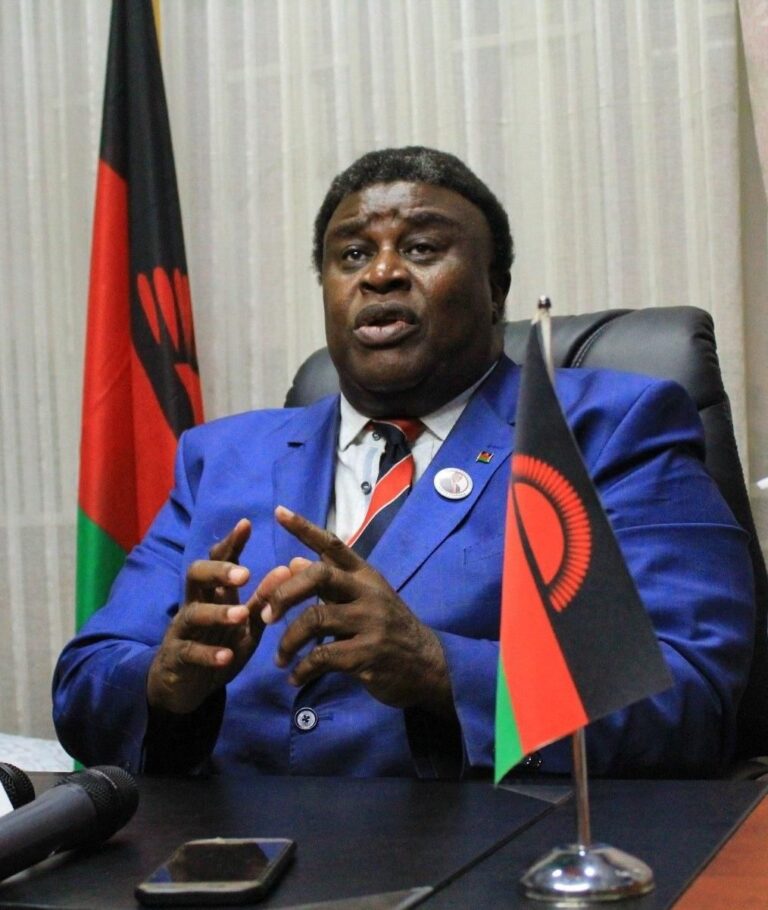
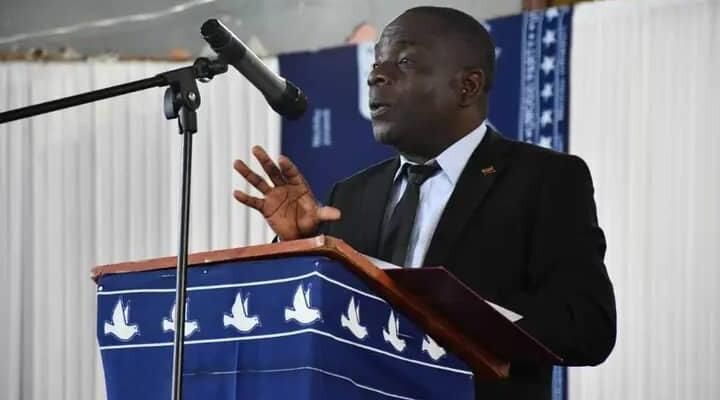
Minister of Homeland Security Ken Zikhale Ng’oma has condemned the political violence that erupted during the Centre for Democracy and Economic Development Initiatives (CDEDI) sanctioned protests on Monday in Lilongwe and has assured the public that an investigation has been launched to identify the perpetrators.

In a statement, Ng’oma has emphasized that Malawians have the constitutional right to hold peaceful demonstrations.

Says Ng’oma:”The Ministry of Homeland Security, in conjunction with relevant security agencies, is working hard to ensure that the country is secure and peaceful.”

The minister has also emphasized that the investigations will bring to light the culprits behind the violence that disrupted the demonstrations.

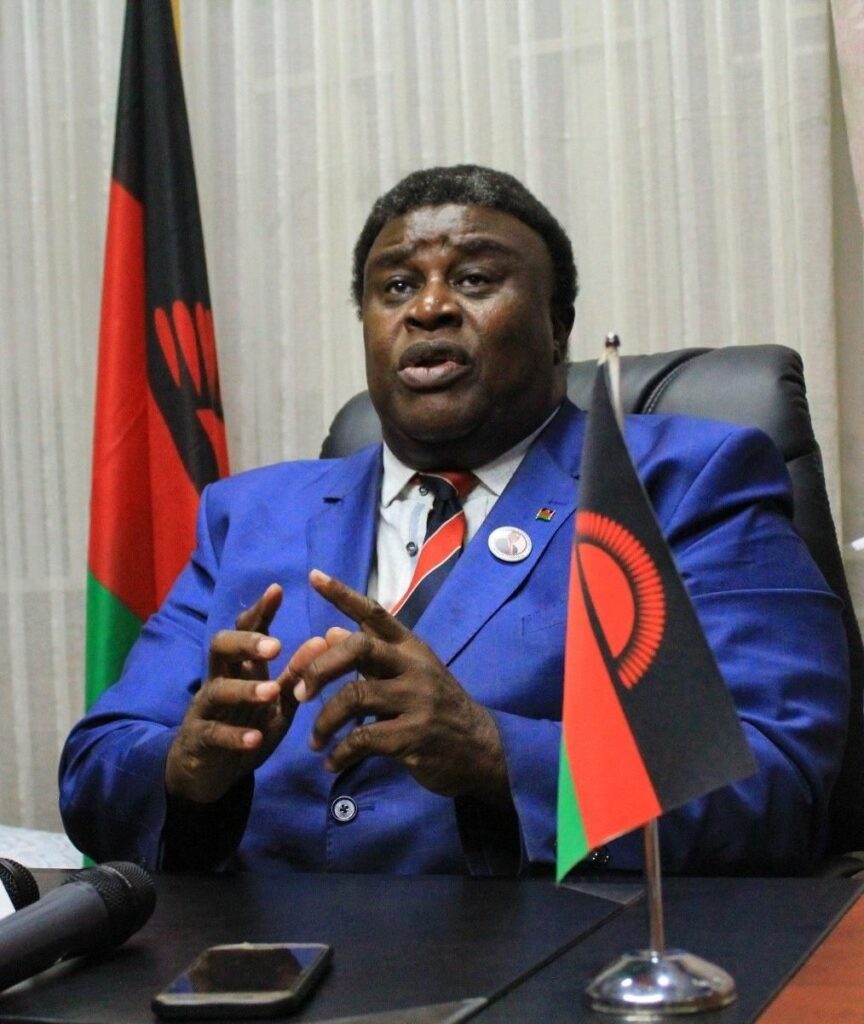
Dr Ken Zikhale Ng’oma


A group of thugs wielding knives descended on the demonstrators, disrupting the peaceful protests.

Several stakeholders, including political parties, have termed this development as undemocratic.

However, Ng’oma’s assurance of an investigation and condemnation of the violence is a step towards ensuring that the rights of Malawians are protected and that the country remains peaceful and secure.

Panga-wielding groups and Police collusion: A threat to Malawi’s democracy


By Burnett Munthali

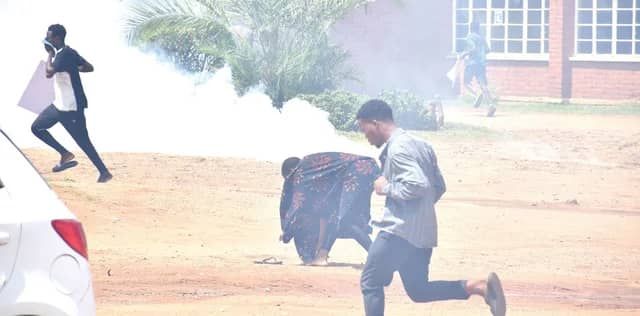
Barely days after a group of panga-wielding individuals disrupted opposition-led demonstrations in Lilongwe, Malawi’s democracy was dealt another blow when masked individuals, allegedly in collaboration with Malawi Police Service (MPS) personnel, thwarted yet another anti-government protest yesterday. The demonstration, organized to highlight the worsening fuel scarcity in the country, was forcefully suppressed, raising serious concerns about the state of civil liberties, freedom of expression, and democracy in Malawi.

This disturbing trend is not only alarming but also a stark reminder of the dark days of political suppression and state-sponsored violence. It is crucial to interrogate the motives and implications of such acts, which are rapidly eroding the foundational principles of democracy.


The incident in Lilongwe was not an isolated occurrence. Recent weeks have seen a disturbing rise in coordinated efforts to silence dissent. Masked individuals, often armed and operating with impunity, have been disrupting opposition gatherings and public protests. While the government has distanced itself from these actions, the involvement of law enforcement agencies in yesterday’s incident strongly suggests otherwise.

Witnesses reported seeing police officers standing idly by or, worse, actively participating alongside the masked ruffians in dispersing protesters. This collusion underscores a chilling reality: the erosion of institutional independence in Malawi.

The Malawi Constitution guarantees citizens the right to assemble and express dissent. The deliberate disruption of these rights by state actors and their proxies is a gross violation of constitutional principles and a betrayal of the social contract between the government and its citizens.

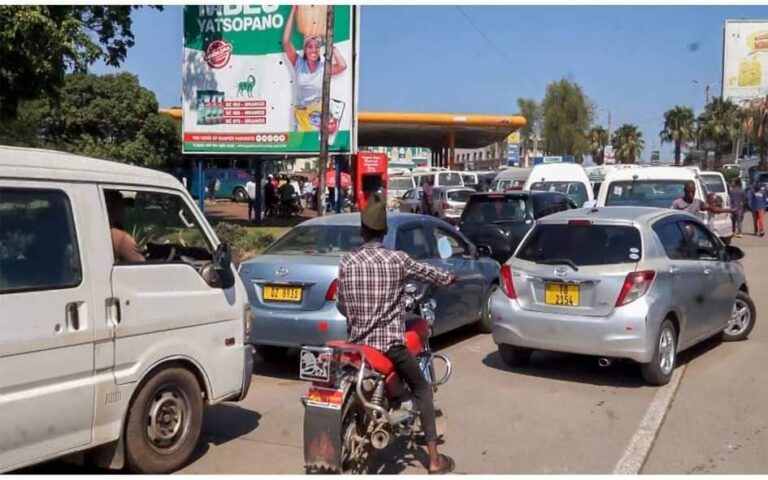
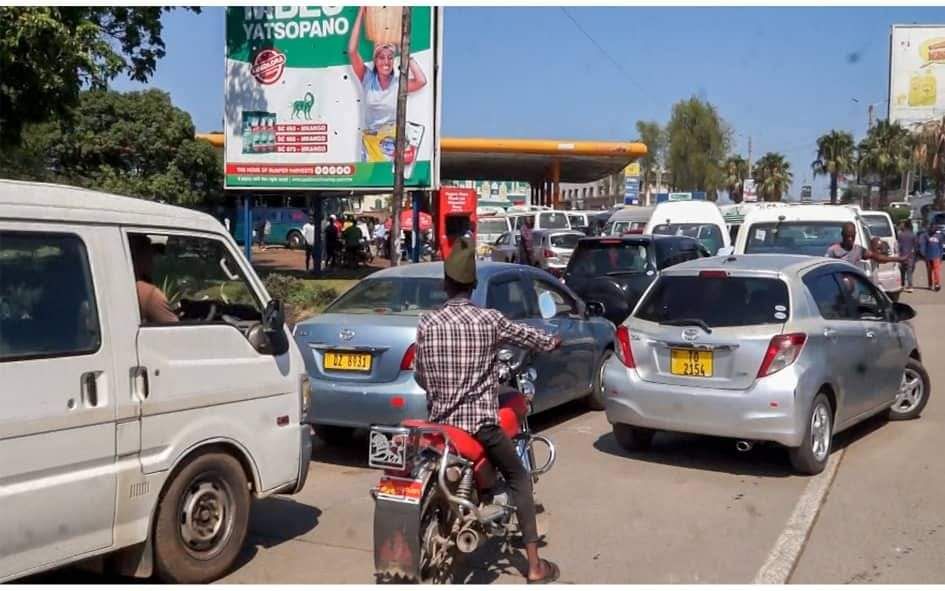
At the heart of these protests is the worsening fuel crisis that has crippled the country. Long queues at petrol stations have become a common sight, disrupting daily life and paralyzing businesses. The scarcity is symptomatic of deeper governance and economic challenges that the administration of President Lazarus Chakwera has failed to address.

Protesters were seeking accountability and immediate action to resolve the crisis. However, instead of engaging with the grievances of its citizens, the government opted to suppress their voices. This approach not only undermines democratic governance but also risks further alienating an already frustrated populace.

The use of masked individuals to disrupt protests is a troubling return to vigilante-style politics. Historically, such tactics have been employed to intimidate political opponents and suppress dissent. The involvement of these groups raises serious questions about who funds and coordinates their activities.

Equally concerning is the message these actions send to ordinary citizens. When peaceful protests are met with violence, people are discouraged from exercising their democratic rights. This creates an environment of fear and silence, where critical voices are stifled, and accountability becomes elusive.

The complicity of the Malawi Police Service in these incidents is particularly disturbing. As an institution tasked with upholding law and order, the police must remain impartial and protect citizens’ rights. However, their apparent collusion with the masked groups tarnishes their credibility and erodes public trust.

This behavior also highlights the need for urgent police reform. A professional and independent police service is critical for safeguarding democracy and ensuring that the rule of law prevails. Without such reforms, the MPS risks becoming a tool for political repression rather than a protector of the people.

The events in Lilongwe should serve as a wake-up call for all Malawians. Democracy thrives on active participation, accountability, and the protection of fundamental rights. The suppression of dissent undermines these principles and threatens the country’s democratic fabric.

Civil society organizations, religious groups, and international partners must unite in condemning these actions and demand accountability from the government. President Chakwera’s administration must also demonstrate its commitment to democracy by distancing itself from these acts of suppression and taking decisive action against those responsible.

Additionally, the Malawi Human Rights Commission (MHRC) must investigate these incidents and hold perpetrators accountable. This includes identifying and prosecuting the masked individuals and any police officers who acted in violation of their mandate.

In conclusion, Malawi’s democracy is under siege. The collusion between panga-wielding groups and the police in disrupting peaceful protests represents a dangerous trend that must be halted immediately. Suppressing dissent will not solve the country’s problems—it will only deepen them.

The government must remember that power lies with the people, and the people’s voices must be heard. Addressing the fuel crisis, restoring trust in institutions, and protecting constitutional freedoms are the only sustainable paths forward. The alternative—a descent into authoritarianism—would be a tragic betrayal of Malawi’s democratic journey.

*About the Author*

Burnett Munthali is a political analyst and writer with a focus on governance, human rights, and democratic processes in Malawi.

UP expresses concern over irregularities in AIP

0


By Chisomo Phiri

The Umodzi Party(UP) has expressed deep concern over the growing irregularities in the Affordable Inputs Program (AIP), which threaten the success of the initiative and undermine the government’s efforts to achieve food security.

In a statement seen by this publication, the party’s president Thomas Wezzie Kaumba has highlighted several challenges faced by program beneficiaries, including missing names from the beneficiaries’ lists and incorrect representation of names.

He says these irregularities are causing unnecessary distress among smallholder farmers who rely on the program to access affordable agricultural inputs.

Thomas Kaumba


Kaumba says despite complaints being lodged with the responsible authorities, little to no action has been taken to address these issues.

The UP president has since called on the Ministry of Agriculture to urgently intervene and rectify these anomalies.

He has also  emphasized that ensuring efficiency and transparency in the AIP is critical for the nation to realize its goal of achieving sustainable food security.

Kaumba says his party  remains steadfast in advocating for the needs of Malawians and has urged responsible authorities to prioritize this issue to prevent further disruptions to the farming season.

He has further called for all eligible beneficiaries to be provided with their inputs on time and has emphasized the need for a collective effort to ensure the success of the AIP for the benefit of the nation.

AIP is an initiative by the Malawi government to provide affordable agricultural inputs to smallholder farmers.

The program aims to improve food security and promote agricultural productivity in the country.

Malawi Fuel Crisis: Is MERA failing Failing the Nation?


By Twink Jones Gadama


In a nation where the sun rises and sets on the promise of progress, Malawi finds itself grappling with an unprecedented fuel crisis that has left citizens bewildered and frustrated.

The Malawi Energy Regulatory Authority (MERA), established to oversee the importation, storage, and sale of petroleum products, including petrol, diesel, and liquefied petroleum gas (LPG), is under scrutiny as the country faces fuel shortages that have brought daily life to a standstill.


For many Malawians, the fuel crisis is not just an inconvenience; it is a matter of survival.

Long queues at petrol stations have become a common sight, with motorists waiting for hours, sometimes days, to fill their tanks.

Public transport has been severely affected, leading to increased fares and a significant drop in mobility for those who rely on buses and taxis to get to work or school.

The crisis has also impacted businesses, with many unable to operate due to a lack of fuel for their vehicles and generators.

As the situation escalates, questions arise about the effectiveness of MERA in managing the country’s fuel supply. Established in 2004, MERA was tasked with ensuring a reliable and efficient energy sector in Malawi.

However, critics argue that the agency has failed to fulfill its mandate, leading to the current crisis.

One of the primary criticisms leveled against MERA is its inability to anticipate and mitigate fuel shortages.

The agency has been accused of being reactive rather than proactive, responding to crises only after they have escalated.

This lack of foresight has left the country vulnerable to external shocks, such as fluctuations in global oil prices and supply chain disruptions.

Moreover, MERA’s regulatory framework has been called into question.

Critics argue that the agency has not done enough to promote competition in the fuel sector, leading to monopolistic practices that drive up prices and limit access to fuel.

The lack of transparency in the pricing of petroleum products has also raised concerns, with many citizens questioning why prices continue to rise despite the government’s assurances of stability.

The fuel crisis has also exposed the weaknesses in Malawi’s infrastructure.

The country relies heavily on imports for its fuel supply, with most of the petroleum products coming from neighboring countries.

This dependence has made Malawi susceptible to supply chain disruptions, particularly during times of political instability or natural disasters in the region.

Critics argue that MERA should have worked to diversify the country’s fuel sources and invest in local production to reduce this vulnerability.

In addition to these structural issues, the crisis has highlighted the need for better communication between MERA and the public.

Many citizens feel left in the dark about the reasons behind the fuel shortages and the steps being taken to address the situation.

This lack of communication has fueled frustration and distrust in the agency, with many questioning its competence and commitment to serving the public.

As the crisis continues, some experts have begun to explore alternative solutions for sustaining fuel supply in Malawi without relying solely on MERA.

One potential avenue is the promotion of renewable energy sources, such as solar and wind power.

By investing in renewable energy infrastructure, Malawi could reduce its dependence on imported fossil fuels and create a more sustainable energy future.

Additionally, there is a growing call for the government to support local fuel production initiatives.

By encouraging the establishment of local refineries and biofuel production facilities, Malawi could create a more resilient fuel supply chain that is less susceptible to external shocks.

This approach would not only enhance energy security but also create jobs and stimulate economic growth.

Furthermore, enhancing public transportation systems could alleviate some of the pressure on fuel demand.

By investing in reliable and efficient public transport options, the government could reduce the number of private vehicles on the road, thereby decreasing overall fuel consumption.

This would not only help to ease the current crisis but also contribute to long-term sustainability.

In the short term, however, the government must take immediate action to address the fuel crisis.

This includes improving communication with the public, providing clear information about the causes of the shortages, and outlining the steps being taken to resolve the situation.

Additionally, the government should consider implementing temporary measures to stabilize fuel prices and ensure that essential services have access to fuel.

As Malawi navigates this challenging period, the role of MERA will be closely scrutinized.

The agency must demonstrate its commitment to transparency, accountability, and effective regulation if it hopes to regain the trust of the public.

The current crisis serves as a wake-up call for MERA and the government to reevaluate their approach to energy management and to prioritize the needs of the Malawian people.

In conclusion, the fuel crisis in Malawi is a complex issue that requires a multifaceted response.

While MERA has faced criticism for its handling of the situation, the path forward must involve collaboration between the government, regulatory agencies, and the public.

By embracing innovative solutions and prioritizing sustainability, Malawi can work towards a more secure and resilient energy future.

The time for action is now, and the stakes have never been higher for the people of Malawi.