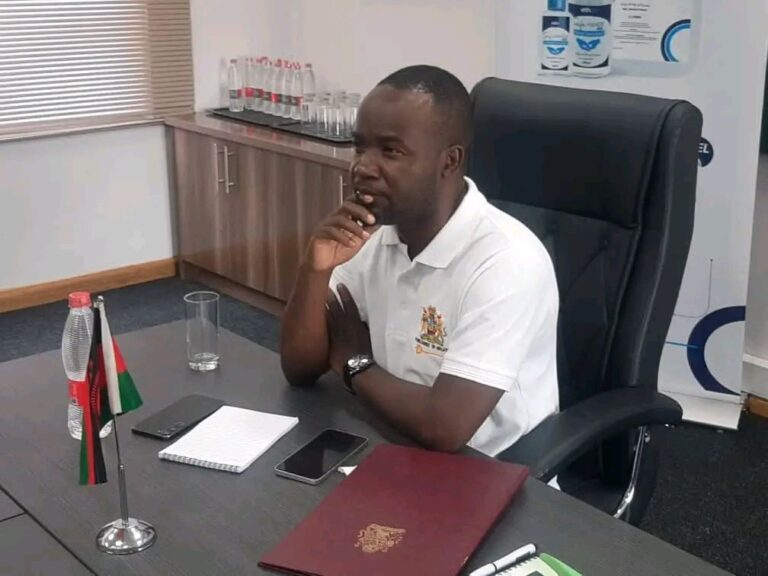
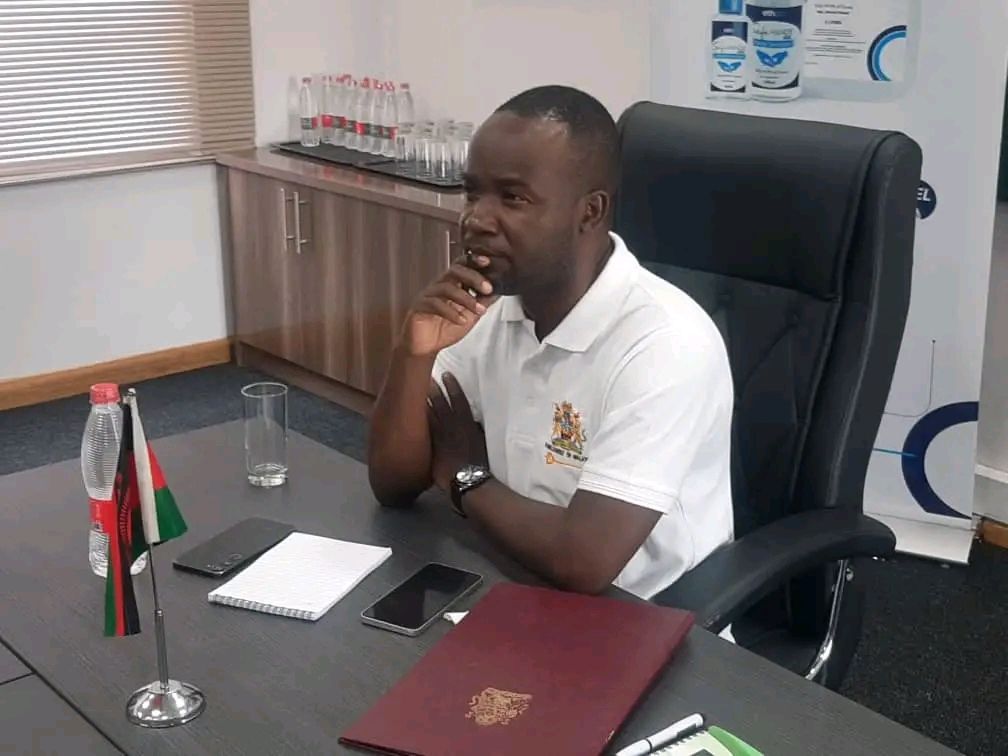
Minister of Trade Sosten Gwengwe has urged Ethanol Malawi Company(EthCO) to ramp up production to meet the soaring demand for its products in both local and global markets.
Speaking during his visit to EthCO in Dwangwa on Thursday, Gwengwe praised the company’s impressive expansion and its ability to satisfy the global ethanol market.
He noted that the company produces high-quality products that can help the country earn foreign currency through exports.
Gwengwe advised the company to scale up its operations
“EthCO is doing quite a lot in terms of venturing into various kinds of products, what I can advise them is simply scaling up what they are doing right now,” he said.
On her part, EthCO Chief Executive Officer (CEO) Lusubilo Chakaniza, revealed that the company plans to construct another production unit in Salima district to increase production.
EthCO is a Malawian company that distills ethanol from molasses, a byproduct of sugar production.
The company was founded in 1982 in response to the fuel crisis of the late 1970s.
EthCo’s main product is ethanol, which is used for a variety of purposes, including fuel, beverage alcohol, and industrial applications.
The company also produces gel fuel for chafing dishes.
In a bold social media statement, celebrity Tamia Ja has made an impassioned appeal to the former U.S. President Donald J. Trump, asking for help as Malawi grapples with a worsening fuel crisis. Her post, which has gained traction online, highlights the dire state of affairs in the country, from long fuel queues to corruption and growing socio-economic inequalities.
“President Donald J. Trump, please help us in Malawi. We have a fuel crisis in our country. People are even sleeping at filling stations for fuel,” wrote Tamia, expressing frustration over the deteriorating situation.
Tamia criticized the growing disparity between the rich and the poor, accusing powerful individuals of exploiting the system while ordinary Malawians struggle to meet their basic needs. She added, “Rich people are getting richer, corruption is too high. When we start to speak out to identify all the problems that we are facing, they scare us by saying, ‘Politics is a dirty game.’ Malawi is now worse than before.”
Her comments reflect the frustrations of many Malawians who have been dealing with a prolonged fuel shortage that has paralyzed businesses and disrupted daily life. With fuel pumps running dry and vehicles lining up for hours, the crisis has sparked public outcry against perceived government inaction.
While Tamia’s appeal to Trump may appear unconventional, it underscores a growing sense of desperation and a call for international attention to Malawi’s challenges. It also highlights the role of celebrities in voicing societal concerns and amplifying the grievances of ordinary citizens.
As public discourse continues to build around the fuel crisis, many are urging the government to take immediate and effective measures to address the shortages and restore normalcy. However, for Tamia and many others, the broader issues of corruption, inequality, and governance remain key barriers to Malawi’s progress.
The government is yet to respond to Tamia’s plea, but her message resonates with a growing segment of the population yearning for tangible solutions and meaningful leadership in these trying times.
The Center for Democracy and Elections (CEDE) has raised concerns about escalating disagreements surrounding Malawi’s electoral processes as the country prepares for the 2025 general elections. Aloisious Nthenda, Technical Specialist at CEDE, described the situation as disheartening, pointing to a deepening lack of trust among key stakeholders in the electoral system.
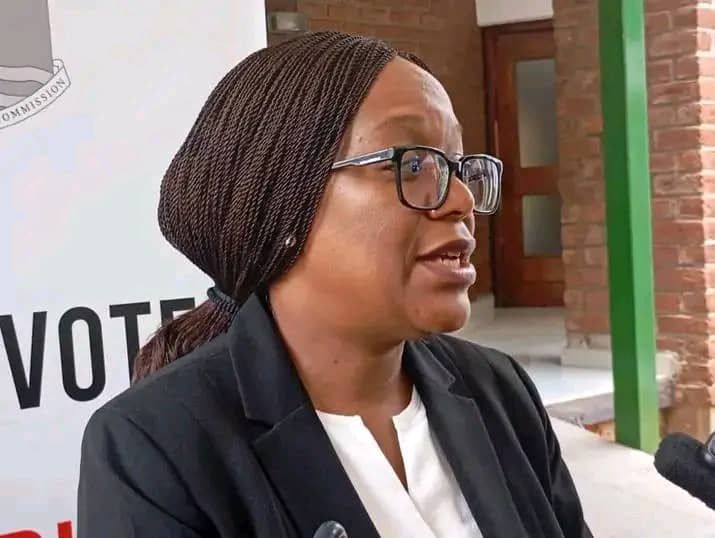
Nthenda’s remarks come in the wake of mounting criticism directed at Annabel Mtalimanja, Chairperson of the Malawi Electoral Commission (MEC), who has resisted calls to resign from her position. The UTM Party, among other opposition groups, has intensified demands for her to step down, citing unresolved grievances related to electoral management.
Mtalimanja
One of the most contentious issues involves the proposed suspension of Smartmatic, a technology firm engaged for next year’s elections. Opposition parties have questioned the transparency and reliability of its systems, fueling broader concerns over the credibility of the election process.
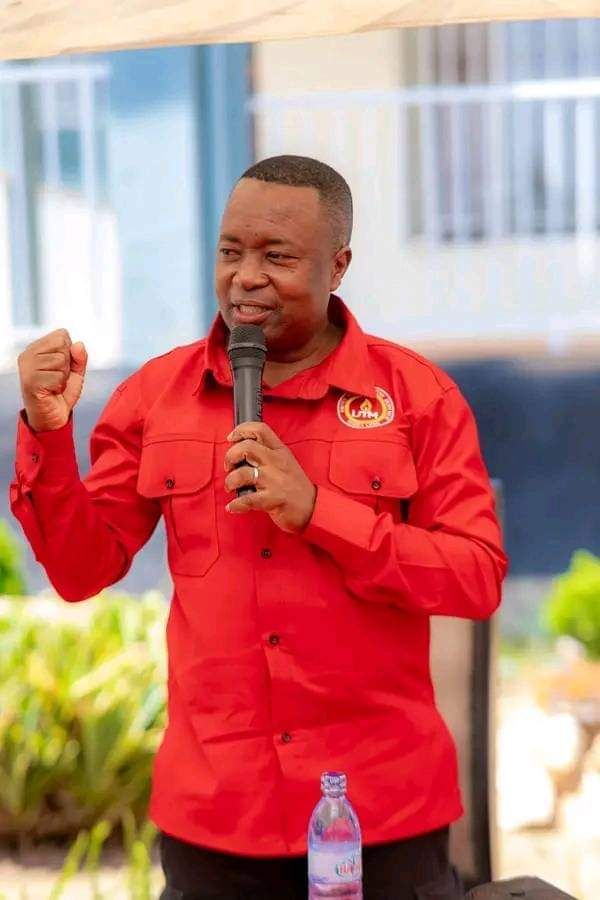
Felix Njawala, UTM’s National Publicity Secretary, has publicly urged Mtalimanja to address these grievances decisively to retain her role as MEC Chairperson. “Stakeholders need confidence in the process, and the Chairperson must act swiftly to resolve these matters if she is to maintain her leadership,” Njawala said.
Speaking to MIJ Online, Nthenda underscored the urgency of dialogue among political parties, civil society, and MEC officials to foster trust and ensure a fair electoral process. “The integrity of Malawi’s democracy hinges on finding common ground. Without genuine dialogue, the prospects of a free and fair election are at risk,” he cautioned.
As the clock ticks toward the 2025 elections, the ongoing disputes threaten to erode public confidence in MEC and its ability to oversee credible elections. CEDE’s call for constructive engagement serves as a timely reminder of the need to safeguard Malawi’s democratic processes through transparency and consensus-building.
In the fluid and often unpredictable arena of Malawian politics, the United Transformation Movement (UTM) has charted a path defined by bold decisions. However, some of these decisions have proven to be politically costly. The 2019 decision to form an electoral alliance with the Malawi Congress Party (MCP) was the first major blunder, and now, as the party eyes the 2025 presidential election, a decision to contest solo would mark the second major misstep.
The Tonse Alliance, forged out of necessity to dislodge the Democratic Progressive Party (DPP) in 2020, initially seemed like a strategic masterstroke. It brought together a diverse coalition of political forces united by a common goal. However, for UTM, it quickly became apparent that the alliance tilted heavily in favor of MCP, with President Lazarus Chakwera consolidating power and marginalizing UTM in governance.
Kabambe
UTM supporters have long expressed dissatisfaction with the alliance, citing a lack of recognition and influence for the party’s efforts. Vice President Saulos Chilima, the face of UTM, has often been sidelined, leaving many to question the wisdom of entering the alliance in the first place. The failure to secure significant influence within the government exposed UTM’s vulnerability and lack of leverage.
Now, as UTM contemplates breaking away from alliances to contest the 2025 presidential election on its own, it risks repeating history—this time in a more perilous way. While the party seeks to establish its independence and identity, the decision to go solo ignores the realities of Malawi’s political landscape, where alliances remain crucial to electoral success.
UTM lacks the grassroots structures and broad support base needed to mount a formidable solo campaign. The political terrain is dominated by regional and ethnic voting patterns, and UTM’s influence remains largely concentrated in urban areas. Without the backing of a larger party or coalition, its chances of securing a significant share of the vote are slim.
Instead of retreating into isolation, UTM must consider forming alliances that align with its vision and provide tangible benefits for the party. A calculated partnership with a party that complements UTM’s strengths could reinvigorate its political standing and address the grievances of its supporters.
Going solo would not only isolate UTM but also diminish its relevance in the broader political discourse. It is a gamble that could see the party relegated to the fringes, undoing years of effort to build its brand as a force for transformation.
UTM’s alliance with MCP was a mistake that exposed the party’s lack of foresight and strategic planning. However, the decision to contest the 2025 presidential election solo would be an even greater error, potentially sealing the party’s political fate. In a highly competitive and coalition-driven political environment, UTM must embrace pragmatism over pride, seeking partnerships that will ensure its survival and relevance.
The road to 2025 is a critical juncture for UTM. The choices made now will determine whether the party remains a significant player in Malawian politics or fades into obscurity. It is a moment that calls for reflection, recalibration, and a willingness to learn from past mistakes.
When Peter Mutharika expressed his interest to stand for presidency in 2014, some quarters expressed their reservation on his choice of leadership because they, among other things, questioned his loyalty to the nation.
Firstly he was someone who had spent all his entire productive life outside the country and had ideally returned home only when his brother ascended to the position of Head of State.
To prove wrong those who questioned his loyalty and allegiance to the Malawian flag, he revealed in one of his media interviews that he has two daughters and a son who are all in the USA, and promised to invite them, something he indeed fulfilled within a short space of time.
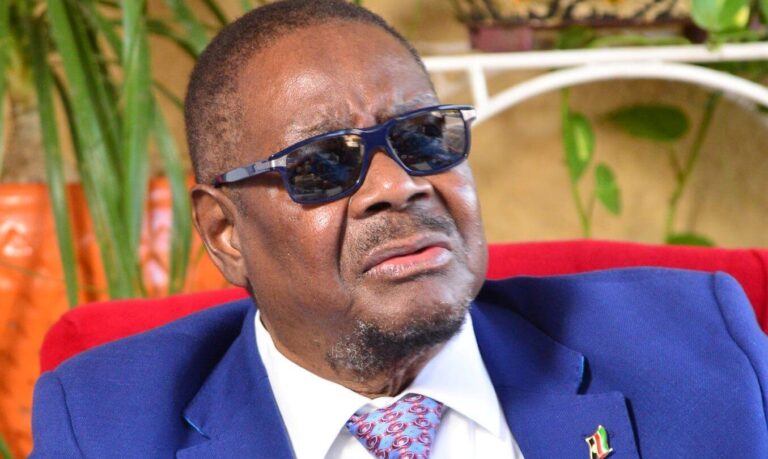
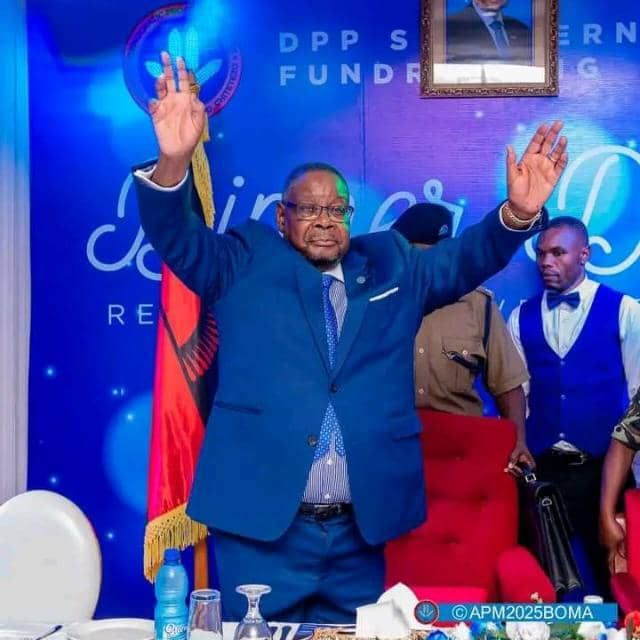
Mutharika
However, my interest is in his son who he claimed is a practicing lawyer in America; is he a Malawian or he is colonized to the bone? When he was asked why he did not attend his aunt’s funeral, Bingu Wa Mutharika’s wife, if memory serves me right, APM defended his absence that he was too busy such that he couldn’t attend the funeral because the courts were in session in America. However, people expected to see him when the country lost Bingu while serving as president of the country but nothing was heard of him, let alone on his father’s both inaugurations.
This has therefore invited more questions than answers among Malawians who have questioned the so-called loyalty of the former president and his family to Malawi. How can someone who served as president of the republic for almost 7 years, fail to convince his own child to set his feet on land that honoured his father with a mantle of power to be at the helm of government? This is unthinkable and hypocrisy of the highest level to say the least.
This has compelled other quarters to make a hasty generalization that it’s the former president himself who discourages his immediate family from visiting Malawi because of his divided loyalty, and in simple terms he is someone who claims to be patriotic to a country he doesn’t inwardly belong to.