
Sunday, April 5, 2026
No menu items!
spot_img
Home Blog Page 888

Divine Silence: Seeking Answers in a World of Suffering

By Twink Jones Gadama

The age-old question of why God remains silent in the face of human suffering has plagued theologians, philosophers, and everyday people for centuries.

In ancient times, it was believed that God communicated directly with prophets and leaders, guiding them through trials and tribulations.

But in today’s world, where conflict, poverty, and injustice reign supreme, many are left wondering: Does God still speak to us? Does He care about our struggles?



For those caught in the midst of war, famine, or disease, the silence can be deafening. Innocent children, in particular, suffer disproportionately, their lives forever scarred by the horrors they witness. It begs the question: Where is God in all of this? Can’t He send angels to rescue these children, to free them from the clutches of violence and despair?

The Bible tells us that God is all-powerful, all-knowing, and all-loving.

Yet, the world around us seems to contradict this notion. We see images of children crying, their homes reduced to rubble, their families torn apart.

We hear stories of entire communities displaced, forced to flee their homelands in search of safety. And we ask: Why?

Some argue that God’s ways are mysterious, that His plan is beyond human comprehension. Others claim that humanity’s free will is to blame, that our choices lead to suffering.

Still, others question the very existence of God, citing the absence of divine intervention as proof.

But what about the countless stories of miraculous interventions? The survivors of natural disasters who credit God for their salvation? The cancer patients who experience unexpected remissions? Do these instances not demonstrate God’s continued presence in our lives?

Perhaps the issue lies not with God’s willingness to intervene but with our understanding of His nature.

We often expect God to work in dramatic, visible ways, forgetting that His power can also manifest in subtle, quiet moments.

A comforting word from a stranger, a generous donation from an anonymous source, or a peaceful night’s sleep amidst chaos – these, too, can be evidence of God’s care.

Moreover, scripture reminds us that God’s timeline is not our own.

His response to suffering may not always align with our expectations or schedules.

The biblical account of Joseph, sold into slavery by his brothers, only to rise to prominence in Egypt, illustrates this point. God’s plan unfolded over decades, not minutes.

This is not to trivialize the pain and anguish that many endure. The suffering is real, and it is valid to question God’s silence.

However, in our seeking answers, we must also acknowledge the complexity of human nature and the consequences of our collective choices.

In war-torn countries, it is often humanity’s darkness – greed, power struggles, and hatred – that creates the very suffering we attribute to God’s inaction.

Can we truly expect God to intervene in every conflict, every instance of injustice, when we ourselves contribute to these problems?

And yet, even amidst this darkness, there are glimmers of hope.

Humanitarian organizations, fueled by compassion and faith, work tirelessly to alleviate suffering.

Medical teams risk their lives to treat the wounded. Activists advocate for policy changes to prevent future conflicts.

In these selfless acts, we see the hand of God at work. We witness the divine in the human, the spark of goodness that refuses to be extinguished.

It is here, in the midst of suffering, that we find the truest expression of God’s care.

As we grapple with the question of God’s silence, let us not forget the countless ways He speaks to us still – through scripture, prayer, and the quiet whispers of conscience.

Let us recognize that His plan may unfold in ways both dramatic and subtle, visible and invisible.

Most importantly, let us remember that we are not alone in our suffering.

We are part of a global community, connected in our struggles and our hopes.

And it is in this shared humanity that we find the strength to persevere, to seek answers, and to hold onto faith – even in the darkest of times.
COMSIP farm input project excites communities in Kasungu, Dowa

0

By Kondwani Kandiado


Communities in Dowa and Kasungu districts have hailed the Livelihoods support programme being implemented by COMSIP Cooperative Union Limited for introducing the Legume Enterprise Structure Programme (LESP) in their areas.

The members say through the program in which they contribute 30 percent, they have managed to become food secure while at the same time start up small scale businesses from profits realized from sale of surplus.


They said this on Monday during a media tour COMSIP organized for Dowa and Kasungu.

Under the program, participants contribute 30 percent towards purchase of farm inputs while the rest is shouldered by the livelihoods support program, a sub component of the Social Support for Resilient Livelihoods Project, which COMSIP is implementing.

Eluby Phiri of Masaka Cluster in Kasungu said through the inputs she got from COMSIP identified agrodealers, she managed to harvest 22 bags of maize weighing 50 kilograms each from an acre last year.

“After selling the surplus, I have been able to support my son’s education through fees and other school requirements,” she said.

Phiri says she expects to have an increased yield this growing season as she has already bought the farm inputs under the COMSIP project.

Grace Chombo a community facilitator at Masaka Cluster in T/A Wimbe Kasungu said the project has assisted farmers in buying certified seeds from certified agrodealers.

“In the past we were not able to afford buying the inputs but now we are able to buy a quantity we want depending on the size of our farm land,” she says.

Rebecca Munthali, a COMSIP caseworker in Dowa under Traditional Authority Dzoole said the LESP program has seen increased profits for the participating households through the sale of surplus.

“Different households have been able to set up group businesses while individual households have been able to invest in livestock and purchase of family assets through proceeds from sale of farm produce,” she said.

Chairperson of Khwema cluster in Dowa, Gremison Kachikonga said through the project, farmers are able to increase the amount of inputs based on the sizes of their farm land.

Kasungu District COMSIP coordinator, Christina Josiya said in an interview that through the project they would like to alleviate poverty and ensure food security among households.

“We are happy that since the project started a number of households have been transformed as some have been building houses, paying fees for their children and bought livestock,” she said.

She further said through the program, participants are given funds for every farm input ranging from fungicides, pesticides, masks, sprayers, fertilizer to best seed varieties. Farmers are also embracing actionable climate smart agriculture practices including producing and applying mbeya manure in their fields that replenish fertility and moisture for crops.

The organization has invested K2.6 Billion in LESP this farming season to enhance food security and income generation in participating households, providing farm inputs support grants to 844 Savings and loans groups and cooperatives and 27,321 households (10,002 males and 17,376 females) in 15 districts.

The beneficiaries are households on social cash transfer and public works programme under the SSRLP, a government of Malawi project being implemented with funds from World Bank and Social protection Multi Donor fund.

Through the project, COMSIP is expected to be the offtaker of the produce and will identify other markets for project’s participants to get fair prices from their labour.

Currently targeted districts in the southern region have already procured the farm inputs.

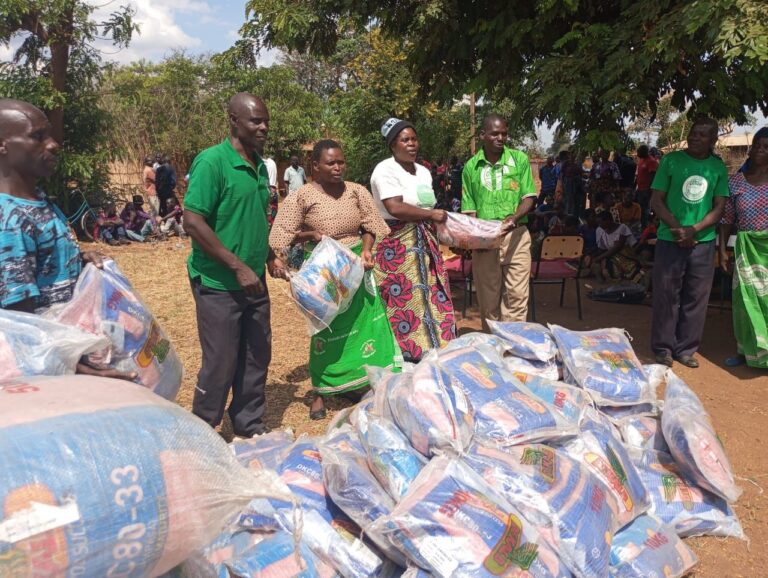
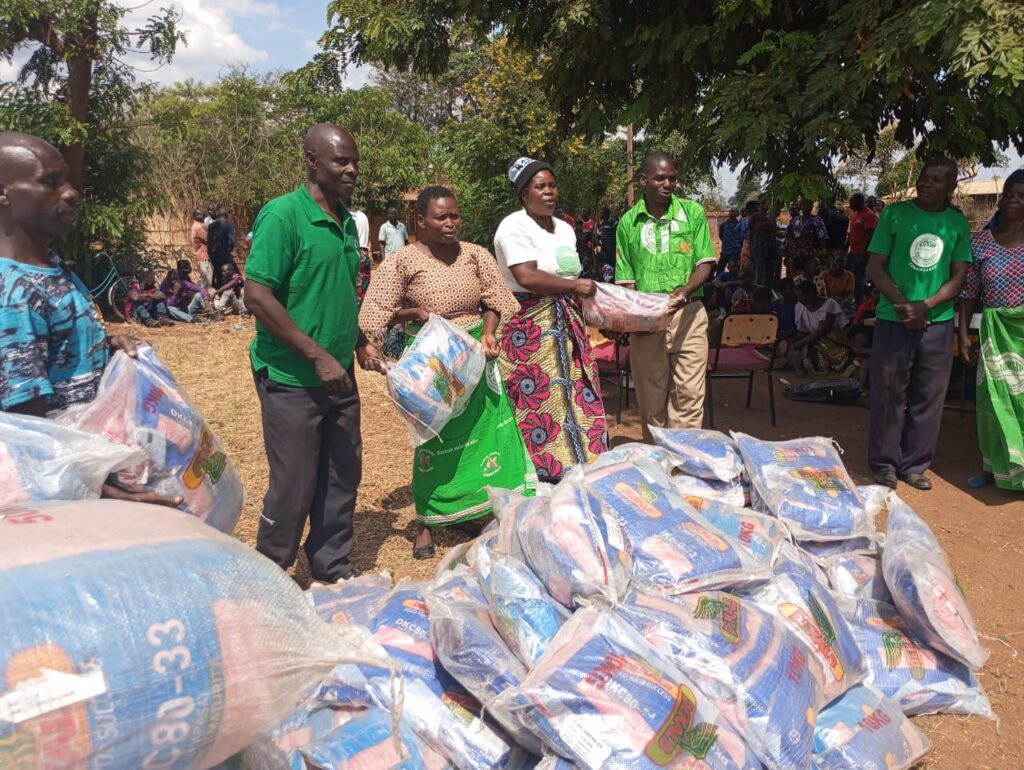
Pic: Some beneficiaries smiling after receiving the farm inputs

Wanderers Set to Shake Up Malawi Football Landscape with Norman Mapeza Appointment

0


By Twink Jones Gadama

In a move that promises to revolutionize Malawi’s football scene, Mighty Mukuru Wanderers FC has officially approached Zimbabwean coach Norman Mapeza to take the reins.

Mapeza, renowned for his impressive coaching career, is expected to arrive in the country next week for talks with club officials.

Mapeza’s illustrious coaching background boasts stints with:

– CAPS United
– Monomotapa United
– Zimbabwe National Team
– Chippa United
– Ajax Cape Town
– Platinum FC

His notable achievements include:

– Four consecutive Castle Challenge Cup wins
– Four consecutive Castle Lager Premier Soccer League titles
– UEFA Champions League experience with Galatasaray in the 1990s

Mapeza’s appointment is poised to challenge the dominance of FCB Nyasa Big Bullets FC, which has long held sway over Malawi’s football landscape.

This development also puts pressure on:

– Kalisto Pasuwa’s historical success
– Emerging coach Peter Mponda’s prospects

Wanderers’ bold move signals their determination to reclaim their spot among Malawi’s football elite.

With Mapeza at the helm, fans can expect a revitalized team strategy, honed tactics, and an injection of fresh talent.

“The arrival of Coach Mapeza marks a new chapter for Wanderers,” said a club official. “We’re confident his expertise will propel us to greater heights and bring excitement back to our supporters.”

As Mapeza prepares to touch down at Chileka Airport, Malawi’s football fraternity eagerly awaits the impact of his presence.

Will Wanderers’ gamble pay off, or will Big Bullets maintain their grip on the league?

Prophecy or Mere Dreams? Unpacking the Enigma of Modern-Day Prophetic Declarations

0

By Twink Jones Gadama

The recent United Transformation Movement (UTM) convention has left many pondering the authenticity of prophetic declarations.

A self-acclaimed prophetess predicted that Newton Kambala would emerge as UTM’s president, with Mathews Mtumbuka as his deputy.

However, the convention’s outcome told a different story, with Dalitso Kabambe securing the presidency.

This incident raises fundamental questions about the nature of prophecy in contemporary times.

In the realm of eschatology, prophetic visions are believed to unfold throughout the Bible, revealing God’s plan for humanity.

The Old Testament prophets, such as Moses, Isaiah, and Jeremiah, foretold the coming of a messianic figure who would bring redemption to Israel.

Their prophecies were often linked to the covenant between God and His people, emphasizing the importance of faithfulness and obedience.

Fast-forward to the present day, and we’re confronted with a plethora of self-proclaimed prophets and prophetesses making declarations that often don’t materialize.

This begs the question: are these genuine prophetic utterances or mere dreams and hallucinations?


The Dilemma of Discernment

In an era where anyone can claim to be a prophet, discerning genuine prophecy from fabrication has become increasingly challenging.

The Bible cautions against false prophets who deceive the masses with misleading messages (Matthew 24:24).

So, how do we distinguish between true and false prophecy?

Accountability__: Genuine prophets are accountable to a higher authority, recognizing that their words carry weight and consequences.
__Consistency__: True prophecy is consistent with Scripture and aligns with God’s character and purposes.
__Fruitfulness__: The prophetic word should produce spiritual fruit, such as repentance, faith, and transformation.

The Role of Human Interpretation

Prophetic declarations can be subjective and open to interpretation.

The prophetess in question may have genuinely believed she received a revelation from God, but her interpretation could have been flawed.

Human interpretation can lead to miscommunication, misapplication, or even manipulation of the prophetic message.

A Call for Humility and Discernment

As we navigate the complex landscape of modern-day prophecy, humility and discernment are essential.

We must approach prophetic declarations with a critical and nuanced perspective, recognizing that not every utterance is divinely inspired.

In conclusion, the distinction between prophecy and mere dreams or hallucinations requires careful consideration.

While genuine prophecy can bring guidance and encouragement, false or misinterpreted prophecy can lead to confusion and disillusionment.

As we seek to discern the authenticity of prophetic declarations, may we remain grounded in Scripture, humble in our understanding, and dependent on the Holy Spirit’s guidance.

Dalitso Kabambe self – service legacy

By Linda Kwanjana

Dalitso Kabambe, the former governor of RBM, has become emblematic of the darker side of political entitlement. His decision to award himself an unprecedented K24 million monthly salary epitomizes a concerning mindset: one where personal gain supersedes public service. His indifference to public outcry and criticism over his obscene salary revealed a profound disconnect from the very citizens he was purportedly serving. Such extravagant self-enrichment raises significant questions about his motivations and ethical standards, leaving Malawians rightfully alarmed about the implications should he ever be trusted to lead the country as a whole at any time in future (because well, 2025 is simply not for him).

Kabambe killed with a spoon and he is seeking to be armed with a grenade and gun. With historical precedent showing that no prior RBM governor or indeed that after him has come close to his exorbitant salary, Kabambe’s greed indicates a potential for broader corruption if he were granted further power. If he considers his compensation “justified” based on his role, one shudders to think what sort of excess he would deem acceptable as a national leader. This culture of entitlement is dangerous, insinuating a willingness to prioritize personal gain over public welfare.

Kabambe


Moreover, Kabambe’s legacy is further clouded by allegations of criminal activities during his tenure at the RBM, with a criminal case currently in court. If you cannot be alarmed by his self-enriching unprecedented entitlement, at least think of the K1 billion fraudulent transfer from RBM to a local bank during a night when election results were announced in 2020. That forms part of his alleged criminality that he is bound to answer in court.

An audit report chronicles criminality that highlight Kabambe as a heartless thief, sparking fears of gross mismanagement of public funds.

These legal challenges that he has to confront coupled with his questionable ethics, could have dire ramifications for his party, the UTM, especially if he were to be convicted. A party leader facing felony charges would effectively disenfranchise his party, leaving it leaderless and vulnerable ahead of crucial elections.

The nexus of greed, entitlement, and alleged criminality exemplified by Kabambe serves as a stark reminder of the importance of vigilance in safeguarding democratic values. As a nation, Malawi must prioritize leaders who genuinely seek to serve the public interest, rather than those who view public office as a means to enrich themselves.