Friday, December 26, 2025
No menu items!
spot_img
Home Blog Page 89

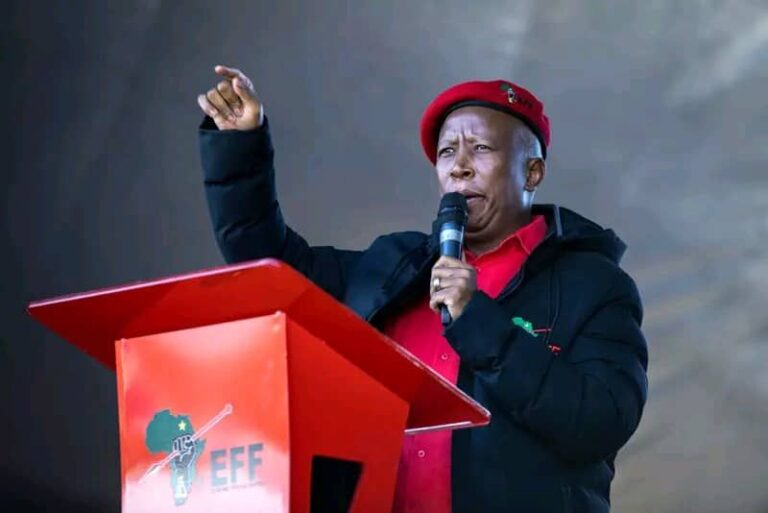
South African Opposition Leader Julius Malema found guilty on firearm charges


By Burnett Munthali

South African opposition politician Julius Malema has been found guilty on five counts in a high-profile case concerning the discharge of a firearm.

The case stems from an incident during a 2018 anniversary celebration of his party, the Economic Freedom Fighters (EFF), where Malema allegedly fired a weapon.

Although the court has reached a verdict, Julius Malema has not yet been sentenced.

Legal experts note that he faces a potential prison term ranging from a minimum of two years to a maximum of 15 years, depending on the judge’s final ruling.

The conviction marks a significant moment in South African politics, as Malema is a prominent and polarizing figure who has built his influence through fiery rhetoric and populist policies.

Observers suggest that the outcome could have ramifications for his political career and the future activities of the EFF, especially as the party positions itself ahead of upcoming elections.
Malema


Supporters of Malema have already expressed concern over the ruling, claiming it may be politically motivated, while critics argue that it demonstrates accountability for unlawful actions, even by high-profile leaders.

Legal analysts anticipate that Malema’s defense team may appeal the decision, potentially prolonging the judicial process and keeping the case in the public eye.

The verdict also underscores South Africa’s broader challenges with firearm regulation and political conduct, particularly during mass rallies and party celebrations.

Across Africa, several political leaders have faced legal battles that tested their parties and movements.

In Zimbabwe, the late Morgan Tsvangirai, leader of the Movement for Democratic Change, was repeatedly arrested, detained, and harassed under Robert Mugabe’s regime, yet his legal struggles galvanized support and strengthened his party’s credibility among the electorate.

In Zambia, opposition leader Hakainde Hichilema was arrested multiple times under the Edgar Lungu administration on charges widely perceived as politically motivated, yet these challenges allowed him to frame himself as a resilient champion of democracy, eventually helping him secure the presidency in 2021.

Kenya offers another example: Raila Odinga faced repeated arrests, detentions, and political restrictions under various administrations, but his persistence enabled him to maintain a strong support base and influence national politics for decades.

These cases illustrate a common pattern in African politics: legal challenges against opposition leaders often strengthen their political narratives rather than weaken them, turning trials into opportunities to mobilize supporters and gain international attention.

For Julius Malema, the firearm conviction could similarly become a defining moment, positioning him as a defiant figure who continues to challenge the status quo despite legal hurdles.

As South Africa awaits his sentencing, both the EFF and the broader political landscape will be watching closely to gauge how this verdict shapes public perception, party cohesion, and the dynamics of the opposition ahead of upcoming elections.

The Malema case also serves as a cautionary tale for governments that attempt to use the legal system to weaken political opponents.

History across Africa shows that prosecuting opposition figures often backfires, transforming legal battles into platforms for mobilization, international sympathy, and political legitimacy.

By targeting prominent leaders like Malema, authorities risk reinforcing the narrative that the state governs through coercion rather than consent, which can energize supporters and attract global attention.

If mishandled, prosecutions can elevate the very figures governments aim to sideline, turning them into symbols of resistance and resilience.

For South Africa, the judicial process surrounding Malema will not only determine his personal fate but could also reshape political dynamics, highlighting the delicate balance between enforcing the law and preserving democratic credibility.

In the end, Malema’s conviction is a reminder that governments who overreach in targeting opposition leaders may achieve short-term control but inadvertently strengthen the long-term influence of the opposition.
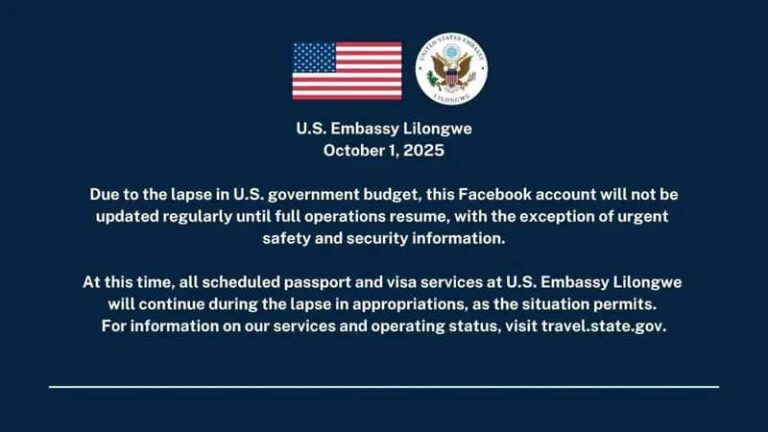

US Embassy in Lilongwe scales back Facebook updates amid Washington budget stalemate

0


By Burnett Munthali

The United States Embassy in Lilongwe has announced that it will not update its Facebook page regularly until the ongoing budget lapse in Washington is resolved.

A government shutdown occurs when the US Congress fails to pass a budget to fund federal agencies, creating disruptions in normal operations both at home and abroad.

In a post dated October 1, 2025, the embassy informed the public that its Facebook account will remain largely inactive.


The embassy emphasized that the only exceptions will be posts carrying “urgent safety and security information,” ensuring that critical updates still reach American citizens and the wider public in Malawi.

The announcement comes at a time when political gridlock in the United States has once again led to uncertainty in federal operations, raising concerns about the impact on diplomatic missions and the services they provide.

Despite the reduced online activity, the embassy reassured Malawians and Americans living in the country that essential consular services will continue.

Reads the embassy’s message: “At this time, all scheduled passport and visa services at US Embassy Lilongwe will continue during the lapse in appropriations, as the situation permits.”

This means that applications for visas, passport renewals, and other vital services will still be processed, though the embassy cautioned that unforeseen developments in Washington could affect operations.

The decision to scale back social media updates underscores how deeply budgetary disputes in the US Congress ripple across the world, even affecting embassies thousands of miles away.

For Malawians, the embassy’s statement is a reminder of the interconnectedness of global governance, where domestic challenges in one nation can have immediate effects on another.

The embassy also sought to reassure the public that it remains committed to safeguarding the welfare of both American citizens in Malawi and Malawians engaging with US services.

As Washington struggles to break its budget deadlock, the scaled-back communication from the US Embassy in Lilongwe highlights the global implications of political paralysis in the world’s largest economy.

This is not the first time that diplomatic missions in Africa have felt the effects of a US government shutdown.

In 2013, during a 16-day shutdown under President Barack Obama, many US embassies across the continent reduced non-essential activities, limiting cultural exchanges and delaying some development assistance programs.

In 2018 and early 2019, the United States experienced its longest-ever government shutdown, lasting 35 days under President Donald Trump, which disrupted grant disbursements and slowed aid programs in countries such as Kenya, Uganda, and Malawi.

Although essential services like visa issuance were maintained as long as funding permitted, embassies were forced to prioritize emergency functions and scale back engagement in areas such as education initiatives, public diplomacy, and technical support to African governments.

For Malawi, where the United States has long been a critical partner in health programs, agriculture, and governance reforms, such disruptions serve as reminders of how dependent bilateral projects can be on stable funding decisions in Washington.

The suspension or delay of development funding during past shutdowns sometimes caused uncertainty for local implementing partners, particularly in areas supported by USAID.

This history illustrates the vulnerability of African nations to political stalemates in the United States, despite being far removed from Capitol Hill debates.

As Malawi waits for Washington to resolve the current budget standoff, the embassy’s reduced communication is both a precautionary measure and a symbol of how far-reaching the consequences of US domestic politics can be.

For now, the embassy’s promise to maintain consular services provides reassurance, but the episode raises larger questions about resilience, dependency, and the global costs of political deadlock in America.

Vice Presidents Usi and Ansah hold historic meeting to ensure smooth transition of power

0

By Burnett Munthali

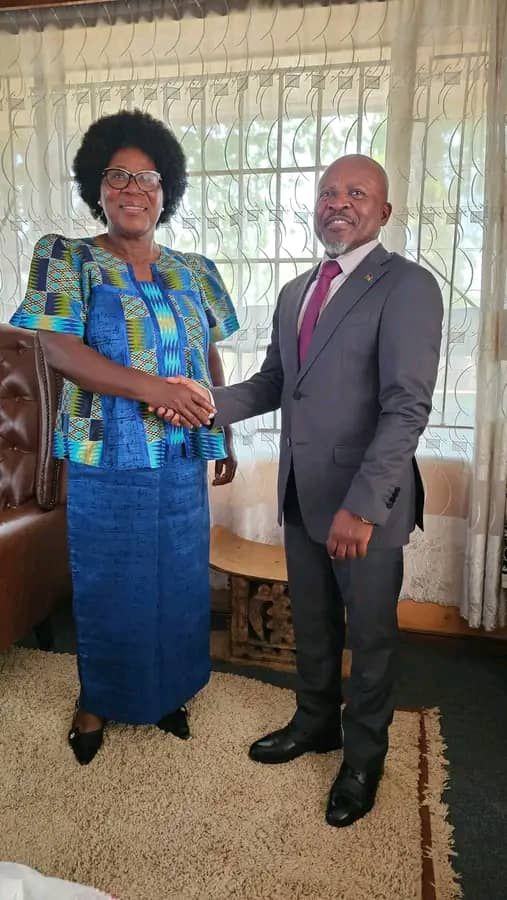
Outgoing Vice President of the Republic of Malawi, Right Honourable Dr. Michael Bizwick Usi, held a cordial meeting with the Incoming Vice President, Dr. Jane Ansah.

The meeting was part of broader efforts to ensure a smooth and orderly transition of power following the victory of President Professor Arthur Peter Mutharika and his running mate in the September 16, 2025, elections.

Their discussion was conducted in a spirit of mutual respect, focusing on continuity and the shared responsibility of safeguarding national interests.

Dr. Usi assured Dr. Ansah of his full support as she prepares to assume her new role.

He emphasized that he would always remain available, if called upon, to provide guidance and assistance during the transition and beyond.


In response, Dr. Ansah commended Dr. Usi for his statesmanship and willingness to cooperate.

She described his pledge of support as a demonstration of patriotism and maturity.

Dr. Ansah further noted that such gestures are vital for fostering unity and stability during a historic political transition.

The meeting between the two leaders highlights Malawi’s commitment to peaceful democratic processes and the importance of collaboration in moments of political change.

It also sets a positive tone for the incoming administration, signaling that the transfer of power can be managed with dignity, dialogue, and mutual understanding.

As Malawi moves forward under new leadership, the cooperation between Dr. Usi and Dr. Ansah will stand as an example of responsible governance and respect for democratic values.

Dr. Michael Usi, who has served as Vice President since 2020, is widely recognized for his unique journey from the creative arts into national politics.

Popularly known by his stage name Manganya, Usi built a reputation as a comedian, actor, and social campaigner before transitioning into public service.

He entered politics under the United Transformation Movement (UTM), working closely with the late Vice President Saulos Chilima and later assuming the role of second-in-command after Chilima’s tragic passing.

Throughout his tenure, Dr. Usi became known for his straightforward communication style, his focus on grassroots engagement, and his efforts to champion issues affecting ordinary Malawians.

As he exits office, many observers note that Usi leaves behind a legacy of connecting government to people in ways that resonated across communities.

By contrast, Dr. Jane Ansah’s background is rooted firmly in law and public administration.

A highly respected legal scholar and former Supreme Court judge, she has served the nation in multiple capacities, including as Attorney General and later as Chairperson of the Malawi Electoral Commission.

Her role at MEC during the disputed 2019 elections made her a controversial figure at the time, but her later work in academia and the judiciary has reaffirmed her credentials as a dedicated public servant.

Now, as she prepares to assume the role of Vice President, Ansah brings deep legal expertise, institutional knowledge, and a reputation for resilience.

Her elevation marks a significant milestone in Malawian politics, making her one of the few women to rise to such a high executive office.

The encounter between Dr. Usi and Dr. Ansah therefore carried symbolic weight, bridging Malawi’s outgoing and incoming leadership through dialogue and shared commitment.

In a political environment often marked by division, their willingness to cooperate sends a powerful message of continuity, stability, and national interest above partisan lines.

As the Mutharika administration prepares to take the reins, the collaboration between the outgoing and incoming vice presidents will serve as an important foundation for governance in the years ahead.

Kamwendo appointed assistant coach at CAPS United

0


By Rahim Abdul

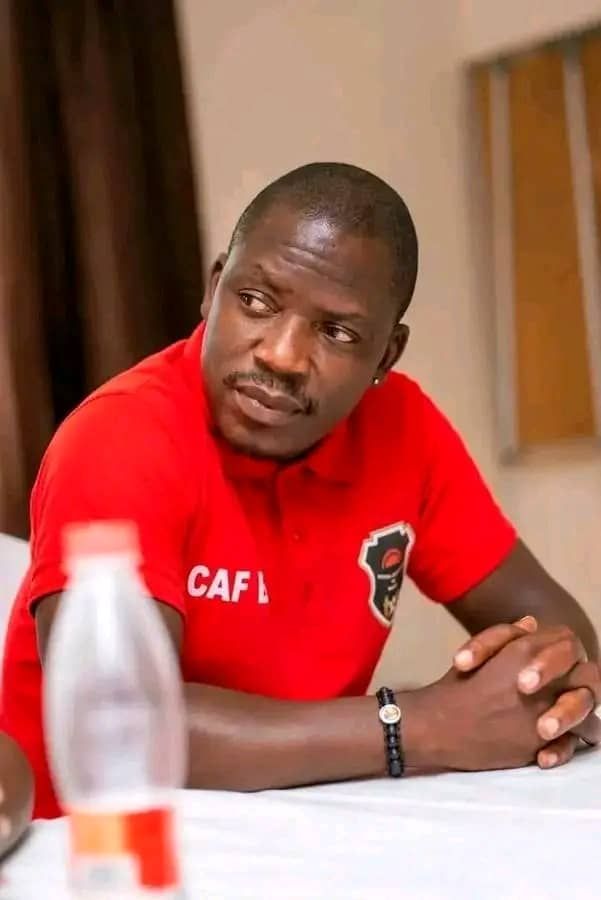
Zimbabwean Premier Soccer League giants CAPS United have appointed former Malawi international midfielder Joseph “Shakira” Kamwendo as one of their assistant coaches.

Kamwendo, who is currently head coach of Malawi’s Mnchinji Villa, will work closely with CAPS United’s head coach Ian Bakala.

According to the club’s president Farai Jere, the decision to bring in Kamwendo is part of the team’s broader strategy to strengthen its technical panel ahead of the new season.

“Joseph Kamwendo is a legend of African football with a wealth of experience both as a player and now as a coach. His presence will help our squad a lot, especially the younger players, who can learn from his vast knowledge of the game,” Jere said.


Kamwendo is no stranger to CAPS United, having played for the Green Machine earlier in his professional career before moving on to clubs in South Africa, Denmark and Mozambique.

During his playing days, he was renowned for his vision, creativity, and leadership on the field.

The former Flames captain also enjoyed a decorated career with Malawi’s national team, earning more than 100 caps and representing his country in several regional and continental tournaments. His leadership and passion for football made him one of the most respected players of his generation.

Since retiring from active football, Kamwendo has focused on coaching and football development. At Mnchinji Villa, he has been instrumental in nurturing young talent and instilling professionalism in the squad, which earned him recognition from football stakeholders both locally and abroad.

His return to CAPS United in a coaching capacity is seen as a homecoming that could reignite the team’s ambitions. Many supporters have welcomed the appointment, describing it as a strategic move that could restore the club’s competitive edge in the Zimbabwean league.

CAPS United, one of Zimbabwe’s most successful football clubs, has been rebuilding its squad and technical staff in recent years to reclaim its dominance on the domestic scene. The addition of Kamwendo is expected to boost both the technical bench and the morale of the players.

Speaking about his appointment, Kamwendo expressed excitement and gratitude for the opportunity: “CAPS United is a club that is very close to my heart. I am honored to return here in this new role and I look forward to contributing to the success of the team.”

As the new season approaches, fans of CAPS United and Malawian football alike will be watching closely to see how Kamwendo fares in his latest football chapter, hoping his experience and leadership will guide the Green Machine to new heights.

Mutharika warns against abuse of transition period

0


By Chisomo Phiri

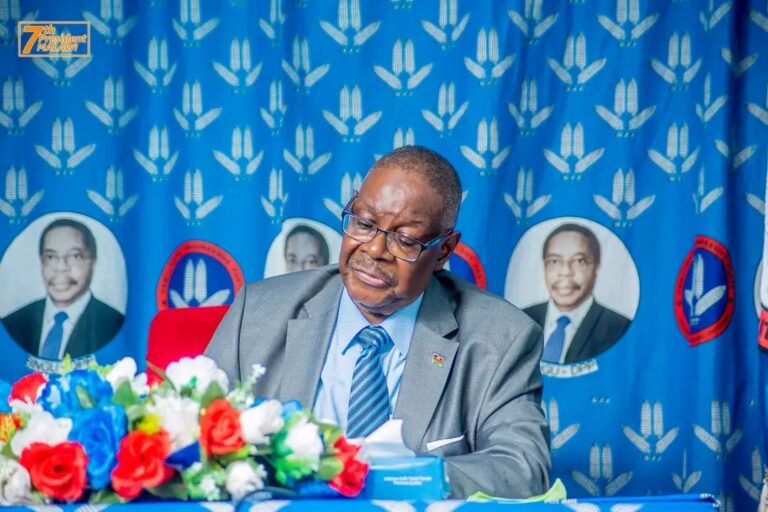
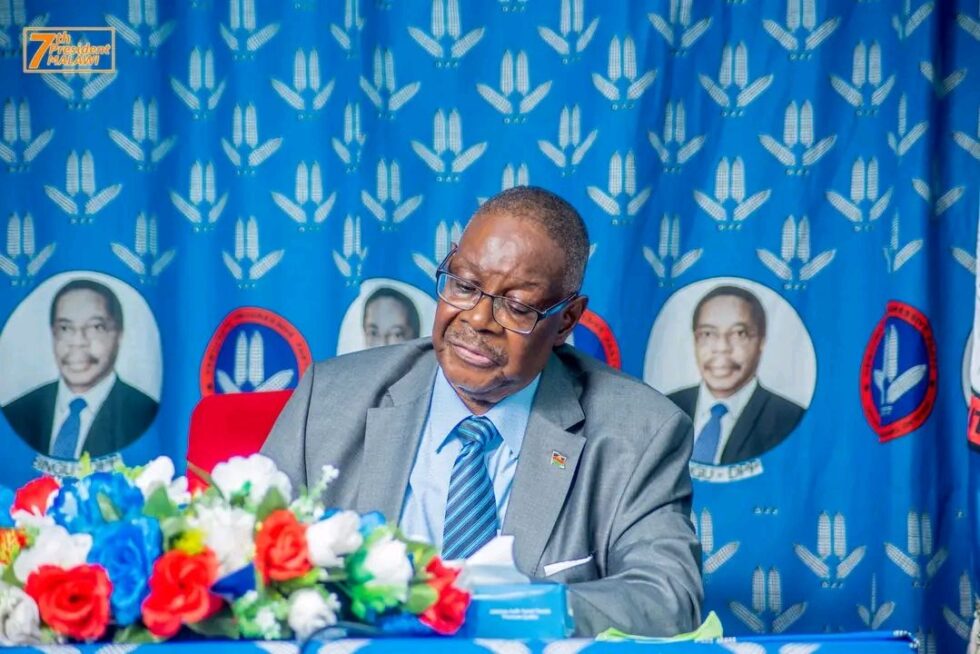
President-elect Professor Arthur Peter Mutharika has issued a stern warning to outgoing government officials against engaging in corrupt and irregular practices during the transitional period, describing such actions as illegal, intolerable, and a betrayal of public trust.

In a statement released on Tuesday, September 30, 2025,and signed by his spokesperson Shadreck Namalomba,Mutharika has expressed concern over reports that some outgoing government officials are taking advantage of the period before the transfer of power to push through questionable contracts and payments, authorize irregular promotions, and carry out dubious recruitments and transfers.

Mutharika


Reads the statement in part:“The behavior not only goes against the principles of patriotism but also violates public trust and breaks the law.”

Mutharika has reminded public servants that he had previously warned against such acts during a press conference at his Nyambadwe residence in Blantyre.

He has reiterated that any public officers found engaging in illicit activities will be held accountable to the fullest extent of the law.

Mutharika has also assured Malawians that any unlawful or irregular decisions made during the transition will be nullified once his administration takes office.

“The incoming administration remains committed to safeguarding public resources and serving the best interests of every Malawian,” adds the statement.

The president-elect’s warning comes as Malawi prepares for a change in leadership following his September 16 presidential election victory, with his team vowing to prioritize accountability and transparency in government operations.