Wednesday, December 17, 2025
No menu items!
spot_img
Home Blog Page 90

Masamba clinches victory in bout and takes home goat plus money prrize

0


By Rahim Abdul

Malawi’s celebrated boxer, Limbani Masamba, put on a remarkable display of skill to defeat Regen Champion from the Democratic Republic of Congo (DRC) in a eight-round match held in Lilongwe on Sunday night.

The fight, organized by Maravi Boxing News Promotions, drew hundreds of boxing fans from across the capital who packed the venue to witness the highly anticipated international clash. Both fighters came out strong from the opening bell, exchanging heavy punches as the crowd roared in excitement.



Masamba, known for his aggressive style and sharp counterattacks, showed great composure throughout the bout.

Regen Champion, on the other hand, demonstrated incredible strength and stamina, refusing to back down despite Masamba’s relentless pressure. The two fighters went toe-to-toe for all eight rounds, keeping spectators on the edge of their seats.

In the end, the judges awarded Masamba a points victory, acknowledging his superior technique and control of the fight.

Speaking after the bout, Masamba expressed his gratitude to his supporters and dedicated the win to Malawians.

“It was not an easy fight. Regen Champion is a tough opponent but I remained focused and stuck to my strategy. This victory means a lot to me and to my career as a professional boxer,” Masamba said.

What made this event even more unique was the unusual prize awarded to Masamba. Besides a cash reward, the boxer received a live goat, courtesy of local businessman and sports enthusiast Aaron Watch.

“I wanted to motivate our athletes in a special way. The goat is valued at K180,000, and I believe this gesture will encourage more young people to take interest in boxing,” said Watch.

Maravi Boxing News Promotions founder George Mwale hailed the event as a success, saying it demonstrated that Malawi has the talent and potential to compete on the international stage.
IPMM introduces first-ever HR Excellence Awards

0

By Chisomo Phiri

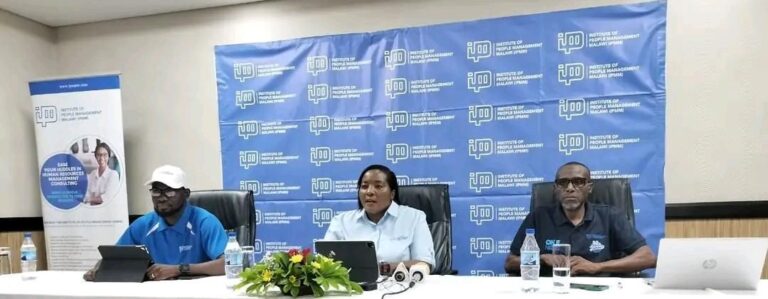
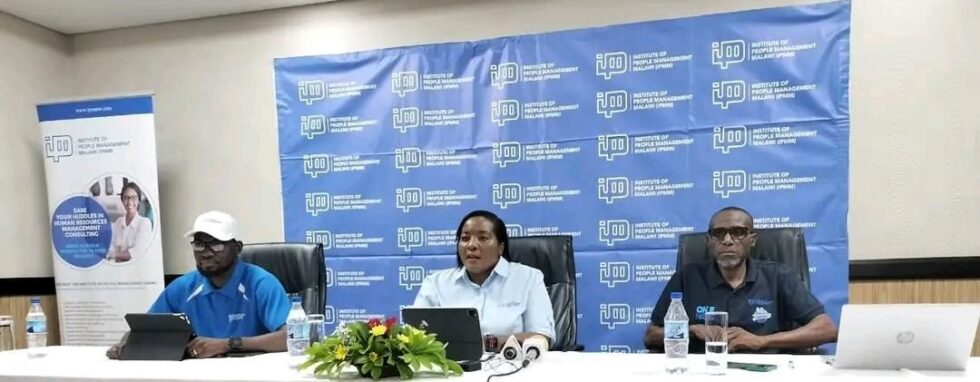
The Institute of People Management of Malawi (IPMM) has announced the launch of its inaugural Human Resources (HR) Excellence Awards, which will take place during its annual conference scheduled for October 23 to 25 this year in Mangochi.

Speaking at a press briefing in Blantyre on Saturday,IPMM secretary general Grace Nyambo said preparations are progressing well, with 450 delegates already registered,representing an increase of more than 30 percent compared to last year’s turnout.


“This year’s conference will be historic, as we will be hosting the HR Excellence Awards for the very first time.

“It will give us an opportunity to recognise remarkable contributions within the HR profession,” she said.

Nyambo said held under the theme ‘HR: The Image, Shaping the Future of Work’, the conference will focus on industrial relations, leadership, skills development, and capacity building.

On his part,IPMM executive council member Limbani Chakhoma, said the awards ceremony, set for October 24, will feature 11 categories, including HR innovation and impact, employee experience and engagement, diversity and inclusion, and learning and talent development.

“The awards are designed to celebrate individuals who are driving transformation, innovation, and meaningful impact in people management,” he explained.

Nominations for the awards opened on September 23 and will close on October 16.

The ceremony will be streamed live on IPMM’s social media platforms.

Mutharika outlines key priorities for his new administration

0


By Chisomo Phiri

President-elect Professor Arthur Peter Mutharika has outlined economic recovery, food security, job creation, strengthening healthcare and education systems, infrastructure development, and restoring trust in public institutions as the key priorities of his new administration.

Speaking in his victory speech at his Nyambadwe private residence in Blantyre on Friday, Mutharika stressed that Malawi’s transformation agenda will be anchored on unity, discipline, and hard work.

“I have no doubt we will rise to the challenge. With unity, discipline and hard work, Malawi will move forward again. And this time, we will move forward together,” he said.

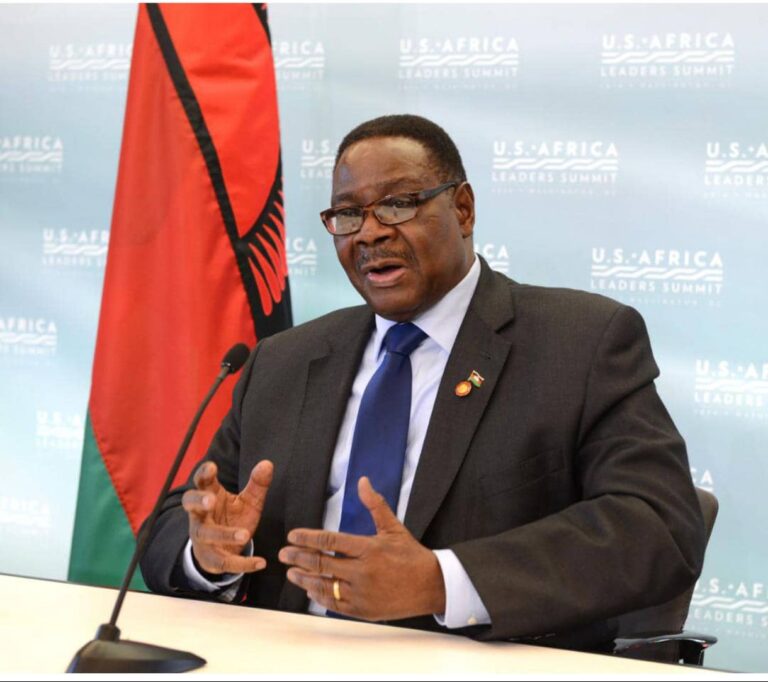
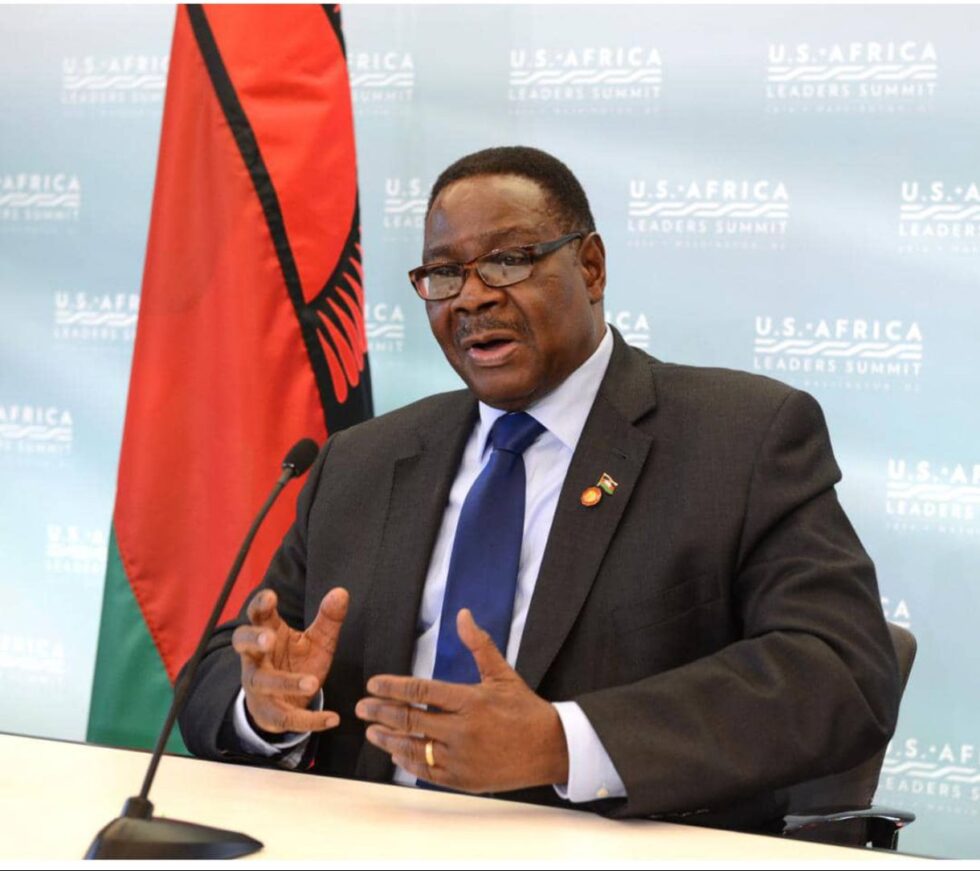
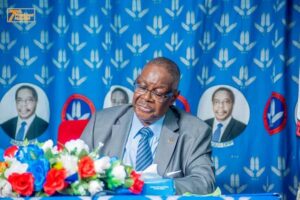
Mutharika


He added that his leadership will focus on prudence, inclusion, competence, and delivery.

The president-elect emphasized that the time for political competition had ended and the time for national cooperation had begun.

“The time for competition has ended. The time for cooperation has begun. Politics has played its part. Now the work of national transformation must take centre stage. This is the moment to put aside what divides us and embrace what unites us. We are one nation. One people. One destiny,” said Mutharika.

He described his election victory as a triumph for democracy, noting that the win was not for an individual or a political party, but for the Constitution and every Malawian who envisions a brighter future.

“This is not a victory for an individual or a party. It is a victory for our democracy, for our Constitution, and most importantly, for every Malawian who believes in a better tomorrow. More than 5.5 million Malawians turned out to vote. That is a powerful statement of hope, civic responsibility, and national unity. Your voice has been heard. Your vote has counted. Your will has prevailed,” he said.

Mutharika paid tribute to outgoing President Lazarus Chakwera for conceding defeat, commending him for demonstrating statesmanship and commitment to peace and democratic values.

He also applauded the Malawi Electoral Commission (MEC) Chairperson Justice Annabel Mtalimanja and her team for presiding over the electoral process with ‘professionalism, clarity, transparency, and dignity.’

The president-elect further expressed gratitude to Democratic Progressive Party (DPP) supporters and alliance partners from the Alliance for Democracy (AFORD), Liberation for Economic Freedom (LEF), and the National Development Party (NDP), saying their combined effort had captured the confidence of the nation.

He acknowledged the role of the media, praising journalists for their responsible reporting, which he said helped to inform voters and promote peace throughout the election period.

On September 24, 2025, MEC declared Mutharika as the winner of the presidential election held on September 16, 2025.

He amassed 3,035,249 votes against 1,765,170 for Chakwera, securing 56.8 percent of the vote and crossing the 50-percent-plus-one threshold required for an outright win.

PLAN Malawi implementing Sports for Protection in Dzaleka Camp

0


By Vincent Gunde

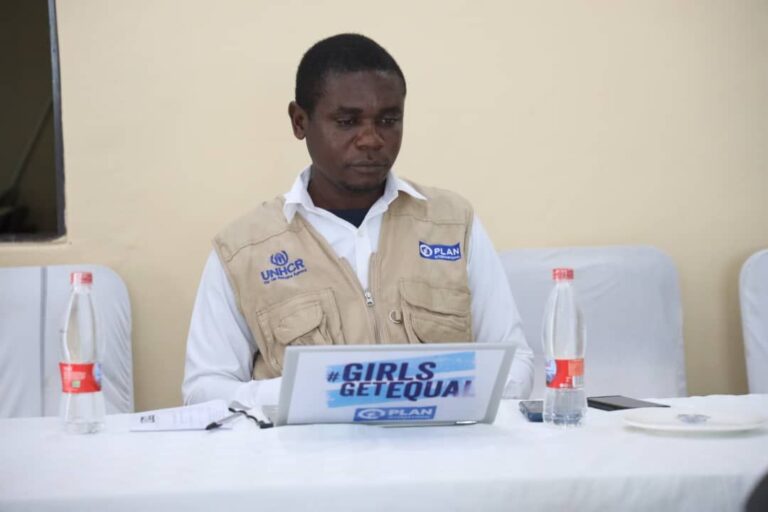
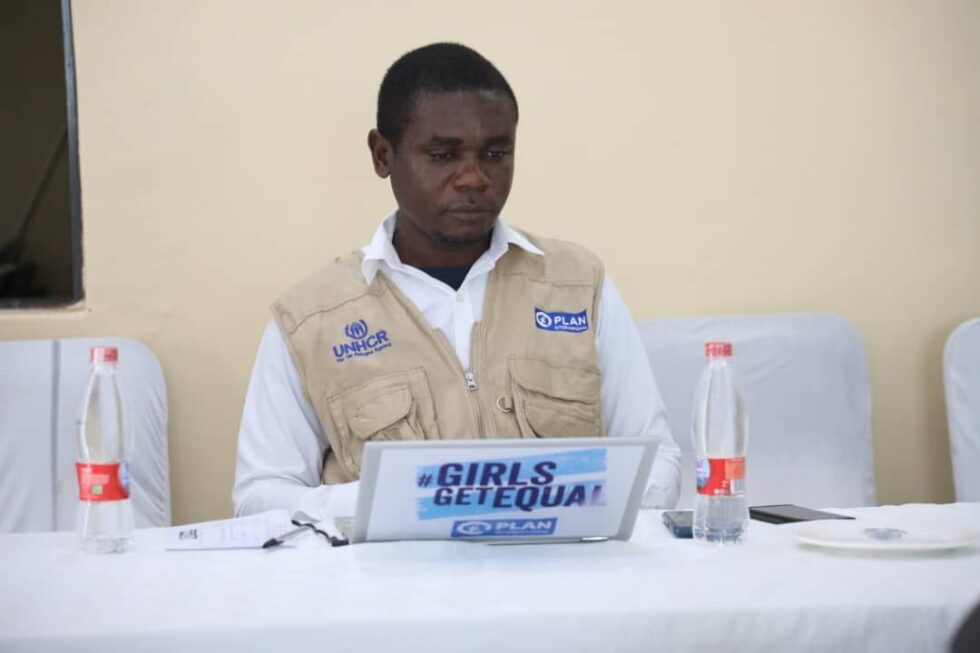
PLAN Malawi says Sports for Protection (S4P) is the use of sport and physical activity to strengthen predominantly young people’s protective environments and mitigate their risk factors for abuse, neglect, exploitation, and violence by achieving specific protection outcomes.

The organization said research has shown that children participating in sports improve their self-esteem, cognitive abilities, social interaction and self-expression saying evidence suggests that sporting activities are making a difference in the lives of children and adolescents by improving their psychological and social well-being.

Lawrence Maulidi- children participating in sports improve their cognitive abilities.


It said improved psychosocial well-being contributes to Social Development Goals (SDG) 3 Good health and well-being, SDG 5 Gender Equality and SDG 10 Reduced inequalities saying lack of protection knowledge, livelihood activities, depressed conditions, lack of self-awareness contribute to protection issues.

Presenting the project to the District executive committee (Dec) in Dowa, PLAN Malawi’s Project Manager Lawrence Maulidi, said Sports for Protection (S4P) project will be Implemented for a period of 36 months.

Maulidi said Dzaleka Refugee Camp hosts 58, 639 refugees and asylum seekers as of June, 2025 saying the project is targeting 58 refugees and asylum seekers and host community members aged 10 to 24 divided into age specific groups.

He said Sports for Protection (S4P) project will involve the children participating in games such as chess, netball, volley ball, tennis, basketball, and football saying the project will train coaches and facilitators, and building resilience and personal development among participants.

The manager said the project will also train relevant stakeholders on sports for protection programming and advocating together with partners in promoting sports as a powerful tool in addressing various challenges.

“The project will advocate for the role of sports in enhancing the lives of displaced persons in fostering resilience, social cohesion, and psychological well-being among vulnerable populations,” said Maulidi.

However, Maulidi said the project is meeting challenges in the course of implementation such as insufficient funding for sports and other recreational activities, community –led initiatives are poorly managed and there are inadequate trained facilitators, among others.

In her remarks, Dowa District Council’s Director of Planning and Development Mercy Mpakule, called on partners in the district to support the program for it to be implemented in the interest of both refugees and asylum seekers and the host community members


.

“I don’t believe in 100 days”: Leader vows to tackle food prices, fuel, and fertilizer immediately

0


By Burnett Munthali

When asked what he plans to do within the first 100 days in office, the leader gave a bold response.

He dismissed the idea of a 100-day yardstick, saying he does not operate within such limitations.

“I don’t believe in 100 days,” he declared firmly.

His priority, he explained, is to ensure that the price of food is reduced so that ordinary Malawians do not continue to suffer.

Mutharika


He also emphasized that fuel prices must come down as quickly as possible to ease the burden on transport and the wider economy.

Another urgent matter on his list is the immediate availability of affordable fertilizer to help farmers prepare for the next farming season.

According to him, these are basic needs that cannot wait for arbitrary timelines or long bureaucratic processes.

“Food, fuel, and fertilizer are essentials,” he stressed, “and people must not struggle to access them.”

He made it clear that he does not subscribe to the notion of setting a fixed 100-day agenda.

Instead, he believes leadership should focus on concrete actions that deliver relief to people without delay.

In his words, “Projects are either short-term, medium-term, or long-term. But I do not limit myself to 100 days.”

This perspective, he argued, allows for flexibility and long-term vision, while still addressing the urgent needs of the nation.

His comments reveal a leadership style that prioritizes immediate economic relief over symbolic benchmarks.

They also suggest a determination to set a new tone of urgency and pragmatism in government.

Traditionally, governments around the world have used the “first 100 days” as a symbolic milestone to demonstrate early momentum and political will.

It is often seen as a window of opportunity to win public trust, showcase priorities, and set the tone for the rest of the administration.

In Malawi, this tradition has played a visible role in shaping public perception of new leaders.

When Bingu wa Mutharika assumed office in 2004, his early focus on food security through the fertilizer subsidy program won him quick credibility and cemented his reputation as a reformer.

Joyce Banda, who rose to power in 2012, used her first 100 days to restore international donor confidence by reversing controversial policies and engaging global partners.

Peter Mutharika’s 2014 entry was judged heavily on whether he could stabilize the economy after Cashgate, and his initial reforms were closely scrutinized within that 100-day window.

Even Lazarus Chakwera in 2020 faced heightened expectations to deliver within 100 days, particularly on job creation and anti-corruption promises, though implementation fell short of the public’s impatience.

By rejecting this benchmark, the current leader challenges the conventional measure of success and instead roots his legitimacy in practical delivery rather than arbitrary timelines.

This approach could redefine public expectations by shifting the focus from political symbolism to tangible results in people’s daily lives.

However, it also raises the stakes: if immediate relief on food, fuel, and fertilizer is not delivered, the public may judge his leadership more harshly than if he had deferred progress to a longer-term agenda.

In this way, the “no 100 days” philosophy is both a bold rejection of tradition and a risky gamble that places performance and urgency at the center of governance.