Wednesday, April 15, 2026
No menu items!
spot_img
Home Blog Page 913

Former Presidents condemn violence and demand electoral justice ahead of 2025 Elections

0


By Burnett Munthali

Dr. Bakili Muluzi, Dr. Joyce Banda, and Professor Arthur Peter Mutharika, three of Malawi’s former heads of state, have strongly condemned the violence and unlawful actions that erupted on November 13, 2024, in Lilongwe. The violence occurred during peaceful protests by citizens who were rightly voicing their concerns over the chaotic registration process for the 2025 General Elections. The former leaders expressed outrage at the brutality inflicted on demonstrators, calling it a severe assault on the nation’s democratic principles.

In a joint statement, the three former Presidents stated that the actions of the police, which were witnessed during the protests, represent a grave violation of the rights guaranteed by the Malawian Constitution and international law. They pointed out that the events were not only unlawful but also directly contrary to the principles of justice, order, and human dignity upon which Malawi’s democracy is built.
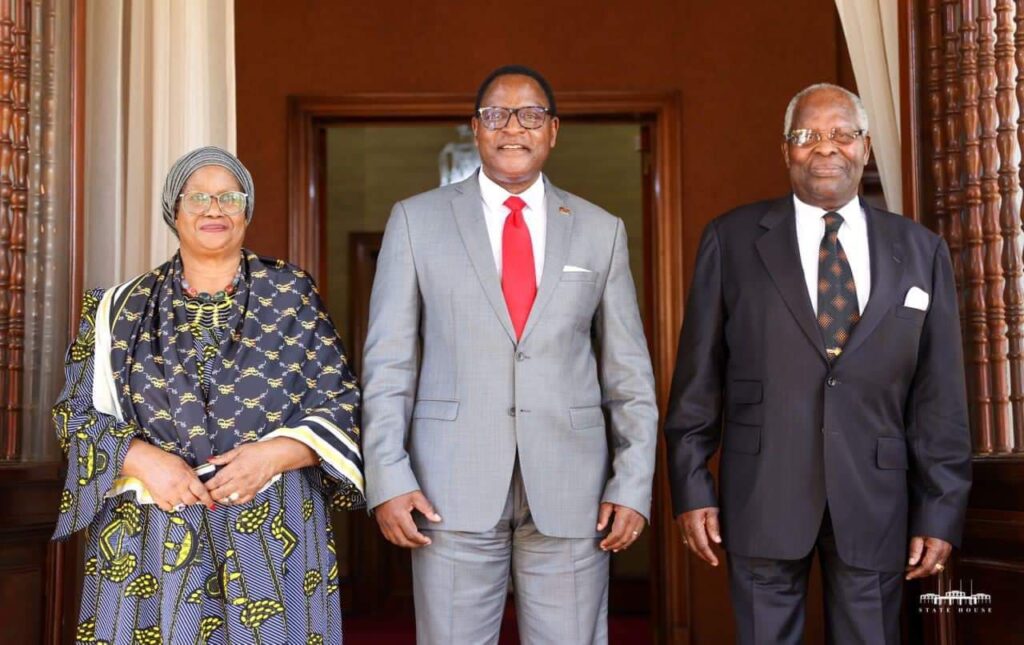
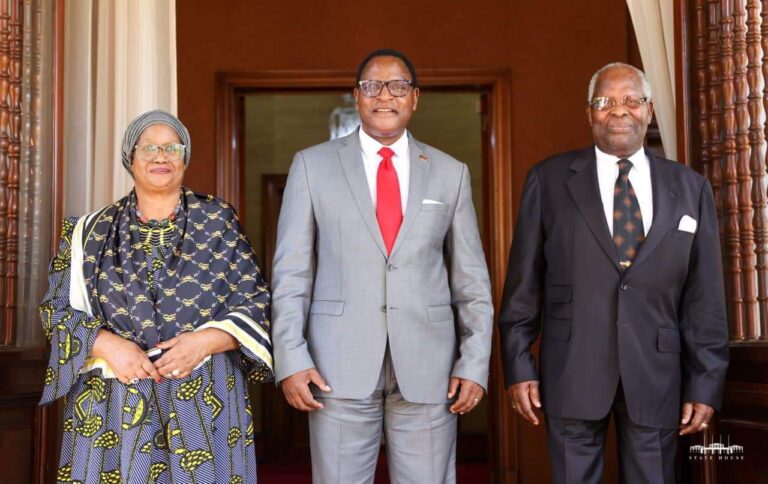
Joyce Banda and Bakili Muluzi flanked by Chakwera


“The violence witnessed on November 13 was an affront to our hard-won democracy. This brutality against peaceful demonstrators represents a direct attack on the freedoms enshrined in our Constitution and the international agreements we are signatories to,” the former Presidents said.

The former leaders emphasized that the Malawian Constitution, along with international treaties under the United Nations, African Union, and Southern African Development Community (SADC), guarantees citizens the right to free and fair elections conducted by an independent electoral body. They also highlighted that these documents protect the rights to freedom of expression, assembly, and association.

Section 40 of Malawi’s Constitution guarantees political freedoms, while Section 38 enshrines the right to peaceful demonstration. The former Presidents called on all authorities to respect these rights, particularly as Malawi approaches the critical 2025 elections.

“It is vital that Malawians are allowed to peacefully assert their constitutional right to participate in the electoral process. Democracy thrives when citizens can freely voice their concerns without fear of violence or intimidation,” they said.

In light of the events, the three former Presidents made the following demands:

Firstly, the Inspector General of Police must launch an immediate investigation into the violence, arrest all perpetrators, and ensure they are held accountable. Video evidence from the incident must be used to support swift action.

Secondly,  President Lazarus Chakwera and the Malawi Congress Party (MCP) must publicly condemn the violence and disassociate themselves from such actions. They must reassure citizens that such brutality will not be tolerated again.

Thirdly, The Malawi Electoral Commission (MEC) must urgently review its decisions that have contributed to the crisis, including the controversial use of the Smartmatic system. Voter suppression caused by the National Registration Bureau (NRB)’s failure to issue Mzika cards to eligible voters must be addressed immediately. Transparency and accountability are non-negotiable.

Fourthly, The National Registration Bureau must fully comply with the court ruling requiring its presence at all registration centers to ensure every eligible citizen receives their Mzika card promptly. Additionally, the failure of the Election Management Devices (EMDs) to register new voters in the NRB system must be resolved to prevent further complications with the voters’ roll.

The former Presidents concluded their statement with a call to action: “The time for action is now! Our democracy demands it. The citizens of Malawi have a right to free, fair, and transparent elections. It is our collective responsibility to ensure that the integrity of our electoral process is upheld.”

As the nation heads into the 2025 elections, the demand for electoral justice is louder than ever. Dr. Muluzi, Dr. Banda, and Professor Mutharika’s call for action serves as a crucial reminder that democracy is fragile and must be safeguarded at all costs. The message is clear: Malawi must work together to ensure that its upcoming elections are free from violence, manipulation, and disenfranchisement.

MEC issues public statement on photographing women in hijabs during voter registration

0


By Burnett Munthali

On Friday, November 15, the Malawi Electoral Commission (MEC) issued an important public statement regarding the taking of photographs during voter registration, specifically addressing concerns about women wearing hijabs. The statement seeks to clarify the Commission’s position on this matter to ensure an inclusive and respectful registration process for all Malawians.

The MEC recognizes the significance of respecting individual rights and religious freedoms, including the right of women to wear hijabs, while still adhering to the necessary requirements for voter identification. The Commission highlighted that it is committed to ensuring a smooth and fair registration process, and it has outlined procedures for handling registration photos of women in hijabs to avoid any inconvenience or misunderstanding.


In its statement, the MEC emphasized that voter registration officials have been instructed to work sensitively and with respect to religious and cultural attire. The Commission assures the public that every effort will be made to ensure the registration process does not discriminate against any individual or group, including those who wear the hijab for religious reasons.

To ensure the public stays informed about such developments, the MEC has encouraged all Malawians to join their WhatsApp community for real-time updates on voter registration and other electoral matters. This platform allows citizens to receive direct communications from the MEC, keeping them updated on any changes or important announcements.

For those interested in staying connected, the public can join the MEC WhatsApp community using the following link: Join MEC WhatsApp Community.

For further inquiries or clarification, Richard Mveriwa, the Communications Officer at MEC, can be contacted via cell phone at 0888870092. The MEC also provided its office address for any formal correspondence:
Chisankho House
Private Bag 113
Lilongwe, Malawi

The MEC’s statement reaffirms its commitment to conducting a fair, transparent, and inclusive voter registration process, where the rights and dignity of all Malawians are respected.

Reserve Bank of Malawi directs commercial banks to transfer foreign currency accounts to its control

0

By Burnett Munthali

In a significant move, the Reserve Bank of Malawi (RBM) has reportedly issued a verbal directive to all commercial banks in the country, instructing them to transfer foreign currency-denominated accounts under their management to RBM’s direct control. The directive, which has raised concerns among financial institutions and the business community, marks a new chapter in Malawi’s ongoing efforts to stabilize its foreign exchange reserves amid persistent economic pressures.

Sources within the banking sector suggest that this shift could allow the central bank to exercise greater oversight over foreign currency transactions, potentially helping to address Malawi’s foreign exchange shortages. RBM has been under pressure to manage declining foreign reserves, with currency shortages affecting importers, fuel suppliers, and local businesses dependent on foreign goods.


The central bank’s move comes against a backdrop of economic challenges, with Malawi grappling with a depreciating kwacha and rising inflation rates. With a limited supply of foreign exchange, RBM may be attempting to consolidate these resources, channeling them toward national priorities, such as essential imports and external debt servicing. However, the lack of formal written communication on the matter has left some banks seeking clarity on the implementation and legal framework for the directive.

Local businesses, particularly those with substantial foreign currency needs, have expressed concern about the potential impact on operations. Many worry that limited access to foreign currency could hinder their ability to import goods, meet contractual obligations, and plan future investments.

The directive has also raised questions about the autonomy of commercial banks and their role in managing foreign currency for customers. In recent years, RBM has introduced various measures to control foreign exchange flows, including tighter regulations on currency trading and monitoring of foreign currency accounts. However, this new directive represents one of the more assertive steps in centralizing control.

As the situation develops, financial experts are calling for transparent guidelines and engagement with the private sector to minimize disruptions. The RBM is yet to release an official statement clarifying the scope of the directive, its duration, and whether exemptions will be made for certain account holders, such as exporters or non-governmental organizations.

This move by RBM underscores the government’s strategy to manage foreign currency more stringently. However, the challenge lies in balancing control over foreign exchange resources with supporting a resilient, competitive business environment—key to fostering long-term economic growth in Malawi.

Mzimba CSOs elect new office bearers

0

By Chisomo Phiri

Mzimba Civil Society Organizations (CSOs) on Thursday elected new office bearers at their elective meeting.

Dennis Chiombeza from Family Health Services was elected the new chairperson of the CSOs after winning against the incumbent Christopher Melele of MIDCT by 17 to 6 votes.

In his acceptance speech, Chiombeza promised to work collaboratively with all stakeholders in implementing development activities.


In other categories, Stalin Mwandira of Shine on Malawi was elected as Secretary of the network, while George Lungu of Tovwirane elected as the Treasurer.

Mzimba has 41 organizations registered with the Non-Governmental Organizations Regulatory Authority (NGORA).

The new office bearers are expected to bring positive changes and work towards the betterment of the society.

DPP’s Commitment to Electoral Reforms: Separating Fact from Fiction


By Twink Jones Gadama

The recent article by Lyson Goodwin Sibande, criticizing DPP’s stance on electoral reforms, raises important questions about the party’s commitment to free and fair elections.

However, it’s crucial to examine the context and motivations behind DPP’s actions.

While it’s true that DPP defended the 2019 election results, it’s also important to acknowledge that the party has since acknowledged the need for electoral reforms.

The call for MEC chair Justice Annabel Mtalimanja’s resignation is not about undermining the electoral process but rather ensuring its integrity.

Moreover, Sibande’s assertions about DPP’s hypocrisy seem to be driven by a biased perspective, overlooking the party’s efforts to address electoral irregularities.

A closer look at the events leading up to the 2020 elections reveals a complex situation, with multiple actors involved.

It’s essential to recognize that DPP, AFORD, and UTM are working together to advocate for electoral reforms, which is a positive step towards strengthening Malawi’s democracy.

Rather than dismissing their efforts as hypocritical, we should encourage constructive dialogue and collaboration.


Exposing Biased Perspectives

A critical examination of Sibande’s article reveals a clear bias towards MCP, with the author failing to provide balanced reporting.

As an MCP supporter, Sibande’s views are tainted by party loyalty, undermining his credibility on this issue.

The article’s tone and language suggest a deliberate attempt to discredit DPP and its leaders, rather than engaging in constructive criticism.

This approach does little to advance the conversation on electoral reforms and only serves to polarize the debate.

The Way Forward

To truly address electoral irregularities and ensure free and fair elections, Malawians must engage in inclusive and respectful dialogue.

This requires setting aside party affiliations and focusing on the common goal of strengthening democracy.

DPP’s call for electoral reforms should be seen as an opportunity for collaboration, rather than an admission of guilt.

By working together, Malawian parties can create a more transparent and accountable electoral process.

In conclusion, while Sibande’s article raises important concerns, its biased perspective and failure to provide balanced reporting undermine its credibility.

A more constructive approach to addressing electoral reforms is necessary, one that prioritizes collaboration and inclusivity.