Tuesday, December 16, 2025
No menu items!
spot_img
Home Blog Page 96

MEC reports 65% voter turnout as Malawi awaits full election results

0

By Burnett Munthali

The Malawi Electoral Commission (MEC) dashboard at the National Tally Centre has been updated to reflect the latest voter turnout figures.

The current voter turnout stands at 65.10%, representing approximately 4.6 million people out of 7.2 million registered voters.

The gender breakdown indicates that 57.02% of voters are female, while 43.98% are male.

Mtalimanja


However, these figures are subject to change once MEC fully incorporates all received results from the constituencies.

The reported voter turnout of 65.10% reflects strong public engagement in the 2025 general elections, which is a positive signal for Malawi’s democratic process.

High participation can enhance political stability by lending greater legitimacy to the outcome and demonstrating that citizens are invested in the electoral process.

It also places pressure on political parties and candidates to respect the results, as they represent the expressed will of a significant portion of the electorate.

At the same time, maintaining public trust will depend on MEC’s continued transparency, accurate compilation of results, and timely resolution of any complaints or discrepancies.

Ensuring that all votes are properly counted and reported will reinforce confidence in Malawi’s institutions and help prevent disputes that could threaten social cohesion or undermine the credibility of the election.


This turnout and transparency will be closely watched by political parties, civil society, and the public as Malawi navigates the final stages of the 2025 elections.

The reported voter turnout of 65.10% reflects strong public engagement in the 2025 general elections, which is a positive signal for Malawi’s democratic process.

High participation can enhance political stability by lending greater legitimacy to the outcome and demonstrating that citizens are invested in the electoral process.

It also places pressure on political parties and candidates to respect the results, as they represent the expressed will of a significant portion of the electorate.

At the same time, maintaining public trust will depend on MEC’s continued transparency, accurate compilation of results, and timely resolution of any complaints or discrepancies.

Ensuring that all votes are properly counted and reported will reinforce confidence in Malawi’s institutions and help prevent disputes that could threaten social cohesion or undermine the credibility of the election.

WLA condemns premature victory claims and electoral malpractice allegations

0

By Rahim Abdul

The Women Lawyers Association (WLA) has expressed deep concern over the behavior of political parties and candidates who are prematurely declaring victory in the ongoing 2025 presidential, parliamentary and local government elections held on September 16.

In a strongly worded press statement released on Sunday, WLA warned that such premature announcements, which are being spread across mainstream and social media, risk undermining public trust in Malawi’s democratic processes.

According to the statement, WLA is equally alarmed by political actors who are publicly alleging electoral malpractice and accusing rival parties of rigging without presenting concrete evidence.

The association emphasized that while stakeholders have the right to question the electoral process, such concerns must be raised responsibly, using verifiable evidence and lawful channels.

Brenda Khwale,


“Reckless claims of rigging, particularly when made publicly without verification, erode public trust, heighten tensions and threaten national stability,” the statement read.

WLA further drew parallels to the tragic events of 2019 in Nsundwe, where politically charged allegations of electoral malpractice sparked violence, leading to women and children suffering gross sexual harassment and abuse.

The association described these incidents as a painful reminder of the real human cost that comes with irresponsible political statements during sensitive times.

The association stressed that peace is a collective responsibility and urged all political leaders, civil society organizations and Malawians at large to act with restraint.

It called on the Malawi Electoral Commission (MEC) to be allowed to carry out its constitutional mandate without undue interference or pressure.

“Malawi’s democracy and the security of its citizens must be preserved through responsible conduct,” the statement urged, appealing to political parties to respect the rule of law and the official electoral processes.

The statement was signed by Brenda Khwale, WLA’s Publicity Secretary, and Executive Director Golda Rapozo.

As tensions rise amid unofficial election results circulating online, the WLA’s message serves as a critical reminder of the potential consequences of misinformation and inflammatory rhetoric.

The association has called on the media to verify information before dissemination and encouraged the public to wait patiently for MEC’s official announcement of results.

Civo defeats Red Lions 1-0 to reach FDH Cup quarterfinals

0


By McLloyd Kudzingo


Chikaiko Batson’s headed goal was enough for Civil Service United to defeat Red Lions and reach the quarterfinals of the FDH Cup.

In a tense match played at Balaka Stadium, both sides started the first half on a slow pace but it was the visitors who showed some resilience as they managed to penetrate the soldiers’ half but lacked fire power upfront.

In the second half, Civil continued from where they stopped and they were rewarded in the 57th minute when they scored the only goal of the match.


Batson scored the winning goal connecting with a header, a free kick well taken by Righteous Banda to give the visitors the much needed lead.

In the 64th minute, Civil were reduced to 10 men after defender Yankho Biliat was shown a second yellow card following a foul on Royal Bokosi.

Red Lions tried to use their  numerical advantage to create a number of scoring opportunities but the visitors proved to be well organised at the back, denying the Zomba-based soldiers an equaliser.

In another round of 16 match played on Sunday, Mchinji Villa FC beat Chatoloma FC 4-2 at Mchinji Community Ground.

On Saturday, FCB Nyasa Big Bullets were 3-0 winners over The Boys FC as Creck Sporting beat Moyale Barraks 2-1 at Aubrey Dimba Stadium.

MCP Spokesperson Jessie Kabwila expresses confidence in party’s victory

0


By Burnett Munthali

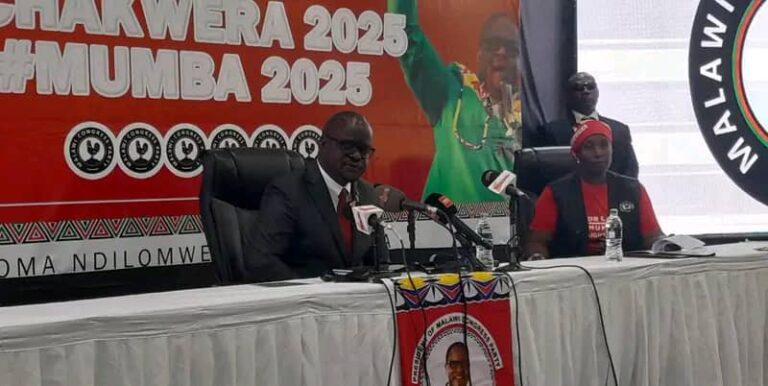
At the conclusion of a press briefing, Malawi Congress Party (MCP) spokesperson Jessie Kabwila expressed strong confidence that the party has won the presidential election.

Kabwila stated that MCP firmly believes it has secured victory in the September 16, 2025 polls.

She emphasized that the party is now only waiting for the Malawi Electoral Commission (MEC) to formally announce the results.

Her remarks reflect MCP’s optimism despite ongoing debates and disputes surrounding the vote tallying process.

MCP presser


Kabwila underscored that the party’s position is based on its own assessments and reports from the ground.

She added that MCP supporters should remain calm and patient as the electoral body carries out its constitutional mandate.

The statement comes at a time of heightened political tension as Malawians eagerly await the official outcome of the elections.

Kabwila’s declaration is expected to energize MCP supporters, while also drawing attention to the critical role MEC plays in safeguarding electoral transparency.

Observers note that such confidence, if not matched by MEC’s final announcement, could potentially raise questions about how parties manage expectations during the sensitive post-election period.

DPP claims vigilance over meetings between Chakwera’s AG and MEC CEO amid election tallying

0


By Burnett Munthali

The Democratic Progressive Party (DPP) has stated that it is closely monitoring interactions between President Lazarus Chakwera’s Attorney General, Thabo Chakaka, and Malawi Electoral Commission (MEC) CEO Andrew Mpesi.

According to DPP sources, these meetings are occurring both inside and outside the National Tally Centre in Lilongwe.

The party emphasized that its monitoring is aimed at ensuring transparency and preventing any potential influence on the ongoing aggregation of election results.

DPP officials have expressed concern about the possibility of unauthorized interventions that could affect the integrity of the tallying process.

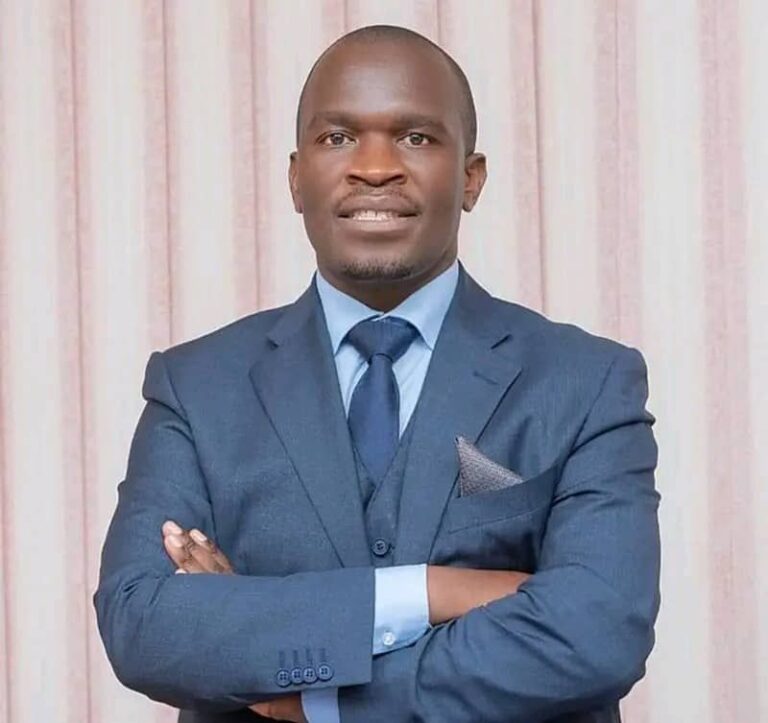
Chakaka


They underscored the importance of all electoral stakeholders respecting constitutional procedures and allowing MEC to carry out its mandate without external pressure.

The situation reflects heightened tensions surrounding the September 16, 2025 general elections, as parties remain alert to any developments that might impact the outcome.

Observers note that these claims, if substantiated, could further complicate the post-election political climate and influence public perception of electoral fairness.

Looking ahead, DPP’s vigilance over these interactions may have a mixed impact on Malawi’s political landscape.

On one hand, active monitoring could reinforce public trust among DPP supporters, signaling that the party is committed to safeguarding the integrity of the electoral process.

It may also act as a deterrent against potential attempts to manipulate results, thereby ensuring that MEC adheres strictly to constitutional procedures and transparent tallying practices.

However, constant scrutiny and public claims of suspicious meetings could heighten tensions between parties, fueling narratives of distrust and partisan confrontation.

If not managed responsibly, this environment may create uncertainty around the official announcement of results, potentially eroding confidence in electoral institutions among the general populace.

Over the medium term, how the DPP communicates its observations and engages with legal and civil society mechanisms will be crucial in maintaining political stability.

A constructive approach—where concerns are formally documented and addressed through proper channels—could strengthen democratic norms and prevent post-election unrest.

Conversely, unchecked allegations or public speculation might exacerbate polarization, undermine cross-party cooperation, and slow governance processes.

Ultimately, DPP’s actions during this critical tallying period could set a precedent for how political actors in Malawi balance vigilance with the responsibility to uphold national stability and respect institutional independence.

Mpesi