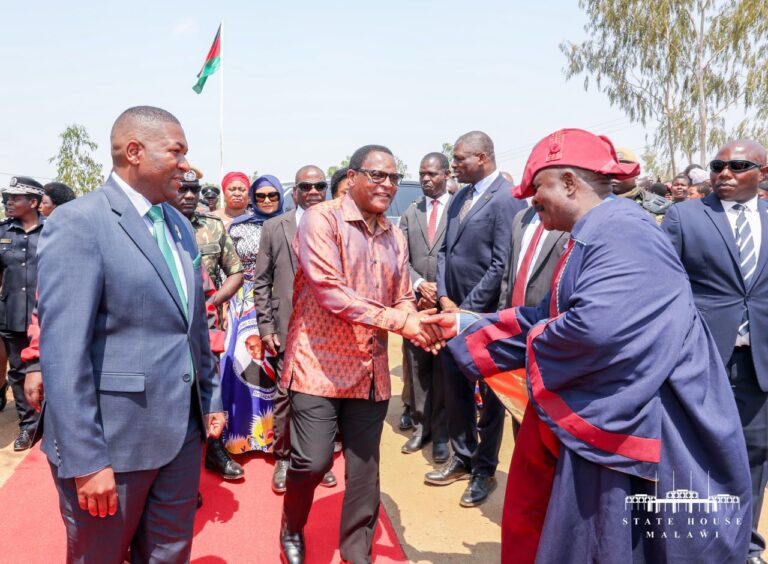
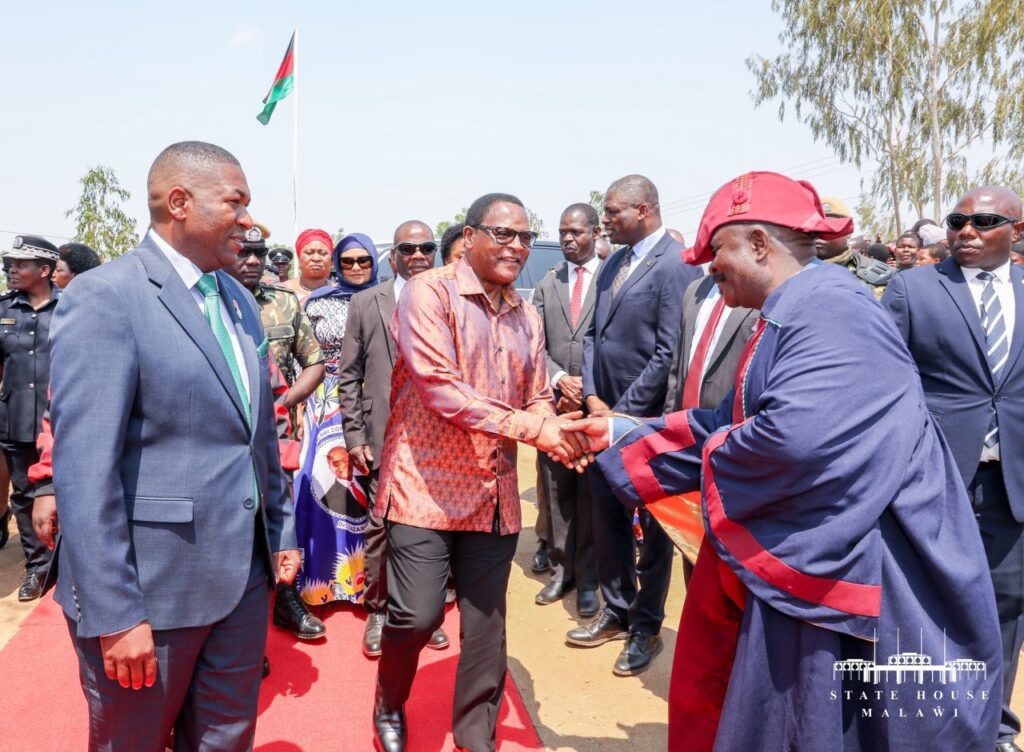
President Dr. Lazarus McCarthy Chakwera, today launched the flagship Affordable Input Program (AIP) at Dzundu Primary School Ground, under the area of Traditional Authority (T/A) Symon at Zalewa in Neno District.
This year’s AIP program is set to benefit over 1.1 million farmers countrywide, offering them a chance to buy essential resources, such as fertilizer, seeds, and livestock, at very affordable prices.
Chakwera at the AIP launch
The achievement of food security for every household in Malawi remains one of President Chakwera’s main priorities, as secure access to food produces wide-ranging positive impacts, including economic growth and job creation.
Upon his arrival, the Malawi leader, who was welcomed by several top government officials, appreciated a number of pavilions showcasing various agricultural products.
Malawi Communication Regulatory Authority ( MACRA) has embarked on telecommunication to manage and mitigate natural disasters which has hit this country for the past years frequently.
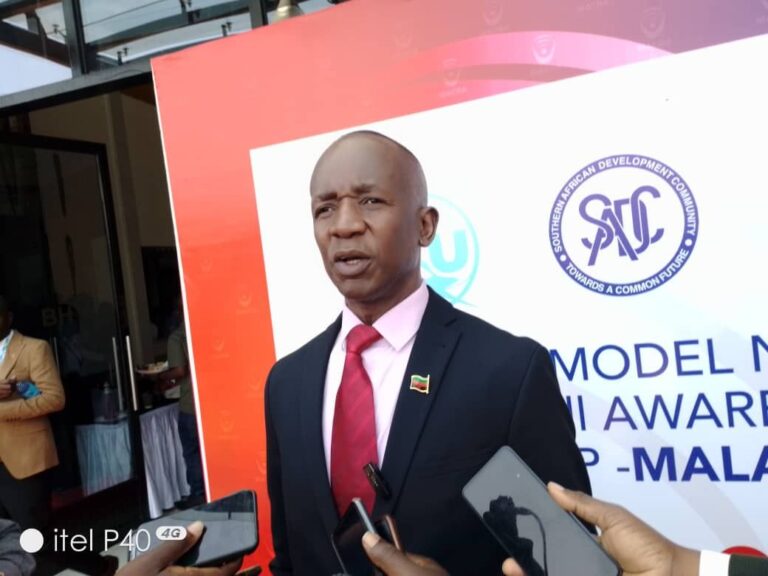
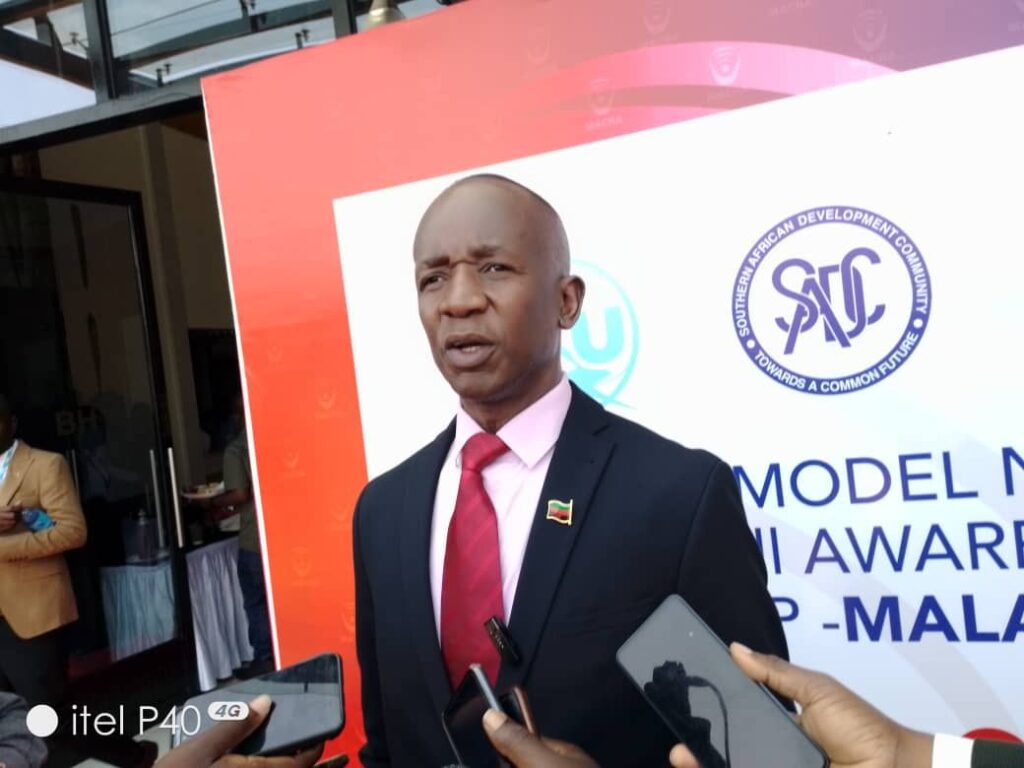
Speaking during SADC Model National Emergency Telecommunications Plan (NETP) and early warning for all awareness workshop Macra Director of telecommunication Edward Kauka said telecommunication serves as a purpose of communication when people are responding to disasters.
He disclosed that from 2019 – 2024 when the country experienced those natural disasters, telecommunication was there but in Zomba most of the telecommunication was washed away hence communication was not available in those areas.
Edward Kauka
Kauka said : ” We had to ask the International Telecommunication Union (ITU) to send setlight phones which were used in those areas affected. This time around we have thought it wise that we can have this workshop where we can bang heads with our friends in SADC area to help us in terms of how to implement the national plan. “
On his sentiment SADC Senior programme officer in Information Communication Technology (ICT) Director of Infrastructure Dr George Ah – Thew said SADC as a region encounters two natural disasters per year hence Malawi,Mocambique, Zambia,Zimbabwe, Madagascar and Mauricius are areas in the region that are very prone to many disasters.
He said the International Telecommunication Union (ITU) set a guild line of how to establish an emergency communication plan, SADC secretariate requested ITU special favour to develop a regional model to help the member states domestically very quickly.
He further said SADC Model NETP was identified and approved because it has an impact on people’s lives now member states are domesticating very nice saying Malawi is on track.
The Model NETP workshop brought together countries from the SADC region except Botswana and Mocambique and Malawi through has already implemented the NETP.
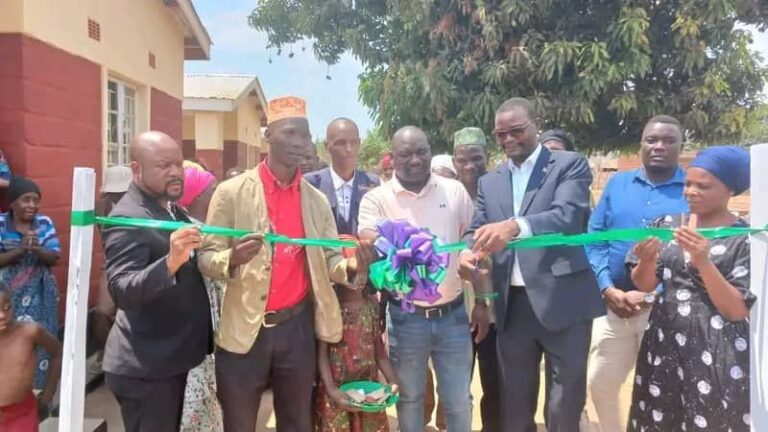
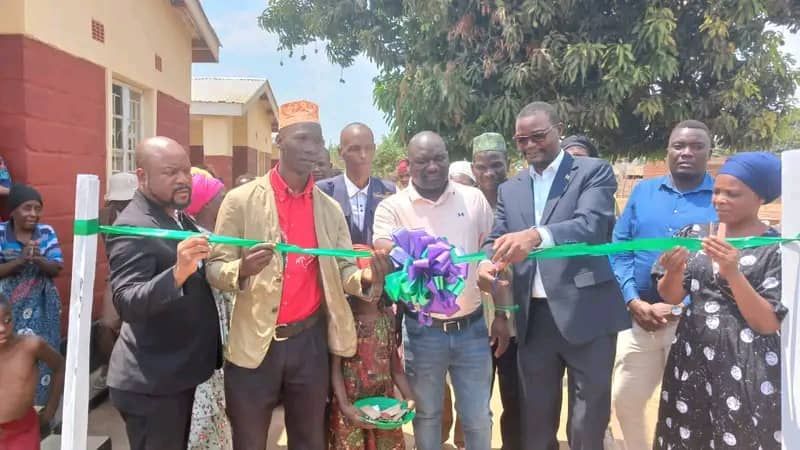
On Sunday, the Joyce Banda Foundation took another step in its ongoing humanitarian efforts by handing over 15 newly constructed houses to survivors of Cyclone Freddy in Traditional Authority Namavi, Mangochi District. This initiative is part of the foundation’s broader mission to provide housing and relief to victims of the devastating cyclone that ravaged parts of Malawi earlier this year.
During the handover ceremony, Timothy Sandram, representing the Joyce Banda Foundation, announced that the foundation plans to build more houses once traditional leaders in the affected areas identify suitable land for construction. “We are committed to continuing this work. As soon as land is identified, we will construct more houses for those in need,” Sandram stated.
The foundation has already contracted over 100 houses across the country to support survivors of Cyclone Freddy, aiming to restore stability and dignity to displaced families.
One of the beneficiaries, Lyner Twaibu, expressed her heartfelt appreciation for the new home, which will enable her family to reunite after being scattered by the cyclone’s destruction. “We are eight in our family and we were scattered by the cyclone. Now, we will be able to live like a family once again,” she said.
Cyclone Freddy, which struck Malawi earlier this year, left widespread devastation, particularly in the southern region, displacing thousands of people. The Joyce Banda Foundation’s efforts have been a beacon of hope for affected communities, helping them rebuild their lives in safer, more secure environments.
The foundation’s commitment to continuing these efforts reflects its ongoing dedication to humanitarian causes and rebuilding lives in the aftermath of natural disasters.
In a bold move to enhance accountability and transparency, Richard Chimwendo Banda, the senior official of the Malawi Congress Party (MCP), has announced the dissolution of the Village Development Committees (VDC) and Area Development Committees (ADC) in Lunzu. This decision comes under the authority of the paramount chief, Kapeni, and is rooted in concerns that these committees have been mismanaging resources and favoring select individuals over the broader community.
During a recent address to party members and local leaders, Chimwendo Banda underscored the importance of having development committees that align closely with government objectives. “The government requires development committees that will actively engage with state initiatives and foster genuine community progress, rather than merely serving personal interests,” he stated. This remark reflects growing frustration with how these committees have been functioning, particularly in terms of resource allocation.
Chimwendo in Lunzu
Local residents have often expressed concerns that committee members were more interested in listing names of beneficiaries for personal gain than in ensuring that aid reached those who truly needed it. The MCP’s decision to disband these committees aims to rectify this situation and restore public trust in the government’s distribution of resources.
Chimwendo Banda emphasized that the new committees will be tasked with collaborating effectively with government officials to implement development programs that genuinely benefit the community. He highlighted the need for a fresh start, encouraging community members to participate actively in the formation of new committees that prioritize inclusivity and accountability.
This decision marks a significant shift in the MCP’s approach to local governance and community development. As the party seeks to build a more transparent system, many residents are hopeful that these changes will lead to a more equitable distribution of resources and improved living conditions in Lunzu.
With the support of Chief Kapeni and local leaders, Chimwendo Banda’s initiative could pave the way for a new era of development in the region, one that emphasizes community collaboration and accountability over personal gain. As the MCP continues to implement its reform agenda, the focus remains on creating a better future for all Malawians.
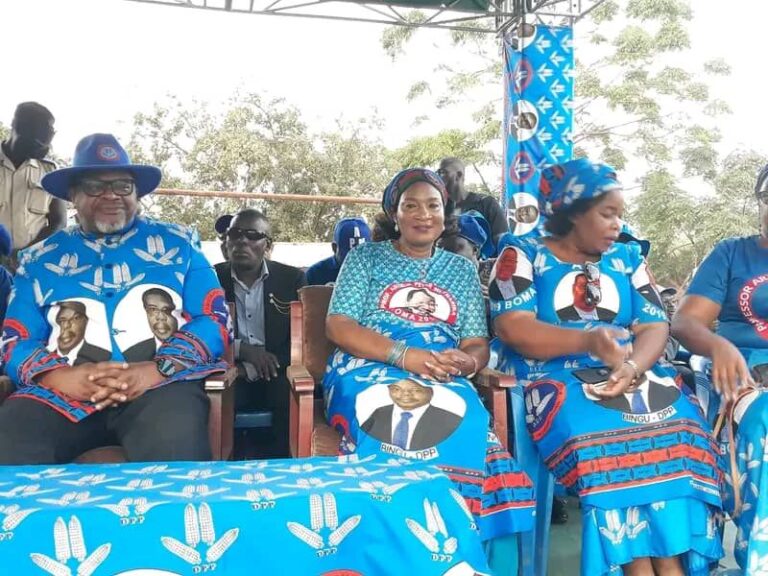
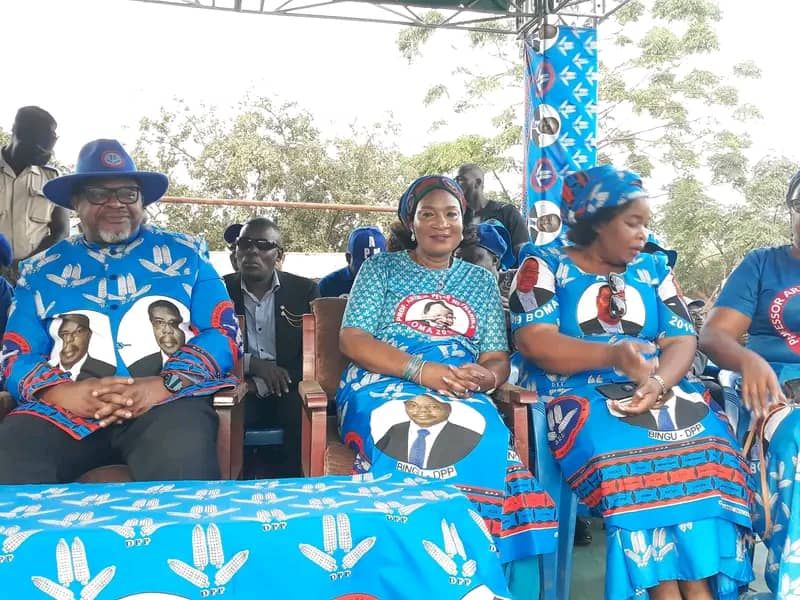
In a show of solidarity and resilience, Daud Chikwanje, the Democratic Progressive Party (DPP) Governor for the Southern Region, publicly thanked his party for their unwavering support following his recent arrest. Speaking passionately at a rally held at the Chinamwali grounds in Zomba, Chikwanje expressed his gratitude, saying, “Zikomo kwambiri a chipani” (Thank you very much, party).
Chikwanje’s arrest had sent ripples through the political landscape, but his return to the spotlight was met with cheers and encouragement from party loyalists. He used the occasion to reflect on the significant developmental strides made during the presidency of Arthur Peter Mutharika, affectionately known as APM by his supporters. “Many of the developments we enjoy today were initiated under APM’s leadership. It’s time for us to rally behind him once again,” he asserted.
DPP rally
Chikwanje’s call to action was clear: he urged Malawians to vote for Mutharika in upcoming elections to allow him to complete the ambitious projects he started. His speech resonated with party members, many of whom echoed his sentiments about the need to restore stability and progress in Malawi.
The rally was further enlivened by the presence of Gertrude Mutharika, the former First Lady, who added an air of nostalgia and hope to the gathering. Together, they painted a picture of a party ready to reclaim its place in the hearts of Malawians, advocating for a future led by a proven leader.
As the DPP looks ahead, Chikwanje’s heartfelt appreciation and rallying cry serve as a reminder of the party’s commitment to its members and the country’s development. The energy at the Chinamwali grounds was palpable, igniting hopes for a bright political future under the DPP banner.