

Monday, April 6, 2026
No menu items!
spot_img
Home Blog Page 972

Why Golf and Charity go hand in hand in Malawi?


By Twink Jones Gadama

Golf, often perceived as an elite sport, has an intriguing connection with charity in Malawi.

This association is deeply rooted in the country’s history and cultural context, as well as the sport’s unique dynamics.

As we explore the intersection of golf and philanthropy in Malawi, we uncover a narrative of compassion, community, and collective impact.



Golf was introduced to Malawi during the colonial era, with the first course established in 1927 at the Blantyre Sports Club.

Initially, the sport catered to the country’s expatriate community and affluent locals.

However, as independence dawned in 1964, golf began to transcend its exclusive reputation, and local business leaders, politicians, and entrepreneurs adopted the sport, recognizing its potential for networking and community engagement.

Consequently, Malawi’s golfing community started organizing charity tournaments in the 1980s, leveraging the sport’s exclusivity to raise funds for social causes.

These events attracted high-profile attendees, including politicians, business leaders, and international donors.

The inaugural President’s Charity Golf Tournament in 1985 set the stage for this fusion of golf and philanthropy.

Several factors contribute to golf’s enduring charity legacy in Malawi.

Firstly, golf provides a unique platform for business leaders, politicians, and influencers to connect, fostering partnerships and collaborations that extend beyond the course.

Moreover, golf’s elite reputation attracts high-end sponsors and donors, leveraging the sport’s prestige to secure funding for social causes.

Additionally, golf clubs and events serve as hubs for community outreach, promoting social responsibility and volunteerism among members.

Meanwhile, Malawi’s golfing community maintains strong ties with international organizations, facilitating access to global funding and expertise.

Notably, charity golf initiatives have made a significant impact in Malawi, with the Presidential Charity Golf Tournament raising millions of kwachas for various causes, including education, healthcare, and disaster relief.

Furthermore, the Malawi Open, an international golf tournament, has attracted global attention, generating funds for local charities and promoting tourism.

Similarly, Golfers Against Poverty, a local organization, uses golf to support economic empowerment programs and community development projects.

Despite these successes, challenges persist.

Golf remains an exclusive sport, limiting participation and engagement from marginalized communities.

Moreover, charity golf initiatives often rely on international donors, creating sustainability concerns.

Some argue that charity golf focuses too heavily on mainstream causes, neglecting lesser-known issues.

To address these challenges, Malawi’s golfing community must increase inclusivity by implementing programs to make golf more accessible to diverse demographics.

It is also crucial to diversify funding streams by developing local fundraising initiatives and partnerships to reduce dependence on external donors.

Furthermore, broadening the charitable focus to support a wider range of causes, including grassroots initiatives and marginalized communities, is essential.

In conclusion, golf’s charity legacy in Malawi serves as a testament to the sport’s transformative power.

By understanding the historical context and complexities surrounding charity golf, we can foster a more inclusive, sustainable, and impactful philanthropic landscape.

As Malawi’s golfing community continues to tee off for a cause, the ripple effects of compassion and community will resonate far beyond the course.


Parliamentary committee launches inquiry into High court judge Ken Manda’s alleged corruption

0

By Twink Jones Gadama

The Legal Affairs Committee of Parliament has launched an inquiry into allegations of corruption and malpractices against High Court Judge Ken Manda.

Committee Chairperson Peter Dimba confirmed that the decision was made during a meeting in Lilongwe, where members gathered to discuss the matter.

The committee will engage with stakeholders, including the Malawi Law Society and lawyer Alexious Kamangira, to investigate the allegations.

Dimba


If found true, the committee will recommend Justice Manda’s impeachment by parliament.

The Malawi Law Society has been vocal about the allegations, having formally written to the Chief Justice in April 2024, flagging misconduct concerns against Justice Manda.

This inquiry marks a significant step towards addressing the society’s concerns, amidst growing calls for accountability within the judiciary.

The allegations have sparked widespread debate, with many Malawians demanding transparency and action.

The committee will consult key stakeholders, including the Malawi Law Society, lawyer Alexious Kamangira, and other relevant stakeholders to ensure a comprehensive investigation.

If the allegations are substantiated, Justice Manda’s impeachment would send a strong message about the government’s commitment to combating corruption. Conversely, if the allegations are unfounded, it would help clear Justice Manda’s name and maintain public trust in the judiciary.

As the inquiry unfolds, Malawians will watch closely to see how the situation develops.

The parliamentary committee’s decision demonstrates a willingness to tackle tough issues and ensure accountability within the highest echelons of power.

In the words of Committee Chairperson Peter Dimba, “The committee is committed to ensuring that justice is served, and the integrity of the judiciary is upheld.”

Chakwera akhazikitsa ntchito yogula zipangizo zotsika mtengo

0

Olemba : Alfred Chauwa

Mtsogoleli wa dziko lino Dr Lazarus McCarthy Chakwera lero wakhazikitsa ntchito yogula zipangizo zotsika mtengo za ulimi ya chaka chino (2024/ 2025) ku Zalewa m’boma la Neno ndi mawu a chilimbikitso kwa alimi ponena kuti boma lakwanitsa kupeza feteleza okwanira anthu oposa 1 million amene ali ndi kuthekera.

Mululankhula kwawo a Chakwera ati akhazikitsa ndondomeko ya chaka chino kuti alimi apeze feteleza otsika mtengo pofuna kuti alimi omwe ali ndi kuthekera kolima chakudya athe kutelo ndithu.

Chakwera

A Chakwera ati pa zitukuko zonse zimene boma lawo likuchita anthu asanamizike kuti Chakwera sanawachitile kanthu.

“Zoti m’dziko muno muli njala palibe amene sakudziwa. Kulikonse komwe ndikumapita ndikumakumana ndi aMalawi omwe dandaulo lawo lalikulu ndi njala,” A Chakwera anatelo.

A Chakwera anapitilizanso kunena kuti alimi ndi anthu ena onse akudziwa kuti m’dziko muno muli njala imene yadza kaamba ka kusitha kwa nyengo kotelo kuti anthu omwe akuyakhula kuti Chakwera ndi yemwe wabweletsa njala mdziko muno amenewo sadziwa ulimi koma ndi anthu omwe chakudya amangochionela mmbale.

“Mlimi simungamuuze zochitika mmunda mwake chifukwa amaziona yekha. Mlimi tikamupatsa feteleza ndi zipangizo motchipa amadziwa kuti amene tamuthandiza kupeza chakudya ndi ife,” A Chakwera anaonjezela.

Mtsogoleli-yu watinso waika padela ndondomeko yakuti anthu ena omwe sangathe kupindula ndi ndondomeko anthe kupindula magawo ena popeza sikoyenela kuti madela omwe kumavuta madzi kapena kuli dothi losakhala bwino adzipindula nawo.

President Chakwera launches 2024/2025 AIP Program

0

By Staff Reporter

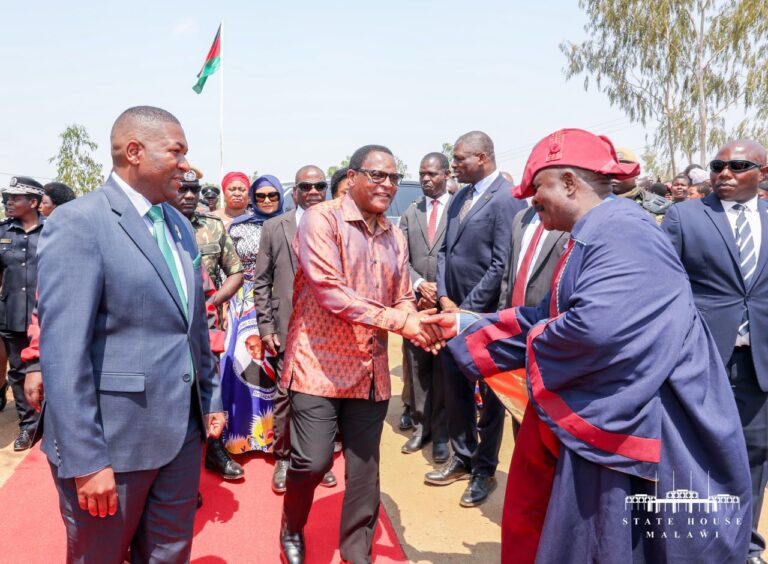
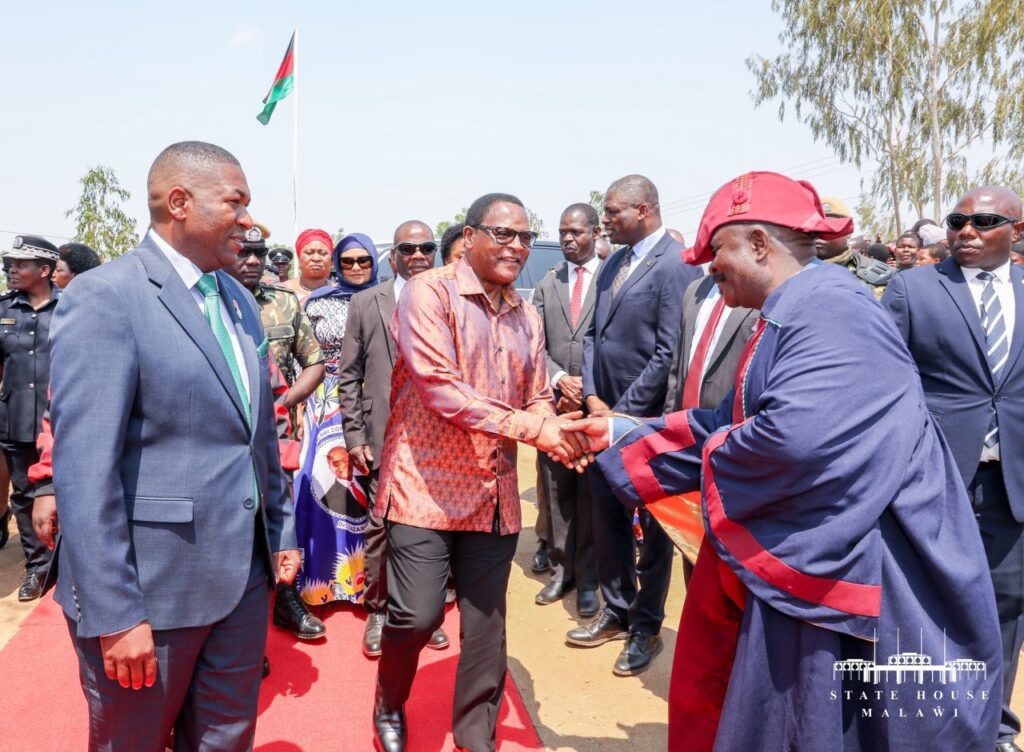
President Dr. Lazarus McCarthy Chakwera, today launched the flagship Affordable Input Program (AIP) at Dzundu Primary School Ground, under the area of Traditional Authority (T/A) Symon at Zalewa in Neno District.

This year’s AIP program is set to benefit over 1.1 million farmers countrywide, offering them a chance to buy essential resources, such as fertilizer, seeds, and livestock, at very affordable prices.

Chakwera at the AIP launch


The achievement of food security for every household in Malawi remains one of President Chakwera’s main priorities, as secure access to food produces wide-ranging positive impacts, including economic growth and job creation.

Upon his arrival, the Malawi leader, who was welcomed by several top government officials, appreciated a number of pavilions showcasing various agricultural products.

Macra embarks on telecommunication to mitigate impact of  natural disasters

0

By Dean Chisambo

Malawi  Communication Regulatory Authority ( MACRA) has embarked on telecommunication to manage and mitigate natural disasters which has hit this country for the past years frequently.

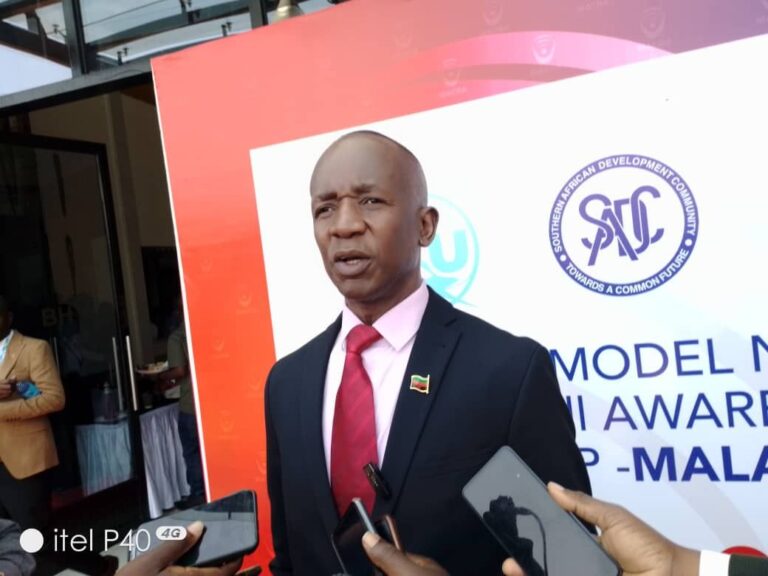
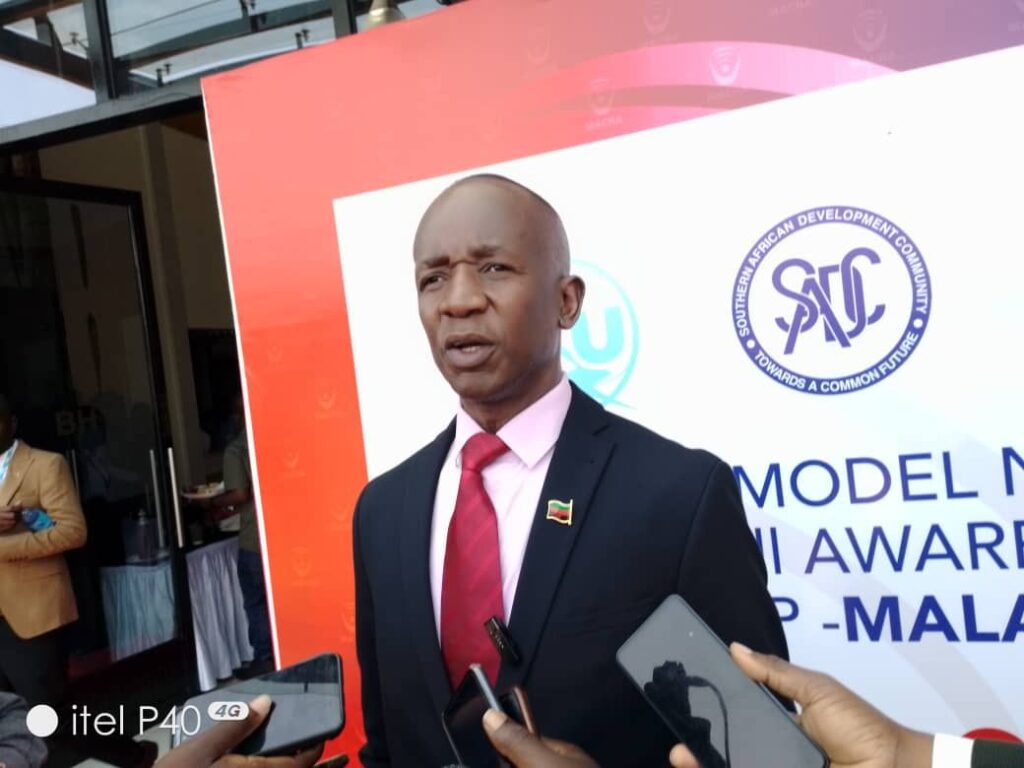
Speaking during SADC Model National   Emergency Telecommunications Plan (NETP) and early warning for all awareness workshop Macra Director of telecommunication Edward Kauka said telecommunication serves as a purpose of communication when people are  responding to disasters.

He disclosed that from 2019 – 2024 when the country experienced those natural   disasters,  telecommunication was there but in Zomba most of the telecommunication was washed away hence communication was not available in those areas.

Edward Kauka

Kauka said : ” We had to ask the International Telecommunication Union (ITU) to send  setlight phones which were used in those areas  affected. This time around we have thought it wise that we can have this workshop where we can bang heads with our friends in SADC area to  help us in terms of how to implement the national plan. “

On his sentiment SADC Senior programme officer in Information Communication Technology (ICT) Director of Infrastructure Dr George Ah – Thew said SADC as a region encounters two natural disasters per year hence Malawi,Mocambique, Zambia,Zimbabwe, Madagascar and Mauricius are areas in the region that are very prone to many disasters.

He said the International Telecommunication Union (ITU)  set a guild line of how to establish an emergency communication plan, SADC secretariate requested ITU special favour to develop a regional model to help the member states domestically very quickly.

He further said  SADC Model NETP was identified and approved because it has an impact on people’s lives now member states are domesticating very nice saying Malawi is on track.

The Model NETP workshop brought together countries from the SADC region except Botswana and Mocambique and Malawi through has already implemented the NETP.