Saturday, April 4, 2026
No menu items!
spot_img
Home Blog Page 984

Unleash Hack Malawi empowers young innovators to drive change

0


By Twink Jones Gadama

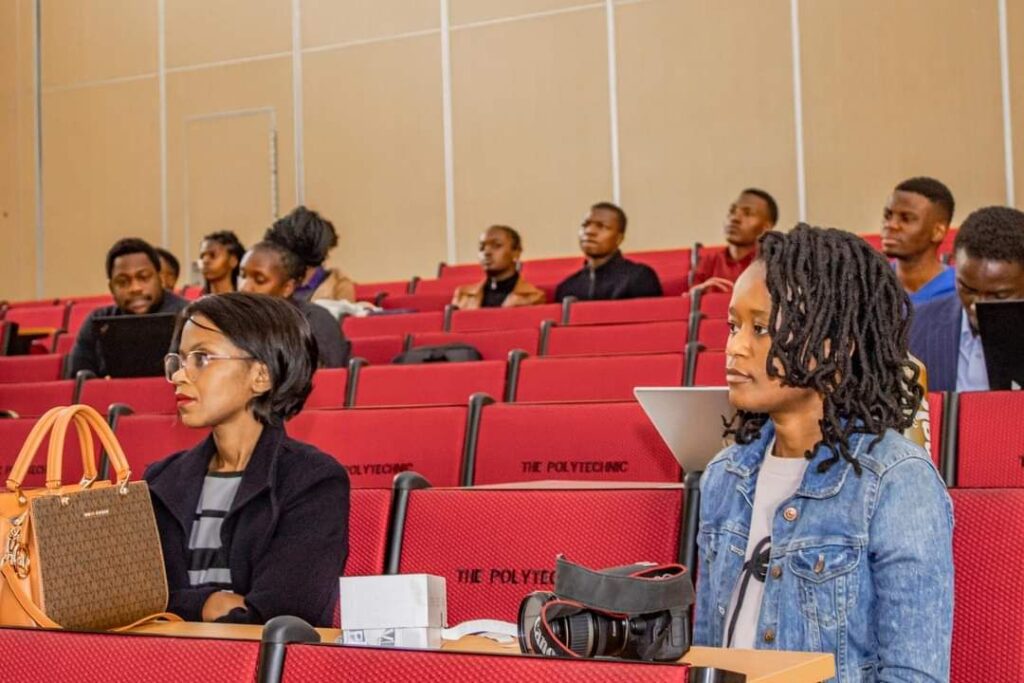
In a bid to harness the potential of Malawi’s youth, Unleash Hack Malawi conducted a two-day hackathon at the Malawi University of Business and Applied Sciences (MUBAS) over the weekend.

The event aimed to equip young Malawians with the skills and knowledge to create innovative solutions that can bring impactful changes to their communities.

According to Joe Nkhula, Team Leader for Unleash Hack Malawi, the initiative recognizes the critical role youths play in addressing the nation’s challenges.

“Youths are the solutions to the problems we face as a nation. We want them to take charge of their communities, identify problems, and find solutions,” Nkhula emphasized.

The hackathon brought together young innovators who were mentored on designing and implementing sustainable solutions.

Participants were encouraged to identify pressing issues in their communities and develop innovative solutions.

Eneless Martias, a second-year student at MUBAS, described the hackathon as an eye-opener.

“This workshop has shown us that as youths, we have the power to create solutions to the problems facing our communities and help reduce unemployment,” Martias said.

Unleash Hacks is a global initiative that provides local talents with tools, knowledge, and support to address sustainability challenges.

By empowering young innovators, Unleash Hack Malawi aims to drive positive change and promote sustainable development.


Youth Empowerment through Innovation

Malawi’s youth population faces numerous challenges, including unemployment, limited access to education, and healthcare.

Unleash Hack Malawi seeks to address these issues by providing a platform for young innovators to develop solutions.

“We believe that youths have the potential to drive change. By providing them with the necessary skills and support, we can unlock their potential and create a brighter future for Malawi,” Nkhula added.

The hackathon featured sessions on design thinking, problem-solving, and pitching ideas.

Participants were also introduced to various tools and technologies to help them develop innovative solutions.


Impact and future plans

Unleash Hack Malawi plans to conduct similar events across the country, targeting various universities and communities.

The initiative aims to create a network of young innovators who can collaborate and support each other.

“We are committed to empowering Malawi’s youth. We will continue to provide resources and support to help them drive positive change,” Nkhula concluded.

As Malawi strives to achieve sustainable development, initiatives like Unleash Hack Malawi play a vital role in harnessing the potential of the nation’s youth.

Malawi Scorchers gear up for COSAFA women’s Championship: Fazili names 38-member provisional squad

0

By Twink Jones Gadama

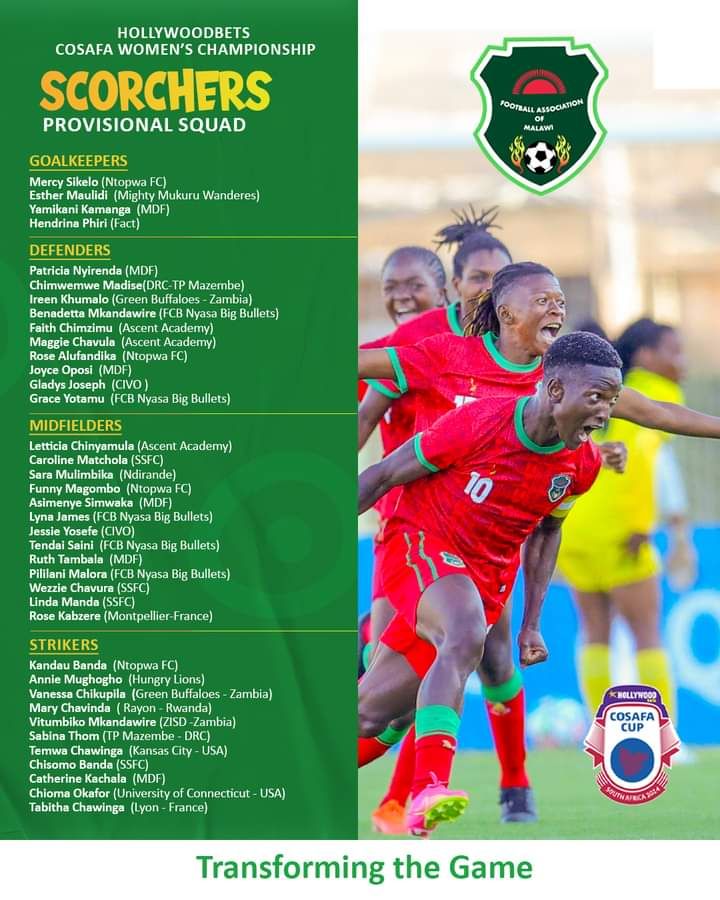
Malawi national women’s team coach Lovemore Fazili has unveiled a 38-member provisional squad to kick-start preparations for the upcoming COSAFA Women’s Championship.

The team is set to converge on Sunday to begin their camp in anticipation of the tournament, scheduled to take place in Gqeberha, South Africa, from October 22 to November 2.

Coach Fazili, who led the Scorchers to their maiden COSAFA Women’s Championship title last October, has singled out South Africa as the team to beat in Group A.


This year’s championship promises to be a thrilling contest, and Fazili’s squad selection reflects his strategic vision for the tournament.

The provisional squad comprises talented players from various clubs across Malawi, showcasing the country’s rich football talent.

With a mix of experienced players and new faces, Fazili aims to strike the perfect balance between skill and teamwork.

*Key Objectives for the Scorchers:*

Fazili’s expertise and leadership will be crucial in guiding the team through the championship.

His experience in navigating the challenges of the tournament will undoubtedly inspire confidence in the players .

The Football Association of Malawi (FAM) has expressed its commitment to supporting the team, proposing Fazili’s permanent appointment as the national women’s team coach.

This move is expected to bring stability and continuity to the team’s development.

As the Scorchers embark on their COSAFA journey, fans and supporters are eagerly anticipating an exciting display of football prowess.

With Fazili at the helm and a talented squad, Malawi is poised to make a significant impact in the championship.

The final squad selection will be announced after the training camp, and fans can expect an electrifying performance from the Scorchers.

Vice president Dr. Michael Usi leads Malawi’s charge at African Consultation conference in Morocco

0

By Twink Jones Gadama

Vice President of Malawi, Dr. Michael Usi, arrived in Tangier, Morocco, last night to participate in the African Consultation Conference, a crucial precursor to the 3rd United Nations Ocean Conference scheduled for June 2025.

This high-stakes gathering aims to protect the planet’s vital ocean resources, with African countries converging to discuss pressing issues and adopt priorities, challenges, and recommendations for presentation at the UN Conference.

Dr Michael Usi


As Minister of Natural Resources and Climate Change, Dr. Usi’s presence underscores Malawi’s commitment to sustainable development and environmental stewardship.

The conference will focus on implementing Sustainable Development Goal 14, which emphasizes the conservation and sustainable use of oceans, seas, and marine resources.

Beyond the conference, Dr. Usi will engage with Moroccan government officials to fortify diplomatic relations between Rabat and Lilongwe, established just 10 months ago.

Key meetings include discussions with Dr. Mohamed Sadiki, Morocco’s Minister of Agriculture, Maritime Fisheries, Rural Development, Water and Forests, to explore bilateral cooperation opportunities.

These strategic engagements will pave the way for enhanced collaboration in areas such as:

– *Agricultural Development*: Sharing expertise and best practices to boost agricultural productivity and food security.
– *Maritime Cooperation*: Strengthening ties in maritime trade, security, and sustainable resource management.
– *Environmental Conservation*: Collaborating on initiatives to protect and preserve natural resources, including forests and water resources.

Dr. Usi’s trip to Morocco is part of a broader diplomatic push, demonstrating Malawi’s dedication to global cooperation and sustainable development.

Following the conference, he will proceed to Baku, Azerbaijan, to attend the Pre-Conference of Parties (Pre-COP) to the UN Climate Change Conference, slated for October 10-12, 2024.

The Vice President is expected to return to Malawi on Monday, October 14, 2024.

His participation in these international gatherings solidifies Malawi’s position as a responsible global citizen, committed to addressing pressing environmental challenges and promoting sustainable growth.

As the world gears up for the 3rd UN Ocean Conference, Malawi’s voice will be heard, thanks to Dr. Usi’s leadership and vision.

The nation’s engagement in global discussions on ocean conservation and climate change underscores its resolve to protect the planet’s vital resources for future generations.

IOM assures Malawi of its support on migration

0

By Linda Kwanjana

The International Organizations for Migration ( IOM) has reaffirmed its commitment towards supporting Malawi on  issues boarding migration.

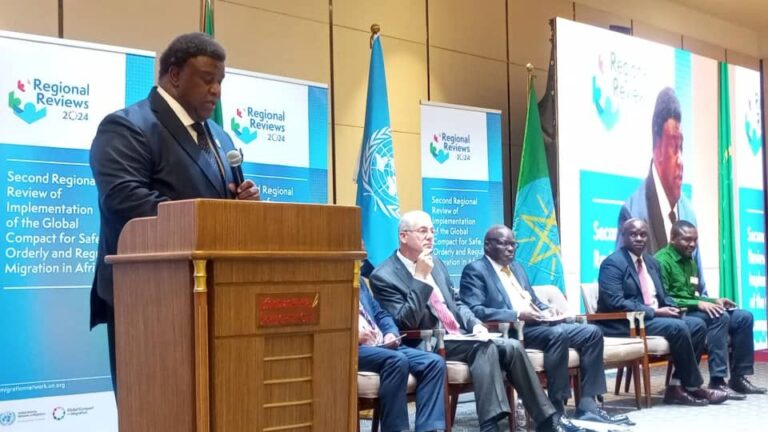
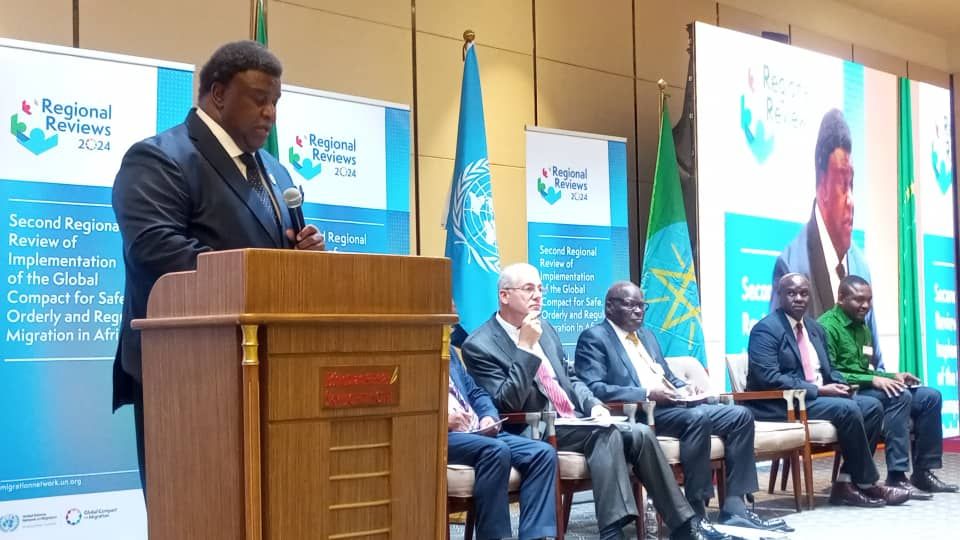
This came  during a meeting which IOM officials led by its Director General Amy  pope held on Wednesday in Addis Ababa -Ethiopia with the Malawi minister of Homeland Security Dr Kenneth Zikhale Ng’oma

Minister Ng’oma is attending the  second regional reviews of implementation of the global compact for safe, orderly and regular migration in Africa that is currently underway in Addis Ababa .

Dr Ken Zikhale Ng’oma


Speaking on the side lines of the conference, Pope expressed satisfaction with the way Malawi is handling issues  of migrants, as the country is hosting a large number of refugees from different African countries.

Pope disclosed that her organisation will be supporting the country by among others provision of expertise and financial support towards the areas of migration


On his part, Minister of Homeland Security Dr Kenneth Zikhale Ng’oma applauded IOM for its unwavering support  towards migration.

Ng’oma highlighted  that apart from financial constraints in handling migrants, there is a need to enhance capacity building on the skills that can help in controlling the borders.

The Minister also presented a statement at the summit on how Malawi is working with other countries in relation to issues of migration.

” As a country we know for sure that issues of migrants border on human rights aspects, as such we work closely with other countries to ensure that no right is being violated in the process.

My ministry  together with the United Nations for High Commissioner for Refugees ( UNHCR) we have embarked on voluntary repatriation of refugees which is a very big milestone that has been registered as far as issues of migrants is concerned,” He explained

The second regional reviews of implementation of the global compact for safe, orderly and regular migration summit that is scheduled for 8th to 10th October, 2024 has brought together over 200 delegates from different African countries.

Alexious Kamangila critiques ACB’s approach to corruption in Malawi

0

By Burnett Munthali

In a scathing critique posted on his Facebook page, lawyer and social commentator Alexius Kamangila has voiced his deep concerns regarding the Anti-Corruption Bureau (ACB) in Malawi. He argues that the ACB’s focus on prosecuting lower-ranking officials, such as magistrates, instead of targeting high-profile individuals like Ken Manda and certain justices, undermines the agency’s credibility and effectiveness in combating corruption.

Kamangila’s remarks come amid growing public discontent with the ACB’s perceived ineffectiveness in addressing systemic corruption within Malawi’s political and judicial systems. He stated, “The greatest shame for ACB is its failure to arrest the likes of Manda and the Justice of Appeal, busy arresting Magistrates.” This assertion highlights what Kamangila sees as a troubling trend: the ACB’s emphasis on prosecuting less powerful figures while seemingly allowing more influential individuals to evade accountability.

Kamangila


In his post, Kamangila goes further by alleging that the ACB is complicit in the protection of corruption rather than its eradication. His statement, “ACB protects corruption in Malawi,” reflects a growing sentiment among many citizens who feel that the agency is not doing enough to confront the root causes of corruption within the country. This perspective raises important questions about the effectiveness and priorities of anti-corruption efforts in Malawi.

The implications of Kamangila’s comments resonate deeply within the broader context of Malawi’s ongoing battle against corruption. Many citizens are calling for more robust actions from the ACB, demanding that it prioritize high-profile cases that involve significant corruption and abuse of power, rather than focusing predominantly on lower-ranking officials who may be acting on orders from above.

Kamangila’s critique is particularly poignant given the historical context of corruption in Malawi, which has seen numerous high-profile cases go unpunished while those at the grassroots level face prosecution. His comments serve as a reminder that the fight against corruption must be comprehensive and equitable, targeting individuals at all levels of the political and judicial spectrum.

As discussions about the ACB’s effectiveness continue, Kamangila’s remarks may spark further debate about the agency’s approach and its commitment to genuine anti-corruption efforts. The call for transparency and accountability is louder than ever, and the expectation for the ACB to respond to public concerns will be crucial in restoring faith in the institution.

Kamangila’s criticisms resonate with many who believe that for real change to occur, the ACB must take decisive action against corruption at all levels, focusing on those who wield the most power and influence in the Malawian political landscape. As the conversation surrounding corruption in Malawi evolves, Kamangila’s voice adds a critical perspective that may help galvanize public support for more effective anti-corruption measures.