
Saturday, April 4, 2026
No menu items!
spot_img
Home Blog Page 996

Analysis of Sheikh Ahmed Al Qassimi’s Statement: “I have no business in Malawi

By Burnett Munthali

The recent declaration by His Highness Sheikh Ahmed Al Qassimi—“I have no business in Malawi”—has sent shockwaves through the political and business landscapes of Malawi. His statement, coupled with the rejection of any contracts or partnerships purportedly involving his office, raises significant questions about the integrity of dealings within the Malawian government. This analysis delves into the implications of this statement, the broader context of corruption, and the legacy of President Lazarus Chakwera amid growing allegations of misconduct.
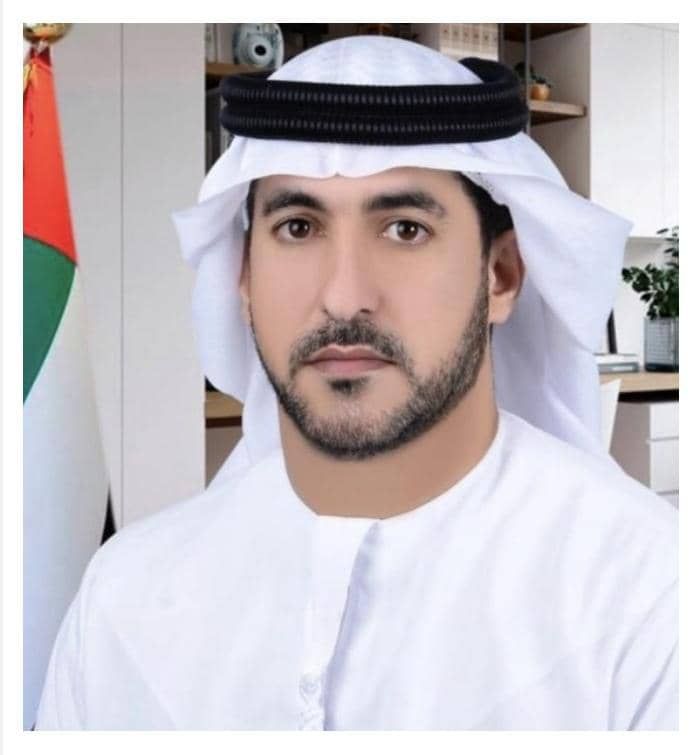
His Highness Sheikh Ahmed Al Qassimi


In a detailed response, Sheikh Al Qassimi’s office categorically denied any involvement in business transactions within Malawi, particularly relating to fuel and fertilizer supplies. The unequivocal assertion by Public Relations Manager Ali Ahmed Alhamed—that they operate solely in Dubai and partially in China—highlights the disconnection between legitimate international business and the fraudulent contracts allegedly signed under false pretenses. The emergence of documents claiming to represent the Sheikh’s interests points to a troubling pattern of impersonation, fraud, and corruption within the Malawian government, specifically implicating Secretary to the President and Cabinet Colleen Zamba.

Zamba’s signing of a Memorandum of Understanding (MoU) with a purported “fake Sheikh” not only raises questions about her judgment but also places the government at risk of significant reputational damage. The potential for legal action from Sheikh Al Qassimi’s office over the unauthorized use of his name for fraudulent contracts cannot be understated. Such legal ramifications could result in further scrutiny of the administration’s dealings, underscoring the need for accountability and transparency in government operations.

The situation surrounding the “fake Sheikh” extends beyond mere allegations; it exemplifies a deeper malaise afflicting Malawian governance. The skepticism surrounding contracts for fuel and fertilizer—totaling over K1 trillion—brings to light a series of fraudulent activities that may surpass previous corruption scandals, including the infamous “Cashgate.” This highlights an alarming trend where public funds are at risk of being siphoned off through illusory deals that compromise the country’s economic stability.

Moreover, the lack of action from the Anti-Corruption Bureau and other oversight bodies in the face of these revelations raises concerns about their effectiveness and independence. The apparent inaction against what could be the most significant attempt to defraud the Malawian government since 1994 reflects a failure of governance that undermines public trust in institutions designed to safeguard the public interest.

President Lazarus Chakwera’s leadership has come under fire as critics argue that his administration’s failure to address rampant corruption could define his legacy. The pattern of fraudulent activities, coupled with a lack of decisive action to hold those responsible accountable, paints a picture of a government more focused on personal enrichment than public service.

Chakwera’s continued endorsement of Zamba and others implicated in these schemes suggests a complicity that could tarnish his legacy irreparably. As history has shown, public figures are often remembered not just for their policies but also for their failures to act against wrongdoing. The shadow of corruption, if unaddressed, will linger long after his presidency, impacting how future generations perceive his tenure.

In conclusion, the statement by Sheikh Ahmed Al Qassimi serves as a clarion call for reform in Malawi’s governance structures. The rejection of fraudulent contracts attributed to his office is not merely a personal affront; it symbolizes the urgent need for accountability within the Malawian government. As Malawians await a response from their leadership, the opportunity for genuine reform remains. President Chakwera’s response to this scandal will ultimately shape his legacy, highlighting the critical intersection between governance, accountability, and public trust. Without immediate and effective action, the consequences of inaction could resonate throughout Malawi for years to come.
Government announces free maize distribution in Thyolo, Mulanje, and Chikwawa Districts

0


By Burnett Munthali

The government has announced the distribution of free maize on Sunday 6 October 2024 in the districts of Thyolo, Mulanje, and Chikwawa, as confirmed by Minister of Local Government Richard Chimwendo Banda during President Lazarus Chakwera’s visit from the United States yesterday.

This initiative comes at a crucial time when the nation is grappling with severe hunger in many regions. The food distribution aims to provide immediate relief to communities suffering from food shortages, particularly in the southern districts that have been heavily affected.

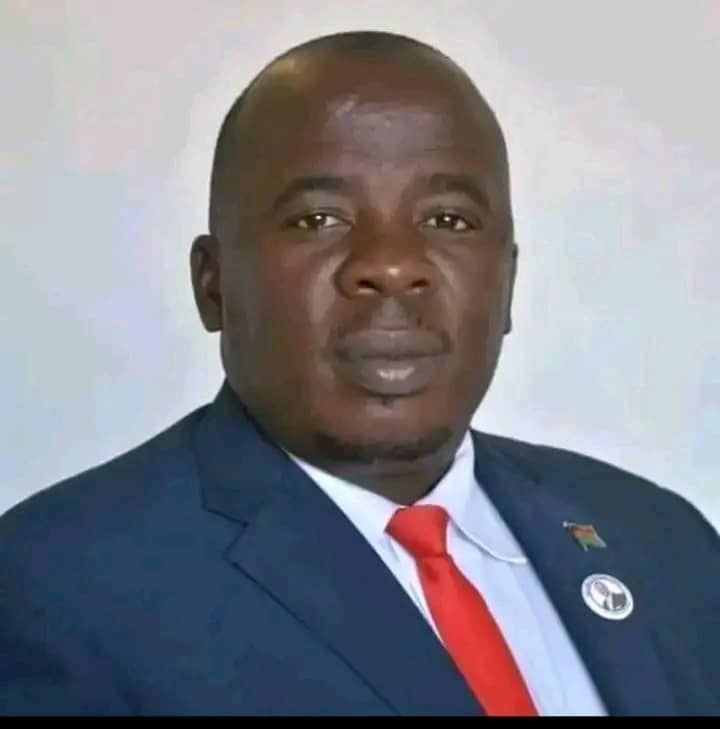
Chimwendo


As the government seeks to alleviate the plight of its citizens, the timing of the distribution coincides with the ongoing Mulhako wa Alhomwe cultural festival, which attracts many attendees from the surrounding areas, including Thyolo, Mulanje, Phalombe, and Zomba. This festival is a significant cultural event that celebrates the traditions and heritage of the Lhomwe people.

Pious Mvenya, a representative from the local community, expressed that the distribution is one of the ways to ensure that many people do not attend the cultural event today without adequate food. He acknowledged the importance of the initiative but noted that not all residents feel secure about their participation in the festival, given the ongoing hunger crisis.

The maize distribution is a critical step for the government in addressing the immediate food needs of the population, but it also highlights the larger issue of food security in Malawi. With the current economic challenges, many families continue to struggle to access basic necessities, and initiatives like this are vital to provide support.

As the government engages in these efforts, the hope remains that further steps will be taken to tackle the root causes of food insecurity, ensuring that all Malawians have access to sufficient and nutritious food.

Is this President Chakwera’s last UNGA?


By Burnett Munthali

As President Lazarus Chakwera returns from the 79th session of the United Nations General Assembly (UNGA), a question lingers in the minds of many Malawians and political observers: Is this his last appearance at this prestigious global event as Malawi’s Head of State?

This question is not without merit, given the political dynamics in Malawi as the country heads toward the 2025 general elections. President Chakwera, having served as president since 2020, may be eyeing a second term, but there are several factors that make his future as Malawi’s leader, and thus his future at the UNGA, uncertain.

President Chakwera’s first term has been marked by both progress and challenges. His victory in the historic 2020 court-sanctioned election re-run was seen as a moment of hope for many Malawians. However, as his administration approaches the end of its first term, the political terrain has shifted. Rising inflation, economic difficulties, and public dissatisfaction over unfulfilled campaign promises have cast doubt on the president’s ability to secure a second term.

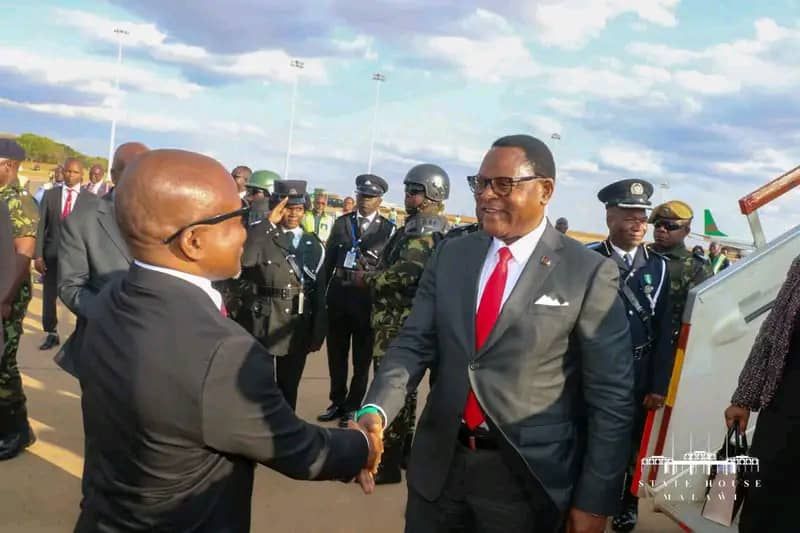
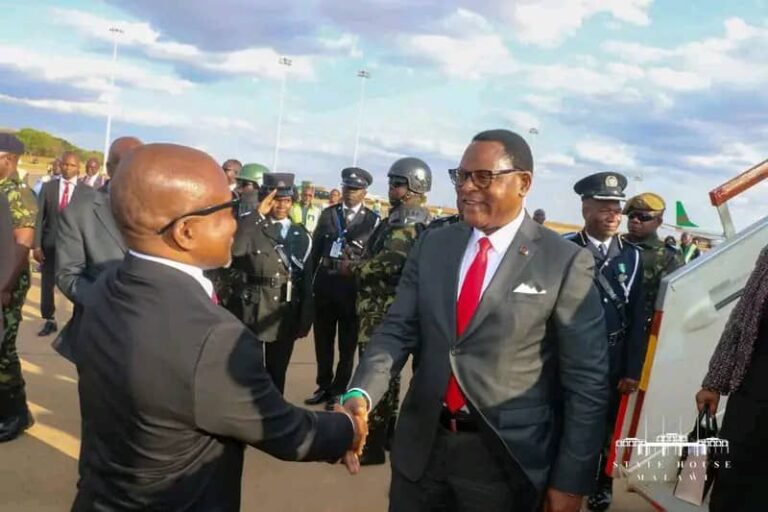
Chakwera being welcomed back from UNGA


Opposition parties, particularly the Democratic Progressive Party (DPP), are gearing up for the 2025 elections, and Chakwera will face a tough battle to retain his position. Should the political winds change, this year’s UNGA could very well be his last as Malawi’s leader.

Another consideration is the internal dynamics within the ruling Tonse Alliance, which brought Chakwera to power. As the alliance prepares for the 2025 elections, there are questions about whether all parties in the coalition remain unified behind Chakwera’s leadership. Any significant political shifts within the alliance could impact his candidacy, either strengthening or weakening his chances of securing a second term. If the alliance fragments, his political future may become more precarious, potentially making this UNGA his final one as president.

Additionally, Chakwera’s age has been a topic of debate. Now in his late 60s, some have speculated whether he might consider stepping down after completing his first term to pave the way for younger leadership within the Malawi Congress Party (MCP). Though Chakwera has not publicly indicated such a move, the possibility cannot be entirely ruled out.

At the UNGA this year, President Chakwera spoke with conviction about Malawi’s needs, securing commitments for financial and technical support, particularly in areas like energy, climate financing, and agriculture. His meetings with the International Monetary Fund (IMF) and World Bank signal his continued efforts to engage the global community in addressing Malawi’s economic challenges. Should he return for another term, these relationships will be crucial in shaping his legacy.

However, the question remains: if this is indeed his last UNGA, how will he be remembered on the global stage? Chakwera has been a vocal advocate for multilateralism and reforming international institutions to better serve developing nations. His speeches at the UN have consistently called for equity in global governance, particularly on issues like climate justice, where African countries, including Malawi, bear the brunt of environmental impacts despite contributing little to global emissions.

In conclusion, while it is impossible to predict with certainty whether President Chakwera’s appearance at this year’s UNGA will be his last, the political, economic, and personal factors surrounding his leadership make it a legitimate question. His ability to secure a second term in 2025 will depend on his success in addressing domestic challenges, maintaining unity within the Tonse Alliance, and convincing Malawians that his leadership is still the best path forward for the nation.

Regardless of the outcome, Chakwera’s participation in this year’s UNGA reflects his commitment to ensuring that Malawi continues to have a voice on the global stage. Whether or not we see him at next year’s UNGA, his contributions to international discourse and efforts to elevate Malawi’s standing will undoubtedly be part of his legacy.

Discussion: The scarcity of jobs for graduating students and school leavers in Malawi

0


By Burnett Munthali

Malawi’s challenging employment landscape for youth is characterized by a scarcity of jobs outside agriculture and insufficient work hours within agriculture. Since Malawi attained independence in 1964, the country’s population has more than quadrupled to 17.6 million people in late 2018.

The job market in Malawi is increasingly struggling to accommodate the growing number of graduates from secondary schools, technical colleges, and universities. Each year, thousands of young people enter the job market, hoping to secure stable employment, but many are met with disappointment. This challenge has created a pervasive sense of uncertainty and frustration among school leavers and graduates.

In a recent discussion, a graduate from one of Malawi’s technical colleges expressed his difficulties in finding employment. Despite possessing technical skills, he has been unable to secure a job related to his field of study and now takes on any available piece work to survive. This reflects the broader challenge faced by many young people across Malawi.

The extent of job scarcity in Malawi

The scarcity of jobs for school leavers and graduates is a significant and growing issue. Many technical college graduates, who have been trained in specialized skills, are finding it increasingly difficult to secure formal employment. This results in a large number of qualified individuals accepting any form of work, often in the informal sector, simply to meet their basic needs. As a result, Malawi is witnessing an increase in underemployment, where individuals take jobs that are not in line with their qualifications or aspirations.

Key causes of job scarcity

Firstly, Malawi’s economy has struggled to expand in recent years, with limited job creation, especially in sectors that require technical skills. Economic activities remain largely focused on agriculture, and the development of industries such as manufacturing and services has been slow. This limits job opportunities for young graduates, particularly those with specialized technical training.

Secondly, the private sector, which is typically a key driver of job creation, remains underdeveloped in Malawi. Small and medium enterprises (SMEs), which could potentially provide employment for graduates, face challenges such as limited access to finance, high operational costs, and bureaucratic hurdles. As a result, many businesses are unable to grow and hire additional workers.

Thirdly, although technical colleges train students in practical skills, there is often a mismatch between the qualifications obtained and the specific demands of the labor market. Many graduates are skilled in trades such as carpentry, electrical installation, and mechanics, but the industries that require these skills are not growing quickly enough to absorb the increasing number of graduates.

Fourthly, traditionally, the government and public sector have been major employers in Malawi. However, budget constraints, hiring freezes, and downsizing in government departments have reduced the number of available public sector jobs, further compounding the job scarcity issue.

Fifthly, many graduates, including the technical college graduate mentioned earlier, are forced to take up piece work or informal jobs just to make ends meet. This trend is growing, with more young people accepting casual work that provides little job security, minimal wages, and no long-term prospects for career growth.

Consequences of job scarcity

Many skilled graduates are forced to work in jobs unrelated to their training. This underemployment not only wastes their potential but also contributes to a sense of frustration and disillusionment among young people. The technical college graduate I spoke with, for example, is highly trained but is currently doing daily piece work that does not match his qualifications.

The inability to utilize skilled labor efficiently results in economic stagnation. Graduates who are forced into informal jobs do not contribute their full potential to the economy, which hinders Malawi’s development.

Without stable jobs, young people are unable to generate reliable income. As a result, many graduates remain in poverty, unable to support themselves or their families.

The lack of job opportunities in Malawi leads many young people to seek employment abroad. This brain drain deprives the country of skilled professionals who could otherwise contribute to national development.

Possible solutions to job scarcity

One of the most viable solutions to address the job scarcity issue is to promote entrepreneurship among graduates. Providing young people with the tools, training, and resources to start their own businesses can help create new job opportunities. This can be done through government-backed programs that offer grants or loans, along with business mentorship and training initiatives to help graduates start and sustain small enterprises.

Secondly, the private sector must be strengthened to absorb more graduates. Reducing bureaucratic red tape, offering incentives for businesses to expand, and improving access to financing for SMEs could stimulate job creation. Additionally, investment in key sectors like manufacturing, agribusiness, and technology can help diversify the economy and create employment opportunities for graduates with various skill sets.

Thirdly, Malawi’s education and training systems should be aligned with the specific needs of the job market. Educational institutions, including technical colleges, should regularly update their curricula to reflect the evolving needs of employers. Collaborations between the private sector, educational institutions, and government agencies can ensure that graduates are equipped with relevant skills.

Fourthly, infrastructure development, particularly in energy, transport, and telecommunications, can create jobs and stimulate growth in other sectors. By investing in industries like renewable energy, construction, and ICT, Malawi can create jobs that align with the skills of graduates from technical and vocational institutions.

Fifthly, encouraging collaboration between the public sector, private companies, and educational institutions can bridge the gap between education and employment. Internships, apprenticeships, and job placement programs can be developed through PPPs to help young graduates gain practical experience and increase their employability.

Sixthly, since many graduates are already working in the informal sector, formalizing and supporting this sector could improve their economic stability. Providing training, access to markets, and financing for those in the informal economy can help improve their livelihoods and create more sustainable jobs.

Conclusion

The scarcity of jobs for graduates and school leavers in Malawi is a significant issue that requires coordinated efforts from the government, private sector, and educational institutions. The experiences of the technical college graduate I spoke with reflect the broader frustrations faced by many young people in Malawi today. However, with targeted solutions such as promoting entrepreneurship, aligning education with market needs, and strengthening the private sector, it is possible to address the challenges and create meaningful employment opportunities for the next generation.

UTM supporters gather at airport to welcome the President, chant “Boma ndi Lomweli”

0

By Burnett Munthali

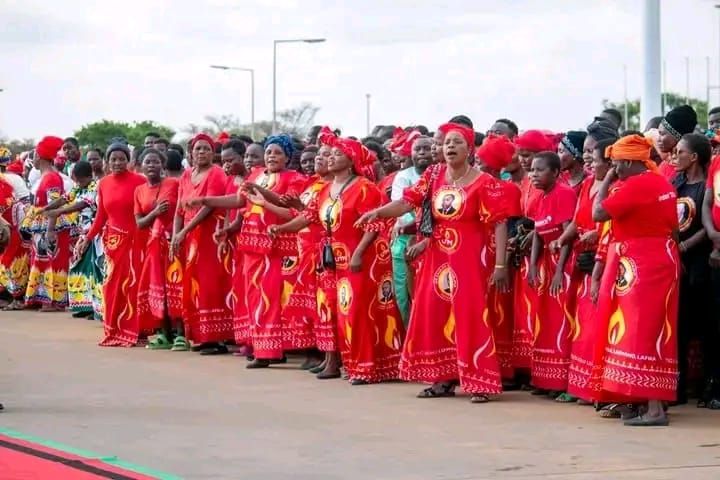
On Saturday 5 October 2024, supporters of the United Transformation Movement (UTM) gathered in large numbers at Kamuzu International Airport in Lilongwe to welcome President Lazarus Chakwera from his recent trip. The atmosphere was filled with excitement and unity as the crowd energetically chanted “Boma ndi lomweli,” reaffirming their confidence in the current administration.

This warm reception reflects the continued support UTM enjoys within its base, with many members praising the leadership and development strides under the Tonse Alliance, which brought President Chakwera to power. The chants and slogans echo a sentiment that the current government is the right one to steer the country forward amidst various challenges.

UTM supporters at the airport


Despite the economic difficulties Malawi faces, the loyal supporters made their presence known, waving flags and singing songs of praise as the presidential motorcade made its way through the airport gates. The gathering symbolized the strong connection between the UTM party and its leadership, and the faith many have in the ongoing policies.

As the day progressed, several key UTM figures were also spotted among the crowd, giving speeches of encouragement and calling for continued unity and resilience as the nation moves towards the 2025 general elections.

The event at the airport underscored UTM’s resolve to maintain its political influence and relevance within the ruling coalition, as well as to remind their opponents that they remain a significant force in Malawi’s political landscape.

The chants of “Boma ndi lomweli” resonated as both a celebration of the present government and a rallying cry for the future.