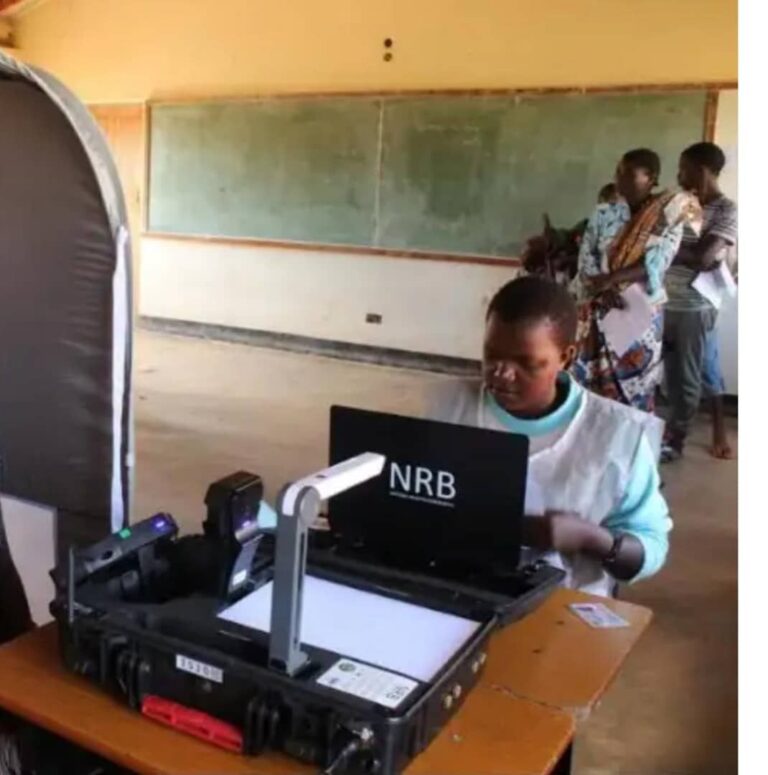
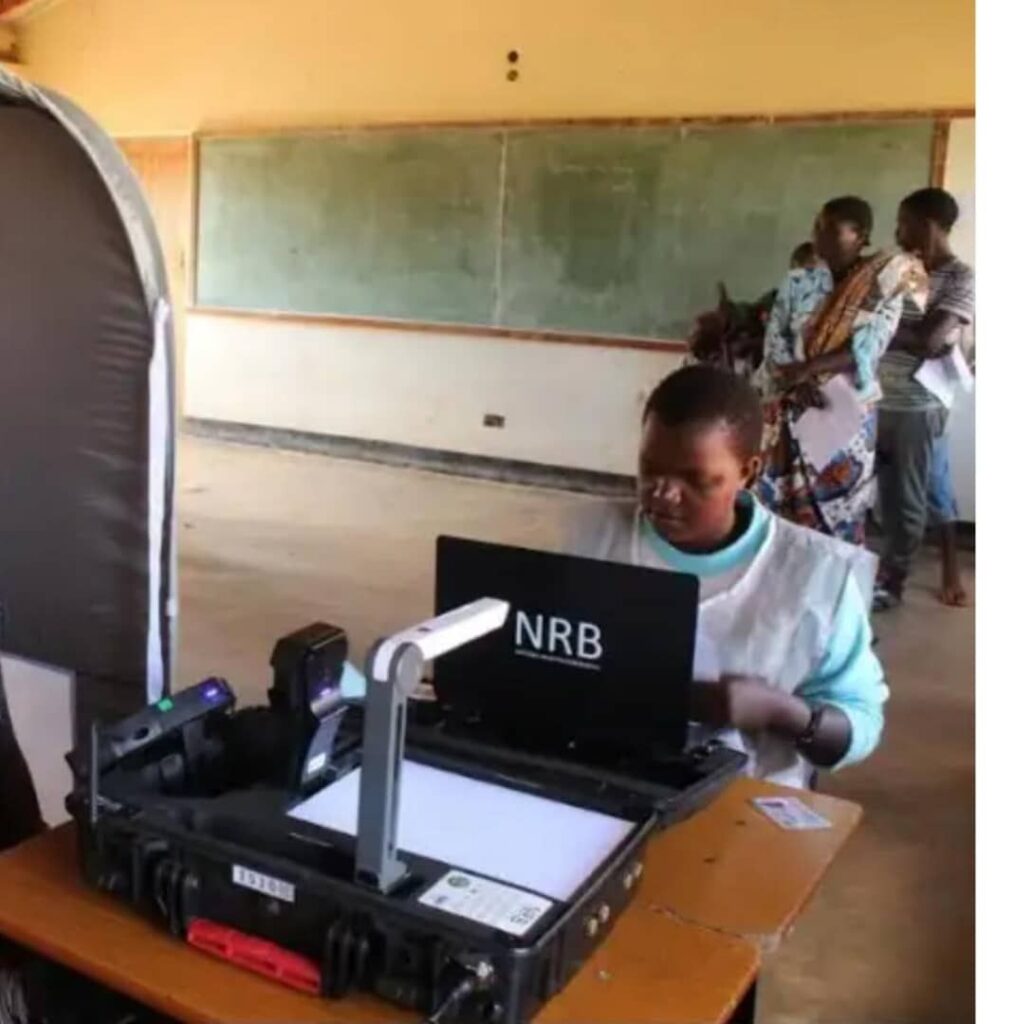
In 2010, Malawi Parliament passed National Registration Bill, which was dully assented to by the then Democratic Progressive Party (DPP) President, Dr Bingu wa Mutharika.
This was the same Act, which empowered the Malawi Government to open what is currently known as the National Registration Bureau (NRB).
This Act gave NRB powers to register all the citizens across the country for easy identification in banks, schools, and during electoral processes.
This is what the Act says in Section 3.
“There shall be a National Registration System consisting of population Register established under this Act. The population register shall comprise the Births, Marriages and Deaths Registers recorded at the village, traditional authority, district national levels,” Reads the section in part.
It is disheartening if not surprising to note that DPP is refusing the use of the National ID, which they, themselves, introduced to Malawians for use during the forth coming general elections.
Reports that we are receiving indicate that DPP wants to ferry ghost voters from the foreign nations in order to beef up their numbers.
DPP is already using errant civil society advocates, and other means to block the Malawi Electoral Commission (MEC) from using the National Identity cards.
Ironically, during the DPP convention, only those with National Identification cards were allowed to vote. Yes, you heard me right: During THE DPP CONVENTION ONLY THOSE WITH NATIONAL IDS WERE ALLOWED TO VOTE.
DPP knows clearly that by using National Identification cards, they cannot win the elections because DPP has no numbers following the ongoing splits and the dwindling popularity. Rigging the vote is their only hope.
The United Democratic Front (UDF) has issued a stern warning to its leader, Atupele Muluzi, cautioning him against forming an alliance with the ruling Malawi Congress Party (MCP) ahead of next year’s general elections. This comes after growing concerns within the party that such a partnership could undermine the UDF’s political identity and alienate its supporters.
A senior UDF official, who spoke on condition of anonymity, revealed that the party’s grassroots members are increasingly uneasy about recent remarks made by both Atupele Muluzi and his father, former President Bakili Muluzi. These statements have been interpreted as hints at a possible alliance with MCP, raising alarm bells within UDF ranks.
Tensions Within the Party
The UDF, a party that enjoyed significant influence in Malawi’s political landscape during Bakili Muluzi’s presidency from 1994 to 2004, has seen its support dwindle over the years. Many members fear that a partnership with MCP could further erode its standing as an independent political force.
“There is a growing concern within the party that Atupele Muluzi is leaning towards forming an alliance with MCP,” the senior UDF official stated. “Our members feel betrayed by these moves, especially considering the historical rivalry between UDF and MCP. We must preserve our identity and remain focused on our own agenda.”
The source also mentioned that many within the UDF view an alliance with MCP as a step backward, especially given MCP’s historical baggage. For decades, UDF and MCP have stood on opposite sides of Malawi’s political divide, with MCP often criticized for its authoritarian rule under former President Kamuzu Banda. UDF members believe aligning with MCP could compromise their credibility and values, which have long been built on principles of democracy and freedom.
Bakili Muluzi’s Role in the Debate
The involvement of Bakili Muluzi in these discussions has further complicated matters. As a revered figure within UDF and the architect of Malawi’s democratic transition in 1994, his words carry weight. However, his open support for a potential alliance with MCP has caused discomfort among UDF loyalists, who see it as a contradiction of the party’s legacy.
Bakili Muluzi’s recent public statements suggesting that cooperation with MCP could be beneficial in the 2025 elections have been met with mixed reactions. While some view it as pragmatic, others see it as undermining the core principles on which UDF was founded.
“Atupele is following in his father’s footsteps, but the party feels that the elder Muluzi is no longer in touch with the current political realities. UDF should be looking for fresh partnerships or standing alone, rather than joining forces with MCP,” the official explained.
A Divided Future for UDF?
As the 2025 elections draw nearer, the UDF faces a critical crossroads. The decision to form an alliance with MCP or pursue an independent strategy could determine the party’s future trajectory. Some within UDF argue that standing alone, even at the risk of losing influence, would be better than compromising the party’s integrity. Others, however, believe that a strategic partnership with a ruling party like MCP could open doors for political relevance and cabinet positions, especially in the event of a post-election coalition government.
Atupele Muluzi, who previously served in coalition governments and has worked closely with different political figures, remains a polarizing figure within UDF. His political experience, combined with his father’s legacy, has positioned him as a natural leader. However, his inclination toward alliances has been a source of internal division.
If the party’s internal disagreements continue unresolved, UDF risks further fracturing, especially if a segment of the party breaks away in protest of a potential alliance with MCP.
Conclusion
As the United Democratic Front deliberates its next steps, the leadership faces immense pressure to make decisions that will either consolidate the party’s future or risk further division. While Atupele Muluzi and his father, Bakili, may view an alliance with MCP as a strategic move, many in the party believe that the risks outweigh the benefits. The coming months will reveal whether UDF can navigate these internal tensions and present a unified front in the 2025 polls or whether this potential alliance with MCP will drive a wedge between the party and its supporters.
Only time will tell if UDF can balance pragmatism with principle as it charts its course in Malawi’s ever-evolving political landscape.
The Presidential Delivery Unit (PDU) says Malawi is expected to get 1000 megawatts of power generation by 2030 due to the number of Independent Power Producers (IPPs) that have applied to produce power in the country.
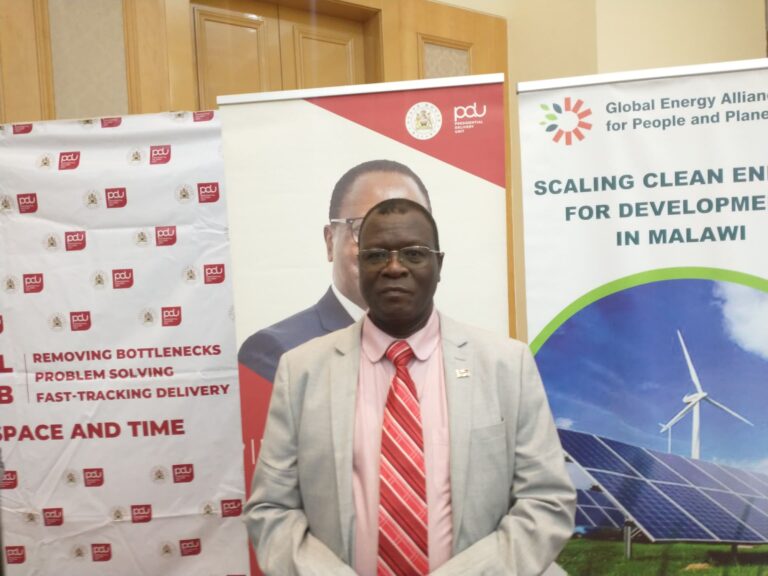
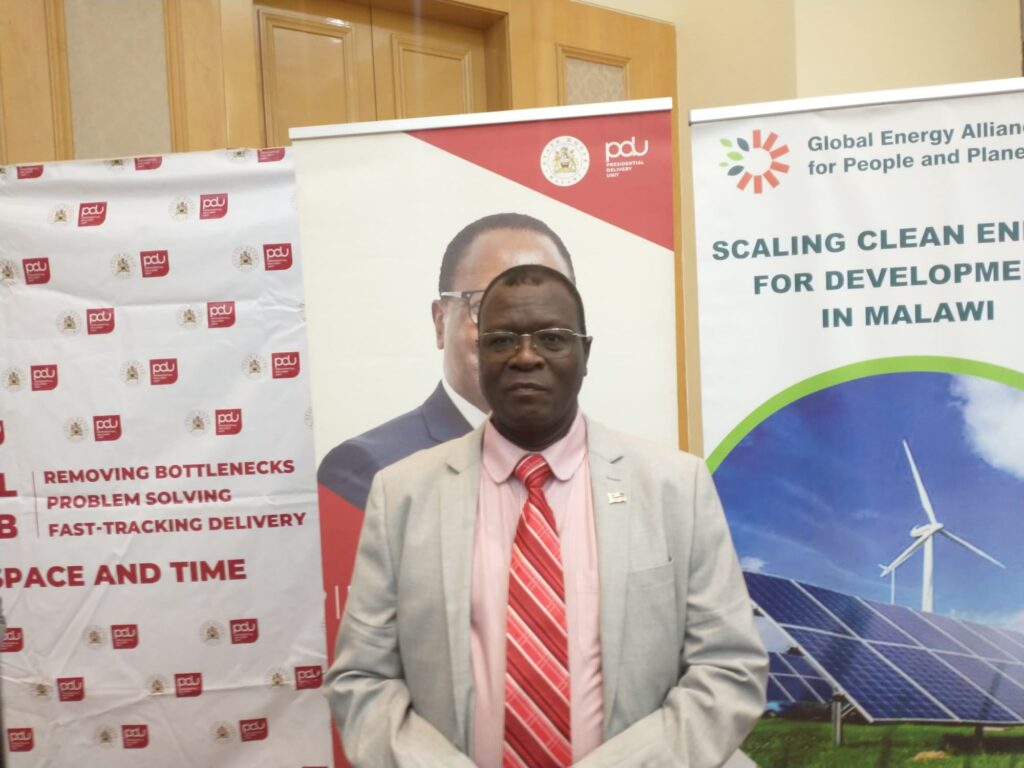
Speaking after the closing of the two-day Pre-Lab on Integrated Resource Plan (IRP) and power sector coordination in Lilongwe on Thursday, Director at PDU Dr. Enwell Kadango said they have other IPPs which are coming from Malawi-Mozambique interconnection which is in progress to achieve the generation power plant that the country wants.
He said:”In this lab, we are basically making a plan and everyone is ready to achieve the target we have set to generate more power for the country.”
Dr. Enwell Kadango
Kadango further disclosed that so far twenty-four IPPs have agreed to produce power, but right now about three IPPs are already finishing the process of signing and others are already producing and giving power to Electricity Supply Corporation of Malawi (ESCOM) which is distributing and transmitting.
He revealed that from the pre-lab they have discussed nineteen issues such as cost-effective tariffs, generation, and forex, just to mention a few, which they will take to the main delivery lab to be resolved by the key stakeholders in the energy sector.
Kadango also added that a number of issues are quite resolved, hence there are some which require further engagements with a few explorations and desk work to be done, but most of the issues are being resolved from the pre-lab.
On his part, Director of Electricity in the Ministry of Energy, Million Mafuta said the pre-lab has disclosed the issues affecting the energy sector and there is a need to provide answers for the challenges which are highlighted, hence are really affecting the sector.
Mafuta said:”I think we say those are not new and the approach that has been used before hasn’t really helped, but from this lab, we have an issue that we say moving forward, we are to identify the serious challenges that we need to resolve and what is it we need to do to address the challenges that we have observed.”
He further added that moving forward, they are going to take the issues in a different way on how they have been approaching, saying there are two sections that are going to be implemented to address the challenges.
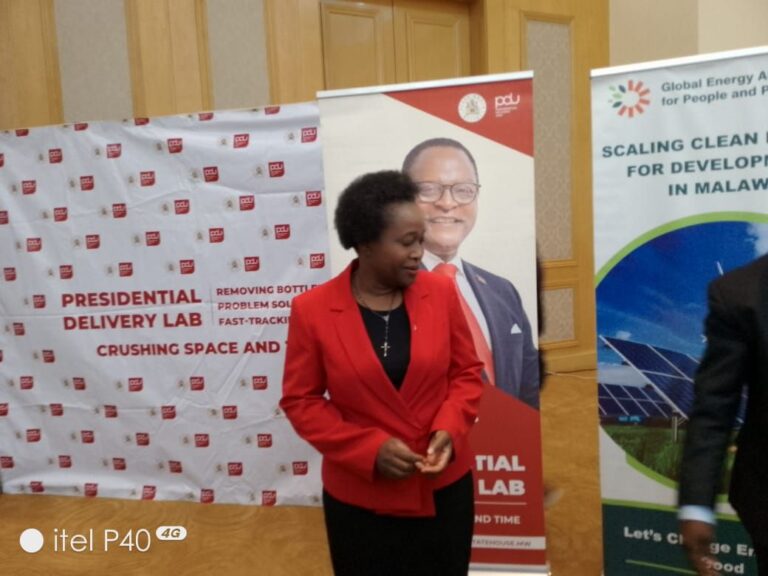
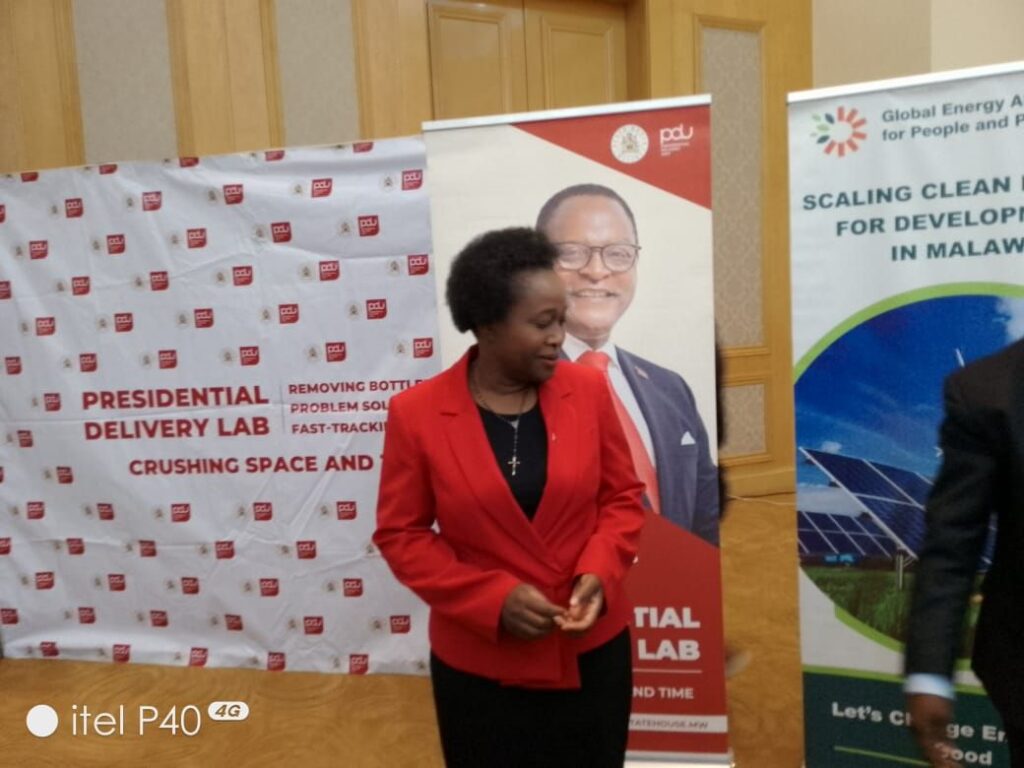
Deputy Secretary to the Office of President and Cabinet, Janet Banda, who is also Head of Presidential Delivery Unit (PDU), has called for coordination in the energy sector to increase access to power generation for the general public in the country.
Banda made the remarks during the two-day pre-lab meeting, which focused on Integrated Resource Planning (IRP) in the energy sector, on Wednesday in Lilongwe.
Janet Banda
She said that the previous energy lab, which was conducted a few months ago, discussed various energy sources that Malawi can utilize on-grid and off-grid, and what is available in the country.
She disclosed that through this energy pre-lab, technicians are expected to look at issues of coordination and integrated resource planning, which the country needs to implement and see how it can work.
Banda said:”It is appropriate for a country when you are talking about integrated resource planning, we are looking at generation, transmission, and distribution.
“Those are the issues that will be discussed in this pre-lab to identify efficiency and inefficiencies in the entire value chain of energy production in the country.”
She also mentioned that from the previous lab, they were able to gain a lot of insights into agro-industrialization through empowering small and medium enterprises, especially those in the field of agriculture, and how they can access electricity by introducing new electricity tariffs special for those in production and manufacturing that is in small scale to revamp the economy through small and medium enterprises.
Banda lamented that by the end of the lab, they are hoping that technicians will be able to identify challenges that are there in the energy sector, especially regarding electricity generation, transmission, and distribution.
She said:”We are also expecting them to discuss the issues affecting coordination among the key stakeholders in the energy sector; we are hoping those issues once identified can now be brought to the main lab for problem-solving.”
In his remarks, Director of Electricity in the Ministry of Energy, Million Mafuta, said that resource mobilization has been a challenge in terms of how many players can contribute to the power generation basket; hence, the country is relying on private partners, which is a good thing, but there is also a need to put up some mechanisms in terms of financing in order for the country to have its own power generation strategic project.
He said there is also a need to capacitate Electricity Generation company (EGENCO) to be able to develop power generation plants for the country.
Blithe Construction Chief Executive Officer (CEO) Patrick Khambadza who is also a lecturer at Malawi University of Business and Applied Sciences (MUBAS),has urged Malawians to embrace Electric Vehicles (EVs) to combat climate change.
Khambadza made the appeal on Friday in Blantyre after purchasing an EC3 electric vehicle from Sky Energy Africa worth K62 million, making him one of the pioneers of electric vehicles in the country.
He emphasized that switching to electric vehicles will not only reduce costs but also contribute significantly to environmental protection.
“By adopting electric vehicles, we will substantially cut our fuel and operational expenses while promoting a greener future.
“It is a smart financial decision that goes beyond environmental responsibility,” Khambadza said.
On his part,Sky Energy Africa’s Operations Director, Kondwani Tchereni, echoed Kambadza’s sentiment, stressing that investing in electric vehicles is crucial for environmental sustainability and cost savings.
“We are committed to protecting the environment while helping individuals make significant savings through the use of electric vehicles,” Tchereni added.
An Electric Vehicle (EV) is a vehicle whose propulsion is powered fully or mostly by electricity.
EVs include road and rail vehicles, electric boats and underwater vessels, electric aircraft and electric spacecraft.