


By Durell Namasani
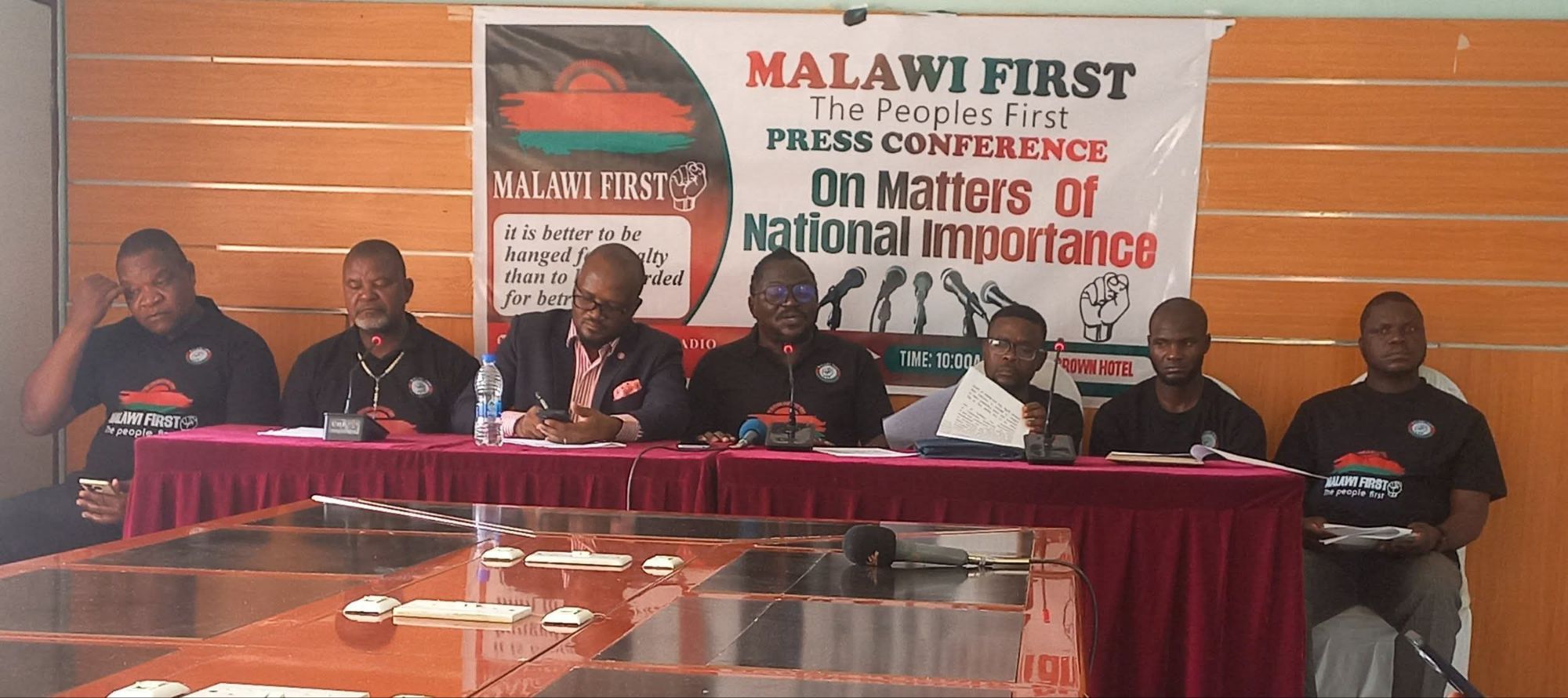
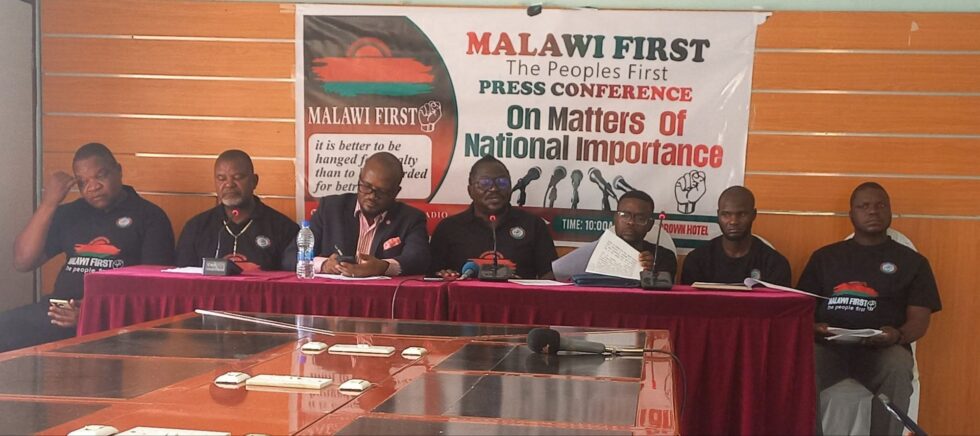
There was a time when Bon Kalindo’s voice was the thunder that preceded the rain of change. When he spoke, the corridors of power trembled, and the common man listened, believing that here, at last, was a leader who understood their pain. But if this week’s press conference in Lilongwe was any indication, that thunder has faded to a whimper, and the firebrand has been reduced to a damp squib.
The recent show of solidarity with government lawyer Frank Mbeta—dismissing corruption allegations against him as “unfounded”—was less a defense of justice and more a theatrical display of desperation. It laid bare a truth that many have long suspected: Kalindo and his Malawi First movement are no longer driven by values, but by the winds of political convenience. They swerve like chaff in the wind, directionless and easily scattered.
Let us be clear. The fight against corruption is sacred. It requires due process, and as the movement stated, evidence should indeed go to the Anti-Corruption Bureau (ACB). However, context is everything. For years, Kalindo built his brand on the premise of being the thorn in the side of the establishment. He was the voice for the voiceless, the defender of the oppressed against the powerful. To see him now deploying his platform to shield a government official—amidst a sea of public anger—smells less of principle and more of patronage.
It raises an uncomfortable question: Who are the real masters now?
The answer, it seems to many observers, is no longer the poor Malawians who once packed the streets. The optics suggest that Kalindo has traded the megaphone of the people for the whisper of the powerful elite. He appears to be operating as a mouthpiece for certain political interests, rushing to the defense of connected individuals while the everyday citizen continues to suffer under the weight of the very corruption he claims to fight.
This disconnect was not lost on the public. While the press conference was ongoing, social media—the very space Kambanje criticized—erupted with the fury of a betrayed populace. The comments were not just critical; they were eulogies for a movement that many believe is dead.
Brove Mkandawile captured the sentiment of disillusionment perfectly, writing: “Musogoleri omenyera ufulu, ufulu wake uti wadziko kapena wachipani. Kalindo ndiwachipani osati kuti azinamizira kuti ndimenyera ma ufulu wa anthu mu dziko muno.” (Translation: “A leader fighting for freedom, which freedom is it? National or party freedom? Kalindo is a party agent, not someone pretending to fight for people’s rights in this country.”)
This is the crux of the fall. When a leader is perceived as partisan, their moral authority evaporates. Kalindo is no longer seen as a unifier against a common enemy (corruption), but as a factional player protecting his own.
Then there was the biting commentary from Eduardo Manda, who dismissed Kalindo’s relevance entirely while warning of the dangers of being out of touch. Manda wrote: “Uyu siwomenyeratu ufulu koma ndiwomenyera mwayi wa dpp palibepo chanzeru chomwe angauze dziko anthu akuphedwa iyeyo a kukamba zake mwina akazagwirapo mubare wake ndipamene azaziwe kuti kunjadi kuno kuli palanaweeee ya tchakinori.” (Translation: “This one is not fighting for freedom, but for the interests of the DPP. He has nothing sensible to tell the nation. People are being killed, and he is busy talking his nonsense. Maybe when they touch his relative, that’s when he will know that this place is tough… ya tchakinori.”)
This is the tragedy of the firebrand who loses his bite. He becomes just another politician. The values of integrity, accountability, and justice that he once championed are now just slogans to be deployed when convenient and discarded when they conflict with the interests of his “masters.”
Kalindo called on the ACB to prove its credibility. Perhaps he should look inward. The public is demanding that he prove his. If he continues to swerve with the political wind, he will find that the people he left behind will eventually stop calling his name. And when that happens, the “firebrand” will simply be a man holding a microphone in an empty room, wondering where the crowd went.