


By Wadza Botomani
In a searing Facebook opinion piece, Dickson Kashoti outlines the crises of economy, floods, and governance demanding answers in Mutharika’s pivotal speech.
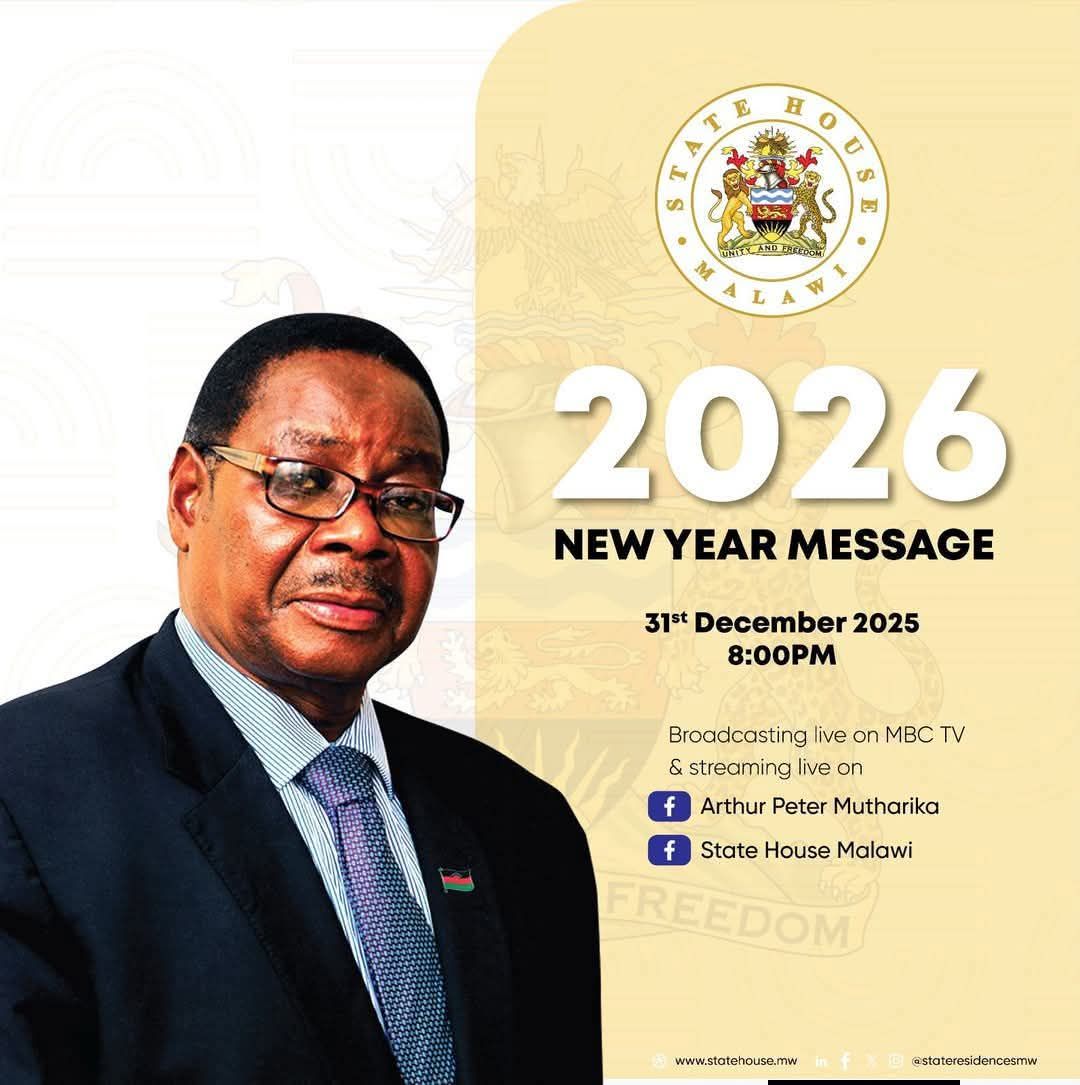
As President Professor Peter Mutharika prepares to deliver his first New Year message since his re-election, veteran journalist Dickson Kashoti has issued a stark public challenge, urging the address to confront the nation’s severe crises rather than offer “usual political rhetoric.”
In a detailed opinion piece posted on his Facebook page, Kashoti argues that Malawians expect substantive solutions as the country “continues to reel from a harsh economic atmosphere.” He cites a “deep and protracted crisis” marked by November 2025 inflation holding at 27.9%, chronic foreign exchange shortages below two months of cover, and stalled economic growth.
“The economy is on sick bed in ICU,” Kashoti writes, asserting this must be the President’s primary focus.

Turning to the ongoing flood disaster, which has affected tens of thousands, the journalist criticizes a perceived “lack of preparedness” by the government. He notably questions the absence of the responsible minister, Vice President Dr. Jane Ansah, who is abroad attending her husband’s birthday celebrations in the UK. “She seems to be detached from the suffering of the Malawians she is supposed to serve,” Kashoti states, calling for President Mutharika to immediately step in and alleviate victims’ suffering.
The opinion piece further raises alarms on governance, accusing the President’s “lieutenants” of a “vengeance mission” against opposition Malawi Congress Party (MCP) senior members, citing arrests of figures like Richard Chimwendo Banda. This, Kashoti warns, is “tainting the image of this government,” which promised rule of law.
He also highlights disturbing allegations of corruption, including a worrying story about the Malawi Revenue Authority and a senior cabinet minister’s wife, urging that such abuse “be stemmed before they are institutionalized.”
Finally, Kashoti calls for sober reflection on flagship policies. While the promise of free secondary education “looks good on paper,” he cautions the government to learn from the decline in primary education after similar past initiatives. He also points to the dire state of public hospitals, where free services and medicine are theoretical for many patients.
“No wonder President Professor Mutharika and other senior government officials, including cabinet ministers prefer treatment outside the country,” he concludes, framing it as a symbol of systemic failure.
Kashoti’s broadside sets a high public bar for the evening’s presidential address, demanding tangible answers on the economy, disaster response, political conduct, and the crumbling social contract.