

Home Blog Page 5

Dowa Council targets 90 percent water access by 2028

0


By Vincent Gunde

The Dowa District Council has set a target of 90 percent water access by 2028 saying the council cannot reach this alone, they need to work together with Water, Sanitation and Hygiene (WASH) partners to deliver for the communities in the district.

The Council has developed the District Systems Investment Plan (DSIP) as a targeted framework to operationalize key WASH priorities outlined in the District Development Plan ( DDP).
.
The developed DSIP is a step towards the realization of Social Development Goal ( SDG 6) – clean water and sanitation.

Presenting the District Coordinating Team (DCT) progress report at a meeting held at the Boma, the Council’s Water Development Officer Fanny Muula, said water goes beyond WASH – without boreholes, girls drop out of school, clinics struggle to operate and cholera risk increases.

Fanny Muula:Water goes beyond sanitation and hygiene


Muula said the DSIP enhances the planning, implementation, and monitoring of WASH interventions, and responding directly to the District Development Plan (DDP).

She said the DSIP is also linked to Malawi 2063 and specifically Enabler 5 Water, Sanitation and Hygiene (WASH) with an objective of improving public – health and human development through better service delivery.

The officer said the integrated approach of the DSIP is focusing on three components such as rural water supply, sanitation and Hygiene, and capacity building targeting the population using safe and wesustainable water supply in communities and institutions,  improved sanitation and Hygiene at household level and institutions.

” Behind every percentage point is a family who now drinks safe water, a school girl who no longer misses class due to poor sanitation, and a community empowered to sustain this gains,” said Muula.

However, Muula said the DSIP in the district is meeting some challenges such as poor reporting by both Area Mechanics and Water Monitoring Assistants, unproper clear sanitation functions, research and human constraints and phasing out of WASH project and that certain areas have geological formations that compromise water quality.

She said increasing human capital, lobbying  for increased funding and WASH partners in the district, and sharing of data from partners to the district on the implementation progress.

Organizations such as Red Cross, Design Outreach, Orant Charities, Self Help Africa, Rhema, World Vision, and Weit Hunger Hilfe (WWH) are some of the institutions that are complimenting government efforts towards delivery of WASH related interventions in Dowa district
Infinity Media Group boosts Mangochi Police with K1 million reflective vest donation

0

By Rahim Abdul

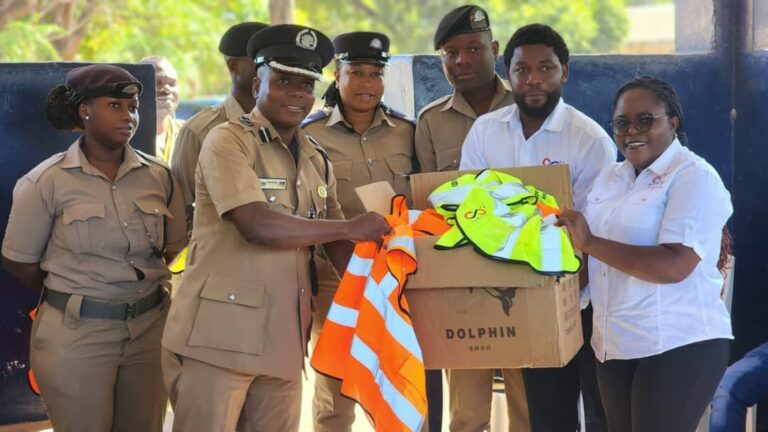
Infinity Media Group has donated 50 reflective vests valued at K1 million to Mangochi Police Station in a move aimed at improving working conditions for officers and enhancing service delivery to communities in the district.

The donation was made on June 17, 2026, following a request submitted by the police station during one of its courtesy visits to the media company.

Speaking during the handover ceremony, Infinity Media Group Director of Operations Ernest Chapotera said the company was impressed by the commitment and dedication demonstrated by police officers in Mangochi as they work to maintain peace and order.

Chapotera noted that Mangochi is among the country’s busiest and fastest-growing districts, making the role of law enforcement officers increasingly important in safeguarding residents, visitors and businesses.


He said the donation was a gesture of appreciation for the efforts being made by the police service and a contribution towards strengthening their visibility while carrying out duties in various parts of the district.

According to Chapotera, the strong presence of police officers in communities helps deter criminal activities and creates a secure environment that supports business growth and economic development.

Receiving the donation on behalf of the station, Officer-in-Charge Assistant Commissioner of Police Peter Kalaya described the support as timely and significant for the daily operations of the police service.

Kalaya explained that reflective vests make it easier for members of the public to identify police officers, particularly during traffic management duties, public events and security operations conducted both during the day and at night.

He further said the donation demonstrates growing confidence among stakeholders in the work being done by the police and serves as encouragement for officers to continue serving the public professionally and effectively.

The police chief has since called on other organisations and well-wishers to emulate Infinity Media Group’s example by supporting initiatives that strengthen policing and improve public safety, pledging that Mangochi Police Station will continue working tirelessly to keep the district safe and secure for all.

Malawi’s Women’s Manifesto expands the battle for equality into digital justice, climate and corruption

Analysis by Burnett Munthali

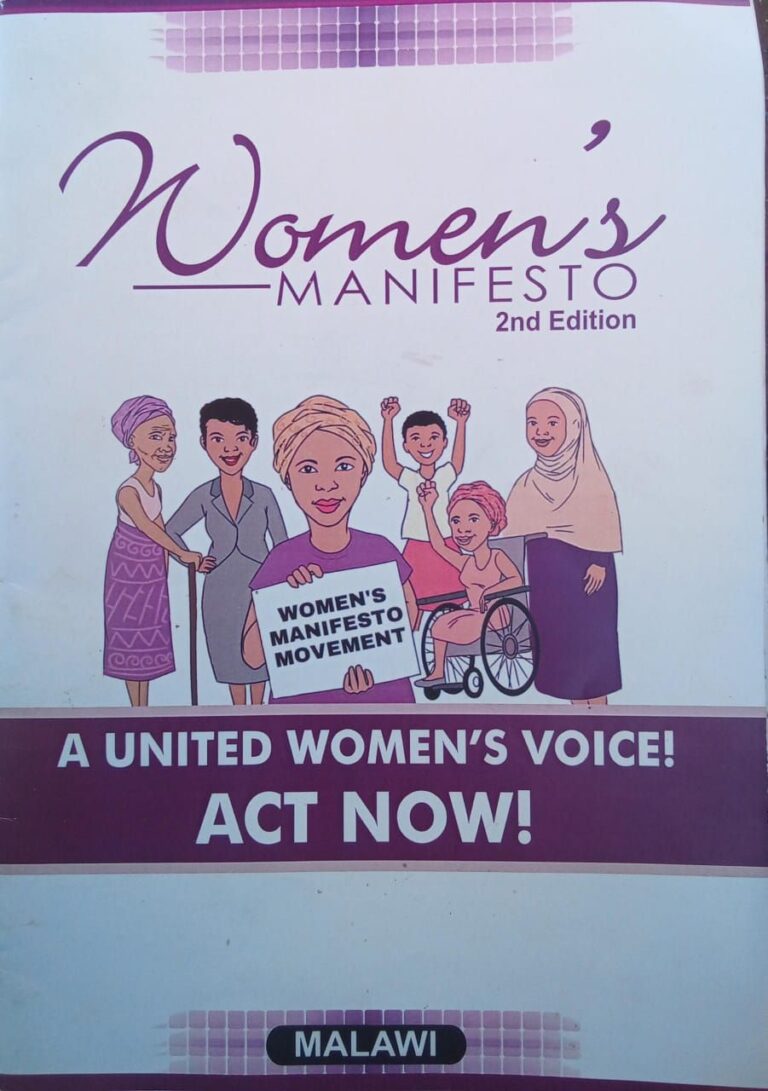
The second edition of Malawi’s Women’s Manifesto presents a powerful call to action that captures the evolving demands of Malawian women and girls in the fight for equality, justice, and inclusion. 

This revised edition integrates new thematic areas such as digital justice and women’s role in the fight against corruption, recognizing the impact of emerging challenges on gender equity. 

In addition to enforcing advocacy around education, health, economic empowerment, leadership, and access to justice, the manifesto now incorporates stronger commitments to environmental sustainability and climate resilience. 


It also pushes for systemic reforms in governance by addressing intersectional vulnerabilities, including those affecting marginalized women and persons with disabilities. 

The document underscores the urgency of holistic policy transformation, arguing that piecemeal interventions can no longer meet the scale of gender inequality in Malawi. 

Through these comprehensive revisions, the Women’s Manifesto movement reaffirms its dedication to advancing gender-sensitive policies and ensuring meaningful accountability from duty bearers at all levels. 

The manifesto’s demands are organized around several thematic areas, beginning with women and economic empowerment on page 4. 

It argues that women’s economic empowerment is essential for poverty reduction and sustainable development in Malawi. 

Despite existing legal frameworks and policies, enforcement remains weak due to funding gaps, limited dissemination, and inadequate gender-sensitive programs. 

The document calls for urgent policy action to remove structural barriers and create inclusive economic opportunities for women across the country. 

A second focus is on women, land, water, and natural resources, where Malawian women face significant challenges due to cultural biases and structural inequalities. 

Customary reliance practices limit women’s ownership and control, with tenure security particularly weak in patrilineal societies, leading to economic insecurity. 

In water access, rural women spend excessive time collecting water, which affects productivity, health, and education outcomes. 

Poor sanitation compounds these risks, while in the mining sector women struggle with a lack of transparency, financial resources, and opportunities for value addition. 

This exclusion keeps them from benefiting fully from natural resource management and broader economic growth. 

The third thematic area addresses women and climate change, noting that Malawi has policies and international commitments to combat the crisis. 

However, women and girls are disproportionately affected due to fragile ecosystems, reliance on rain-fed agriculture, and limited adaptive capacity. 

Extreme weather events like droughts and floods disproportionately affect women, leading to food insecurity, risky coping mechanisms, and restricted access to education and healthcare. 

Climate change also worsens mental health among vulnerable women, while climate-induced disasters expose them to increased risks of gender-based violence, including sexual exploitation, abuse, and harassment. 

These abuses are perpetrated by intimate partners, community members, human traffickers, emergency responders, and humanitarian personnel. 

Limited resources for disaster response mean women face poor security, inadequate sanitation, and increased gender-based violence, while recovery efforts remain weak and under-resourced. 

The manifesto highlights that women have low representation in decision-making structures and limited access to early warning systems, worsening their vulnerability to climate risk. 

A fourth area examines women and agriculture, despite Malawi’s strong legal and policy commitments to achieving food security and promoting agriculture for economic growth. 

A significant gender gap persists, with women constituting 70% of the agricultural labor force but remaining on average 28% less productive than male counterparts. 

This disparity significantly hinders the nation’s progress toward its agricultural and developmental goals, including those outlined in Malawi 2063 and the Sustainable Development Goals. 

The productivity gap is driven by systemic challenges: lower education levels, lesser control over land and natural resources, reduced labor availability, disproportionate caregiving responsibilities, and minimal access to financial resources, information, and technology. 

Collectively, these sections signal a shift in Malawi’s gender advocacy from a narrow focus on welfare to a broader demand for systemic change across the digital, environmental, and governance spaces. 

The second edition positions the Women’s Manifesto not only as a policy checklist but as a political instrument for holding leaders accountable ahead of and beyond elections.

Feedback:
+265884433313
bonnetmunthali2101@gmail.com

Blantyre gears up for free Fête de la musique as schools take center stage at Alliance Française

By Jones Gadama 


Alliance Française de Blantyre will host this year’s Fête de la Musique on June 20, 2026 from 1PM to 5PM, with free entry for all music lovers.

The celebration will feature the Jacaranda African Ensemble as special performers, alongside other musical guests and student acts from across the city.

Fête de la Musique, also known as World Music Day, began in France in 1982 under then Minister of Culture Jack Lang.

The idea was simple: make music free, accessible, and for everyone. Every June 21, musicians amateur and professional take to streets, parks and venues to perform all genres without payment.

Poya Chapweteka


The event has since spread to over 120 countries, becoming one of the world’s biggest annual music celebrations.

Malawi’s Alliance Française branches have marked the day for years, using it to showcase local talent and cultural exchange.

This year’s Blantyre edition puts young performers in the spotlight.

Poya Chapweteka, coordinator at L’Alliance Française de Blantyre, said in an interview that more schools, both primary and secondary, will take part in the performances.

According to the flyer, the program will highlight student talent playing instruments like the balafon, drums and other traditional and modern instruments.

“The focus is on giving learners a platform to celebrate music while appreciating Malawi’s cultural diversity,” Chapweteka said.

He noted that involving schools aligns with the original spirit of the festival, which encourages everyone to participate regardless of training or background.

The Jacaranda African Ensemble will headline with a special performance, joined by guest artists.

Organizers expect a mix of genres, from traditional Malawian rhythms to contemporary sounds, reflecting the festival’s “music for all” philosophy.

With free entry and an afternoon program, Alliance Française de Blantyre hopes to turn its venue into a hub of sound and celebration.

For Blantyre residents, it’s a chance to experience live music, support young artists, and join a global tradition that started on the streets of Paris over four decades ago.

Malawi Defence Force Soldiers Begin French Training at Alliance Française to Boost Peacekeeping Capacity

0

By Jones Gadama


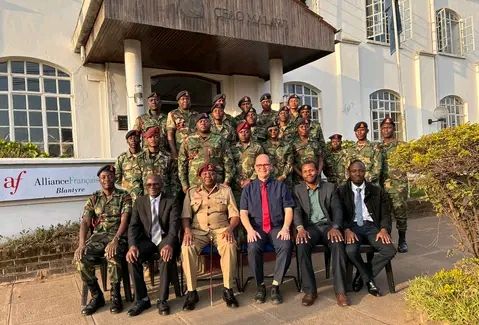
French language courses started this week at Alliance Française de Blantyre for 25 women and men in uniform from the Malawi Defence Force, under a new regional cooperation program aimed at strengthening security and diplomacy in Southern Africa.

The program, titled “French as a tool to strengthen Diplomatic, Security and Military Cooperation in Southern Africa”, is coordinated by France in partnership with South Africa, Lesotho and Malawi, and the French Institute of South Africa.

Brigadier General P Simwaka graced the opening ceremony as guest of honour.


He told the cohort that French proficiency is now vital for Malawian soldiers deployed to conflict zones in French-speaking countries as part of African Union or United Nations peacekeeping missions.

He cited recent deployments in the Democratic Republic of Congo and Rwanda as examples where language barriers affected operations and community engagement.

“Language is a tool of peace and protection. When our soldiers can communicate directly with local communities and fellow peacekeepers, it saves lives and builds trust,” Brig. Gen. Simwaka said.

The Blantyre course will run for two years, taking the 25 defence force personnel from beginner A1 level up to independent B2 level under the Common European Framework of Reference for Languages.

At B2, learners can understand complex discussions, interact fluently with native speakers, and handle operational briefings in French without assistance.

Alliance Française de Blantyre is simultaneously delivering similar courses in Lilongwe. Ten diplomats from the Ministry of Foreign Affairs and ten members of the Malawi Police Service are also enrolled there.

The dual rollout reflects the program’s goal of building a common French-language capacity across Malawi’s diplomatic, security and military institutions.

Officials say the regional initiative is part of France’s wider strategy to enhance interoperability among African forces and diplomats operating in Francophone regions.

For Malawi, it means better preparedness for multilateral missions and stronger bilateral ties with French-speaking neighbors.

The first cohort in Blantyre will sit regular proficiency assessments as they progress toward B2 certification by 2028.