By Chisomo Phiri
President of the United Democratic Front (UDF), Atupele Muluzi,says Malawi’s persistent poverty is largely a result of poor leadership and policy choices, stressing that meaningful change depends on adopting better governance and decision-making.
In an interview with 247 Malawi News,Muluzi argued that the country’s economic challenges are not inevitable but largely man-made, attributing them to systemic failures that have allowed corruption and inequality to flourish.
He emphasized that solutions are within reach if the country embraces visionary leadership and practical strategies.
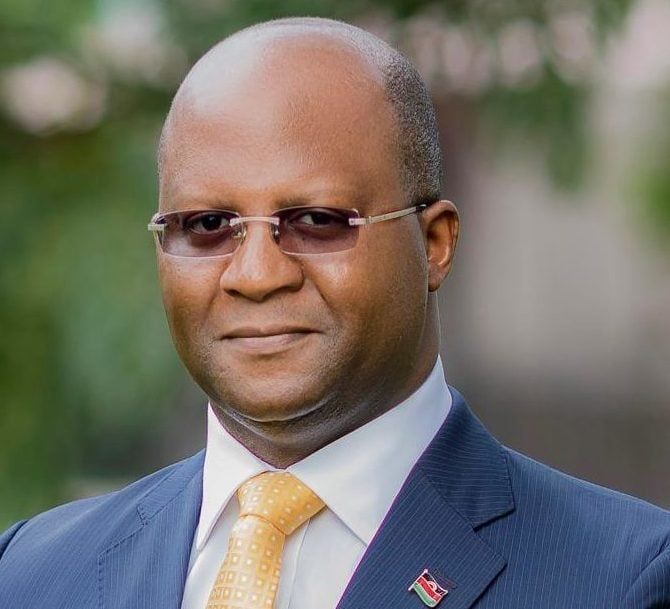
Said Muluzi:“Fixing Malawi is not rocket science.What we need is leadership that sets a clear, transformative vision for the country and a realistic plan to achieve it.”
He, however, warned that such progress cannot be achieved under what he described as a system designed for extraction and exclusion, where opportunities are skewed in favor of a select few, often along ethnic lines.
Muluzi said the consequences of this governance model are now evident in the daily struggles faced by ordinary Malawians.
Despite the challenges, he highlighted what he called a ‘once-in-a-generation opportunity’ in the country’s critical minerals sector.
He noted that the industry has the potential to significantly transform Malawi’s economy, with projections indicating up to $30 billion in export earnings between 2026 and 2040, and annual revenues reaching $3 billion by 2034.
This growth, he said, could expand the sector’s contribution to Gross Domestic Product (GDP) from 1 percent to 12 percent.
“This should be a turning point for our country,” he said, cautioning that such potential will only be realized if governance systems are reformed.
Muluzi also criticized certain policy choices, including the management of exchange rates, arguing that artificially fixed rates create opportunities for arbitrage that benefit a small elite.
This, he said, leads to the enrichment of a few individuals, weakened exports, and broader economic hardship for the majority.
He called for the emergence of reform-driven leadership capable of steering the country toward structural transformation.
“Malawi does not just need change.It needs bold, fair, and inclusive structural transformation,” said Muluzi.
He concluded by urging Malawians to recognize the opportunities ahead and make deliberate choices to secure a better future.
Malawi is one of the poorest countries in Africa, with a largely agrarian economy that depends heavily on rain-fed agriculture.
Most Malawians rely on smallholder farming, which makes incomes highly vulnerable to climate shocks such as droughts and floods.
This pattern is common across much of Sub-Saharan Africa, where economies are often tied to primary commodities rather than diversified industries.
Historically, Malawi’s economic structure was shaped during the colonial period under United Kingdom (UK) rule, when the economy was oriented toward exporting raw agricultural products like tobacco, tea, and sugar.
After independence in 1964, the country made some progress in social development, but economic growth remained uneven and heavily dependent on agriculture and foreign aid.
Compared to some African peers, Malawi has struggled to industrialize.
Countries like South Africa and Kenya have more diversified economies, including manufacturing and services, which provide more stable employment and revenue streams.
Malawi, by contrast, has limited infrastructure, low levels of industrial investment, and a narrow export base.
Poverty levels remain high, with a significant portion of the population living below the international poverty line.
Rapid population growth has also put pressure on land, education, and health systems, making it harder for economic gains to translate into improved living standards.