


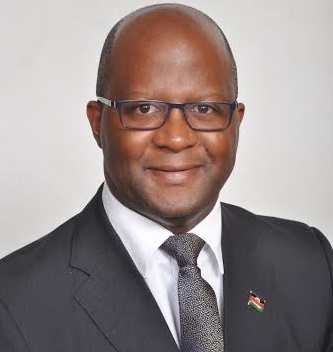
By Chisomo Phiri
President of the United Democratic Front (UDF), Atupele Muluzi,has emphasized the urgent need for systemic reforms and stronger institutions to effectively tackle corruption in the country.
Responding to concerns raised by legal practitioner Counsel Alexious Kamangira in an interview with 247 Malawi News, Muluzi described the issues as valid and widely shared, welcoming the call for open and healthy debate on corruption and governance.
He noted that corruption remains one of Malawi’s most pressing challenges, warning that it distorts the economy, undermines public trust, and entrenches inequality.
According to Muluzi, practices such as cartel-like behavior and parallel exchange rate arbitrage disproportionately harm ordinary citizens by increasing the cost of living, limiting opportunities, and weakening public services.
The UDF leader highlighted his long-standing stance on governance reforms, stating that over the past two decades he has consistently advocated for a radical transformation of Malawi’s systems.
However, he acknowledged that reform efforts often face resistance from entrenched interests.
“In Malawi, reformers are often vilified because change threatens those who benefit from the status quo,” he said, adding that a cabal continues to resist meaningful reforms.
Muluzi also raised concerns about the role of the media, cautioning that a compromised press undermines accountability.
He stressed that the media must act as watchdogs, exposing wrongdoing without fear or favor.
The son to the second Malawi president Bakili Muluzi further called for a stronger and more independent civil society to promote transparency and hold leaders accountable.
Despite the challenges, he rejected authoritarian approaches, arguing that Malawi’s path forward lies in improved governance grounded in strong checks and balances.
He underscored the importance of functional institutions, fair enforcement of rules, and equality before the law.
“Corruption is largely a symptom of weak systems,” said Muluzi, urging comprehensive reforms to strengthen institutions, close loopholes, and curb abuse.
He pointed out that rent-seeking behavior has persisted since independence and can only be addressed through deliberate and sustained efforts.
Muluzi commended Kamangira for speaking out, describing such actions as both difficult and necessary in the fight against corruption.
For further insight into governance and reform, the UDF president recommended the book The Essence of Success, which explores development challenges and solutions, including perspectives drawn from Malawi.
He concluded by stressing that lasting change depends on good governance, effective leadership, and systems designed to serve all Malawians equally.