


By Apengie Apengire
Politics in Malawi has once again exposed the smallness of those who hold power when they mistake the state for their party. The decision by the Democratic Progressive Party government to block former President Lazarus Chakwera from attending the official Kamuzu Day commemorations in Lilongwe is not just petty. It is a deliberate insult to the memory of Dr. Hastings Kamuzu Banda, to the Malawi Congress Party, and to every Malawian who understands that May 14 is not a DPP function but a national day. The day is meant to honor the founding father of the nation and the founder of the Malawi Congress Party. By turning it into a partisan gatekeeping exercise, the DPP government has shown that it fears the shadow of both MCP and its leader, even out of office. That fear is telling. It reveals a government that understands it has no moral claim to Kamuzu’s legacy and therefore tries to monopolize the ceremony to manufacture legitimacy it does not possess.
Kamuzu Day is not a DPP day. It was never meant to be. Dr. Hastings Kamuzu Banda founded the Malawi Congress Party in 1958 and led the country to independence in 1964. He ruled Malawi for thirty years under the MCP banner. When Malawians voted to end one-party rule in 1993, they rejected Kamuzu as an individual leader, but they did not erase his place in the country’s history. Kamuzu remains the father and founder of the Malawi nation. To celebrate his life is to acknowledge that history, with all its contradictions. It is a day for all Malawians, regardless of party affiliation, to reflect on where the country has come from and where it is going. When the state organizes a national ceremony, it acts on behalf of the people, not on behalf of the ruling party. To exclude the former president and leader of the main opposition party from that ceremony is to tell Malawians that citizenship is conditional on political loyalty. That is not how a democracy functions.
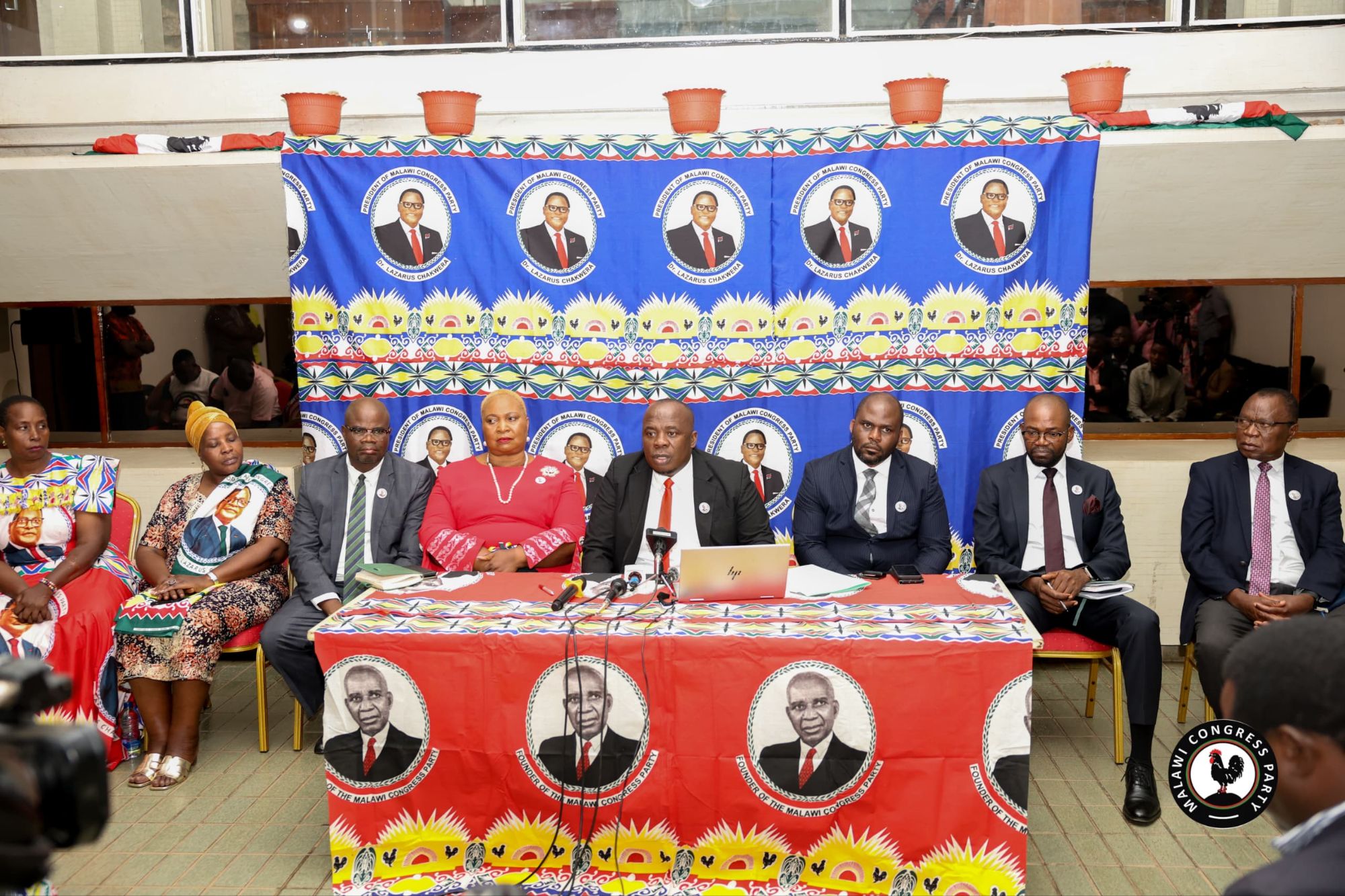
MCP Secretary General Richard Chimwendo Banda was right to question why President Peter Mutharika and his government would block Chakwera from attending. According to Chimwendo Banda, the MCP held discussions with government officials hoping that Chakwera would be part of the official ceremony, but the talks failed. The failure was not accidental. It was deliberate. The DPP knows that Chakwera’s presence at a national event would draw attention, respect, and applause. It knows that Malawians still remember that he was the man who defeated the DPP in 2020 after decades of opposition. It knows that allowing him to stand alongside Mutharika at a Kamuzu commemoration would blur the lines between ruling and opposition in a way that makes the DPP uncomfortable. So they chose exclusion. They chose to turn a national day into a party rally.
This is not the first time the DPP has acted this way. History has a way of repeating itself when leaders refuse to learn from it. During Mutharika’s inauguration, Lazarus Chakwera wanted to attend and congratulate him on that occasion. He was ready to attend the proceedings as a statesman, to show that Malawi’s democracy could accommodate both victory and defeat with dignity. At the eleventh hour, he was barred. The message was clear then, and it is clear now: the DPP does not want to share space with Lazarus Chakwera. It fears his presence, his words, and the symbolism he carries. It fears that Malawians will see in him a leader who commands national respect beyond party lines. That fear drives decisions that weaken national unity and reduce the presidency to a party chairmanship.
The DPP’s behavior undermines the very idea of national commemoration. A national day is supposed to bring people together. Independence Day brings together MCP, DPP, UTM, UDF, and every other political grouping because it belongs to all of us. Martyrs Day honors those who died for democracy, and it is not owned by one party. Kamuzu Day should be the same. Dr. Kamuzu Banda may have been the leader of MCP, but he was also the first president of Malawi. His legacy belongs to the nation, not to the party that currently occupies the State House. When the DPP treats Kamuzu Day as its private event, it disrespects Kamuzu himself. It reduces his memory to a campaign tool. It tells young Malawians that history is something to be owned and controlled by whoever is in power at the moment.
The irony is that the DPP has no moral claim to Kamuzu’s legacy. The party was formed in 2005 after a split from the United Democratic Front. It has no historical connection to the struggle for independence or to the early years of MCP. Its leaders often attack Kamuzu’s record while simultaneously trying to claim his name for political convenience. They want the symbolism without the substance. They want the crowds that gather for Kamuzu without the scrutiny that comes with his legacy. That is why they fear seeing Lazarus Chakwera at the same podium. Chakwera leads the party that Kamuzu built. His presence is a living reminder of that continuity. The DPP cannot compete with that on historical grounds, so it resorts to exclusion.
In contrast, the Malawi Congress Party’s decision to organize its own special memorial prayers for Kamuzu Banda at the party headquarters after the government event deserves commendation. MCP is doing what a responsible political party should do when the state abandons its duty to be inclusive. The party is celebrating the life of the father and founder of the Malawi nation and the Malawi Congress Party on its own terms. That ceremony will be free from the pettiness and fear that define the DPP’s approach. It will allow MCP members, supporters, and all Malawians who feel excluded from the official event to honor Kamuzu in a dignified way. It is a reminder that national memory cannot be monopolized by a government that fears competition.
The MCP ceremony also sends a message to the DPP. You can block a former president from a state function, but you cannot block a nation from remembering its history. You can control the guest list at a government event, but you cannot control how Malawians choose to honor their past. By organizing its own commemoration, MCP is reclaiming space for political pluralism. It shows that democracy means more than holding elections every five years. It means allowing different political actors to participate in national life without fear of exclusion or intimidation.
The DPP government should reflect on what it loses by acting this way. Every time it blocks the opposition from participating in national events, it deepens the perception that it is insecure and vindictive. It reinforces the narrative that it fears the MCP and its president. That perception matters. In politics, perception shapes legitimacy. A government that appears afraid of its opponents appears weak, even if it controls the machinery of the state. A government that welcomes competition appears confident, even when it faces criticism. The DPP has chosen the path of weakness.
Malawians should see this for what it is. Kamuzu Day is not about Peter Mutharika. It is not about Lazarus Chakwera. It is about Malawi. It is about acknowledging that the country has a history that predates 1994 and 2020. It is about recognizing that political differences should not erase shared heritage. The DPP’s decision to block Chakwera is a short-term tactic with long-term consequences. It teaches citizens that the state is partisan, that public events are party events, and that political exclusion is acceptable if you have the power to enforce it. That is a dangerous lesson in a country that has fought hard to move away from one-party rule.
The Malawi Congress Party deserves credit for not retaliating with bitterness. Instead of calling for boycotts or confrontation, MCP chose to organize its own ceremony. That is leadership. That is statesmanship. It shows that MCP understands that the memory of Kamuzu is bigger than any single government event. It shows that MCP is willing to celebrate its founder even when the state tries to erase its role. That is how political maturity looks. It is how a party that has governed before and hopes to govern again behaves.
The DPP would do well to learn from that example. A government that fears its predecessor, that fears the opposition leader, that fears sharing a podium on a national day, is a government that does not trust its own legitimacy. If Peter Mutharika and the DPP believe in their record, they should have no problem standing alongside Lazarus Chakwera at a Kamuzu commemoration. If they believe Malawians support them, they should welcome the presence of their opponents. Instead, they have chosen to hide behind protocol and exclusion.
Kamuzu Day will come and go. The official ceremony will happen with or without the opposition. But the memory of how the DPP handled it will remain. Malawians remember how they were treated. They remember who tried to include and who tried to exclude. They remember who acted like a national leader and who acted like a party chairperson. When history judges this moment, it will note that the DPP had a chance to demonstrate national leadership and chose party politics instead.
The Malawi Congress Party has shown the way forward. By organizing its own ceremony, it has ensured that Kamuzu’s memory will not be hostage to the DPP’s fear. It has shown that the party and its supporters can honor their founder without permission from those who currently hold power. That is how a democracy survives. That is how a nation remembers.
May 14 belongs to Malawi. It does not belong to the DPP. It does not belong to MCP. It belongs to the people who fought for independence, who lived through one-party rule, who voted for change in 1993, and who continue to build the country today. No government, no matter how powerful, can take that away. The DPP can block Lazarus Chakwera from a podium, but it cannot block Malawians from remembering. And in the end, memory outlasts power.