


By Staff Reporter
The legacy of Dr. Saulos Klaus Chilima in Malawi is often discussed in terms of his energy, reform agenda, and appeal to younger voters.
Yet a complete assessment of his political journey must also confront the mistakes and missed opportunities that shaped his time as Vice President.
One of the most cited critiques of Chilima’s leadership was the gap between his ambitious reform rhetoric and the limited institutional change that materialized.
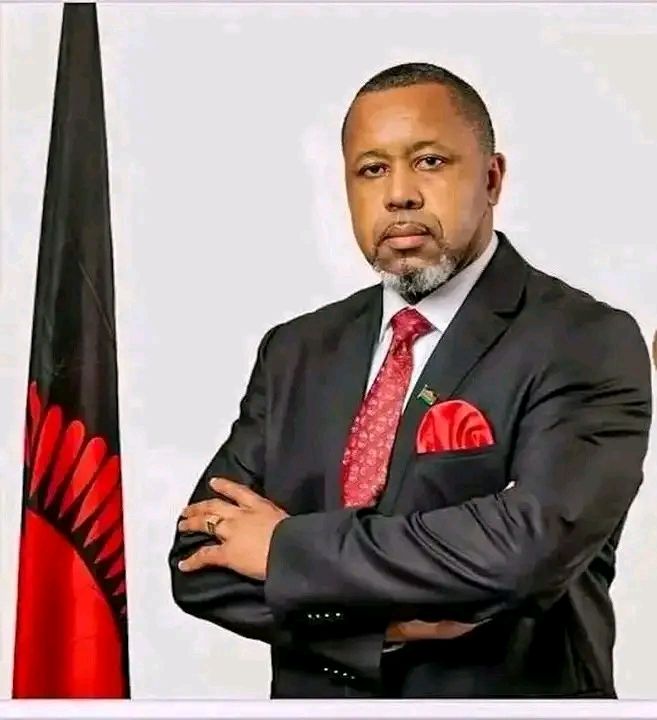
Despite spearheading the Public Service Reforms agenda, many of the proposed changes were slowed or diluted by bureaucratic resistance and political compromise.
Chilima also faced criticism for remaining within a government structure he frequently described as inefficient and resistant to change.
His decision to stay in the Tonse Alliance administration after 2020, while publicly pushing for accountability, created perceptions of contradiction among some observers.
Another area of concern was the challenge of translating his popularity into a durable political organization.
The UTM Party, which he led, struggled to build a nationwide grassroots structure capable of sustaining momentum beyond urban centers.
Chilima’s communication style, while effective in direct engagement with citizens, sometimes lacked the strategic discipline needed in coalition politics.
His public criticism of government failures, even while serving as Vice President, blurred lines of collective responsibility and weakened internal cohesion.
This tension highlighted the difficulty of being both an insider and a reformer in a system with entrenched patronage networks.
From these mistakes, several lessons emerge that extend beyond Chilima and speak to leadership across Africa.
The first lesson is that reform requires more than vision; it requires the political capital and alliances to implement it.
Ideas alone, no matter how compelling, cannot overcome institutional inertia without sustained negotiation and coalition-building.
A second lesson is the importance of organizational depth in politics.
Personal charisma can mobilize crowds, but without a structured party machinery, influence remains fragile and episodic.
Chilima’s experience shows that building institutions is slower and less glamorous than making speeches, but it is essential for lasting impact.
A third lesson is the need for consistency between public messaging and institutional role.
When leaders publicly condemn the systems they are part of without a clear path to change them, credibility suffers on both sides.
This underscores the value of defining early whether one intends to reform from within or to position oneself as an external challenger.
Another lesson lies in managing expectations in a political environment where citizens demand rapid transformation.
Chilima’s fast-paced communication style raised hopes for immediate change, which made the slower reality of governance appear disappointing by comparison.
This mismatch between expectation and delivery is a common pitfall for reform-minded leaders in young democracies.
The importance of focusing on the mistakes of leaders and other role models lies in the preventive value of such analysis.
Mistakes, when examined objectively, provide practical case studies for how not to navigate complex political and organizational environments.
Focusing on errors does not diminish a leader’s contributions; rather, it allows societies to extract transferable lessons for future governance.
In Malawi, where public trust in institutions remains fragile, understanding why reforms stall is as important as celebrating when they succeed.
Analyzing Chilima’s missteps helps demystify the process of political change and reduces the tendency to view leadership in purely heroic terms.
It reminds citizens and aspiring leaders that effectiveness depends on strategy, coalition management, and institutional design, not only on personal integrity.
This kind of analysis also protects against the cycle of disillusionment that follows when high expectations meet unchanged realities.
For young leaders in particular, Chilima’s experience illustrates that ambition must be matched with patience, structure, and adaptability.
It shows that communication must be paired with coalition-building, and that visibility must be supported by organizational depth.
Internationally, the story of Chilima’s mistakes contributes to a broader understanding of the challenges reformers face in hybrid political systems.
It adds to the evidence that accountability and service delivery are not achieved by personality alone, but by the alignment of ideas, institutions, and political incentives.
Ultimately, the value of studying Chilima’s mistakes is to move beyond personality-driven politics toward a more analytical approach to leadership.
If Malawi and other democracies can learn from both the strengths and the shortcomings of leaders like Chilima, they stand a better chance of converting political energy into durable reform.