By Burnett Munthali
A community support initiative in northern Malawi is seeking to help vulnerable families move from dependence on relief assistance towards greater food and economic security, following the distribution of agricultural inputs and income-generating equipment in Rumphi District.
The intervention, implemented through the Jane Ansah Foundation, reached households and cooperatives in the area of Paramount Chief Chikulamayembe. Beneficiaries received fertiliser, maize, maize seed, beans, bicycles and tailoring machines as part of an effort to respond to immediate needs while creating opportunities for longer-term livelihood development.
Vice President Dr Jane Ansah, speaking during the handover, encouraged the beneficiaries to organise themselves into cooperatives and use the assistance as a foundation for productive economic activities. She said communities could achieve greater economic strength by working collectively rather than relying solely on external support.
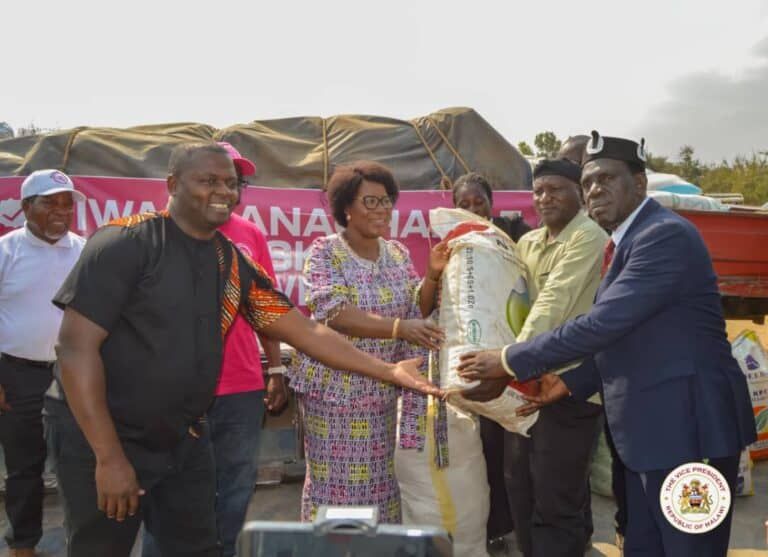
She also called for increased food production, saying households needed to make productive use of available resources to improve their ability to feed themselves and strengthen their economic position. Her message placed agriculture and community enterprise at the centre of efforts to improve resilience among vulnerable households.
The assistance comes at a time when farming remains the principal livelihood for many rural Malawians. For households dependent on agriculture, the availability of seed and fertiliser can determine whether they are able to cultivate sufficient land and produce enough food for consumption or sale.
The maize and beans provided to beneficiaries offer immediate food support, while the agricultural inputs have the potential to contribute to future harvests. This combination is important because food insecurity often requires both an immediate response and measures capable of strengthening household production.
The programme also includes resources intended to support activities outside crop farming. Tailoring machines could enable beneficiaries to establish or expand small businesses, create employment opportunities within communities and develop an additional source of household income.
Similarly, bicycles can provide practical support to people living in areas where transport is limited. Improved mobility can make it easier for farmers and small-scale entrepreneurs to reach markets, farms and other economic opportunities.
The foundation’s intervention is intended to complement government programmes supporting households affected by food insecurity. Such partnerships can provide additional assistance to communities while supporting broader national efforts to improve food production and household resilience.
However, the long-term value of the initiative will depend heavily on how beneficiaries manage the resources they have received. Agricultural inputs must be used for their intended purpose, equipment must be maintained and cooperative members must establish systems that promote transparency and accountability.
The cooperative model promoted by Ansah could provide communities with an opportunity to combine their skills, labour and resources. When effectively managed, cooperatives can improve members’ bargaining power, facilitate access to markets and enable communities to undertake projects that would be difficult for individual households to finance.
But cooperative development also requires effective leadership and sound financial management. Without proper accountability, community groups can struggle to maintain productive assets or distribute benefits fairly among members.
The situation facing rural households in Malawi makes such interventions particularly relevant. Smallholder farmers often face a combination of high agricultural costs, limited access to finance, inadequate market opportunities and vulnerability to changing weather patterns.
Improving food production can help households reduce their dependence on purchased food and potentially create surpluses for sale. Income generated from agricultural production can then support other household priorities and enable families to reinvest in farming or small businesses.
Diversification is equally important. Households that combine farming with activities such as tailoring and other small enterprises may be better positioned to withstand economic shocks than those dependent on a single source of income.
The distribution was attended by Paramount Chief Chikulamayembe, Rumphi Central Member of Parliament Dr Matthews Mtumbuka and District Commissioner Thomas Chigwenembe, bringing together traditional leadership, political representation and district administration.
Their participation also highlights the importance of coordination at community level when implementing development interventions. Local authorities can play a role in ensuring that programmes respond to genuine community needs and that beneficiaries are supported to use resources effectively.
For the families who received the assistance, the distribution provides both immediate relief and an opportunity to strengthen their productive capacity. The challenge is now to ensure that the support produces benefits that extend well beyond the day of the handover.
The foundation’s approach illustrates the distinction between short-term relief and long-term empowerment. While food donations can help households cope with immediate shortages, farming inputs and productive equipment can potentially provide the means to generate future food and income.
The impact of the programme should therefore be assessed by what happens after the distribution. Increased harvests, functioning cooperatives, successful small businesses and improved household incomes would provide stronger evidence of lasting success than the number of items distributed.
For Rumphi’s vulnerable communities, the assistance offers a starting point for pursuing greater self-reliance. With effective management, continued community cooperation and appropriate technical and market support, the resources could contribute to stronger livelihoods and improved household food security.
The initiative ultimately underscores a broader development lesson for Malawi: addressing vulnerability requires more than responding to immediate hardship. Sustainable progress depends on giving communities the resources, opportunities and organisational capacity needed to produce food, generate income and withstand future economic pressures.