


By Rick Dzida
Malawi’s democratic architecture is under assault from within its own executive. While Vice President Jane Ansah spent her weekend at Chisitu Parish in Mulanje offering safe, politically correct public relations—professing gratitude to President Peter Mutharika for choosing her as a running mate and calling reports of their fractured relationship as fake news—the political reality tells a vastly different story.
Human beings are intelligent animals; we do not just listen to carefully scripted platitudes, we use our senses to analyse data and connect the dots.
The systematic stripping of the Vice President’s powers is not misinformation—it is an undeniable fact written into the official record.
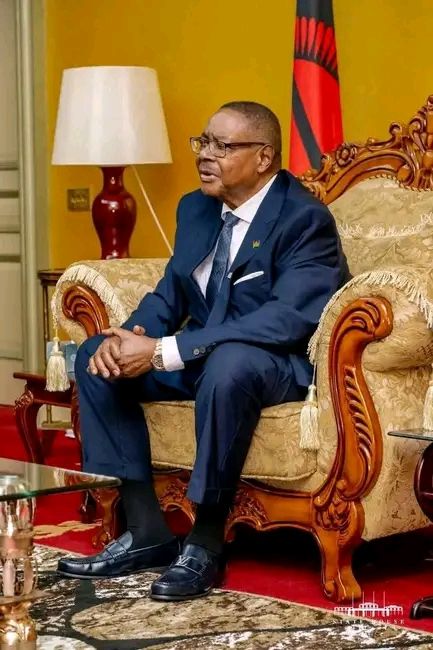
By treating the second-highest office in the land as a decorative entity, President Mutharika is violating the institutional respect owed to the Vice Presidency.
One does not need an advanced degree in political science to interpret what is happening in the office of the president: there is a profound lack of trust at the top of the executive. This is evidenced by a timeline of stripped responsibilities.
On 18 November 2025, just after gresh off their electoral victory, President Mutharika formally delegated critical operational powers to Vice President Jane Ansah, making her the overseer of the Department of Disaster Management Affairs (DoDMA).
On 11 December 2025, Ansah was still trusted enough to launch the Public Sector Reforms Information Management System (PSRIMS) on behalf of the President, cementing her role over public reform services. Beautiful!!
On 10 January 2026, in a sudden, aggressive executive reshuffle timed precisely with her return from a private trip to the United Kingdom, the Office of the President and Cabinet (OPC) abruptly snatched DoDMA away from her office.
Shortly thereafter, the presidency stripped her of her second major portfolio—Public Sector Reforms—leaving her essentially a Vice President without a substantive ministerial portfolio.
This executive downsizing effectively pulled away Ansah’s biggest platforms. This was a calculated move toward political containment.
The narrative that this is an invention of social media collapses entirely when looking at public events.
In recent months, Malawians have witnessed a bizarre protocol anomaly: junior officials and the Second Vice President, Enoch Chihana, being systematically delegated to represent the state at official functions while the First Vice President is actively in attendance or left sitting idly.
During recent state events and cabinet distributions, rather than utilizing a former Supreme Court judge and seasoned legal expert, the presidency bypassed Ansah. This is not disinformation; it is the reality of public protocol.
Church leaders, including Archbishop Thomas Luke Msusa, have had to publicly plead with Mutharika to mend the rift. If the relationship were truly perfect, a senior Catholic archbishop would not need to use a national pulpit to beg the President to stop dividing the executive leadership.
Jane Ansah’s recent statements at the Umai wa Amai Maria celebration are nothing more than a tactical exercise in damage control. Forced into a corner, she is structurally powerless to openly complain about her boss.
Under Section 91 of the Malawi Constitution, the Vice President holds entirely delegated authority—she serves at the whim of the President’s assignments.
When Ansah claims her Christian faith forces her to respect leadership, she is telling the public exactly what she is forced to do to survive politically.
Her appreciation statements are a shield, meant to cool down a sour relationship while she is privately starved of any actual state duties.
Malawians must see through this performance: a quiet, compliant Vice President who goes to the office merely for a cup of coffee is a waste of state resources and a disservice to the voters who elected a co-governing ticket.
Therefore, Malawi cannot afford a paralyzed executive branch while navigating severe economic and environmental challenges.
Civil society organizations must lobby for constitutional amendments that permanently attach explicit, non-transferable portfolios (such as Public Sector Reforms) to the Office of the Vice President, ending the era where presidents can weaponise delegations.
Second , to prove critics wrong, President Mutharika must immediately restore the Department of Disaster Management Affairs (DoDMA) to the Vice President’s office. In a climate crisis, field leadership cannot be hoarded by an opaque Office of the President and Cabinet.
Most importantly, the executive must halt the public humiliation of delegating state tasks to junior ministers or political allies when the First Vice President is available. State protocol must reflect the democratic hierarchy chosen by the electorate.