


By Rick Dzida
The foundational
pillars of Malawi’s dying democracy are not just crumbling; they are being viciously, sadistically demolished by a toxic syndicate of terrified state plunderers and corrupt judicial hitmen.
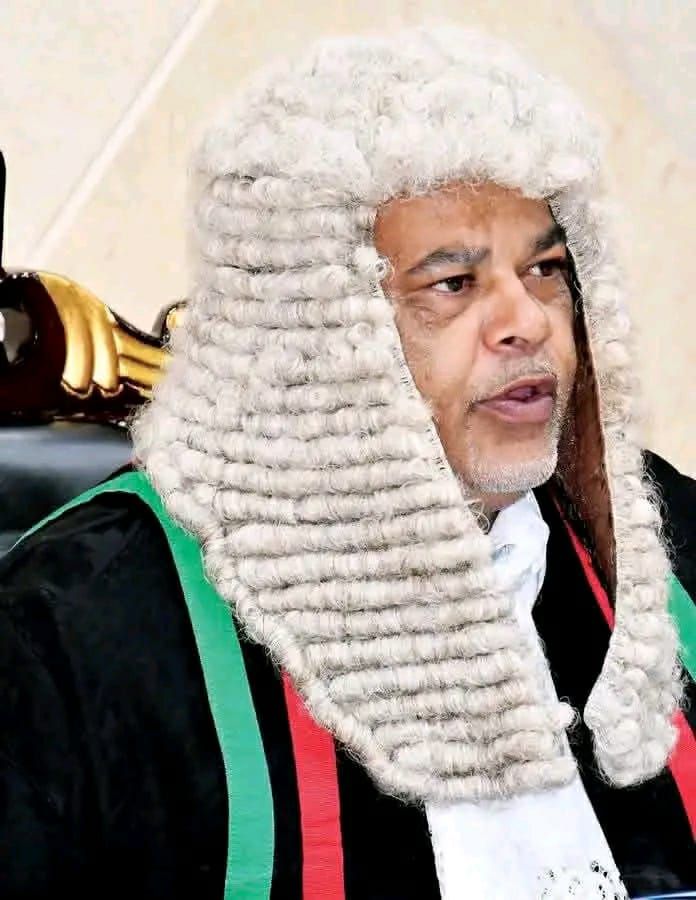
The catastrophic, jaw-dropping injunction granted by the High Court against Speaker of Parliament Sameer Suleman is a sickening, brazen declaration of institutional warfare.
By summarily suffocating the planned joint ad hoc parliamentary committees from gutting twelve rot-hollowed, corruption-riddled state entities—including the parasite-ridden ESCOM, NOCMA, and Blantyre Water Board—the judiciary has committed a monstrous, unpardonable act of high treason against the citizens of Malawi.
This is absolutely not a legitimate legal pause. It is a frantic, panic-fuelled counter-offensive orchestrated by a criminal Executive branch terrified of being caught completely red-handed.
Like sewer rats scattering under a blinding spotlight, the Executive deployed a transparent, insulting subterfuge.
They operationalised a suspiciously timed, handpicked proxy—a shameless unpatriotic citizen named Austin Mkoka—to secretly run to a compromised court.
This cowardly, backdoor litigation strategy is a complete farce, designed entirely to shield the state’s multi-billion kwacha looting syndicates from legislative annihilation.
The Executive’s absolute dread of ad hoc legislative accountability stems from a pathological awareness of its own disgusting, systemic rot.
The single, driving motivation of this branch of government is to aggressively shield its lucrative state-contract looting from ever being exposed to the public.
To achieve this, the state relies heavily on its favourite weapon: proxy litigation.
By funding and weaponising bad-faith actors to masquerade as vigilant citizens, the Executive completely paralyzes parliamentary probes before investigators can even open a single file.
The historical ledger of this executive pillaging is long, bloody, and decorated with high-profile political felons who laughably walk the streets on overly generous bail terms.
Let us provide some incidents of corruption. In February 2026, the Malawi Police Service was forced to move against massive, top-tier executive actors.
Former Cabinet Ministers Sosten Gwengwe and Sam Kawale, alongside the former Secretary to the President and Cabinet, Colleen Zamba, were ensnared in a staggering, fraudulent 200-billion kwacha East Bridge contract designed to bleed the country dry.
In April 2026, in a frantic, subsequent sweep following regime shifts, former Finance Minister Simplex Chithyola Banda was arrested alongside a gang of eight former cabinet heavyweights for structural corruption and blatant abuse of office.
Despite the unforgivable gravity of draining national reserves, these political elites remain free on lucrative bail arrangements, mocking ordinary starving Malawians from their mansions.
Yet, the Executive could never pull off this authoritarian coup without an accomplice in robes.
Enter the Malawi Judiciary—an institution so profoundly compromised that it has traded its sacred constitutional mandate for the dirty apron of a political hitman.
The judiciary’s primary motivation in this unholy alliance is raw, naked self-preservation.
The courts are driven by absolute terror that parliamentary spotlights will inevitably expose the unmitigated bribery, extortion, and dirty cash rotting their very own chambers.
To unleash this shield of mutual protection, the courts weaponise draconian, unilateral ex-parte injunctions and deliberately delayed review mechanisms.
By instantly freezing parliamentary actions without allowing the National Assembly an immediate right of reply, the judiciary ensures that vital anti-corruption inquiries are brutally suffocated in their infancy.
This deep judicial capture is completely validated by the explosive, ongoing claims brought forward by courageous whistleblower and human rights lawyer Alexious Kamangila.
Starting in October 2024, Kamangila unmasked systemic, institutionalised corruption within the courts, explicitly exposing High Court Judge Kenan Manda as a central architecture of questionable rulings.
The Judicial Service Commission (JSC) was forced to launch a probe after a staggering 26 damning corruption complaints were lodged against Manda and his colluding court officers.
Instead of executing swift justice, the judiciary actively dragged its feet for two years to bury the probe and protect its own.
Rather than cleaning the house, the High Court weaponised malicious defamation lawsuits, draconian gag orders, and procedural ambushes against Kamangila, while simultaneously fast-tracking an injunction to completely castrate the National Assembly.
Let us strip away the legalese and call this what it is: a coordinated, institutional coup d’état against the separation of powers.
By paralyzing Speaker Sameer Suleman’s 12 joint committees, the High Court has essentially declared that state corruption is now a protected, legally insulated enterprise in Malawi.
The impending judicial review is a pre-programmed, rigged charade designed to ensure Parliament definitively loses the case, cementing a terrifying precedent where public thieves can steal with total legal immunity.
Therefore, civil society networks, the Malawi Law Society (MLS), and enraged youth organizations must launch aggressive, unyielding public demonstrations to force the High Court into lifting this anti-people injunction immediately.
The National Assembly must aggressively push through legislation granting itself total financial independence from the Executive, completely insulating it from budgetary blackmail when executing corruption probes.
Furthermore, it is essential to disband the sluggish, protective Judicial Service Commission (JSC) and replace it with an external, citizen-led tribunal featuring international jurists to aggressively investigate, impeach, and jail corrupt judges.
Most importantly, Parliament must assert its supreme constitutional mandate of state oversight. If the courts persist in shielding thieves, the Speaker must invoke parliamentary privilege, openly defy the injunction, and proceed with the 12 committee inquiries in open defiance of this corrupt judicial tyranny.