By Vincent Gunde
A Malawian businessman and project developer based in South Africa, Jones Yamikani Chadza, is preparing to join the legal battle surrounding an injunction restraining Speaker of Parliament Sameer Suleman from establishing proposed Joint Committees to investigate various public institutions.
In an interview with 247 Malawi News,Chadza said, through his legal counsel, he intends to apply to the High Court to intervene in the matter as an interested party, arguing that the case raises broader questions about public accountability, constitutional powers and the rights of ordinary Malawians.
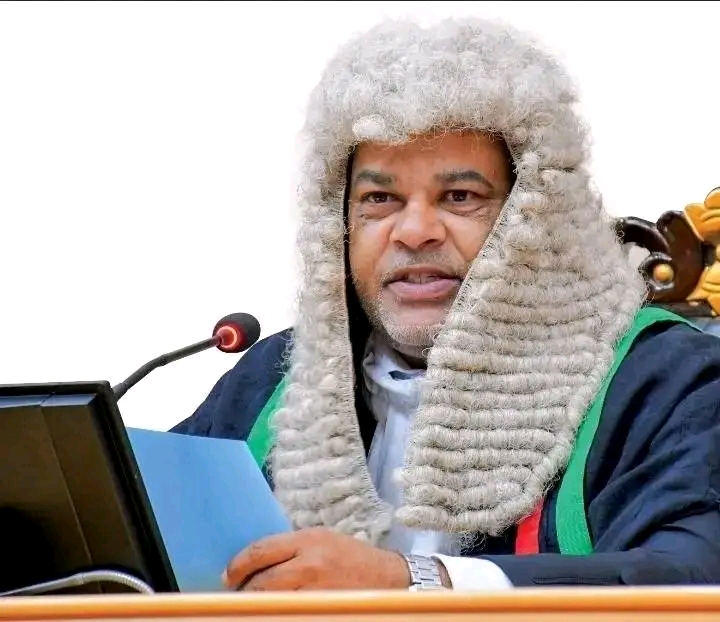
Speaker Sameer Suleiman
He said his intended intervention is not an attack on the Judiciary, claimant Austin Mkoka, Parliament, the Executive or any political party, but is aimed at ensuring that matters of public interest were addressed within the constitutional framework.
According to Chadza, the Judiciary must remain independent and empowered to review allegedly unlawful exercises of public power, while Parliament must also be able to exercise investigative and oversight functions lawfully conferred upon it by the Constitution.
He further said public institutions and individuals subjected to investigations must be protected by the principles of natural justice, while interim court orders affecting constitutional institutions should be carefully framed to protect the interests of all parties pending determination of the main case.
Chadza said Malawi belong to its people and that public power should not be used as a shield against accountability.
He, however, stressed that accountability must itself be exercised within the law.
Chadza said the case should not be reduced to a political contest between individuals or institutions, arguing that allegations against any public institution should not be treated as proven before they are properly investigated and determined through lawful processes.
He said questions surrounding the use of public resources, governance and service delivery should be capable of being examined through constitutional mechanisms.
“The question is, what kind of constitutional Malawi do we want to leave for the next generation? No individual or institution should be above the Constitution,” he said.
Meanwhile, Malawi Congress Party (MCP) supporter Rodgers Kamphangala of Mvera in Dowa has appealed to Malawians with financial resources to support Chadza’s planned legal intervention.
Kamphangala says political activist Bon Kalindo had indicated that his Malawi First movement will, if provided with the necessary resources, pursue legal action seeking to have the injunction vacated.
He also has criticised the Democratic Progressive Party (DPP), claiming that recent political developments, including activist Sylvester Namiwa’s treason case and the controversy surrounding Suleman’s impeachment, are signs of growing challenges within the party.
Kamphangala says Suleman and Namiwa are among individuals who, in his view, play significant roles in Malawi’s political transition from the MCP government to the DPP.
“The DPP has dug for itself a deep pit latrine to fall and, if care is not taken, by January 2027 the DPP will be just a name to remember and not a political party,” says Kamphangala.
He recalls former president Bakili Muluzi’s remarks about opposition parties eventually dying a natural death, saying he believes the UDF experienced such a decline and that the DPP will face a similar fate.
Kamphangala has also appealed to president Mutharika to take steps to address what he describes as challenges facing the DPP.
He warns that, unless the party addresses its internal and political challenges, it will face further decline ahead of the 2030 elections.