


By Rick Dzida
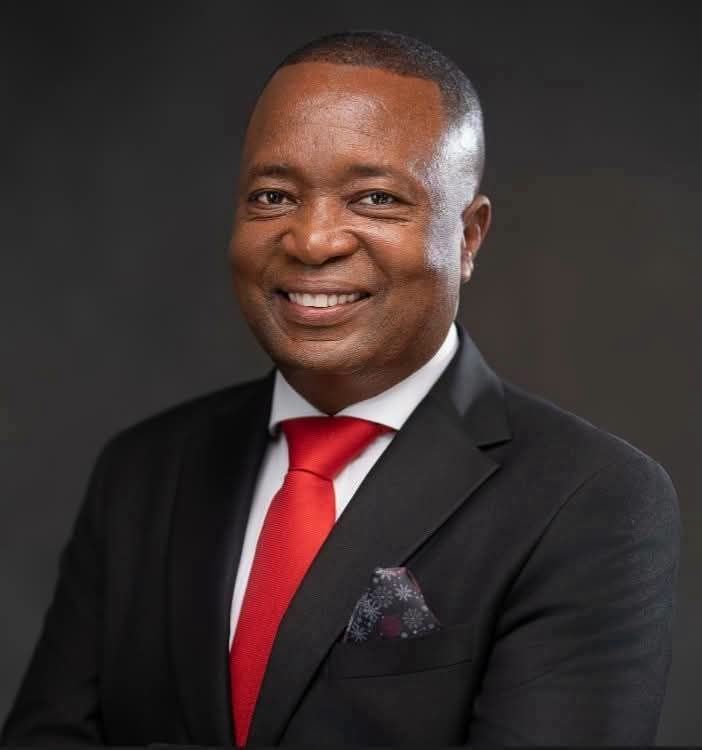
Dr. Dalitso Kabambe sat at his desk, his fountain pen hovering over the final page of his open letter. Outside, the Lilongwe breeze carried the faint, earthy scent of dry maize husks. To an ordinary politician, the superficial stability of the markets was a victory to be celebrated. To an economist and a philosopher, it was a troubling illusion.
Kabambe lowered his pen, reflecting on the state of the nation exactly one year into the administration of Arthur Peter Mutharika (APM). He knew that a true leader in waiting does not merely oppose; he diagnoses the structural rot that others mistake for architecture.
Kabambe implored his fellow opposition leaders to wake up, for the constitutional mandate of checks and balances was not a political luxury—it was the country’s oxygen.
Kabambe’s mind turned first to the market logic of the administration’s proudest achievement: stabilized maize prices.
True, the immediate economic burden on everyday Malawians had eased, but the economic equilibrium was deeply flawed.
By forcing maize prices down below the actual cost of production, the administration was protecting consumers at the absolute expense of the producers.
This policy is a ticking time bomb for national food security. When farming families realize that their sweat yields net financial losses, they will stop planting. Short-term affordability would inevitably yield long-term famine.
Philosophically, Kabambe viewed this through a twisted version of Maslow’s hierarchy of needs.
In a developing nation, satisfying physiological needs—like the raw availability of maize for Nsima—is merely the baseline of human survival, not a metric of national advancement.
When a government measures its developmental success entirely by whether its citizens have managed not to starve, it does not prove progress; it substantiates the tragedy that Malawi remains trapped in systemic poverty.
True development begins where survival ends, yet the state is forcing its people to celebrate the bare minimum.
But the decay went far deeper than mismanaged economics. As Kabambe reviewed his letter, the shadow of unaddressed corruption and blatant regionalism loomed large.
The state’s highest offices had shifted from meritocracies to ethnic strongholds. Statistically, the cabinet and key public appointments revealed an undeniable bias, with over 60 percent of strategic positions disproportionately awarded to individuals from the Lhomwe belt, choking out the diverse representation a unified Malawi required.
Worse still was the moral bankruptcy of the administration’s justice system. The executive pardon of the murder convicts involved in the custodial death of Buleya Lule—the prime suspect in the horrific syndicate of albino killings—sent a terrifying tremor through society.
These individuals had served less than a year of their 15-to-20-year sentences. By setting them free, the presidency was unintentionally signalling a culture of tolerance toward the brutal exploitation of vulnerable citizens.
This tolerance extended directly into financial crime. Individuals like Norman Chisale, Joseph Mwanaamveka, and Richard Luhanga were appointed to high offices despite facing serious corruption charges, only to have those charges quietly dropped.
When Chisale was embroiled in the fraudulent procurement of security contracts with the Malawi Revenue Authority, the presidency responded with absolute silence.
Today, Chisale remains both the President’s personal bodyguard and the Deputy Minister of Homeland Security with his wife as the Deputy Inspector of police within the same ministry—a glaring monument to impunity.
Meanwhile, the state’s executive function was suffering from a literal and metaphorical absence. APM frequently slipped away on private trips to South Africa funded entirely by taxpayers, with no explanations offered to the public regarding his medical or personal purposes, and no clear directives on who held executive authority in his absence.
This vacuum was visible at home too. The President had missed a string of crucial public events: he failed to chair consecutive cabinet meetings, skipped the passing-out parades of newly commissioned Police and Malawi Defence Force officers, and absented himself from key international state visits.
Kabambe paused, staring at the wall. He did not hate the man; he pitied the predicament. Much of the late administration’s erratic choices could be attributed to the natural frailties of the President’s advanced age.
Historically, APM possessed a legacy of good temperament. He had once been a kingmaker, a man who recognized raw competence and groomed the youth into higher echelons.
It was APM who had brought Saulos Chilima from the private sector into active politics, who had elevated Kondwani Nankhumwa from grassroots to formidable state roles, and who had entrusted Vice President Jane Ansah with critical state responsibilities following the turbulent 2019 electoral disputes—even if she was then sidelined by a predatory inner circle.
The vultures surrounding the ailing, aged President are taking ruthless advantage of his decline, exploiting his signature to protect their personal fortunes rather than advancing his true legacy.
Kabambe folded the letter, sealed the envelope, and sighed. For the love of the country, and out of respect for what APM’s legacy could have been, the truth had to be told. The shadows ruling Malawi had to be dragged into the light.