By Lyson Swala
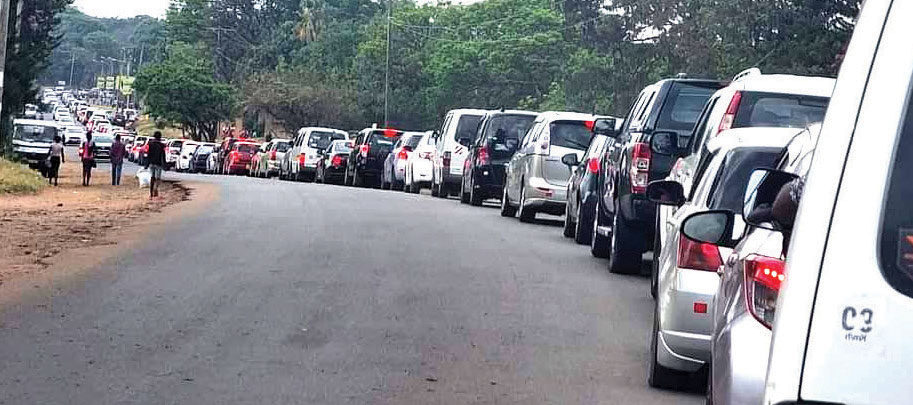
A government can win an election with 56 percent of the vote, receive a passing mark from experts and still struggle to convince an ordinary Malawian standing in a fuel queue that life is getting better.
That is the uncomfortable paradox facing President Peter Mutharika as his administration completes its first year in office.
Mutharika returned to State House on October 4, 2025, promising to restore what he described as a country trapped in an economic crisis.
His campaign message was built around experience and a pledge to fix the economy, with food, fuel, fertiliser, foreign exchange and essential medicines emerging as immediate priorities.
One year later, the picture is neither a spectacular success nor an outright failure.
In fact, the latest independent assessment by Nation Publications Limited (NPL) gives the administration an overall score of 62.2 percent, categorised as ‘Satisfactory’.
The economy scored 54.3 percent, governance 63.3 percent and social services 72.5 percent.
That distinction matters because it challenges both extremes of Malawi’s political debate.
Those who want to portray Mutharika’s first year as a complete disaster will struggle to explain the measurable improvements.
Inflation has fallen from 28.7 percent in September 2025 to 20 percent in August 2026, while maize prices have also declined significantly.
Fuel availability improved for much of the year, although queues have resurfaced recently.
The administration can also point to progress in social services.
The independent assessment gave that sector its strongest score of 72.5 percent, with health receiving 85 percent.
Free secondary education and changes to the Affordable Inputs Programme(AIP) have also been presented as important achievements.
But this is where the government’s celebration should stop and self-examination should begin.
Stabilisation is not the same as transformation.Inflation falling does not mean prices have returned to their old levels. It simply means prices are increasing more slowly.
Petrol, for example, has risen sharply despite the improvement in headline inflation.For a family struggling to pay school fees, buy food, pay rent and find transport money, a lower inflation rate is useful,but it does not necessarily feel like economic recovery.
The same problem exists in the energy sector.Malawi continues to experience electricity challenges, while businesses remain constrained by unreliable power, high borrowing costs and foreign-exchange shortages.
The independent assessment found that firms are operating below 50 percent capacity and warned that reforms necessary to unlock donor budget support are progressing too slowly.
Then there is employment.This is perhaps the biggest test that cannot be solved through statistics alone.
If factories are not expanding, if businesses are not employing more people and if young graduates continue spending years searching for work, government cannot simply point to falling inflation and declare victory.
As economist Marvin Banda argued in the Nation assessment, government should look beyond inflation and ask whether factories are producing more and whether formal jobs are being created.
That is precisely where the 62-percent argument becomes interesting.
If someone gives the administration a lower score because of what ordinary citizens experience on the ground, that criticism should not automatically be dismissed as political hostility.
Likewise, a higher score should not automatically be interpreted as blind support for the government.The better question is: what exactly are we measuring?
Are we measuring policy announcements?
Are we measuring implementation?
Are we measuring economic indicators?
Or
Are we measuring whether ordinary Malawians can actually afford a better life?
These are not necessarily the same thing.Mutharika inherited an extraordinarily difficult economic situation. Malawi was already dealing with high inflation, foreign-exchange shortages, fuel shortages, debt pressures and food insecurity.
The United Nations (UN) described the situation as one of the country’s most severe economic crises since independence.
Therefore, blaming everything on the new administration would be unfair.But using the inherited crisis as a permanent excuse would also be dangerous.
Mutharika campaigned on ‘proven leadership’. That means his government should ultimately be judged not merely on whether it stopped the economy from deteriorating further, but on whether it can move Malawi from stabilisation to genuine growth.
There are encouraging signs.There are also serious warning signs.
The Anti-Corruption Bureau (ACB) still lacks a substantive Director General(DG), according to the latest assessment, while concerns remain about the pace of corruption investigations and enforcement.
The International Monetary Fund (IMF) programme remains unfinished, public debt continues to constrain government finances and electricity problems persist.
These are not minor technical matters. They directly affect businesses, households and the country’s ability to create jobs.So perhaps the fairest verdict is not 62 percent or any other single number.
The first year of Mutharika’s administration appears to have been a year of stabilisation rather than transformation.
He has arguably slowed some of the economic bleeding.But Malawi has not yet reached the stage where citizens can confidently say that the economic crisis is behind them.
And that is where the next four years become more important than the first one.Mutharika himself has acknowledged that rebuilding the economy is a process and cannot happen through a magic hand.That is true.But processes must eventually produce results.
The President therefore has four years to answer the most important question of his second presidency:Can the stability his government claims to have created be converted into jobs, reliable electricity, affordable living costs, stronger businesses, increased production and higher household incomes?That is the report card Malawians will ultimately care about.Not 47 percent.Not 62.2 percent.Not 100 percent.The real score will be measured in the lives of ordinary Malawians.