


By Burnett Munthali
Malawi has spent much of this year confronting difficult headlines, from economic pressures and foreign-exchange shortages to rising living costs and uncertainty about jobs and investment. Yet thousands of kilometres away in Morocco, the national women’s football team has offered the country a very different story—one built on determination, discipline and success.
The Malawi Scorchers have reached the 2026 Women’s Africa Cup of Nations final after producing one of the tournament’s most remarkable runs.
Their 3–1 victory over Algeria in Rabat was more than a place in the final. It was another demonstration that Malawi can compete with some of Africa’s established footballing nations when talent is matched with preparation, confidence and proper opportunity.
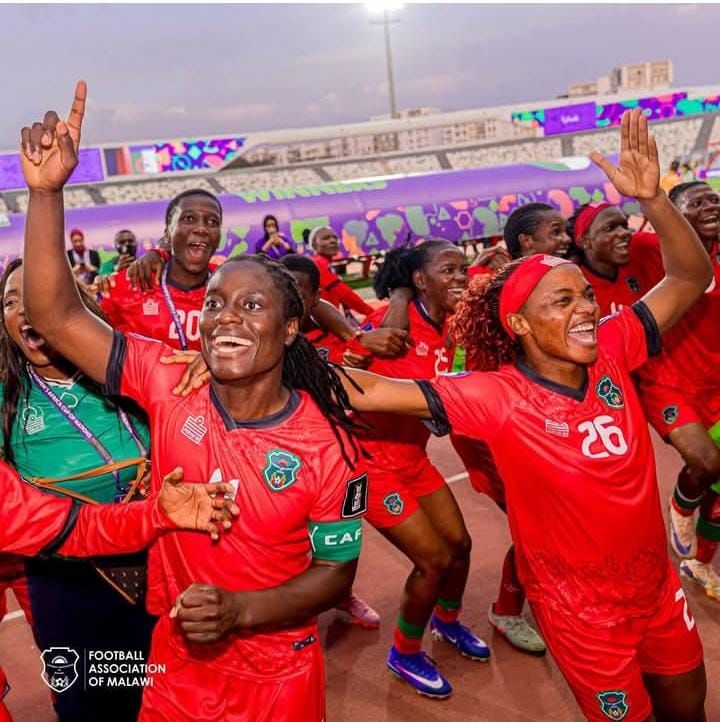
The achievement is particularly significant because the Scorchers entered the tournament without the reputation enjoyed by some of their opponents. Instead of allowing expectations to define them, they have steadily dismantled one challenge after another.
Their journey has included victories over major opponents and, most importantly, qualification for the 2027 Fifa Women’s World Cup in Brazil.
For a country accustomed to debating what is going wrong, the Scorchers have provided an unusually welcome example of what can happen when things are done well.
Their success has also crossed political and social boundaries.
Football has temporarily provided a common language for Malawians. Supporters from different political backgrounds, regions and communities have found themselves celebrating the same players and the same national colours.
That unity is one of the greatest contributions the team has made.
But the celebrations should not end with the final whistle.
The Scorchers’ performance should force a serious conversation about the future of women’s football in Malawi. Historic victories should not be followed by temporary enthusiasm, ceremonial appearances and promises that disappear once the spotlight moves elsewhere.
The country needs a long-term strategy.
That means improving football facilities, strengthening grassroots programmes, supporting academies, investing in coaches and ensuring that girls have regular opportunities to compete. Talent identification must begin early, while players need appropriate equipment, training and competitive exposure.
The success of the Scorchers demonstrates that such investment can produce results that extend well beyond the football pitch.
There is also an important lesson for the wider national development debate.
The players did not become successful simply because Malawians wished them well. Their progress required preparation, teamwork, technical ability, coaching and a willingness to compete against stronger opponents.
That formula is relevant beyond sport.
Malawi’s economic challenges cannot be solved through slogans or repeated promises of a better tomorrow. Progress requires sustained effort, effective institutions, investment and measurable results.
The Scorchers have offered a simple example: preparation must eventually produce performance.
Their achievement has also created an opportunity for the country to change how it views women’s sport.
Young Malawian girls watching the tournament can now see national-team players reaching the biggest stages in African football and qualifying for a global competition.
That visibility matters.
A girl playing football on a school ground or community pitch can now imagine herself wearing the national jersey. The possibility has become tangible.
Government, the private sector, football administrators and communities should build on that inspiration.
The Scorchers should not have to wait until their next historic achievement before receiving serious attention.
Malawi has already seen what these players can accomplish with the resources and opportunities available to them. The logical next step is to give them the structures required to sustain that progress.
For once, Malawi has a scoreboard that does not need an explanation.
The Scorchers have competed. They have overcome expectations. They have qualified for the World Cup. They have reached the Wafcon final.
Their achievement is a reminder that Malawi’s limitations are not always determined by the size of its economy or the scale of its challenges.
Sometimes, the difference is simply whether talent is given the opportunity to perform.
The Scorchers have taken that opportunity and made history.
Now Malawi must make sure their success becomes the beginning of something bigger—not merely another moment of national celebration.
The players have shown what is possible.
The responsibility now belongs to the country to help make that possibility permanent.