


By Burnett Munthali
Communities in Traditional Authority Chindi in Mzimba District are demonstrating the power of collective action after civic education initiatives inspired residents to construct a primary school, teachers’ houses and accommodation for a Health Surveillance Assistant through locally mobilised resources.
Group Village Head Mpeyama has credited Chindi Civic Education Hub with transforming community attitudes towards development by encouraging residents to abandon dependency and take greater responsibility for addressing their local challenges.
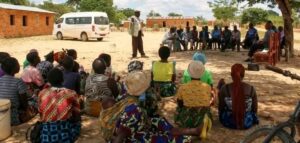
Speaking on Monday, November 16, 2026, at Chisisi Primary School during a Civic Education Hub strengthening activity monitored by officials from the Department of Civic Education, Mpeyama said the initiative had helped communities recognise that meaningful development required collective commitment and personal contributions.

He explained that residents responded to the civic education campaign by moulding bricks and contributing money towards purchasing iron sheets, enabling them to construct a primary school accommodating learners from Standard One to Standard Six.
The community has also constructed houses for teachers and a separate house for a Health Surveillance Assistant, strengthening access to education and essential community health services.
Mpeyama further disclosed that residents had completed another school structure intended to accommodate learners in Standards Seven and Eight, marking another milestone in the community’s efforts to expand educational opportunities.
Chindi Civic Education Hub Chairperson Memory Moyo said the organisation was deliberately working to change attitudes and promote community participation, recognising that sustainable development depended on people taking ownership of their priorities.
Moyo, however, identified significant operational challenges affecting the hub’s activities, including long distances between villages, inadequate transportation and limited opportunities for volunteer training and capacity development.
She appealed for greater institutional support to strengthen volunteers’ ability to mobilise communities and sustain civic education programmes across the area.
Ward Councillor for Mzalangwe in Hora Constituency, Daniel Somba, supported the community-led development approach, arguing that residents who actively participate in improving their welfare are better positioned to achieve lasting progress.
Somba emphasised the need for additional schools and teachers’ houses, saying collective responsibility could help communities address infrastructure shortages that might otherwise remain unattended.
Chief Civic Education Officer in the Ministry of Local Government and Rural Development, Kondwani Chitosi, described Civic Education Hubs as important instruments for accelerating rural transformation by enabling residents to identify local problems, discuss possible interventions and implement collective solutions.
Chitosi particularly recognised the leadership demonstrated by women in Traditional Authority Chindi, observing that their mobilisation efforts had contributed significantly to the construction of the school and other community facilities.
He explained that the Ministry, through its Department of Civic Education, established the hubs across the country with support from the Boma Lathu Democratic Governance Programme to strengthen citizen participation and promote democratic governance at grassroots level.
Beyond infrastructure development, the Chindi Civic Education Hub also provides a platform for addressing social challenges affecting families and communities.
During the strengthening activity, women facilitated discussions on mental health, child marriages and teenage pregnancies, highlighting the importance of community awareness and informed decision-making in confronting harmful social practices.
The hub also conducts awareness meetings on environmental protection, early and forced marriages, teenage pregnancies and witchcraft-related beliefs.
The experience in Chindi demonstrates how civic education can translate community awareness into practical development, although sustaining such achievements will require stronger volunteer support, institutional cooperation and continued participation by local residents.