


By Apengie Apengire
The recent announcement of Malawi’s diplomatic appointments under President Peter Mutharika’s administration has once again thrown into sharp relief the deep-seated regional and ethnic biases that continue to plague the country’s political landscape. The list of individuals appointed to various embassies and high commissions abroad predominantly features members from the Lomwe ethnic group, revealing a troubling pattern of nepotism by the Democratic Progressive Party (DPP).
This glaring imbalance not only sidelines the Chewa people of the Central Region, who have traditionally played a pivotal role in Malawi’s political and social fabric, but also further marginalizes the Northern Region, which has long struggled for equitable representation.
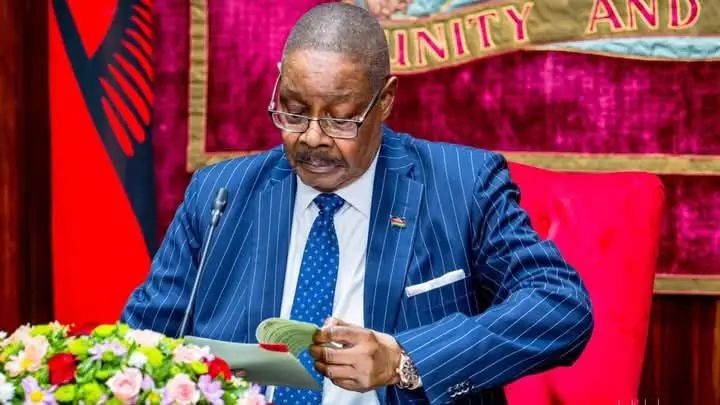
Out of the 19 appointees named to represent Malawi internationally, an overwhelming 95% hail from the Lomwe ethnic group.
This disproportionate representation underscores a deliberate political strategy by the DPP, a party widely accused of fostering ethnic favoritism and division rather than unity. It is particularly disconcerting given that the Chewa, despite their significant electoral support for Mutharika—delivering him critical votes across central Malawi—have been systematically excluded from these prestigious diplomatic roles.
This exclusion is not merely a matter of appointments but a reflection of a broader marginalization and disenfranchisement of the Chewa people under DPP rule.
The sidelining of the Chewa community reveals the DPP’s underlying agenda: to consolidate power by rewarding loyalty within certain ethnic lines while penalizing others who, despite their support, are viewed as politically inconvenient.
The Northern Region, too, suffers in this arrangement, as its limited representation in diplomatic circles further entrenches the region’s historical neglect.
The cumulative effect of these actions is a country increasingly fragmented along ethnic lines, undermining national cohesion and the very essence of democratic inclusivity.
President Mutharika’s administration has often touted its commitment to national development and unity. However, these recent appointments paint a contrasting picture—one where political favoritism trumps meritocracy and national interest.
The diplomatic service, which ought to be a beacon of Malawi’s diversity and a platform for showcasing the country’s unity on the international stage, instead becomes a tool for ethnic patronage. Such practices erode public trust in governance and fuel resentment among communities that feel excluded from the corridors of power.
Moreover, this pattern perpetuates a dangerous cycle of division that threatens to destabilize Malawi’s socio-political environment.
When ethnic identities are weaponized for political gain, the nation risks entrenching regional disparities and igniting tensions that could derail progress. The DPP’s approach, as evidenced by these appointments, signals a regression to politics of exclusion, where ethnic allegiance is prioritized over competence and inclusiveness.
It is important to recall that Malawi’s strength lies in its rich cultural mosaic and the ability of its diverse peoples to work together for common goals.
The President and his party have a responsibility to harness this diversity rather than exploit it. By ignoring the contributions and aspirations of the Chewa and Northern communities in critical diplomatic roles, the DPP undermines the very principles of fairness and equality that should guide public service.
The diplomatic appointments made by President Peter Mutharika’s administration reveal a clear pattern of nepotism favoring the Lomwe ethnic group at the expense of the Chewa and Northern peoples. This blatant ethnic bias not only marginalizes significant portions of Malawi’s population but also threatens national unity and democratic integrity.
If Malawi is to move forward as a cohesive nation, it is imperative that future appointments reflect the country’s diversity and commitment to inclusive governance rather than perpetuating ethnic favoritism. The DPP must reconsider its divisive tactics and embrace a leadership style that truly represents all Malawians.