Saturday, December 13, 2025
No menu items!
spot_img
Home Blog Page 1138

Chakwera mourns Kasambara

0

By Chisomo Phiri

President Dr.Lazarus Chakwera says he is deeply saddened to learn of the passing of Malawi’s prominent lawyer Ralph Kasambara.

In a brief statement, President Chakwera says Kasambara’s contributions to the development of Malawi, particularly in the fields of law and justice, will never be forgotten.

The late Ralphael Kasambara

Reads the brief statement in part:” His unwavering commitment to the practice of law and his fight for the rights of the marginalized will always be remembered.

“May his soul rest in eternal peace and may his legacy continue to inspire us all.”

Kasambara was found dead at a Lodge in Lilongwe’s Area 47 in the evening of Friday June 7,2024.

It is suspected that he died due to hypertension.

Kasambara went to Chancellor college where he got his law degree with distinction before landing a scholarship to study a Masters Degree at University of Notre Dame Law School, South Bend, Indiana in the United States of America.

He served in Malawi government both as Attorney General and Minister of Justice and Constitutional Affairs.

Sad News as Lawyer and former Cabinet Minister Ralph Kasambara dies

0


By Burnett Munthali


Ralph Kasambara, the former Minister of Justice and Attorney General of Malawi, has passed away.

Kasambara was a prominent and controversial figure in Malawian politics and law.

He served under President Bingu wa Mutharika and later under President Joyce Banda, where he played crucial roles in the administration of justice and legal affairs of the country.


Kasambara’s career was significantly impacted by his involvement in the “Cashgate” scandal, which was a large corruption case that shook Malawi.

In 2016, he was convicted and sentenced to 13 years in prison for conspiring to murder Paul Mphwiyo, a key figure in the scandal.

Despite his conviction, he continued to appeal his case, and his legal battles remained unresolved for several years.

His death marks the end of a tumultuous chapter in Malawian political and legal history.

Kasambara’s life and career were characterized by both significant achievements and profound controversies, leaving a complex legacy behind.

Business woman Triephornia Mpinganjira buys K30 million house for retired nurse Ireen Tembo

0

By Chisomo Phiri

Business woman Triephornia Mpinganjira has bought a three-bedroom brick-fenced house worth K30 million in Chileka Township, Blantyre for a 66-year-old retired nurse Ireen Tembo, whose legs were amputated on medical grounds.

Tembo’s story came to light through MBC TV’s ‘Reach Out and Touch’ programme, where she narrated how she has been struggling to fend for herself.

Speaking when handing over the house on Friday, Mpinganjira said it is important for Malawians to support each other.

Gift of a house- Mpinganjira

“I was really touched when I heard about  her story and i felt obliged to help,” she said.

On her part, Tembo, who retired in 2007 after working for various hospitals including Queen Elizabeth Cebtral Hospital in Blantyre,expressed her excitement for the life-changing support.

Meanwhile,other well-wishers have also pledged to support the woman’s poultry business.

The initiative was championed by Malawi University of Science and Technology (MUST) vice Chancellor Professor Address Malata who is  also a professional nurse.

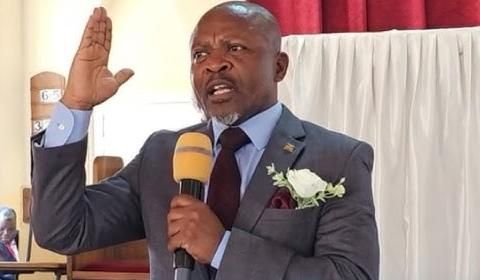
Leader of Opposition George Chaponda addresses Malawi’s Passport Crisis

0

By Burnett Munthali


In a significant move highlighting the challenges facing Malawi, Dr. George Chaponda, the recently appointed Leader of the Opposition, has brought attention to the ongoing passport crisis that has plagued the country. Speaking out on the issue, Chaponda criticized the government’s handling of passport issuance, describing the situation as a severe administrative failure that is affecting thousands of Malawians.

Chaponda, who took over the opposition leadership following Kondwani Nankhumwa’s resignation, has swiftly positioned himself as a vocal critic of the current administration. He asserts that the passport shortage is not just an inconvenience but a critical failure that hampers citizens’ ability to travel for personal, educational, and business purposes. This crisis, according to Chaponda, reflects broader systemic inefficiencies within the government’s operations.

Chaponda


“The inability of the government to ensure the availability of passports is a clear indication of its administrative incompetence,” Chaponda stated. He pointed out that many Malawians have been unable to travel or conduct business abroad, causing economic setbacks and personal distress. The delays in passport issuance have led to long waiting periods, with some applicants waiting for months without receiving their documents.

Chaponda’s remarks come at a time when the Democratic Progressive Party (DPP) is seeking to rejuvenate its role in parliament. The party, which has faced internal conflicts and leadership changes, sees Chaponda’s appointment as a strategic move to strengthen its opposition stance and enhance its capacity to hold the government accountable.

In addressing the passport crisis, Chaponda has called for immediate government intervention to resolve the backlog and streamline the issuance process. He argues that the resolution of this issue is critical for restoring public confidence in the government’s ability to manage essential services effectively. “We need a government that can meet the basic needs of its citizens, and the issuance of passports is a fundamental service that should not be in disarray,” Chaponda emphasized.

Chaponda’s leadership is expected to bring a more robust and dynamic opposition in Malawi’s parliament. His experience and assertive approach are seen as vital in challenging the ruling party’s dominance and advocating for the needs of ordinary Malawians. The DPP has defended his appointment amid some criticisms, particularly from gender activists who felt that the previous acting leader, Mary Navicha, was capable and should have continued in the role.

As Chaponda takes on this new role, his focus on critical issues like the passport crisis sets the tone for what could be a more engaged and proactive opposition. His efforts to address such pressing matters underline his commitment to ensuring that the government is responsive to the needs of its citizens.

Immigration Officers Strike: Legal and Practical Implications


By Burnett Munthali


Immigration officers in Malawi have embarked on a strike, voicing grievances related to working conditions, salaries, and administrative practices. This industrial action raises significant concerns about the impact on national security, border management, and public services.

Legal Framework

Right to Strike:
Malawian law, specifically the Labour Relations Act, permits employees to strike under certain conditions, typically after unresolved mediation or arbitration. However, this right is balanced against the need to maintain essential services, which includes immigration.

Essential Services:
Immigration services are often classified as essential, meaning strikes can be legally restricted to ensure continuity in critical functions like border control and national security. The law may require a minimum level of service to be maintained during industrial action.

Government Intervention:
The government can intervene by negotiating with striking officers or taking measures to ensure service delivery, such as deploying alternative personnel or seeking court injunctions to end the strike.


Implications

*Security and Economy:*
The strike disrupts both national security and economic activities by delaying border operations, affecting trade, and potentially increasing security risks.

Administrative Challenges:
The strike highlights systemic issues within the Department of Immigration, indicating a need for reforms in working conditions, pay structures, and administrative practices.

Balancing Rights and Services:
Managing the strike involves balancing the legal right to strike with the necessity of maintaining essential public services, ensuring both fair treatment for immigration officers and the uninterrupted functioning of critical services.

Conclusion

The ongoing strike by Malawi’s immigration officers underscores significant administrative and labor challenges within the department. Legal frameworks allow for strikes but emphasize the importance of maintaining essential services. Addressing the root causes through dialogue and reforms is crucial for resolving the current impasse and preventing future disruptions.